
Don’t Get Stranded: The Ultimate Guide to 18-Wheeler Roadside Help
Why Every Commercial Truck Driver Needs 18-Wheeler Roadside Assistance
18 wheeler roadside assistance is an emergency service providing immediate help for commercial truck breakdowns. Unlike standard car services, it uses heavy-duty equipment and certified technicians to handle the unique challenges of semi-trucks.
Quick Answer: What You Need to Know
- What it covers: Heavy-duty towing, mobile mechanic dispatch, tire service, fuel delivery, jump starts, lockouts, and winching.
- How it works: Call 24/7 hotline -> Describe issue and location -> Technician dispatched -> Service provided on-site or towed to a repair facility.
- Cost models: Membership plans, pay-per-use (no contracts), or insurance add-ons (deductibles and limits apply).
- Average response time: Dispatch connection in 20-30 minutes; technician arrival varies by location and service.
A single roadside emergency can mean missed deliveries, lost revenue, and angry customers. For owner-operators and fleet managers, reliable 18 wheeler roadside assistance isn’t just a convenience–it’s essential for protecting your business from the financial impact of unexpected downtime.
I’m Byron Tarlton, founder of Road Rescue Network. With over two decades of experience in commercial roadside assistance, I’ve seen how the right support can turn a major business crisis into a minor delay.
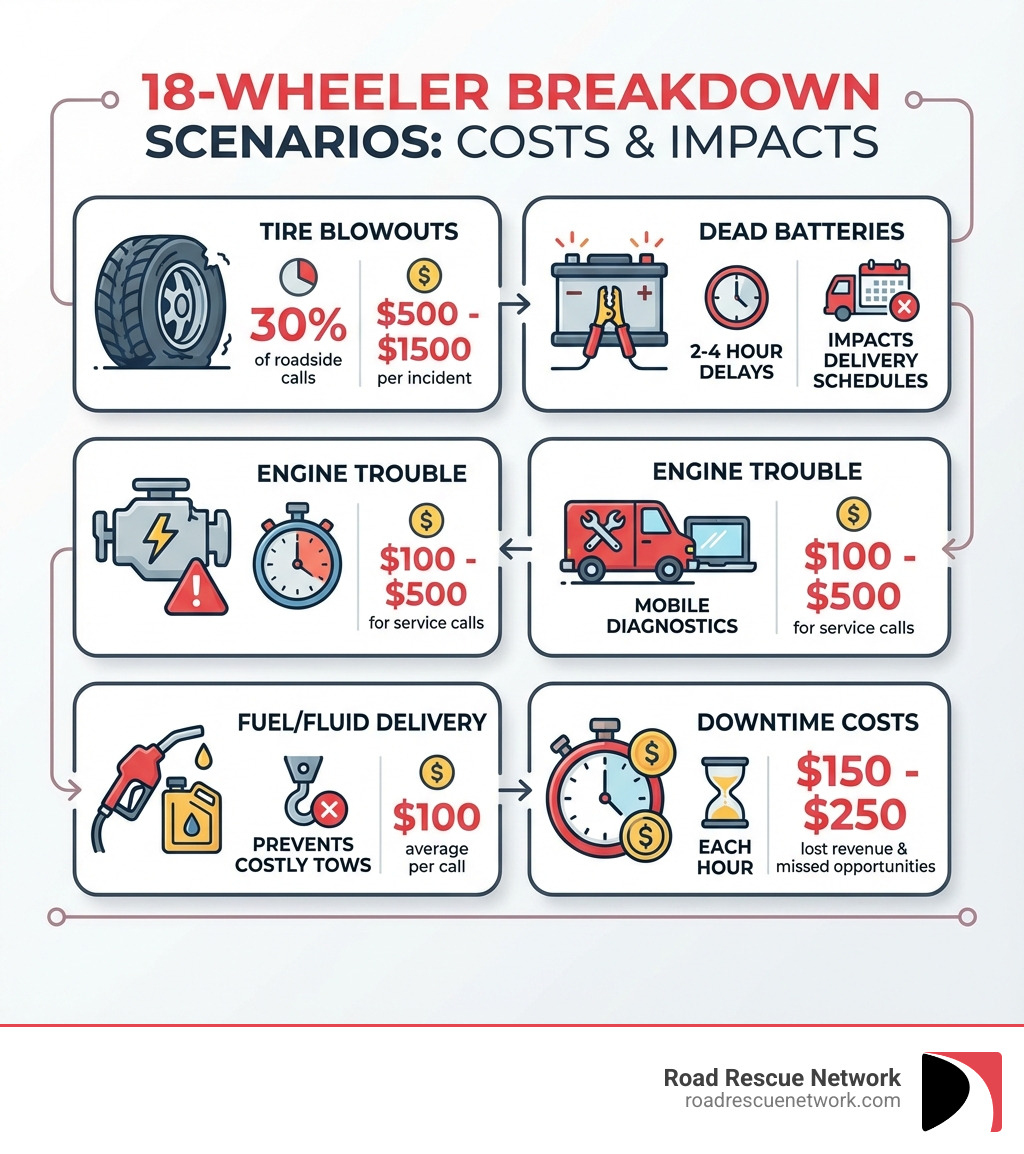
Common Breakdown Scenarios & Services Covered
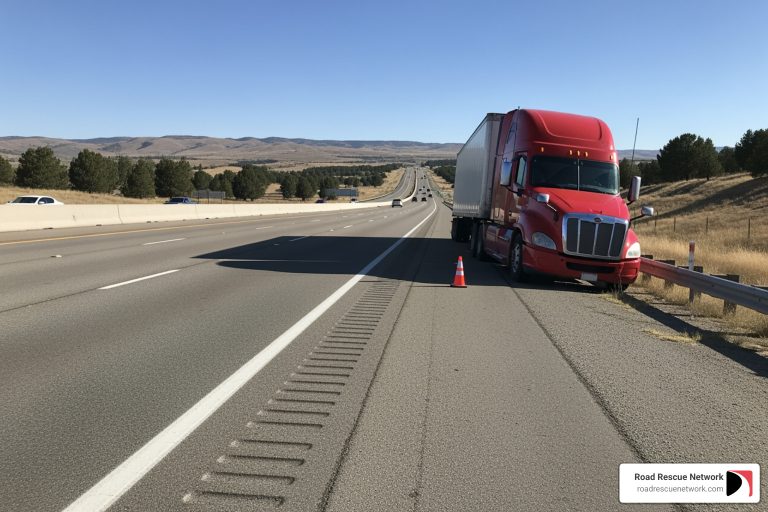
Breakdowns are an inevitable part of life on the road. For an 18-wheeler, a minor issue can quickly become a major safety hazard and logistical problem. This is where specialized 18 wheeler roadside assistance is crucial.
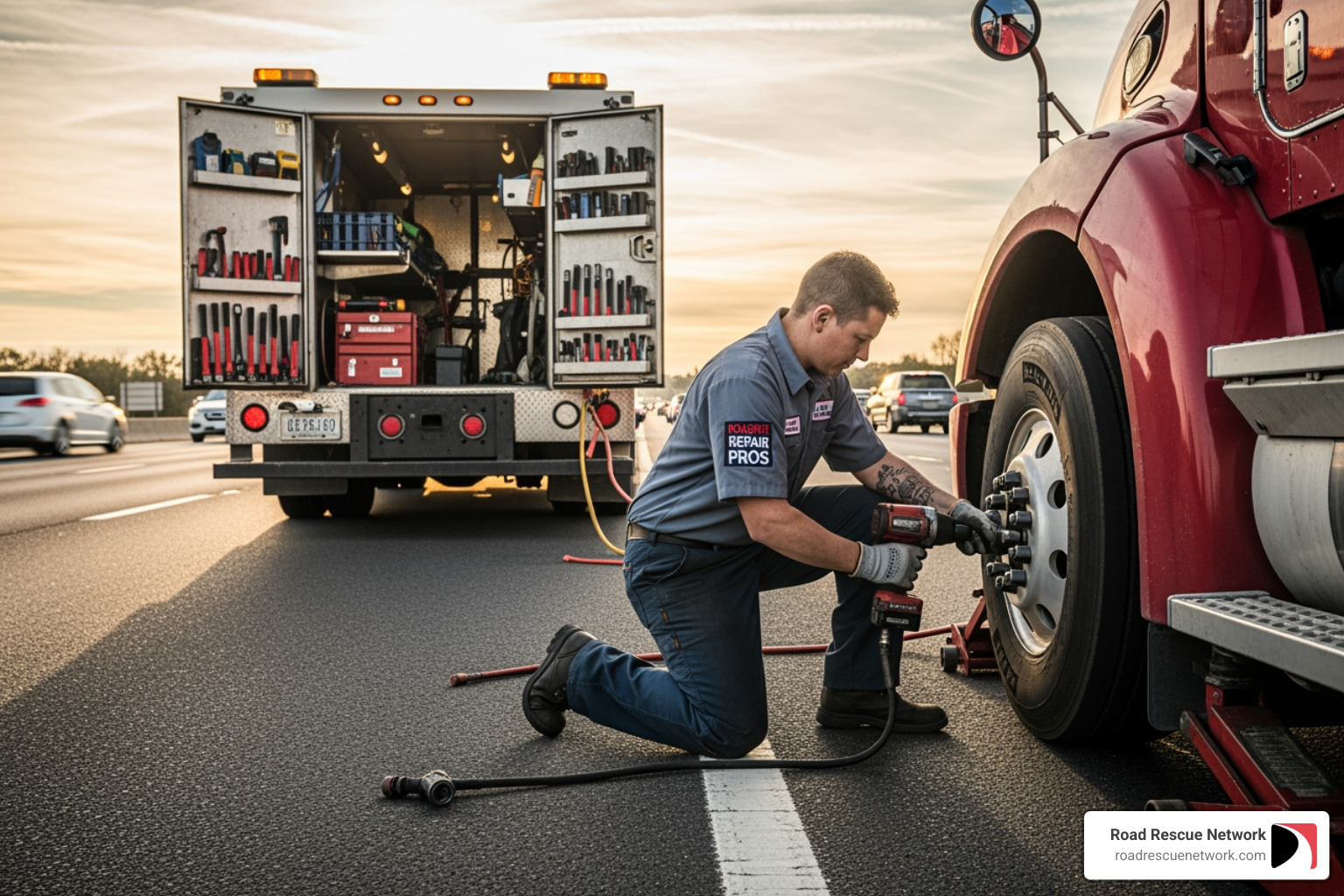
Common breakdown scenarios include:
- Flat Tires: A frequent issue requiring heavy-duty jacks and specialized tools for repair or replacement.
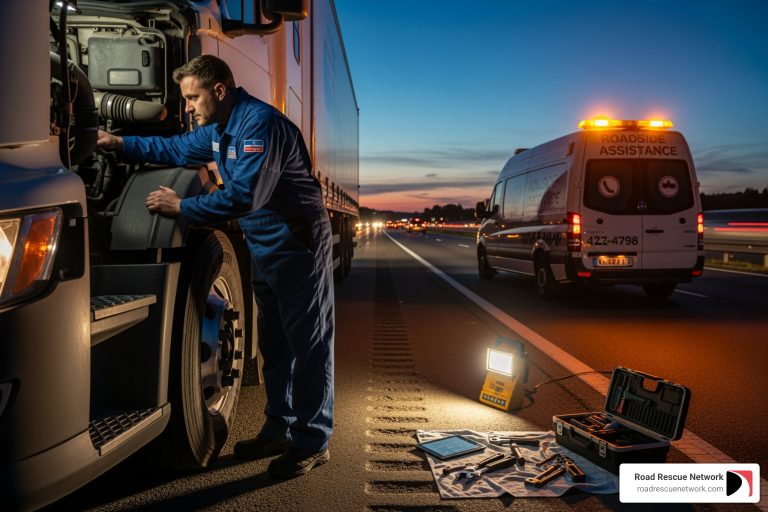
- Engine Trouble: Mobile diesel mechanics can diagnose and repair many common engine problems on-site.
- Dead Batteries: Heavy-duty jump starts or battery replacements can get you powered up and back on schedule.
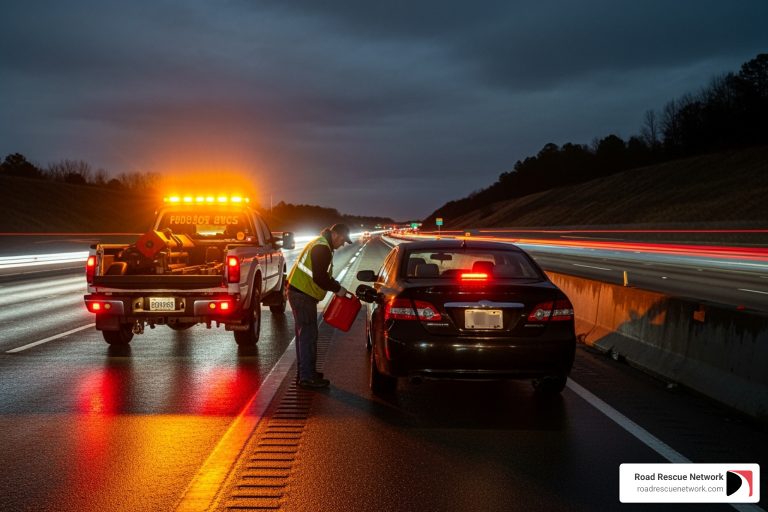
- Fuel and Fluid Issues: Mobile delivery of diesel, oil, or coolant can prevent a costly tow.
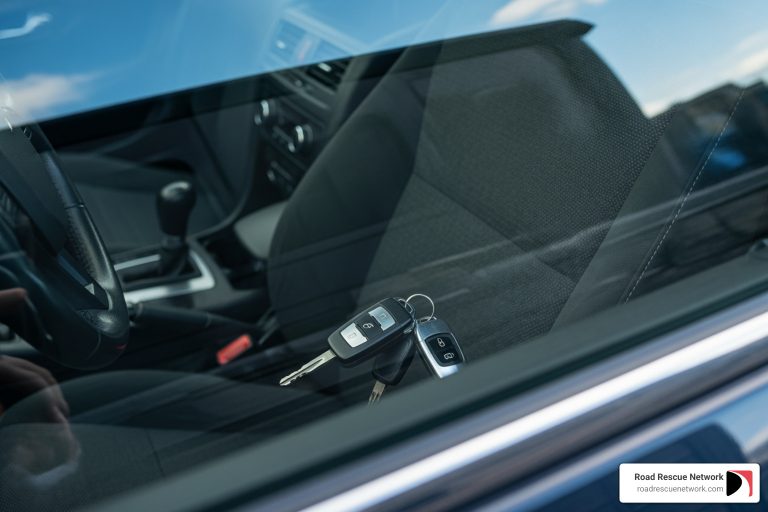
- Lockouts: Technicians can quickly get you back into a locked cab without causing damage.
- Brake and Air Leaks: Mobile mechanics can perform minor adjustments or temporary fixes to ensure the truck is safe to move.
- Electrical Failures: Mobile units are equipped to diagnose and fix many minor electrical issues.
These scenarios highlight why specialized assistance is indispensable for minimizing the impact on your schedule and bottom line.
What Services Are Included in 18-Wheeler Roadside Assistance?
While coverage varies, most comprehensive plans or pay-per-use services include a core set of offerings designed for heavy-duty vehicles:
- Towing: Heavy-duty towing to move your truck and trailer to a qualified repair facility if an on-site fix isn’t possible.
- Mobile Mechanic Dispatch: On-site repairs by a qualified technician to save you the time and expense of a tow.
- Tire Service: Roadside repair for punctures or replacement for blowouts.
- Fuel and Fluid Delivery: Delivery of diesel, oil, coolant, and other essential fluids.
- Jump Starts and Battery Replacement: Service for dead batteries, including replacement if needed.
- Lockout Services: Assistance for keys locked inside the cab.
- Winching and Extrication: Pulling your truck out if it’s stuck in mud, snow, or a ditch near the road.
At Road Rescue Network, we offer comprehensive, on-demand services to get you back on track quickly. You can learn more by visiting our page: Road Rescue Network Roadside Assistance Services.
Specialized Repairs for Heavy-Duty Trucks
Commercial trucks often need repairs that go beyond standard fixes. Technicians with specific training and equipment are required to handle these complex issues:
- Hydraulic and Liftgate Repair: Diagnosing and fixing issues with hydraulic systems, pumps, hoses, and liftgates.
- DPF Filter Service: Mobile Diesel Particulate Filter (DPF) regeneration or cleaning to restore engine performance.
- Trailer Repair: Addressing issues with trailer lights, brakes, or structural components.
- Computer Diagnostics: Using specialized tools to read error codes and troubleshoot sophisticated onboard computer systems.
- Welding and Load Shifts: Performing minor mobile welding or helping to re-secure shifted cargo for safety.
These specialized services show that 18 wheeler roadside assistance is a technical field dedicated to keeping the nation’s supply chain moving.
Choosing the Right 18 Wheeler Roadside Assistance Provider
Selecting the right 18 wheeler roadside assistance provider is a critical decision for any owner-operator or fleet manager. It’s about partnering with a service that understands commercial trucking and can deliver when it matters most, protecting your profitability and schedule.
Prioritize these factors when making your choice:
- 24/7/365 Availability: Breakdowns happen anytime. Your support must be available around the clock.
- Nationwide Network: Ensure the provider has a wide network to reach you, whether in a busy city or on a remote highway.
- Service Scope: Confirm they offer a full range of services, from basic fixes to complex mobile repairs and heavy-duty towing.
- Technician Qualifications: Look for providers who use certified technicians to ensure quality work on your vehicle.
- Cost Models: Understand the payment structure, whether it’s a membership, pay-per-use, or insurance add-on.
Road Rescue Network Service Plans
At Road Rescue Network, we champion a transparent pay-per-use model. This approach avoids the common frustrations of traditional plans. Here’s a comparison of the common cost models:
| Feature | Road Rescue Network (Pay-Per-Use) | Membership Plans | Insurance Add-ons |
|---|---|---|---|
| Cost Structure | Pay only when you need service. | Annual or monthly fees. | Added to your insurance premium. |
| Contracts | No contracts or commitment. | Typically a 12-month commitment. | Part of your insurance contract. |
| Coverage Limits | Transparent, upfront pricing. | Per-occurrence limits and exclusions. | Per-occurrence limits and incident caps. |
| Deductibles | None. | Usually none, but you pay overages. | A deductible often applies. |
| Incident Limits | No limit on use. | Often limited per time period. | Limited incidents per policy period. |
| Flexibility | On-demand service as needed. | Must use their network; may have waiting periods. | Must use their network; terms apply. |
- Membership Plans: These require an annual or monthly fee for access to a set of services with specific limits.
- Pay-per-use Model: With Road Rescue Network, you pay only for the service you need, when you need it. There are no membership fees or contracts, offering maximum flexibility.
- Insurance Add-ons: Offered by insurers like Progressive, these plans add roadside coverage to your policy but typically include deductibles and limits on the number of incidents.
Our pay-per-use model ensures you get fast, reliable 18 wheeler roadside assistance without recurring costs, helping you maximize profitability.
Key Factors to Evaluate in a Provider
Beyond cost, evaluate these factors to find a reliable partner:
- Network Size and Coverage: A large, nationwide network ensures help is always accessible.
- Technician Certifications: Ensure the provider uses qualified technicians, such as those who are A.S.E. Certified, for expert repairs.
- Response Time Estimates: A good provider should offer realistic ETAs to help minimize downtime.
- Customer Reviews: Check testimonials for feedback on reliability, professionalism, and speed.
- Included vs. Excluded Services: Read the fine print to understand coverage limits and what isn’t covered to avoid surprises.
- Billing Transparency: Look for clear, upfront pricing and convenient payment options.
By carefully evaluating these factors, you can select a provider that keeps your trucks on the road. To see how a service request is handled, you can see an example of a service request portal.
The Modern Roadside Experience: Technology and Preparation
The world of 18 wheeler roadside assistance has been transformed by technology, making the process more streamlined and transparent. These advancements play a pivotal role in minimizing downtime for truckers.
Key technologies include:
- GPS Tracking and Mobile Apps: Many providers use GPS-equipped service trucks and mobile apps. This allows for dispatching the closest technician, providing accurate ETAs, and letting you track their progress in real-time.
- Digital Dispatch and Billing: Sophisticated software in call centers ensures the best-qualified provider is sent quickly. Technology also enables centralized, transparent billing, which is especially helpful for fleets. Our pay-per-use model uses this tech to provide simple, clear invoices.
These integrations keep you informed every step of the way when you’re stranded.
How to Prepare for a Roadside Emergency
Being prepared can reduce stress and speed up the resolution of a roadside emergency.
- Have Information Ready: Keep your truck’s make, model, VIN, and any fleet or policy numbers accessible for the dispatcher.
- Know Your Location: Be ready to provide cross streets, mile markers, or nearby landmarks, especially in areas with poor cell service.
- Describe the Problem: Be specific about the issue. More details help the dispatcher send the right technician with the right tools.
- Carry an Emergency Kit: A well-stocked kit with reflective triangles, a flashlight, and a first-aid kit is essential.
- Follow Safety Procedures: Pull over to a safe location, turn on your hazard lights, and deploy reflective triangles. Your safety is the top priority.
Understanding Response Times and Potential Delays
When you’re broken down, every minute counts. Understanding the factors that affect response times for 18 wheeler roadside assistance can help manage expectations.
- Average Response Times: Most providers connect you with a dispatcher within 20-30 minutes, but the technician’s arrival time can vary.
- Factors Affecting ETA: Delays can be caused by remote locations, severe weather, heavy traffic (especially near cities like Chicago or Los Angeles), and the complexity of the required service.
- Preparing for Delays: Keep your phone charged and inform the dispatcher of any safety concerns about your location. While our goal at Road Rescue Network is to get you help quickly, some external factors are unavoidable.
Frequently Asked Questions about 18-Wheeler Roadside Assistance
Here are answers to some of the most common inquiries we receive about 18 wheeler roadside assistance.
What’s the difference between roadside assistance and a regular mechanic?
The key difference is their function. Roadside assistance is an emergency service focused on getting you back on the road quickly. It’s mobile, available 24/7, and uses specialized heavy-duty equipment. A regular mechanic typically works from a fixed shop during business hours, handling scheduled maintenance and more extensive repairs that don’t require an immediate, on-location response. Think of roadside assistance as your emergency response team and a regular mechanic as your long-term care provider.
Does my commercial auto insurance include 18-wheeler roadside assistance?
It might, but you need to check your policy. Many insurers offer 18 wheeler roadside assistance as an optional add-on, not as a standard feature. These plans often come with limitations, such as:
- Deductibles: You may have to pay a deductible (e.g., $250) at the time of service.
- Coverage Limits: Policies typically have caps on how much they will pay for services like towing or labor.
- Incident Caps: There may be a limit on how many times you can use the service within a policy period (e.g., three incidents per six months).
Always review your policy documents or contact your insurance agent to confirm your coverage. A pay-per-use service like ours has no deductibles or incident limits.
Can I choose my own repair shop for towing?
This depends on your provider. Many insurance and membership-based plans will only tow your truck to the “nearest qualified repair facility” to control costs. If you request a different shop, you will likely have to pay for any extra mileage or costs beyond what the plan covers.
A pay-per-use model like ours at Road Rescue Network can offer more flexibility. While we prioritize connecting you with the closest and most efficient service, we can often accommodate requests for a specific tow destination, with any additional costs communicated clearly upfront. It’s always best to discuss your preference with the dispatcher when you call for help.
Conclusion: Stay Rolling with Reliable Roadside Support
In commercial trucking, uptime is everything. 18 wheeler roadside assistance is not a luxury; it’s a vital safety net that protects your business when a breakdown threatens your schedule and profits.
Reliable roadside support minimizes downtime, protects your bottom line, and ensures driver safety. Whether you choose a membership, an insurance add-on, or a flexible pay-per-use service like ours, understanding your plan is key. Our no-contract, pay-per-use model offers the ultimate transparency and flexibility, ensuring you only pay for the service you need.
At Road Rescue Network, we are committed to keeping you on the move. Our 24/7 service connects you with certified mobile mechanics across the nation, from New York to Los Angeles, turning a potential crisis into a manageable delay. Don’t let a breakdown leave you stranded.
Learn more about our heavy-duty towing services



3 Comments
Comments are closed.