Pedal Power Peace of Mind: A Guide to Bike Roadside Assistance
Why Every Cyclist Needs a Safety Net on Two Wheels
Road side assistance for bike is a service that provides emergency help when your bicycle breaks down or you can’t continue riding. Here’s what you need to know:
Quick Answer: What Road Side Assistance for Bike Covers
- Transportation – Get you and your bike to a safe location, repair shop, or home
- On-site Help – Some providers attempt minor repairs like fixing flat tires
- 24/7 Availability – Call anytime, day or night
- Multiple Bike Types – Covers standard bikes, e-bikes, tandems, cargo bikes, and rentals
- Distance Limits – Varies by plan (5-200 miles depending on membership level)
Cycling offers many benefits, but unexpected mechanical failures like a flat tire or broken chain can leave you stranded. With over 9 million daily bike trips in the U.S. and cities investing in cycling infrastructure, the risk of getting stranded is growing.
That’s where bike roadside assistance comes in. Like its automotive counterpart, it ensures a mechanical problem, severe weather, or injury won’t leave you stranded by providing transportation for you and your bike to a safe location.
The concept is simple: when you can’t ride, someone comes to get you. Most services focus on getting you home safely, not fixing your bike on the spot. While some providers like AAA include this as a membership benefit, on-demand services let you pay only when you need help.
I’m Byron Tarlton, founder of Road Rescue Network. With over two decades in the industry, my team and I have built roadside assistance infrastructure across North America, including road side assistance for bike services. We know what it takes to respond fast and deliver real help when it matters most.
What is Bike Roadside Assistance and What Does It Cover?
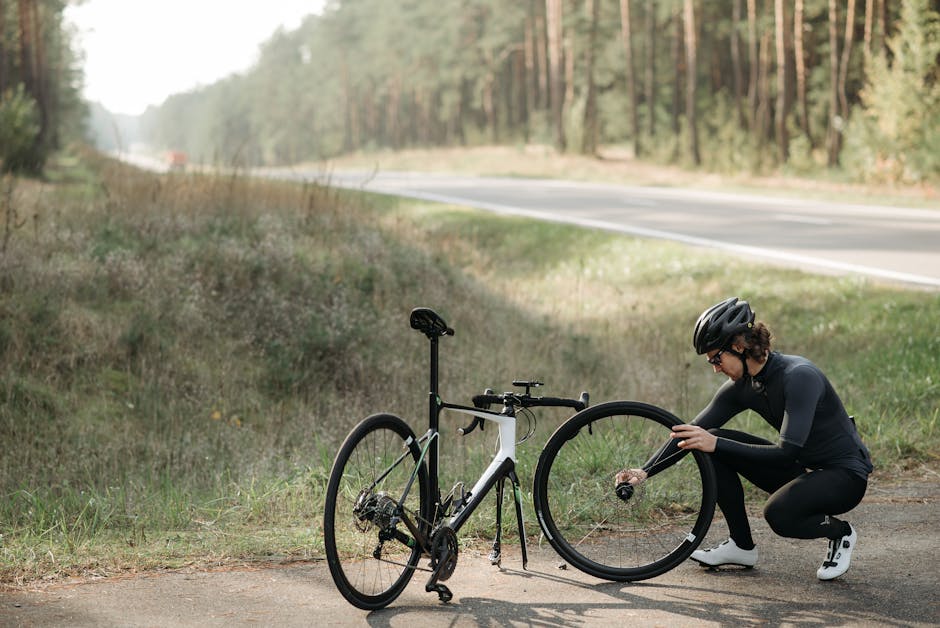
Imagine your tire deflating mid-commute or your chain snapping on a remote trail. These are the moments when road side assistance for bike becomes essential.
Think of it as your safety net on two wheels. It’s an emergency service for when your bicycle breaks down or you can’t continue riding. Unlike car assistance that often focuses on on-the-spot repairs, bike services prioritize transporting you and your bike to safety—whether that’s home, a repair shop, or another secure location.
The primary benefits are safety (avoiding being stranded and vulnerable to traffic or weather), convenience (no long walks pushing a broken bike), and peace of mind to ride confidently. As cycling becomes a more serious mode of transit, this service supports the shift toward sustainable transportation.
So what emergencies does road side assistance for bike actually cover? Flat tires are the most common breakdown, followed by broken chains. Other mechanical failures like bent wheels or faulty brakes can also make your bike unrideable. Some services even cover rider injury or exhaustion if you’re physically unable to continue, or if severe weather makes it dangerous to keep riding.
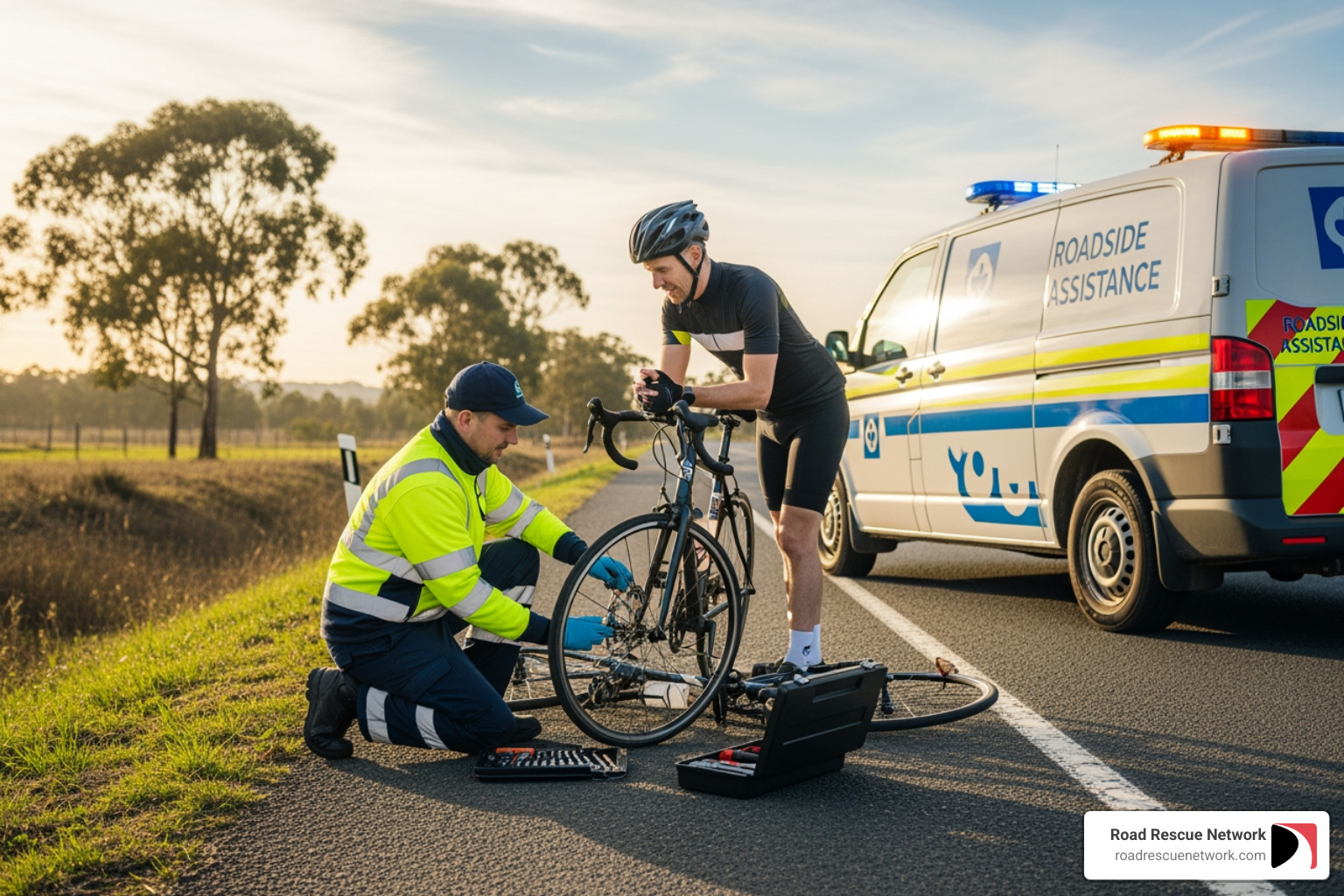
What specific services are included with road side assistance for bike?
When you’re stuck, most road side assistance for bike services focus on transportation. A service vehicle will pick up you and your disabled bicycle and take you to your home, a bike shop, or another safe spot. The goal is to get you off the roadside.
Some providers may attempt minor on-site adjustments, like patching a flat tire. However, service vehicles are not mobile bike shops and don’t carry a full inventory of parts. Rescue is the priority, not extensive repairs.
Unlike car assistance, lockout service isn’t relevant for bikes. For security reasons, providers will not cut locks or other securing devices.
At Road Rescue Network, we understand the urgency of being stranded. While our core expertise is in vehicular emergencies like light-duty towing, the same principle applies to bikes: getting you and your property safely transported.
Why is it a valuable service for modern cyclists?
For millions, cycling is a daily commute. With cities working to triple their cycling numbers, reliable support is a necessity.
The explosion in e-bike popularity adds another dimension. These heavier, more complex bikes are difficult to manage when broken. You might need specialized transport, potentially even equipment hauling services.
For long-distance recreational riders, a breakdown miles from home can be a stressful ordeal. Assistance provides a genuine safety net, allowing you to explore with confidence.
Bike roadside assistance also saves time and money by eliminating the need for expensive last-minute transport that might not even accommodate a bike. It removes the aggravation of being stranded, letting you enjoy a greener, more active lifestyle.
Comparing Your Options for Road Side Assistance for Bike
When you’re thinking about road side assistance for bike, you have three main paths to choose from: a membership plan, on-demand services, or a DIY repair kit. The right fit depends on your riding frequency, budget, and mechanical skills.
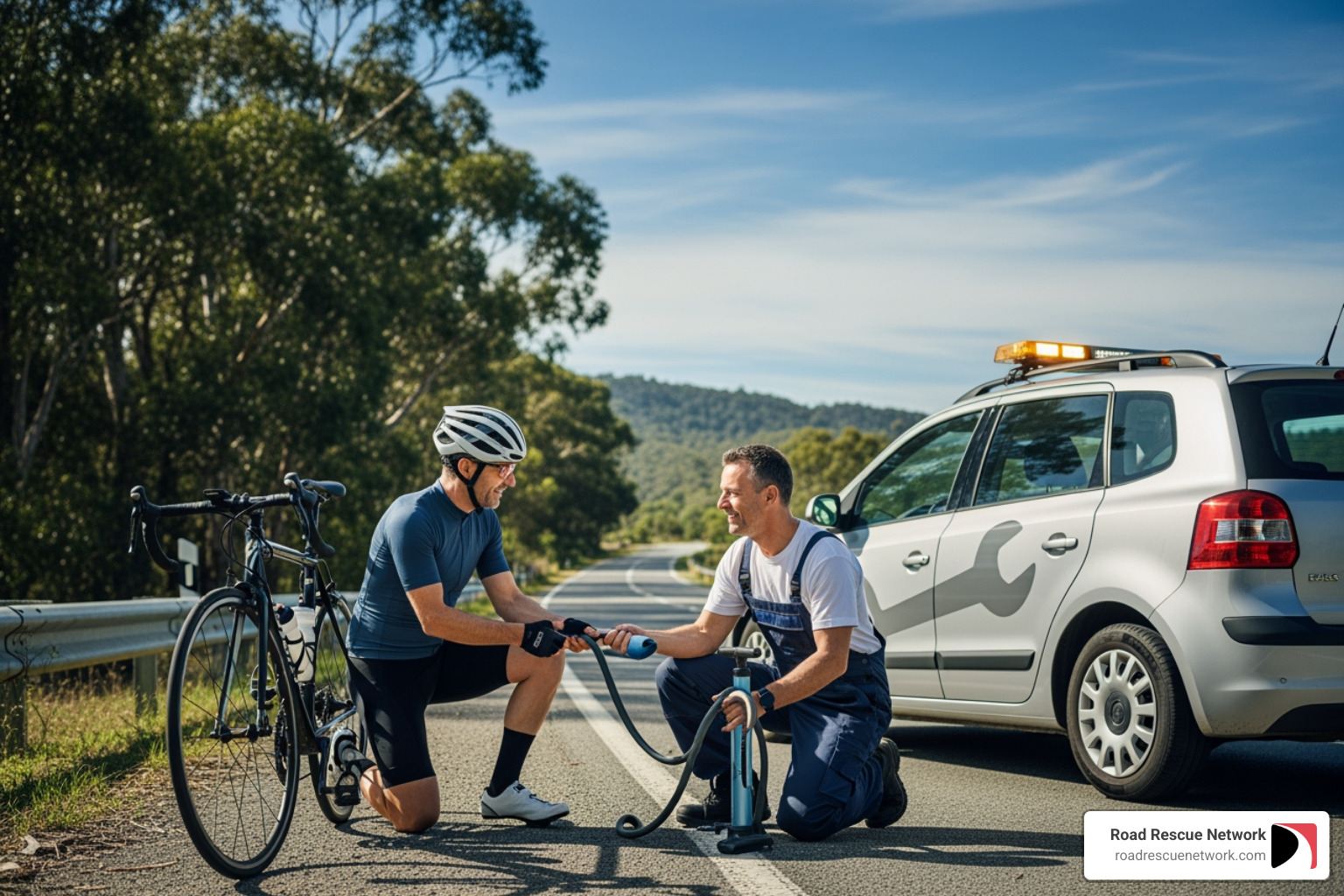
Membership-Based Plans (AAA, CAA, RACV)
Many cyclists get road side assistance for bike through an existing auto club membership. Organizations like AAA, CAA, and RACV often bundle bicycle coverage with their roadside packages.
These memberships have tiers—Classic, Plus, and Premier—with increasing benefits. The main difference for cyclists is the towing distance limits. A AAA Classic member might get a 5-mile tow, while a Plus member gets up to 100 miles. These calls typically count toward your annual limit, and you pay the annual fee regardless of use. If you already have a car membership, it’s a great bonus. If not, an annual fee of $50 to $200+ for a bike-only service might be steep.
On-Demand & Pay-Per-Use Services
For riders who value flexibility, on-demand services provide assistance without a membership. You simply request help through a call or mobile app and pay for that specific incident.
A single use might cost $50 to $150+, but if you rarely break down, you could save money over an annual membership. This model is ideal for infrequent riders, budget-conscious cyclists, and anyone who prefers flexibility.
At Road Rescue Network, this is our philosophy. While we primarily focus on car emergencies like light-duty towing, the principle applies perfectly to bikes: fast, 24/7 service with no memberships or hidden fees. You call, we connect you with a local rescuer, and you get back on track.
Membership vs. On-Demand vs. DIY: A Comparison
| Comparison Factor | Membership-Based Plans (e.g., AAA, CAA) | On-Demand Services | DIY Repair Kit |
|---|---|---|---|
| Annual Cost | $50-$200+ per year | $0 (pay only when needed) | $20-$100 (one-time purchase) |
| Per-Incident Cost | Included (within limits), possible overage fees | $50-$150+ depending on service and distance | $0 if you have parts, or cost of replacement parts |
| Convenience | High: call and wait for pickup | High: call or use app, get picked up | Low: requires your time, effort, and roadside repair skills |
| Scope of Help | Transportation of you and your bike, occasional minor fixes | Transportation of you and your bike, occasional minor fixes | Limited to your skills, tools, and what you’re carrying |
| Required Skill Level | None for the service itself | None for the service itself | Moderate to high, depending on the repair |
The DIY approach has its place, but when a major failure occurs, having a service to call—whether membership or on-demand—can save you a long, frustrating walk home.
The Fine Print: Coverage, Costs, and Limitations
Before committing to any road side assistance for bike plan, it’s crucial to understand what is and isn’t covered. Every service has its boundaries, some practical and others related to liability. At Road Rescue Network, we believe in transparency, and that same philosophy should guide your choice.
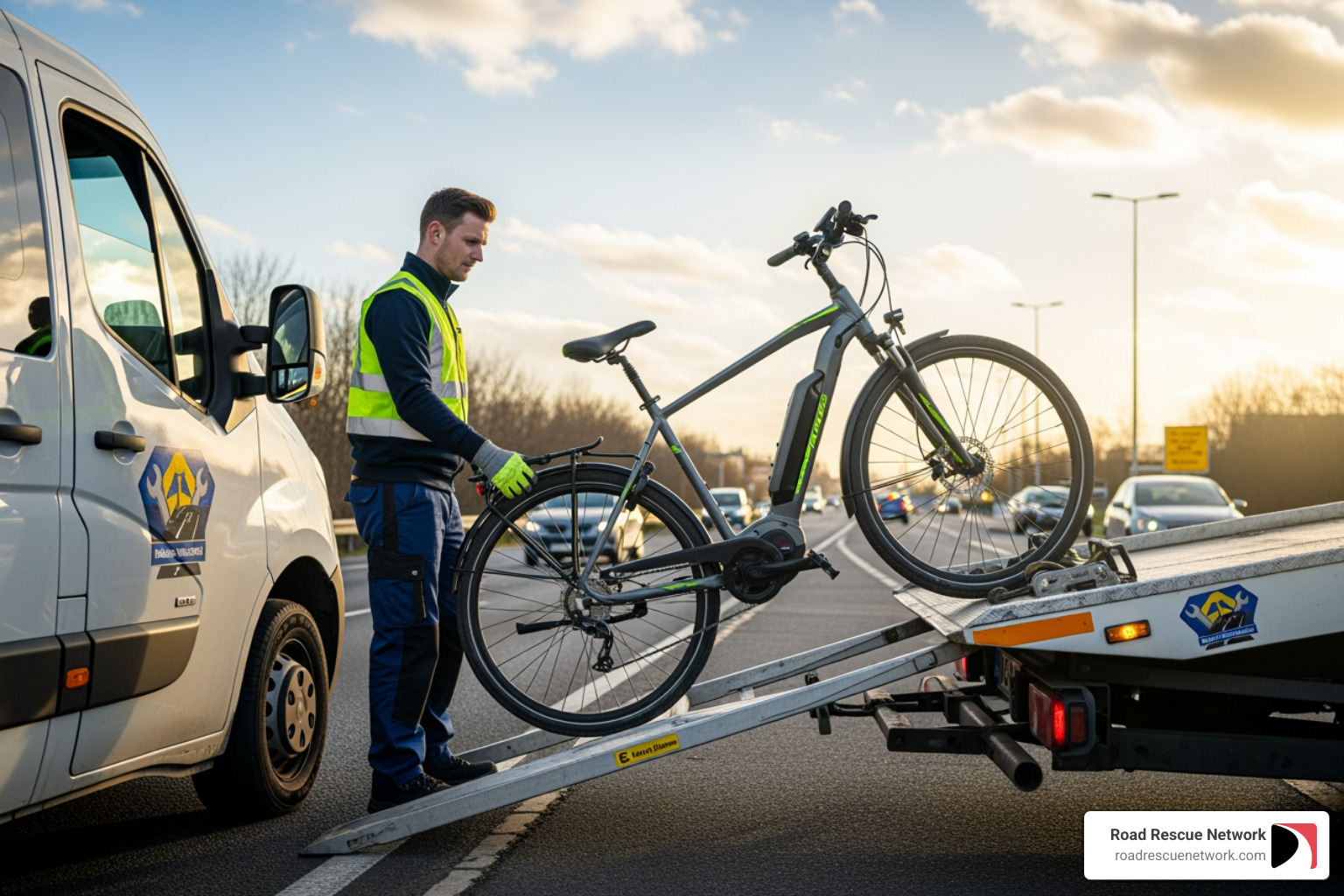
What types of bicycles are covered?
Most providers are inclusive, covering a wide range of bicycles.
Standard bicycles (road, mountain, hybrid) are always covered. E-bikes are also included by most services like AAA and CAA, as long as they have pedals. However, their weight and complexity may require specialized equipment hauling and could mean longer wait times.
Tandems, cargo bikes, and adult tricycles are usually covered but may be classified as specialized equipment. If you’re on a rental bike, the service follows you, the rider, so you’re still covered.
Motorcycles, electric scooters, and mopeds are not covered under bicycle assistance. These require different service categories.
Understanding the costs of road side assistance for bike
The cost structure depends on whether you choose a membership or a pay-per-use service.
Membership plans like AAA charge an annual fee ($110-$200+) that covers a set number of service calls. Higher tiers offer longer towing distances. If you already have an auto club membership, bike coverage may be included at no extra cost.
On-demand services have no upfront fee. You pay for each incident, typically from $50 to $150+, depending on the service and distance. At Road Rescue Network, we provide upfront pricing so there are no surprises.
Be aware of overage charges if your tow exceeds your plan’s mileage limit. Some providers also have reimbursement policies if you must arrange your own transport, but you’ll need to get prior approval and submit receipts.
The best option depends on your riding frequency. Daily commuters may benefit from a membership, while occasional riders might save with a pay-per-use model.
Common Exclusions and Geographic Limits
Every road side assistance for bike plan has limitations.
The most common exclusion is off-road trails and inaccessible areas. Service vehicles need paved roads. If you’re deep in the woods, you must get your bike to an accessible road for pickup.
There’s also a distinction between rider fatigue and rider injury. Simple tiredness is usually not covered, but if you’re injured or have a mechanical failure, you’re covered.
For security reasons, providers will not perform lock cutting. Also, you must be present with your bike when the service arrives; they won’t pick up an unattended bicycle.
Geographic limits and service area boundaries also apply. Check for reciprocal coverage if you plan to travel. For context on your rights as a cyclist, you can check the Bicycle State Laws in your area.
How to Use Your Service When You’re Stranded
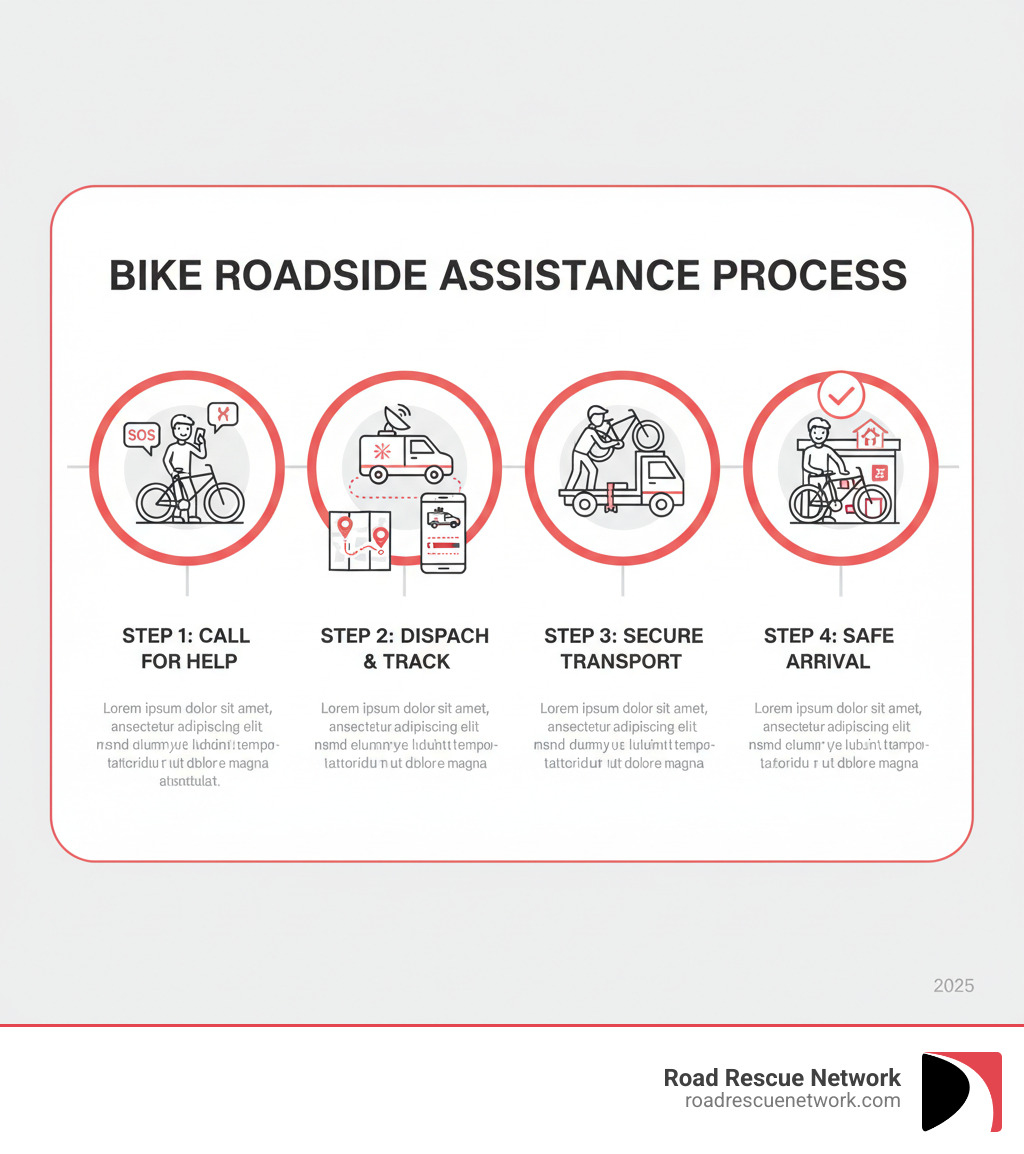
A breakdown on your bike can feel overwhelming, but using your road side assistance for bike is actually pretty straightforward. The whole system is designed to get you and your bike to safety with minimal stress.

Requesting Assistance
When you’re stranded, requesting help is simple.
If you have a membership, call the number on your card. For on-demand services like Road Rescue Network, you can often use a mobile app. Apps are convenient as they use your phone’s GPS to pinpoint your location.
When you connect with a dispatcher, be ready to provide:
- Your exact location: Be as precise as possible. GPS coordinates are ideal.
- The problem: Briefly explain the issue (e.g., “flat tire,” “broken chain”).
- Your bike type: Mention if it’s an e-bike, tandem, or other non-standard bike.
- Your membership details: If applicable.
While waiting, move yourself and your bike to a safe spot away from traffic but still visible. Stay with your bike until help arrives.
What to Expect During a Service Call
Response times can vary from 45-60 minutes, depending on your location, time of day, and service demand. Specialized equipment may take longer. At Road Rescue Network, our model is built to connect you with the closest available rescuer for fast, 24/7 service.
When the technician arrives, they will assess the situation. Remember the repair versus transportation reality: the primary goal is to transport you, not perform complex repairs. A quick fix for a flat tire might be attempted, but for most mechanical failures, you’ll be taken to a bike shop, your home, or another specified location.
The type of vehicle that shows up can vary. It might be a tow truck with a bike rack, a flatbed, or even a taxi that can accommodate you and your bicycle. Our network includes a variety of local rescuers with different vehicle types, similar to how we handle everything from jumpstart services to towing for cars.
Expect professional, courteous service. The technician will handle your bike with care and confirm the plan with you. Payment will be handled according to the service type (membership verification or pay-per-use transaction). The whole experience is designed to take the stress out of being stranded.
Frequently Asked Questions about Bicycle Roadside Assistance
When you’re considering road side assistance for bike, it’s natural to have questions. Here are answers to the most common concerns.
Do providers fix my bike on the spot or just transport it?
Here’s the honest answer: most services are going to transport you, not fix your bike on the spot. Service vehicles are not rolling bike shops and lack the specialized parts and tools for complex mechanical work. The primary goal is to get you to a safe location or a proper repair shop where your bike can be fixed correctly. While a provider might attempt a minor fix like patching a flat, this is not guaranteed.
Is my electric bicycle (e-bike) covered?
Yes, most providers cover e-bikes, and that’s great news given how popular they’ve become. Both AAA and CAA explicitly include e-bikes in their coverage. However, e-bikes are heavy and may require specialized transport, which could affect response times. Be aware that coverage is for mechanical breakdowns, not for running out of battery power. Always confirm the specifics with your provider, especially if you have a heavy or specialized e-bike.
What happens if I break down on a trail far from a road?
This is where most road side assistance for bike plans hit their limit. Service is typically limited to accessible roads—places where a service vehicle can actually reach you. If you break down on a remote mountain bike trail, you’ll need to move your bike to the nearest accessible road yourself. This is why even with roadside assistance coverage, carrying a basic repair kit for trail rides is still smart. For more information about bicycle regulations in your area, check out the Bicycle State Laws resource from the League of American Bicyclists.
Conclusion
There’s nothing quite like the freedom of cycling, but that freedom can turn into frustration quickly when you’re miles from home with a flat tire or a snapped chain. These moments remind us that even the most reliable bicycle can let us down.
That’s exactly why road side assistance for bike matters. It’s not about expecting the worst—it’s about riding with confidence, knowing that a mechanical hiccup won’t leave you stranded. Whether you’re commuting daily, exploring new trails, or embracing the e-bike revolution, having a backup plan transforms how you ride.
This guide has covered what these services do, who offers them (from membership clubs to flexible on-demand options), and what they cost. The right choice depends on your situation: how often you ride and whether you prefer the predictability of a membership or the flexibility of paying only when needed.
For cyclists who value that flexibility, an on-demand approach makes perfect sense.
That’s where Road Rescue Network comes in. While we’re known for helping drivers with car emergencies, our model works beautifully for cyclists too. We connect you instantly with local rescuers who can provide light-duty towing and transport for your bike, getting you safely home or to a repair shop. No membership required. No hidden fees. Just fast, reliable help when you need it most, 24/7.
Because at the end of the day, cycling should be about joy and adventure—not worry. With the right safety net in place, you can focus on the ride itself.