Blowout! Don’t Panic: A Step-by-Step Guide for Highway Tire Emergencies
Why a Blown Out Flat Tire on Highway is a Critical Emergency
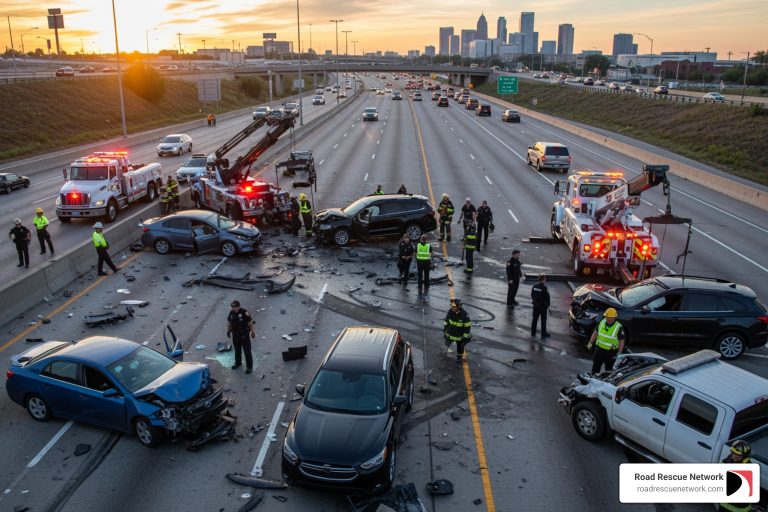
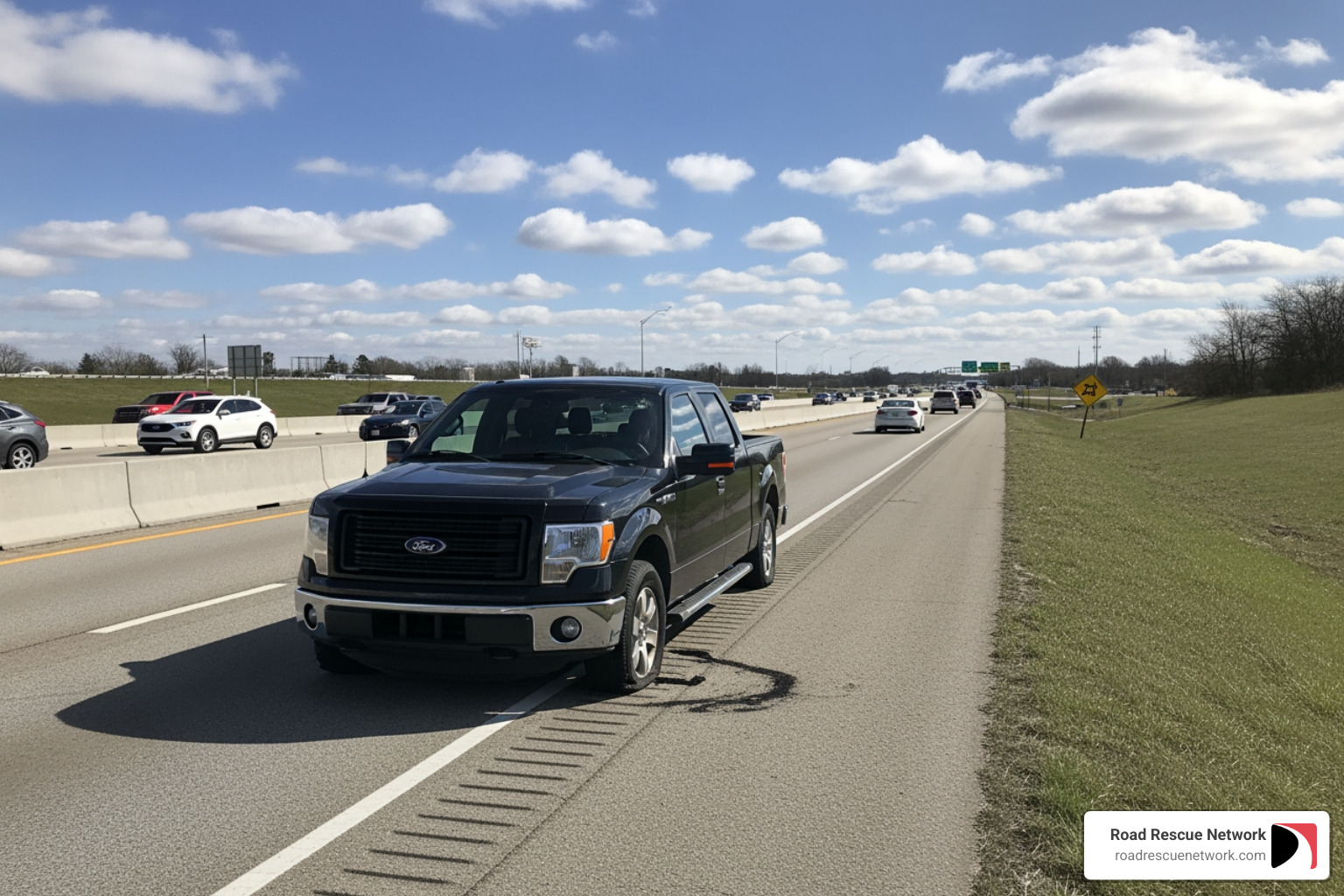
A blown out flat tire on highway can turn your routine drive into a heart-stopping moment in less than a quarter of a second. When a tire suddenly loses all air pressure at 65 mph, your vehicle can become dangerously difficult to control almost instantly. Here’s what you need to do right now:
Immediate Actions for a Highway Tire Blowout:
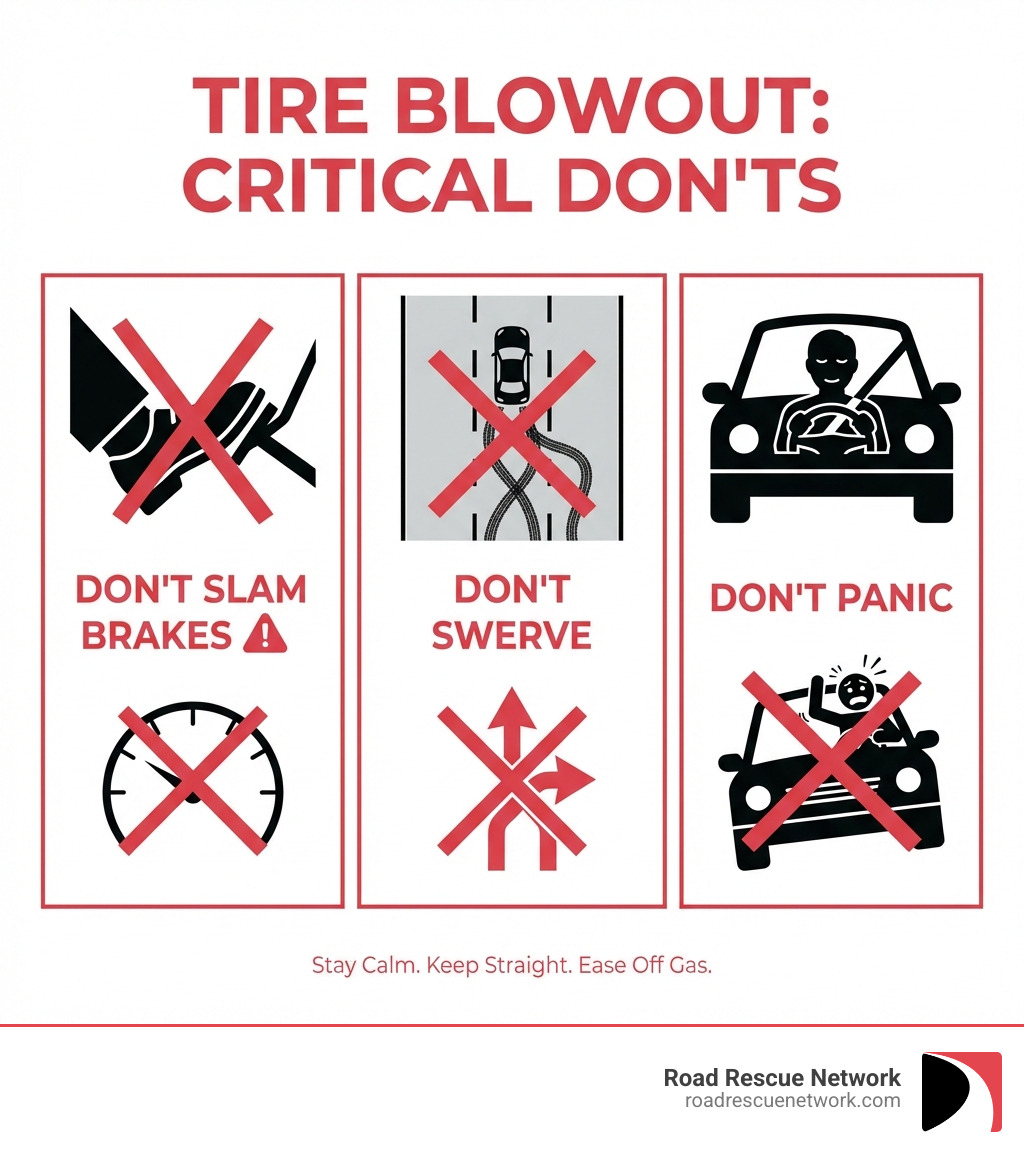
- Grip the steering wheel firmly with both hands
- Do NOT slam on the brakes – this causes loss of control
- Ease off the accelerator gradually
- Keep the vehicle straight – resist the pull
- Signal and pull over to the safest spot possible
- Turn on hazard lights once stopped
Most tire blowouts happen between May and October when road surfaces are hottest, often caused by underinflated tires, worn treads, or overloaded vehicles. The sudden loss of control, combined with highway speeds and surrounding traffic, makes this one of the most dangerous roadside emergencies you can face.
This guide covers what to do in the first 30 seconds, how to pull over safely, whether to change the tire or call for help, and how to prevent future blowouts.
I’m Byron Tarlton, founder of Road Rescue Network. With over two decades of experience in roadside assistance since 1998, my team and I have helped thousands of drivers through this exact emergency. I’m here to share what works when seconds count.
Blown out flat tire on highway word roundup:
The First 30 Seconds: How to React to a Tire Blowout
When a tire blows out on the highway, your primary goal is maintaining vehicle control. Panic is your enemy. It takes only a quarter of a second to lose control, so a calm, quick reaction is vital.

Resist the instinct to slam the brakes or jerk the wheel. Instead, focus on steering straight and reducing speed gradually. Grip the steering wheel firmly to counteract the pull from the blown tire. Ease off the accelerator and let the car slow down on its own. This controlled deceleration is key to maintaining stability.
Recognizing the Signs: What a Blowout Sounds and Feels Like
To react effectively to a blown out flat tire on highway, you first need to recognize it. The experience is often unmistakable:
- Loud bang or boom: A sudden, explosive noise like a gunshot as the tire fails.
- Hissing or whooshing sound: A continuous hissing or whooshing sound as air escapes.
- Flapping or thumping noise: A flapping or thumping sound from the shredded tire hitting the road.
- Vehicle pulling to one side: A strong pull to one side. A front tire blowout pulls the steering wheel. A rear tire blowout causes the back of the car to sway or fishtail.
- Steering vibration: Violent vibration in the steering wheel.
- Rough ride: A rough, bumpy ride, as if driving over potholes.
Being aware of these sensory cues can help us confirm that we’re experiencing a blowout and prompt the correct immediate responses.
How to Handle a Blown Out Flat Tire on the Highway
Once we recognize that we’re dealing with a blown out flat tire on highway, these are the critical steps to take:
- Grip the steering wheel firmly with both hands: A firm, two-handed grip is non-negotiable to counteract the pull and keep the car straight with small, firm corrections.
- Do not slam on the brakes: Our natural reaction might be to hit the brakes hard, but this can lead to a complete loss of control, especially at high speeds. Slamming on the brakes can cause the car to swerve, spin, or even overturn.
- Ease off the accelerator gradually: Slowly lift your foot off the gas. The drag from the flat tire will help slow the car. Do not brake. A brief, slight press on the accelerator can sometimes help you regain stability before you ease off completely.
- Maintain forward momentum and steer straight: Focus on keeping the vehicle moving in a straight line. Resist the urge to make sudden steering inputs. Small, steady corrections are better than abrupt jerks.
- Allow the vehicle to slow gradually: Patience is key here. As the car loses speed, it will become easier to control.
- Signal your intentions: Once you’ve regained some control and the car has slowed sufficiently, activate your turn signal to indicate your intention to move to the side of the road.
- Pull over to a safe location: Find a safe place to pull over, like a shoulder or exit ramp. It’s safer to drive slowly on the rim to get clear of traffic than to stop in a travel lane.
The goal is to safely guide the vehicle to a stop without causing further danger to ourselves or other drivers.
Safely Stopped: What to Do After a Blown Out Flat Tire on the Highway
Once you’ve steerd the immediate crisis of a blown out flat tire on highway and brought your vehicle to a safe stop, the next phase is securing the scene and assessing your options.
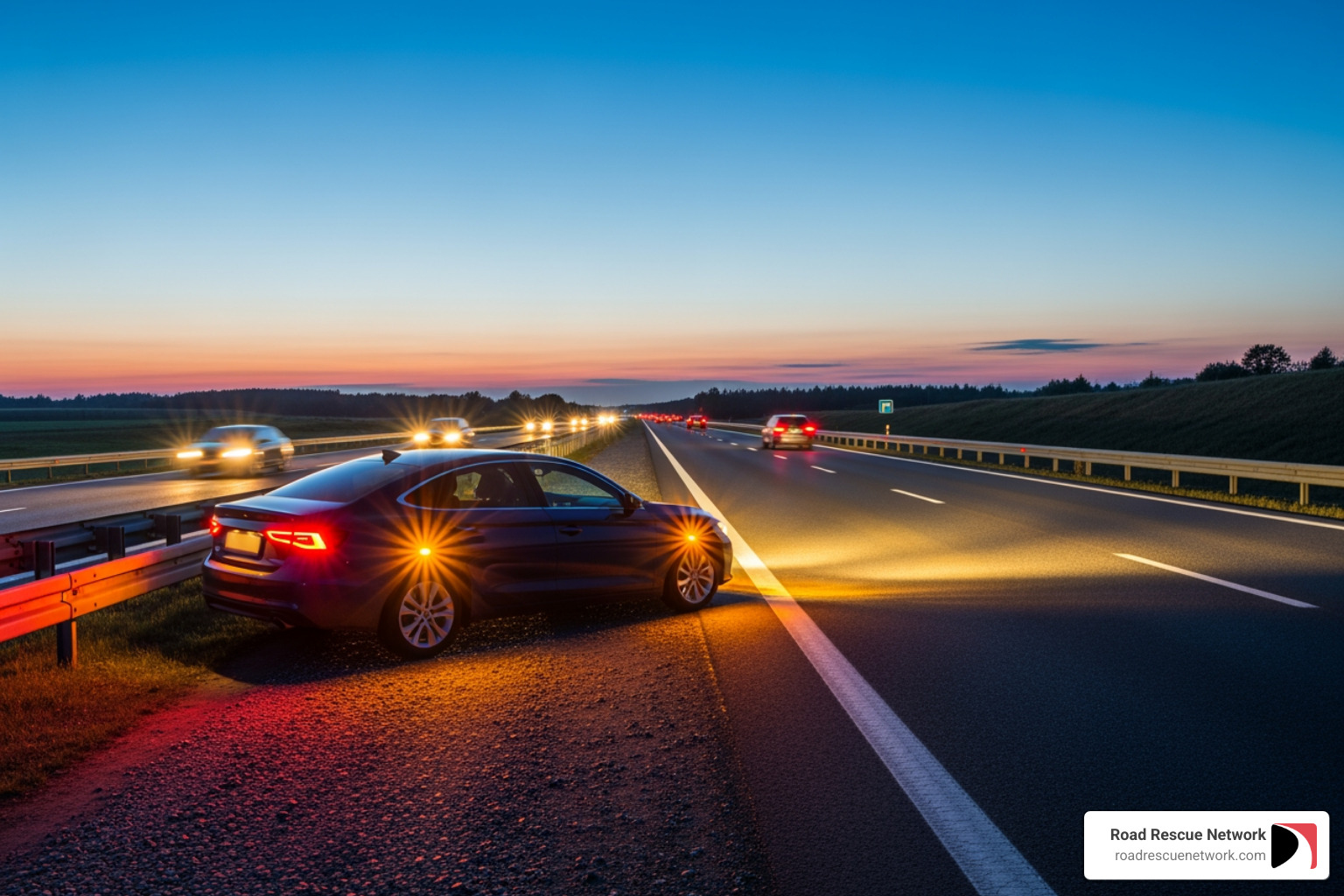
Ideally, you’ve pulled onto a wide, flat shoulder, exit ramp, or rest area. On a busy highway, the breakdown lane is still dangerous due to proximity to traffic. Before exiting, assess your surroundings. Your safety is paramount. Have passengers exit on the side away from traffic and move to a safe distance, like behind a guardrail.
Securing the Scene
After safely pulling over, our immediate focus shifts to making our vehicle visible to other drivers and signaling for help.
- Turn on emergency flashers: This is the first and easiest step. Our hazard lights immediately alert other motorists to our disabled vehicle.
- Set the parking brake: This prevents the vehicle from rolling, especially important if we’re on a slight incline.
- Put out reflective triangles or flares: If it’s safe to do so, and we have them, place reflective warning devices at least 100 feet behind our vehicle. This gives oncoming traffic ample warning, especially in low light or adverse weather conditions.
- Raise hood to signal for help: Raising the hood of the car is a universally recognized sign that a vehicle is disabled and assistance is needed.
- White cloth on antenna or out window: If we have a white cloth, tying it to the antenna or hanging it out a window can further signal to authorities that help is needed.
While waiting for assistance, if we can safely do so, we should stand away from the vehicle and traffic. If we’re on a multi-lane highway, it’s generally inadvisable to walk along the roadside. If help is within sight and reachable on foot, we must keep as far from traffic as possible.
To Change or Not to Change: Assessing the Situation
Now comes the decision: do we attempt to change the tire ourselves, or do we call for professional roadside assistance? This depends on several factors:
Consider changing the tire yourself only if:
- You are in a safe location: a wide, flat surface far from traffic.
- It’s daylight with good weather.
- You have the necessary tools: an inflated spare, a jack, and a lug wrench.
- You are experienced and confident in changing a tire.
- You are physically able to do the job.
Call for professional help if:
- The location is unsafe (narrow shoulder, heavy traffic, unstable ground).
- It’s nighttime or during adverse weather.
- You lack a working spare. Repair kits won’t fix a blowout.
- You’re missing tools or a lug nut is seized.
- You are inexperienced or unsure.
- You have physical limitations.
- You have a “donut” spare. Remember its speed (usually max 50-55 mph) and distance (around 50 miles) limitations. It’s a temporary fix only.
This is exactly where services like Road Rescue Network shine. We understand that changing a tire on the side of a busy highway can be nerve-wracking and dangerous. Our on-demand roadside assistance connects you instantly with local rescuers in many major cities across the US, including New York, Los Angeles, Chicago, Houston, Phoenix, San Antonio, San Diego, Dallas, and many more. We offer fast, 24/7 service with no memberships or hidden fees, ensuring that a certified technician can come to you, safely change your tire, or tow your vehicle to a repair shop if necessary. Prioritizing safety over schedule is paramount when experiencing a tire emergency on the highway, and we make that choice easy.
Prevention is the Best Policy: Tire Maintenance Essentials
While knowing how to react to a blown out flat tire on highway is crucial, preventing one in the first place is even better. Most tire blowouts are preventable through regular maintenance and awareness.
Regular inspections are key, as most blowouts are preventable. They are most common from May to October when hot roads put extra stress on tires. Common culprits include underinflation, worn treads, and overloading. Proactive checks significantly reduce your risk.
Common Causes of Tire Blowouts
Understanding why blowouts happen helps us prevent them. Here are the most common causes:
- Underinflation: This is the top cause. Underinflation causes the tire’s sidewalls to over-flex, generating excessive heat that weakens the tire’s structure, leading to failure.
- Overloading vehicle: Exceeding your vehicle’s load capacity puts immense stress on tires, causing them to overheat and fail. Check your manufacturer’s recommended load limits.
- Potholes and road hazards: Hitting potholes, curbs, or road debris can cause immediate or delayed damage that leads to a blowout.
- Worn treads: Worn treads have less grip and are more prone to punctures and heat buildup. Poor tread depth reduces the tire’s ability to dissipate heat.
- Sidewall damage: Damage to the thinner sidewall from impacts or age creates a weak point that can lead to a blowout.
- Tire age: Rubber in old tires degrades over time, making them brittle and prone to failure, even with good tread.
Preventing a Future Blown Out Flat Tire on the Highway
Taking a few simple steps can dramatically reduce our chances of experiencing a blown out flat tire on highway:
- Check tire pressure monthly: Check tire pressure monthly with a reliable gauge, inflating to the PSI recommended on the driver’s door jamb sticker, not the tire sidewall. Even with a TPMS, manual checks are wise. For more details, you can consult NHTSA’s tire safety guidelines.
- Adhere to vehicle load limits: Never overload our vehicle. Consult the owner’s manual for the maximum weight capacity and distribute weight evenly.
- Rotate tires regularly: Regular tire rotations help ensure even wear across all four tires, extending their lifespan and preventing excessive wear on specific tires.
- Check tread depth: Use the “penny test” or a tread depth gauge. If you can see all of Lincoln’s head when a penny is inserted upside down, your treads are too worn. Also, look for the built-in tread wear indicator bars.
- Avoid road debris and hazards: Pay attention to the road ahead and try to avoid potholes, sharp objects, and other debris that can damage tires.
- Inspect tires for damage: Routinely look for cuts, bulges, cracks, or embedded objects in the tread and sidewall. Any unusual signs should prompt a visit to a tire professional.
By making these maintenance practices a routine part of our driving habits, we can significantly improve our safety and avoid the stress and danger of a highway blowout.
Advanced Scenarios & Getting Help
While the immediate reactions to a blown out flat tire on highway are similar regardless of which tire blows, understanding the nuances of front versus rear blowouts can further help us maintain control.
| Feature | Front Tire Blowout | Rear Tire Blowout |
|---|---|---|
| Feeling | Strong pull in the steering wheel; heavy steering. | Felt more in the seat or body of the car; rear end sway. |
| Vehicle Reaction | Vehicle wants to pull sharply to the side of the blowout. | Vehicle’s rear end may swerve or fish-tail. |
| Control Challenge | Direct impact on steering control. | Affects overall vehicle stability and direction. |
In either scenario, the core principles remain: grip the wheel, ease off the gas, and steer straight. However, a rear tire blowout might feel less direct in the steering, making it tempting to overcorrect. Small, firm adjustments are always best.
When to Call for Professional Roadside Assistance
There are many situations where attempting to change a blown out flat tire on highway yourself is simply too dangerous or impractical. This is when calling for professional roadside assistance becomes the smartest and safest choice. We at Road Rescue Network are here to help in these moments.
Consider calling us if:
- Unsafe highway shoulder: If the shoulder is narrow, uneven, or immediately adjacent to high-speed traffic, it’s too risky.
- Heavy traffic: Changing a tire with cars whizzing past at 70 mph or more is incredibly dangerous.
- Nighttime or adverse weather: Low visibility, rain, snow, or extreme temperatures make the task much harder and more hazardous.
- No spare tire: Many modern vehicles forgo a spare tire for a repair kit, which won’t fix a blowout, or have no emergency repair option at all.
- Unable to loosen lug nuts: Lug nuts can be incredibly tight, and without proper leverage or strength, they can be impossible to remove.
- Physical limitations: If you have an injury, are elderly, or simply lack the physical strength to safely change a tire.
- Unsure of what to do: If you’re not confident in the process, it’s better to rely on an expert.
Road Rescue Network provides on-demand roadside assistance for car emergencies like flat tires across all our service areas, from New York to California, Texas to Florida, and many more locations. We offer fast, 24/7 service with no memberships or hidden fees. Our system instantly connects you with local rescuers who are equipped to handle your blown out flat tire on highway situation safely and efficiently. We can perform a tire change on-site or provide a tow to the nearest repair shop if your tire or vehicle sustained further damage. Don’t risk your safety; let our professionals handle it.
Frequently Asked Questions about Highway Tire Blowouts
We often get questions about the aftermath and prevention of a blown out flat tire on highway. Here are some common inquiries:
How does insurance cover damage from a tire blowout?
Insurance coverage for a blown out flat tire on highway can be a bit nuanced.
- Damage to the tire itself: Typically, your standard auto insurance policy does not cover the cost of a new tire if it’s simply a blowout due to wear and tear or a road hazard.
- Damage to the vehicle from the blowout: If the blowout causes damage to your vehicle (e.g., fender damage, suspension issues, wheel damage), this is usually covered under your collision coverage if you have it. If the blowout was caused by an external event like hitting road debris, it might fall under comprehensive coverage. For example, if you hit a large piece of debris that causes the blowout and subsequent damage, comprehensive might apply.
- Exclusions for poor maintenance: Most policies will not cover damage if the blowout is determined to be a result of negligence or poor maintenance (e.g., driving on severely worn or underinflated tires).
- Tire and wheel protection plans: Some drivers opt for separate tire and wheel protection plans, often offered by dealerships or third-party providers. These plans specifically cover the cost of tire repair or replacement due to road hazards and sometimes even wear and tear, regardless of fault.
- Roadside Assistance: While not direct damage coverage, adding roadside assistance to your car insurance policy (or using a service like Road Rescue Network) can cover the cost of getting your tire changed or your vehicle towed after a blowout. This provides peace of mind and can save you out-of-pocket costs at the scene.
It’s always best to talk to your local independent agent or check your specific policy details to understand your coverage.
What are the limitations of a spare tire?
Understanding the limitations of your spare tire is crucial, especially after a blown out flat tire on highway.
- Compact “donut” spares: Most modern vehicles come with a compact spare tire, often called a “donut” or “space-saver” spare. These tires are significantly smaller and lighter than regular tires. They have strict limitations:
- Speed limitations: They typically have a maximum speed rating, often 50-55 mph. Exceeding this speed can be dangerous and cause the tire to fail.
- Mileage limitations: They are designed for limited use, usually around 50 to 150 kilometers (30-90 miles) depending on the vehicle load. They are meant to get you to the nearest service station, not for long road trips.
- Handling differences: Your car will handle and brake differently with a donut spare. Drive cautiously and avoid sudden maneuvers.
- Not for long-term use: They are not designed to be a permanent replacement. You should get your regular tire repaired or replaced as soon as possible.
- Full-size spare differences: If your vehicle has a full-size spare, it generally doesn’t have the same speed and mileage limitations as a donut spare. However, it’s still wise to have it checked to ensure it’s properly inflated and in good condition before relying on it for an extended period.
- No spare at all: Increasingly, car manufacturers are skipping the spare tire altogether to reduce weight and improve fuel economy. Instead, cars might come with a tire repair kit (sealant and compressor) or run-flat tires. While run-flats allow you to drive a limited distance on a flat, a major blowout might still require assistance.
Always check the sidewall of your spare tire for specific speed and mileage recommendations, and ensure it’s properly inflated regularly.
What’s the difference between a blowout and a regular flat tire?
While both result in a deflated tire, the experience and immediate danger level of a blown out flat tire on highway are vastly different from a regular flat:
- Blowout:
- Sudden vs. gradual: A blowout is a sudden, explosive loss of all air pressure.
- Control loss: Causes an immediate and severe struggle to control the vehicle, especially at highway speeds.
- Sound and feel: Characterized by a loud bang or boom, followed by rapid air escape and violent thumping. The vehicle pulls aggressively.
- Immediate danger: High, due to sudden loss of control and potential for accident.
- Repairability: Often irreparable due to extensive structural damage.
- Regular Flat Tire:
- Sudden vs. gradual: Usually a gradual loss of air pressure, often from a small puncture or slow leak.
- Control loss: Less immediate and less severe impact on vehicle control. You might feel a slight pull or vibration, but generally have time to react calmly.
- Sound and feel: May be a soft hiss, a rhythmic thumping (if completely flat), or simply a notification from a TPMS. The vehicle feels “soft” or “sluggish” on one side.
- Immediate danger: Lower, allowing more time to safely pull over.
- Repairability: Often repairable if the damage is in the tread area and not too large.
A blowout is an acute, high-danger emergency demanding immediate and precise action, whereas a regular flat allows for a more controlled response.
Get Back on the Road Safely
Experiencing a blown out flat tire on highway is undoubtedly one of the most frightening situations we can face on the road. But by understanding the risks, knowing how to react, and taking preventative measures, we can steer this emergency safely and confidently.
Let’s recap the key safety steps: stay calm, grip the steering wheel firmly, ease off the accelerator gradually, steer straight, and pull over to the safest possible location. Your safety, and the safety of your passengers and fellow motorists, is always the top priority.
When in doubt, or if conditions are unsafe, don’t hesitate to call for professional help. Services like Road Rescue Network are designed for these exact moments, providing fast, reliable assistance without the need for memberships or hidden fees. We’re here to get you back on the road safely and efficiently, connecting you with local rescuers when you need them most.