

Budget-Friendly Fixes: Smart Ways to Get Your Tyre Repaired Without Overspending
That Sinking Feeling: When a Flat Tyre Hits Your Budget
Cheap tyre repair is possible when you understand your options and know what qualifies for a safe, affordable fix instead of an expensive replacement.
Quick Answer: Most Affordable Tyre Repair Options
- DIY plug kit: $5-$15 (temporary emergency fix only)
- Professional puncture repair: $15-$50 (permanent solution)
- Mobile repair service: $20-$60 (convenience at your location)
- In-garage repair: Typically 15-30 minutes, often under $30
What Can Be Repaired Cheaply:
- Small punctures (under ¼ inch) in the tread area
- Tyres with tread depth above 1.6mm
- Damage away from sidewalls and shoulders
When You Need Replacement Instead:
- Sidewall or shoulder damage
- Punctures larger than ¼ inch
- Multiple previous repairs
- Driving on a flat tyre, causing internal damage
Picture this: you’re driving when you hear the dreaded thump-thump-thump of a flat tyre. Your first thought? “How much is this going to cost?” The good news is that half of all flat tyres from a puncture can be repaired cheaply and safely. The key is knowing when repair is a viable option.
A flat tyre doesn’t always mean a $100+ replacement bill. Professional puncture repairs typically cost between $15 and $50 and take just 15-30 minutes. That’s a fraction of the cost of a new tyre—but only if the damage meets specific criteria for a safe repair.
The catch? Not every puncture qualifies. Sidewall damage, large gashes, or worn tread all require replacement. Even a repairable puncture needs the right approach—a quick DIY plug might get you to a shop, but it’s not a permanent solution.
I’m Byron Tarlton, founder of Road Rescue Network. With over two decades in the roadside assistance industry, I’ve seen how understanding your repair choices can save you significant money while keeping you safe. Through our nationwide mobile tyre services, we help drivers steer unexpected breakdowns and find affordable repair options.
Assessing the Damage: Is Your Tyre a Candidate for Repair?
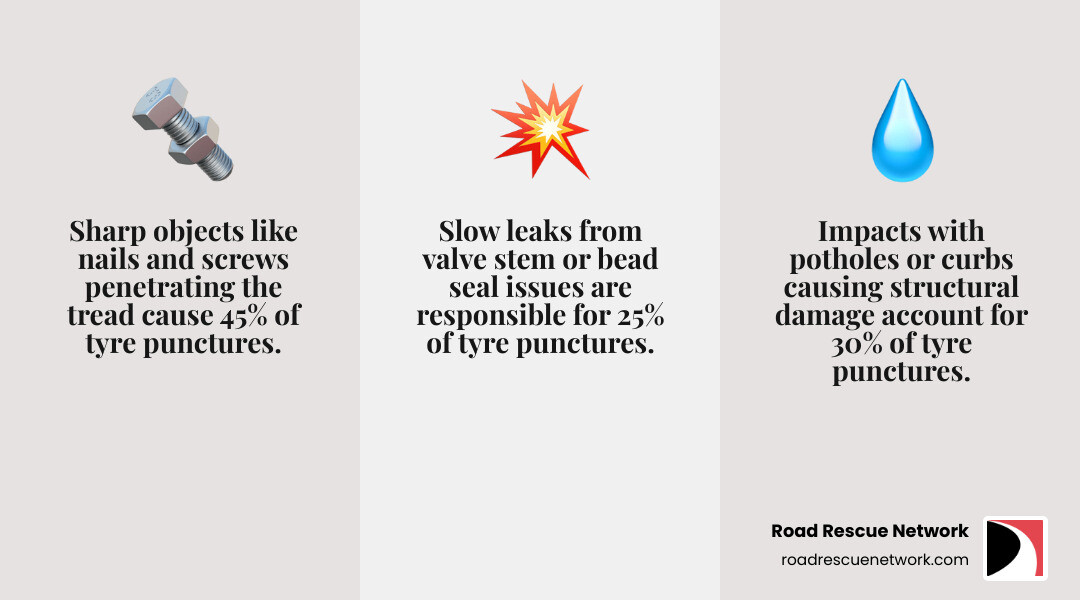
When you get a flat, the first step is to assess the damage. Not all punctures are created equal, and some are unsafe to repair. Knowing what to look for can save you time and money and ensure your safety.
Puncture Location: Tread Area is Key
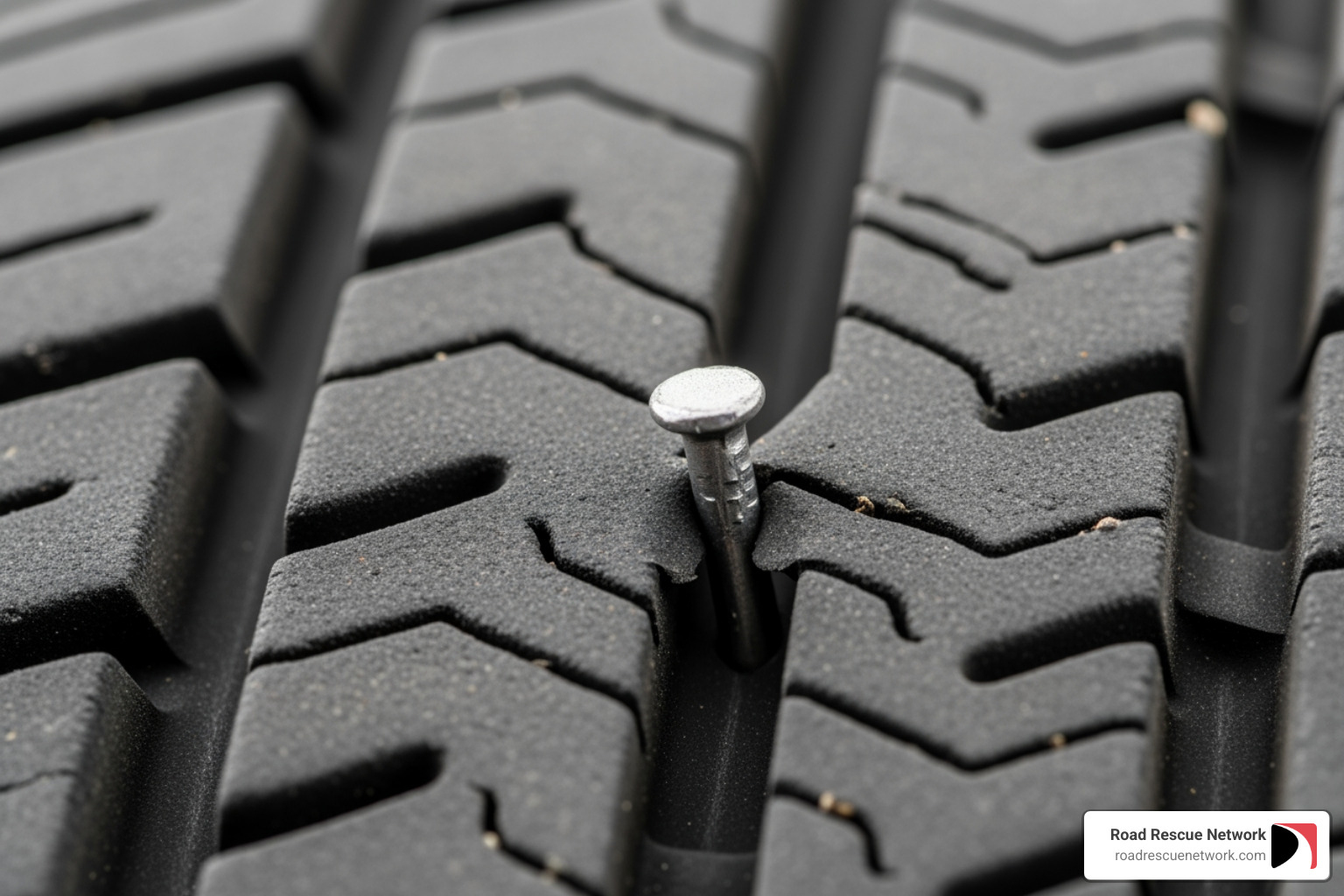
The puncture’s location is the most critical factor. For a safe repair, the damage must be within the tread area—the central part of the tyre that contacts the road. The sidewall and shoulder of a tyre flex constantly and bear the vehicle’s weight. A puncture in these areas compromises the tyre’s structural integrity, making it unsafe to repair. Attempting to fix a sidewall puncture is extremely dangerous and can lead to catastrophic tyre failure.
Puncture Size: The Quarter-Inch Rule
Beyond location, size matters. Punctures less than ¼ inch (about 6mm) in diameter are generally considered repairable. A hole larger than this causes extensive damage to the tyre’s internal cords, making a safe repair impossible. This size limit ensures the repair can effectively seal the hole without weakening the tyre’s structure.
Tread Depth: More Than Just Legal Limits
Your tyre must also have sufficient tread depth. The legal minimum in the United States is typically 2/32 of an inch (1.6mm). If your tread is worn to or below this minimum, the tyre is not a candidate for repair, even if the puncture is small and in the right spot. Repairing a tyre with unsafe tread depth is a false economy.
Multiple Punctures and Previous Repairs
Most professionals agree that a tyre should only have one repair per quadrant and a maximum of two to three repairs total. If you have multiple punctures close together, or if a new puncture overlaps a previous repair, the tyre is likely beyond safe repair. Too many repairs in close proximity can compromise the tyre’s integrity.
A professional service, like those we connect you with at Road Rescue Network, will always remove the tyre from the wheel for a thorough internal inspection. This allows them to accurately assess all these factors and determine if a repair is truly safe. You can find local service options for mobile tyre repair in your area, such as Mobile Tire Repair in Missouri.
When to Replace Instead of Repair
Sometimes, a cheap tyre repair isn’t an option, and replacement is the only responsible choice.
Here’s when to replace a tyre:
- Sidewall or Shoulder Damage: Any damage, including bulges, on the sidewall or shoulder means the tyre cannot be safely repaired.
- Large Gashes or Holes: Punctures larger than ¼ inch (6mm) are unrepairable.
- Worn Tread: If tread depth is below the legal minimum of 1.6mm (2/32 of an inch), the tyre is at the end of its life and should be replaced.
- Internal Damage from Driving on Flat: Driving on a flat or severely underinflated tyre, even for a short distance, can destroy its internal structure. This damage isn’t always visible from the outside, which is why a professional inspection is crucial.
- Run-Flat Tyres: While designed to be driven after a puncture, run-flat tyres often cannot be safely repaired. Their reinforced sidewalls can hide internal damage, making it impossible for a technician to assess the tyre’s integrity. If you have a punctured run-flat, prepare for a replacement.
- Multiple or Overlapping Repairs: If a tyre already has several repairs, especially if they are close together, it’s time for a new one.
Choosing to replace a tyre when necessary is an investment in your safety. When it’s time for a tyre change, services like Tire Change in Illinois can help you get back on the road quickly.
The Risks of Ignoring Tyre Damage
Ignoring tyre damage or attempting an improper fix is a serious safety hazard. Here are the critical risks:
- Compromised Handling: A damaged tyre can alter your vehicle’s handling, steering, and stability.
- Decreased Fuel Efficiency: A damaged or improperly inflated tyre creates more rolling resistance, forcing your engine to work harder and use more fuel.
- Increased Risk of Blowout: This is the most dangerous consequence. A weakened tyre can fail suddenly at high speeds, causing you to lose control of your vehicle.
- Dangers of Improper Repair: A DIY plug can fail, leading to rapid air loss while driving. Professional repairs that follow safety standards are essential.
If you suspect tyre damage, prioritize safety. As a general rule, keep calm and pull the vehicle over to a safe location. Don’t risk an accident by driving on a compromised tyre.
Comparing Your Options: DIY vs. Professional Cheap Tyre Repair
When faced with a flat tyre, you have two main approaches for a cheap tyre repair: doing it yourself or seeking professional help. Each has its own advantages and ideal scenarios.

The Pros and Cons of a DIY cheap tyre repair
DIY tyre repair, usually with a plug kit, is tempting for its low cost and immediacy. A basic kit costs just $5-$15 and can get you out of a tight spot in an emergency.
Pros of DIY Repair:
- Cost-Effective: The initial cost for a kit is minimal.
- Immediate Solution: Can be performed on the spot to get you moving again.
Cons of DIY Repair:
- Temporary Fix: DIY plugs are only meant to get you to a repair shop, not for long-term use.
- Safety Concerns: Without removing the tyre, you can’t inspect for internal damage from driving on it while flat.
- Limited Scope: Kits only work for small, simple punctures in the tread. They are dangerous and ineffective for sidewall damage.
- Difficulty with Sealant: Tyre sealant can be a quick fix, but it can make a proper professional repair more difficult later and may damage tyre pressure sensors.
Signs of a Failed DIY Repair:
If you notice continued air loss, a hissing sound, a bulge near the repair, or vibrations while driving, your DIY fix may be failing. It’s always best to have a professional inspect the tyre as soon as possible after a DIY repair. A DIY plug is a roadside emergency measure, not a substitute for a permanent fix. For more comprehensive guides on what to do when your tyre needs attention, visit resources like Tire Change in Texas. When it comes to mobile tyre repair, Road Rescue Network can connect you with professionals in areas like Mobile Tire Repair in Arizona for expert assistance.
Why a Professional Fix is Often the Best Bet
While DIY fixes have a place in emergencies, a professional repair is the safer, more reliable long-term solution. Professionals use a method called the “plug-patch combo,” which is the industry gold standard.
This process involves:
- Tyre Removal & Inspection: The tyre is removed from the wheel for a complete internal inspection to check for hidden damage.
- Preparation: The technician cleans and buffs the inner liner around the puncture to ensure a strong bond.
- Plug-Patch Application: A rubber plug is inserted through the puncture from the inside, and a patch is bonded to the inner liner over the plug. This combination permanently seals the hole and reinforces the area.
- Wheel Balancing: After the repair, the wheel is re-balanced to prevent vibrations and ensure smooth driving.
Professional shops adhere to strict safety standards, ensuring the repaired tyre is as safe as possible. While a repaired tyre is never identical to a new one, a professional plug-patch repair is considered a permanent and reliable solution for the tyre’s remaining life.
To illustrate the differences, consider this comparison:
| Feature | DIY Plug Kit | Professional Plug-Patch |
|---|---|---|
| Cost | $5 – $15 (Kit) | $15 – $50 (Service) |
| Durability | Temporary | Permanent |
| Safety | Low (No internal inspection) | High (Internal inspection, balanced) |
| Best For | Roadside Emergencies | Long-Term Reliability |
Finding Affordable Repair Services Near You
When you have a flat, finding a reliable and cheap tyre repair service quickly is key. The typical cost of a professional puncture repair ranges from $20 to $50, making it a very affordable alternative to buying a new tyre. The repair is also fast, usually taking 15 to 30 minutes, so you can get back on the road without a long wait.
Local Garages vs. Mobile Services
- Local Garages and Tyre Shops: These traditional shops have all the equipment for thorough inspections, repairs, and wheel balancing. Reputable shops across the country, from Phoenix, AZ to Philadelphia, PA, offer competitive pricing.
- Mobile Services: For maximum convenience, mobile tyre repair services come to you. Companies like Road Rescue Network connect you with local rescuers who can perform the repair at your home, office, or on the roadside. This eliminates the need for towing or changing to a spare yourself. We provide fast, 24/7 service with no memberships or hidden fees in areas like Mobile Tire Repair in Pennsylvania, Mobile Tire Repair in Florida, or Mobile Tire Repair in California.
How to find a Professional for a cheap tyre repair
Finding a reputable service is straightforward:
- Online Search: A quick search for “tyre repair near me” or “cheap tyre repair [your city]” will show local options.
- Check Reviews: Look at online reviews for feedback on pricing, speed, and quality of service.
- Ask for Quotes: Call a few places to compare prices for a standard puncture repair.
Here are some questions to ask a repair shop before service:
- “What is your standard charge for a puncture repair?”
- “What repair method do you use (e.g., plug-patch combo)?”
- “Do you remove the tyre from the rim for an internal inspection?”
- “Does the price include wheel balancing?”
- “How long will the repair take?”
- “If the tyre is unrepairable, what are my replacement options and costs?”
Asking these questions helps ensure you get a safe, affordable, and professional repair. If you need a tyre change service, Road Rescue Network is ready to help in locations such as Tire Change in Ohio.
Frequently Asked Questions about Tyre Repair
We hear a lot of questions about balancing tyre repair affordability with safety. Here are answers to some of the most common concerns.
Can run-flat tyres be repaired?
The answer is generally “no.” Run-flat tyres have reinforced sidewalls that allow them to be driven on after losing air. However, this same feature makes it nearly impossible for a technician to spot hidden internal damage caused by driving on the deflated tyre.
Because of this safety risk, most tyre manufacturers and service centers have a policy against repairing run-flats. They cannot guarantee the tyre’s integrity after a repair. If you have a punctured run-flat, you should expect to replace it. While not the cheap tyre repair you hoped for, it is the safest course of action.
How many times can a single tyre be repaired?
There isn’t a single hard limit, but professionals follow safety guidelines. The general rule of thumb is:
- A maximum of one repair per tyre quadrant.
- A maximum of two to three repairs over the tyre’s entire life.
- New punctures must not be too close to existing repairs.
The final decision rests with the technician after a thorough inspection. They will consider the tyre’s overall condition, tread depth, and the location of all punctures. Over-repairing a tyre weakens its structure and increases the risk of failure, so if there is any doubt, replacement will be recommended.
Is it safe to drive on a properly repaired tyre?
Yes, absolutely. If a tyre’s damage met all the criteria for repairability and it was fixed by a qualified professional using the plug-patch method, it is safe to drive on for the rest of its useful life.
A professional repair restores the tyre’s airtight seal and structural integrity. The process includes re-balancing the wheel to ensure it rotates smoothly without causing vibrations. While some experts note a repaired tyre is never as strong as a brand-new one, a proper repair is a robust, permanent, and safe solution that returns the tyre to normal operating conditions.
Conclusion: Get Back on the Road Without Breaking the Bank
A flat tyre is a hassle, but it doesn’t have to be an expensive one. For as little as $15-$50, many punctures can be safely and permanently repaired. The key is knowing if the damage—a small puncture in the tread on a tyre with good tread depth—is repairable.
While a DIY plug is a temporary fix for emergencies, a professional plug-patch repair is the best choice for long-term safety and reliability. A technician can inspect for internal damage, apply a permanent seal, and balance your wheel, giving you peace of mind.
At Road Rescue Network, we understand the stress of a roadside emergency. We provide fast, 24/7, on-demand assistance for a cheap tyre repair without memberships or hidden fees. We instantly connect you with qualified local rescuers in cities nationwide, from New York, NY to Los Angeles, CA, who can perform a safe repair or tyre change to get you back on your way.
Don’t let a flat tyre derail your day. Stay informed, prioritize safety, and know that an affordable, reliable fix is just a click away.
Get fast, affordable tyre change service now



2 Comments
Comments are closed.