
Don’t Get Stranded: The Ultimate Guide to Car Battery Jumps
Why a Dead Battery Doesn’t Have to Ruin Your Day
A car battery jump is a critical skill for any driver. It’s the fastest way to revive a dead battery and get back on the road. Whether you left your lights on or your battery has simply aged out, knowing how to safely jump-start a car can save you time and frustration.
Quick Answer: How to Jump-Start a Car Battery
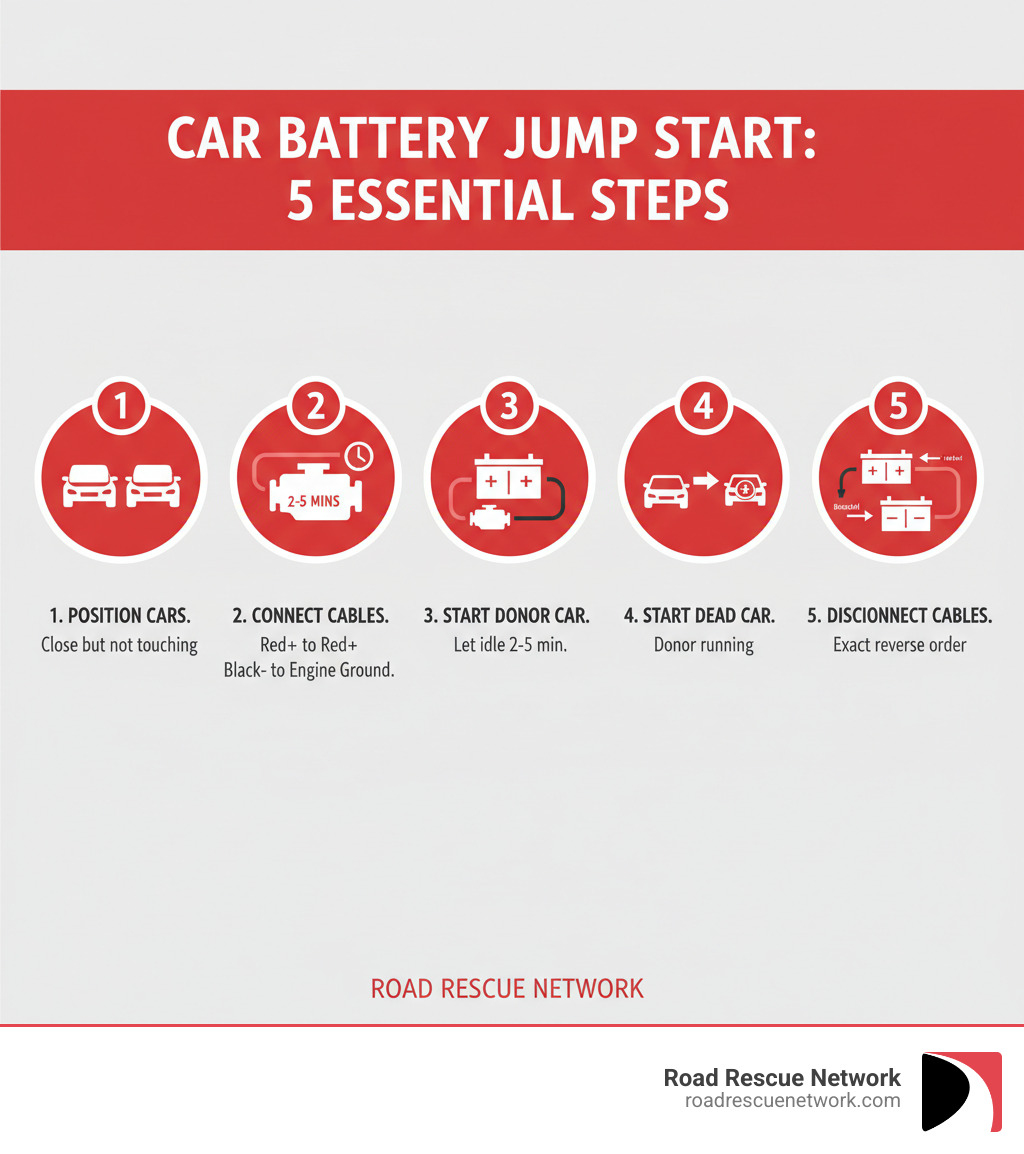
- Position both vehicles close enough for cables to reach, but not touching.
- Connect jumper cables in this exact order:
- Red clamp to dead battery’s positive (+) terminal.
- Other red clamp to donor battery’s positive (+) terminal.
- Black clamp to donor battery’s negative (-) terminal.
- Other black clamp to an unpainted metal surface on the dead car’s engine block (not the battery).
- Start the donor vehicle and let it run for 2-5 minutes.
- Start the dead vehicle.
- Disconnect cables in the reverse order of connection.
- Drive for 20-30 minutes to let the battery recharge.
According to industry statistics, up to 46.2% of all breakdowns are caused by poorly maintained batteries. This means a simple jump start could resolve nearly half of all roadside emergencies. Getting stuck often happens at the worst possible moment, but jump-starting a car is straightforward when you follow the correct procedure. The key is understanding which cables go where and why the order matters. Incorrect connections risk damaging your car’s electronics or causing sparks near flammable battery gases.
This guide walks you through everything you need to know about car battery jumps, from identifying a dead battery to performing a safe jump start and troubleshooting common issues. I’m Byron Tarlton, founder of Road Rescue Network, with over two decades of experience in roadside assistance. This guide will give you the confidence to handle a dead battery on your own—or know when to call for professional help.
Is Your Battery Really Dead? Signs and Essential Tools
Before attempting a car battery jump, it’s important to confirm that a dead battery is the actual problem. The most common sign is a faint click-click-click sound or complete silence when you turn the key. This indicates the battery lacks sufficient power to start the engine. Often, a battery will show warning signs before it fails completely.
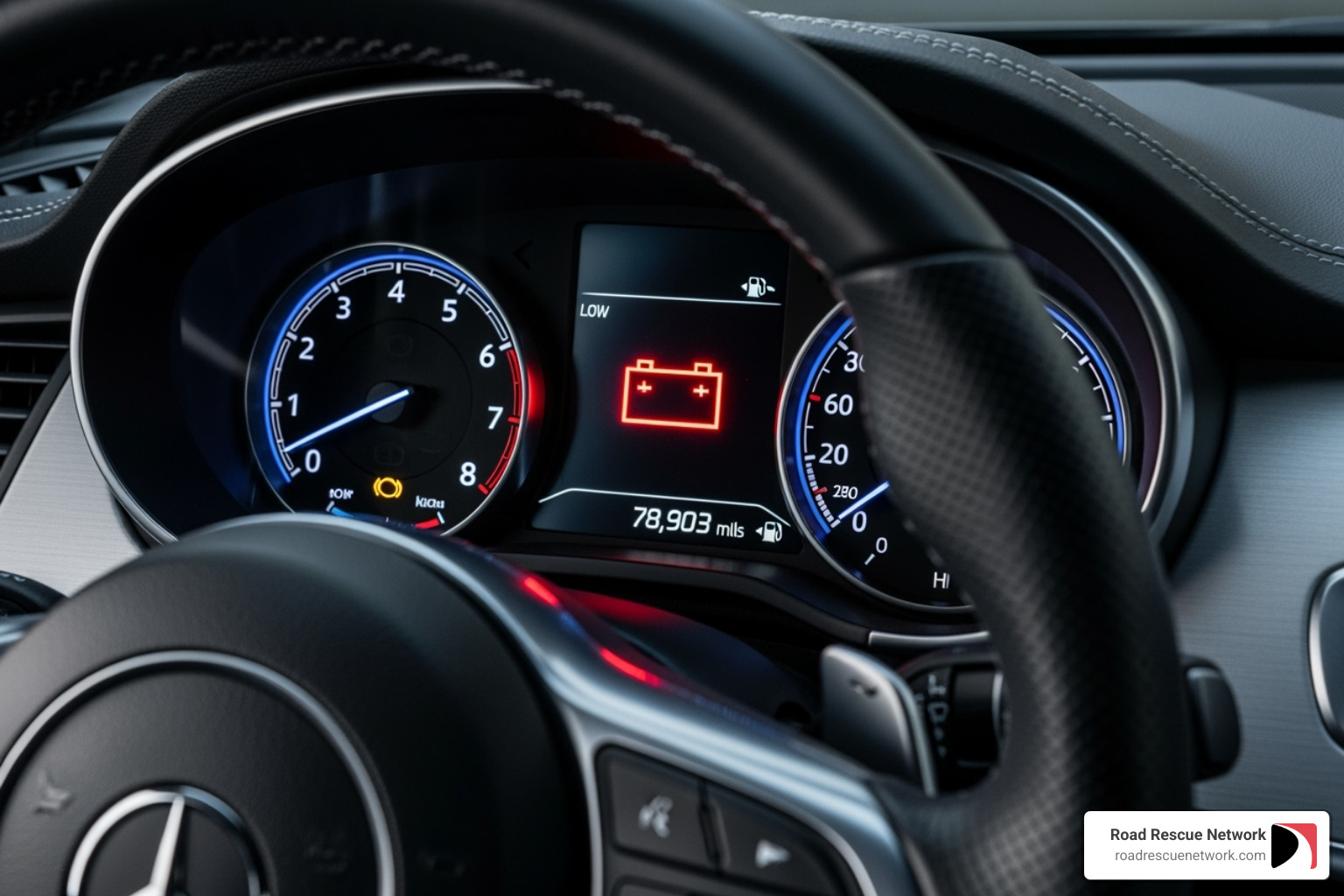
Unusually dim headlights or flickering dashboard lights are early red flags. Physically, look for white or bluish-green crusty buildup (corrosion) around the battery terminals, which can impede electrical flow. Battery age is another critical factor; most last three to five years. Extreme heat or cold can accelerate battery failure, leading to more breakdowns during summer and winter.
Signs of a Dying Battery
- Dim lights: Interior lights or headlights that are dim before starting the car suggest a weak charge. If they brighten when you rev the engine, it points to a battery issue.
- Slow engine crank: A labored, drawn-out sound as the starter struggles indicates the battery can’t deliver enough power.
- Clicking sound: This means the battery has enough power to activate the starter solenoid but not enough to turn the engine over.
- No power at all: Complete silence with no lights or dashboard activity means the battery is fully drained.
- Dashboard warning lights: A battery symbol or check engine light can signal a weak battery or a problem with the charging system.
- Corroded terminals: This buildup blocks electrical connections and should be cleaned before attempting a jump start.
- Old battery: If your battery is over three years old and showing these symptoms, it likely needs replacement.
Essential Tools for the Job
Keep these items in your trunk to turn a potential disaster into a minor inconvenience.
- Jumper cables: A reliable set is a must-have. We recommend quality cables like these Jumper Cables with thick-gauge wire.
- Portable jump starter: This compact battery pack allows you to jump-start your car without needing another vehicle.
- Protective gloves: Protect your skin from sulfuric acid and get a better grip on cable clamps.
- Safety glasses: Shield your eyes from potential acid splashes or sparks.
- Magnetic flashlight: A hands-free light source is invaluable for nighttime emergencies. An option like this Magnetic Flashlight is affordable and rechargeable.
- Wire brush: Essential for cleaning corroded battery terminals to ensure a solid connection.
The Safe and Correct Car Battery Jump Procedure
Before starting a car battery jump, safety is paramount. While routine, this procedure can be dangerous if done casually. Taking a few extra minutes for safety precautions is always worth it.

First, find a well-ventilated area. Car batteries produce flammable hydrogen gas, so no smoking or open flames nearby. Visually inspect both batteries for cracks, leaks, or excessive corrosion. If a battery is swollen, leaking, or frozen, do not attempt to jump it—it needs to be replaced. Also, ensure both vehicles use the same 12-volt system, which is standard for most modern cars. Finally, check your owner’s manual for any specific jump-start instructions or designated jump points to avoid damaging your car’s electronics.
How to Perform a Car Battery Jump with Cables
The key to a successful car battery jump is following the correct sequence to prevent sparks and protect both vehicles’ electrical systems.
- Position the vehicles close enough for the cables to reach, but ensure the cars are not touching. Turn off both engines, remove the keys, and engage the parking brakes.
- Locate the batteries and identify the positive (+) and negative (-) terminals. They are often color-coded (red for positive, black for negative). Clean off any corrosion with a wire brush.
- Connect the cables in the correct order:
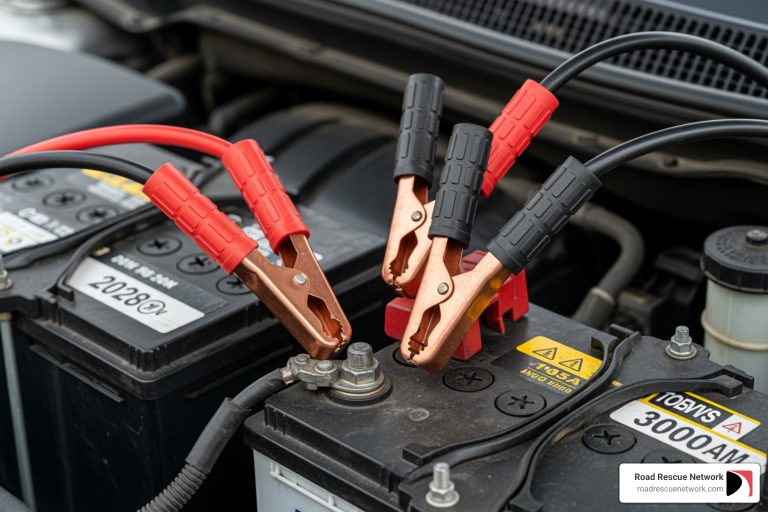
- Attach one red clamp to the positive (+) terminal of the dead battery.
- Attach the other red clamp to the positive (+) terminal of the working (donor) battery.
- Connect one black clamp to the negative (-) terminal of the working battery.
- Attach the final black clamp to an unpainted metal surface on the engine block or chassis of the dead car, away from the battery. This proper grounding technique prevents sparks near the battery.
- Start the donor vehicle and let it run for 2-5 minutes to send a charge to the dead battery.
- Try to start the car with the dead battery. If it doesn’t start immediately, wait another minute and try again.
- Once the car starts, keep both engines running. To help prevent voltage spikes, turn on an electrical accessory (like the headlights) in the newly started car before disconnecting.
- Disconnect the cables in the exact reverse order: Remove the black clamp from the ground spot, the black clamp from the donor battery, the red clamp from the donor battery, and finally the red clamp from the formerly dead battery.
What to Do After a Successful Jump
Your car is running, but you’re not done yet. Follow these steps to ensure your battery recharges properly.
- Don’t turn off your engine immediately. The battery is still very low.
- Drive for at least 20-30 minutes. Highway driving is ideal, as it allows the alternator to efficiently recharge the battery.
- Monitor your dashboard. If a battery or check engine light appears, it could signal a failing alternator or a battery that can no longer hold a charge.
- Get your system tested. A car battery jump is often a temporary fix. Have your battery and charging system tested at an auto parts store or service center to determine if you need a new battery or have an alternator issue.
If you have repeated issues or are uncomfortable performing a jump, professional help is available. Our network offers fast assistance, whether you need a Jump Start Service in Texas or elsewhere.
Troubleshooting and Advanced Scenarios
Sometimes, a car battery jump doesn’t work even when you follow the steps correctly. This can be frustrating, but before giving up, let’s review some common issues and what they might indicate.
The most frequent culprits are simple: corrosion on the terminals blocking the electrical flow or loose cable connections. However, the problem can be more serious, such as a bad alternator, a failing starter, or a blown fuse. Understanding these possibilities helps you decide whether to continue troubleshooting or call for professional help.
Troubleshooting a Failed Car Battery Jump
If the jump doesn’t work, here’s a checklist of what to do next:
- Check cable connections: This is the #1 reason for failure. Ensure all four clamps are firmly attached and making good contact. Wiggle them to test their grip.
- Clean the terminals: If you haven’t already, use a wire brush to scrub away any corrosion blocking the electrical current.
- Give it more time: A deeply discharged battery may need more charging time. Let the donor vehicle run for another 5-10 minutes before trying again.
- Consider if the battery is too dead: A battery with severe internal damage simply won’t accept a charge. Signs like swelling, leaking, or a frozen case mean the battery is beyond saving and needs replacement.
If these steps don’t work, the issue might not be the battery:
- Clicking noise but no engine crank: This usually points to a faulty starter motor.
- No electrical power at all: If there are no lights or sounds even after a prolonged jump attempt, you could have a blown main fuse or a more serious electrical problem.
- Car starts but dies after disconnecting cables: This is a classic sign of a failed alternator. The jump provided enough power to start the engine, but the alternator isn’t recharging the battery to keep it running.
When you’ve exhausted these steps, Road Rescue Network can help. Whether you’re stranded in Florida or another service area, we provide fast, professional assistance with no membership fees.
Jumping Hybrid and Electric Vehicles (EVs)
With EVs making up 14% of new vehicle sales in 2022, it’s important to know that their jump-starting process is different. EVs have two electrical systems: the main high-voltage battery for driving and a separate 12-volt auxiliary battery that powers accessories and the car’s computer.
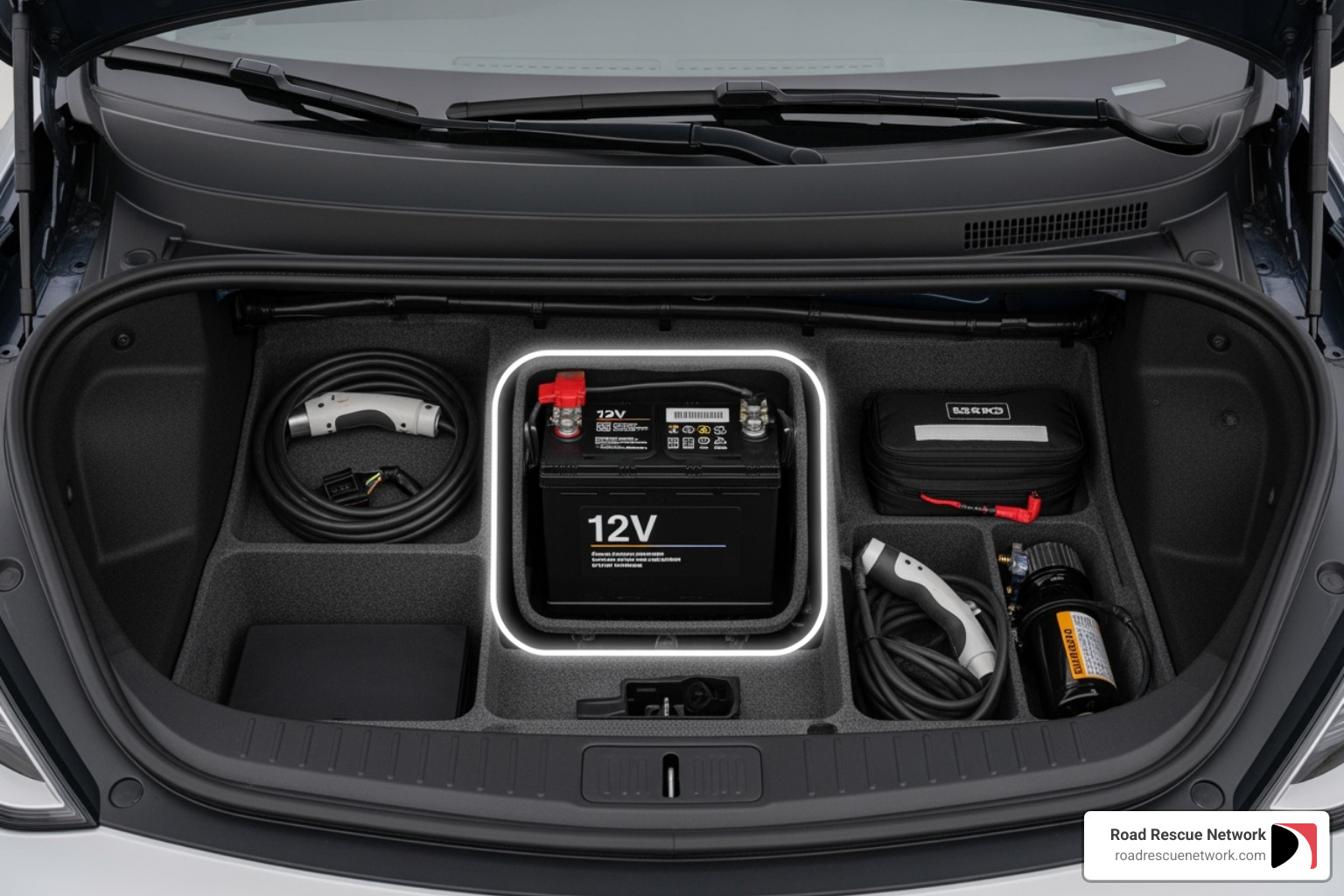
When an EV won’t start, it’s almost always this 12-volt battery that’s dead. You can jump-start it, but you must do it correctly.
- Only jump the 12-volt battery. Check your owner’s manual for its location or for designated jump-start terminals.
- NEVER jump an EV with another EV or hybrid. Doing so can cause catastrophic damage to the electrical systems of both vehicles.
- Use a conventional gas-powered car or a portable jump starter. The procedure is the same as for a regular car, connecting to the 12-volt system.
- After a successful jump, drive the EV for at least 20 minutes to let the 12-volt battery recharge.
Jumper Cables vs. Portable Jump Starters
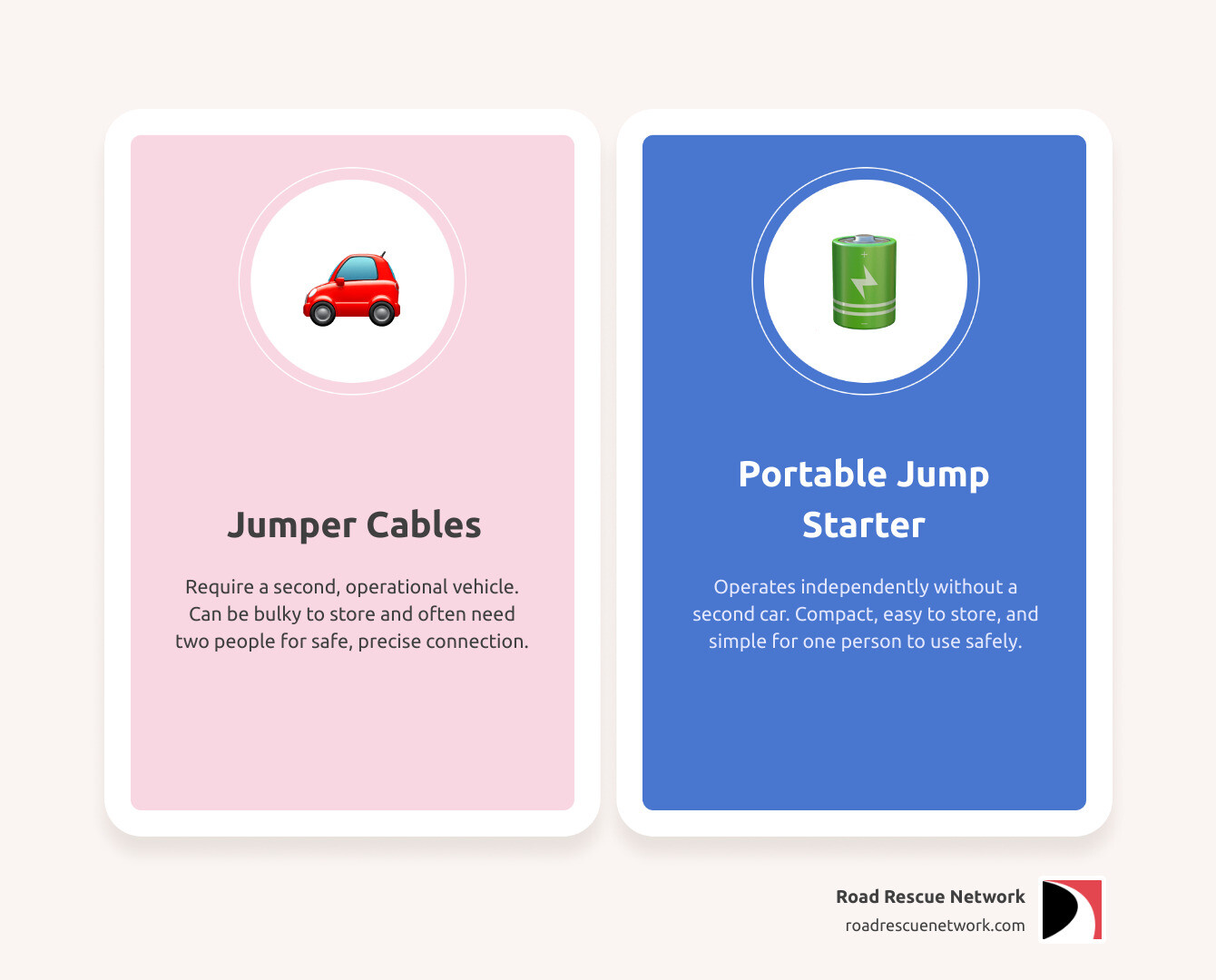
For a car battery jump, you have two main tools: traditional jumper cables and modern portable jump starters. Both get the job done, but they have distinct advantages and disadvantages.
Jumper cables are like asking a neighbor for help; you’re dependent on another person and their vehicle. A portable jump starter is like having a reliable assistant in your trunk, ready anytime.
| Feature | Jumper Cables | Portable Jump Starter |
|---|---|---|
| Need for Second Car | Yes, absolutely | No, works independently |
| Portability | Can be bulky, requires storage | Compact, easy to store in trunk/glove box |
| Ease of Use | Requires careful connection, potentially two people | Simpler connection, one person operation |
| Safety | Higher risk of sparks/incorrect connection | Built-in safety features (reverse polarity) |
| Cost | Generally inexpensive ($20-$50) | More expensive ($60-$200+) |
| Extra Features | None | USB charging, flashlight, air compressor |
| Maintenance | Store dry, check for damage | Needs to be recharged periodically |
| Ideal For | Drivers who often have access to another vehicle | Solo drivers, frequent travelers, emergency preparedness |
Jumper cables are affordable and durable but require a second vehicle. Portable jump starters offer complete independence at a higher upfront cost, making them ideal for solo drivers or those in remote areas.
How to Choose Quality Jumper Cables
If you opt for jumper cables, quality is crucial for safety and effectiveness.
- Cable Gauge: Lower numbers mean thicker, better cables. Look for 4-gauge or 6-gauge for passenger vehicles, as they carry more current without overheating.
- Cable Length: Aim for at least 16-20 feet to provide flexibility in positioning the vehicles.
- Clamps: Choose heavy-duty clamps with strong springs and solid copper jaws for good conductivity and a secure grip.
- Insulation: The insulation should be thick, weather-resistant rubber to prevent cracks, shorts, and shocks.
For a reliable option, consider these Recommended Jumper Cables. Quality cables are an investment in your peace of mind.
The Benefits of a Portable Jump Starter
As AutoSimple notes, portable jump starters are a great resource. Their biggest advantage is self-sufficiency.
- Independence: You don’t need another car, which is invaluable if you’re stranded alone or in a remote location.
- Compact Size: Most units are small enough to fit in a glove compartment yet powerful enough for multiple jumps on a single charge.
- Safety Features: Many include reverse polarity protection, which prevents the device from working if you connect the clamps backward. This makes them safer for beginners than traditional cables.
- Versatility: Most starters also function as USB power banks for charging devices, and many include a built-in LED flashlight. Some even have an air compressor.
While more expensive, the convenience and safety features of a portable jump starter often justify the cost. Just remember to recharge it every few months to ensure it’s ready when you need it.
Frequently Asked Questions about Car Battery Jumps
Here are answers to the most common questions I’ve heard in over two decades of roadside assistance.
Can a car battery be too dead to jump-start?
Yes. A car battery jump provides power to start a car, not to repair a damaged battery. If the internal cells have failed due to age, freezing, or repeated draining, the battery can no longer accept or hold a charge. It’s like trying to fill a bucket with holes in it.
Physical signs that a battery is beyond saving include a swollen or bulging case, visible cracks, or significant leaks. If you see any of these, do not attempt a jump; the battery must be replaced.
Does jump-starting a car damage the computer?
There is a low risk if you do it correctly, but an incorrect connection can cause damage. Modern cars are full of sensitive electronics that are vulnerable to voltage spikes or reversed polarity.
The most common damage from a botched jump is blown fuses, which is an annoyance rather than a catastrophe. However, reversing the polarity (connecting positive to negative) can send a surge that may fry expensive components like the engine control unit. This is why following the correct connection order is critical.
Many modern jumper cables and portable jump starters have built-in surge and reverse polarity protection, making the process much safer for today’s vehicles.
How often should a car battery be replaced?
Most car batteries last between 3-5 years. This lifespan is heavily influenced by two main factors:
- Climate: Extreme heat accelerates internal degradation, while extreme cold reduces a battery’s starting power and puts more strain on it.
- Driving Habits: Frequent short trips prevent the alternator from fully recharging the battery, leading to chronic undercharging. Conversely, letting a car sit for long periods allows the battery to self-discharge, which also shortens its life.
My advice is to have your battery tested annually once it reaches the three-year mark. Most auto parts stores offer this service for free. Being proactive about replacement is far better than waiting to get stranded.
Conclusion
You now have the knowledge to handle a dead battery. We’ve covered how to identify the signs, the safe car battery jump procedure, troubleshooting tips, and special considerations for EVs. The key takeaways are that safety comes first and preparation goes a long way.
A car battery jump is often a temporary fix. If your battery dies repeatedly, it’s a sign that it may be at the end of its 3-5 year lifespan or that you have an underlying issue with your alternator or starter. Get your charging system tested to avoid being stranded again.
Sometimes, a DIY solution isn’t the best option. If you’re in an unsafe location or simply don’t feel comfortable, that’s why Road Rescue Network exists. We provide fast, 24/7 on-demand roadside assistance with no memberships or hidden fees. Our local rescuers can reach you quickly, whether you need a car battery jump in New York, Florida, Texas, or anywhere else in our service area.
Beyond jump starts, we also offer services like professional mobile auto repair. You don’t have to face car troubles alone. Keep our contact information handy, and remember—when you need help, we’re just a call away.


One Comment
Comments are closed.