
Silence is Not Golden: What to Do When Your Car Won’t Crank
Understanding Why Your Car Won’t Crank
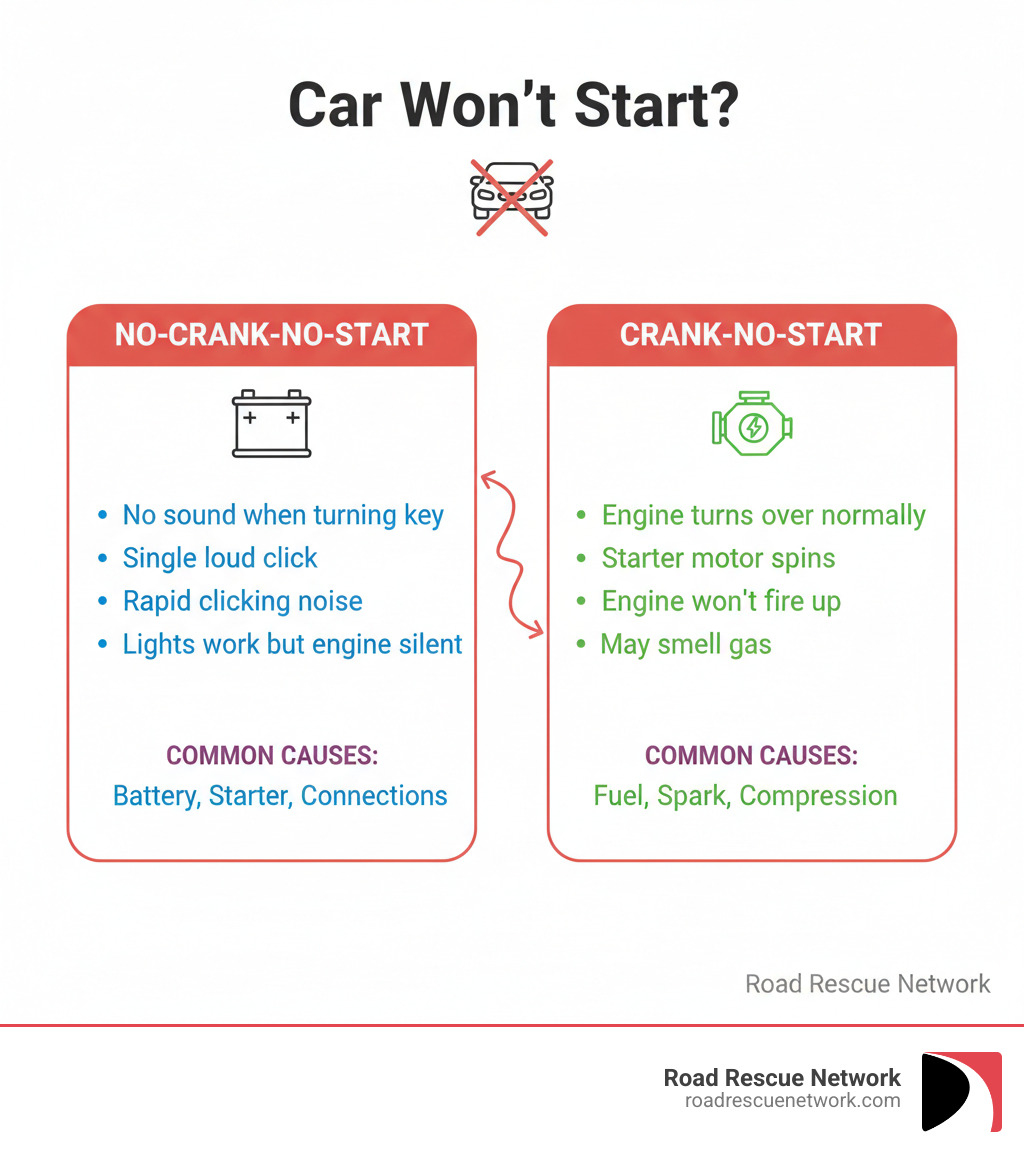
When your car won’t crank, it means the engine isn’t turning over when you turn the key or push the start button. This is different from a car that cranks but won’t start—where the engine turns over but doesn’t fire up. Here’s what you need to know:
Most Common Causes:
- Dead or weak battery – Not enough power to spin the starter motor
- Corroded or loose battery connections – Power can’t reach the starter
- Failed starter motor or solenoid – Mechanical failure prevents cranking
- Faulty ignition switch – Power isn’t reaching the starting system
- Bad neutral safety switch – Car doesn’t recognize it’s in Park or Neutral
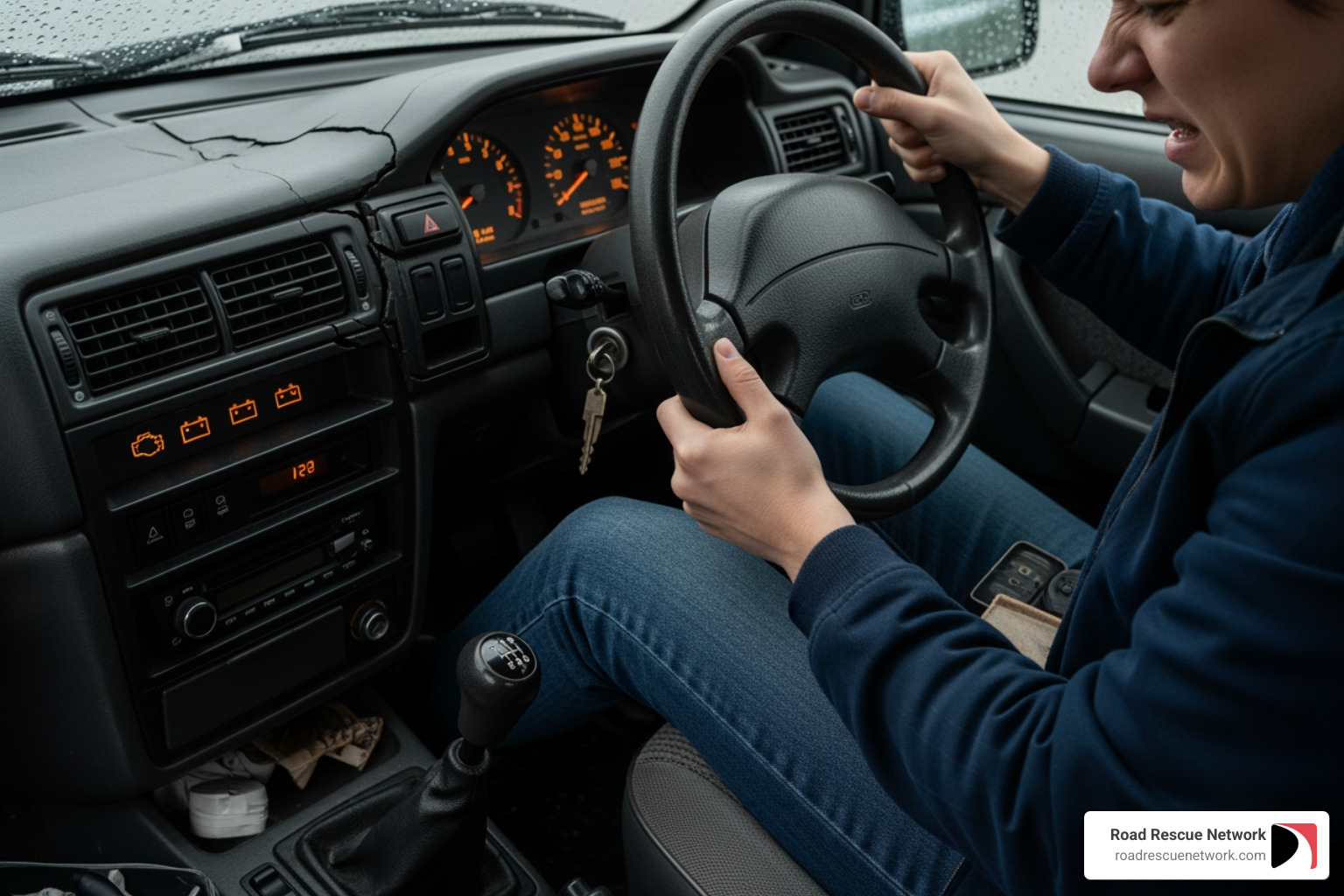
You get in your car, turn the key, and… nothing. Not even a click. Your lights and radio work, but the engine refuses to turn over. This is the frustrating reality of a no-crank-no-start condition.
Unlike a situation where your engine turns over but won’t fire (a crank-no-start), a no-crank means your starter motor isn’t attempting to spin the engine. The good news is this problem often comes down to a handful of common culprits, many of which you can diagnose yourself.
The difference matters because it changes your troubleshooting approach. If your car cranks but won’t start, you’re looking at fuel, spark, or compression issues. When your car won’t crank at all, you’re dealing with the electrical starting system—the battery, cables, starter, and switches that work together to spin your engine.
I’m Byron Tarlton, founder of Road Rescue Network. With over two decades in the roadside assistance industry, I’ve helped countless drivers diagnose why their car won’t crank. My experience has shown that understanding these common problems empowers drivers to make better decisions when trouble strikes.
Is It the Battery or Charging System?
When your car refuses to crank, the battery and charging system are the top suspects. They are the heart of your car’s electrical system, providing the crucial burst of power to get the engine started.
The starter motor demands a huge amount of electricity—far more than your lights or radio. This is why accessories may work fine even when the engine won’t crank. A healthy car battery should show about 12.6 volts. If that voltage dips below nine volts when you try to start, there isn’t enough juice for the starter motor to do its job.
This comparison table can help you figure out if it’s your battery or the alternator causing the issue by highlighting the key differences in symptoms:
| Symptom / Component | Bad Battery | Bad Alternator |
|---|---|---|
| Engine Cranking | Slow, sluggish, single click, rapid clicking, or no crank at all | Starts normally if battery is charged, then may die shortly after |
| Dash/Interior Lights | Dim, flicker, or don’t come on | Dim, flicker, especially when accessories are used, or brighten/dim erratically |
| Headlights | Dim, especially when trying to start | Dim and brighten erratically while driving |
| Wipers/Windows | Operate slowly or barely move | May operate slowly, especially with other accessories |
| Car Dies After Jump | Stays running (if battery holds charge) | Dies shortly after jump-starting (alternator isn’t recharging) |
| Warning Lights | No specific battery light (unless very low) | Battery light or “GEN” light often illuminates |
| Smells/Noises | None | Squealing (belt), burning rubber (overworked alternator) |
| Battery Swollen | Possible, due to internal damage | Unlikely, unless battery was severely overcharged |
| Age | Often 3-5 years old | Can fail at any mileage, but often lasts longer than battery |
A Weak or Dead Battery: The Top Reason a Car Won’t Crank
The most common reason a car won’t crank is a weak or dead battery. Most car batteries last three to five years, but extreme weather can shorten that lifespan. Cold weather, for instance, puts a huge strain on the battery while also thickening engine fluids, making it much harder to start the engine.
How can you tell if your battery is failing? Look for clues like dim dashboard lights, sluggish windshield wipers, or slow electric windows. These are classic signs of a weak battery. Even if your lights seem okay, your battery might not have enough “cold cranking amps” (CCA) to start the engine. A dying battery might cause a single click, a rapid clicking noise, or just silence when you turn the key.
If you suspect the battery, a jump-start is often the first step. For a step-by-step guide, check out how to properly jump-start your car. If your car starts after a jump, drive it to a mechanic or an auto parts store. Many places offer free battery testing.
Bad Battery Cables and Connections
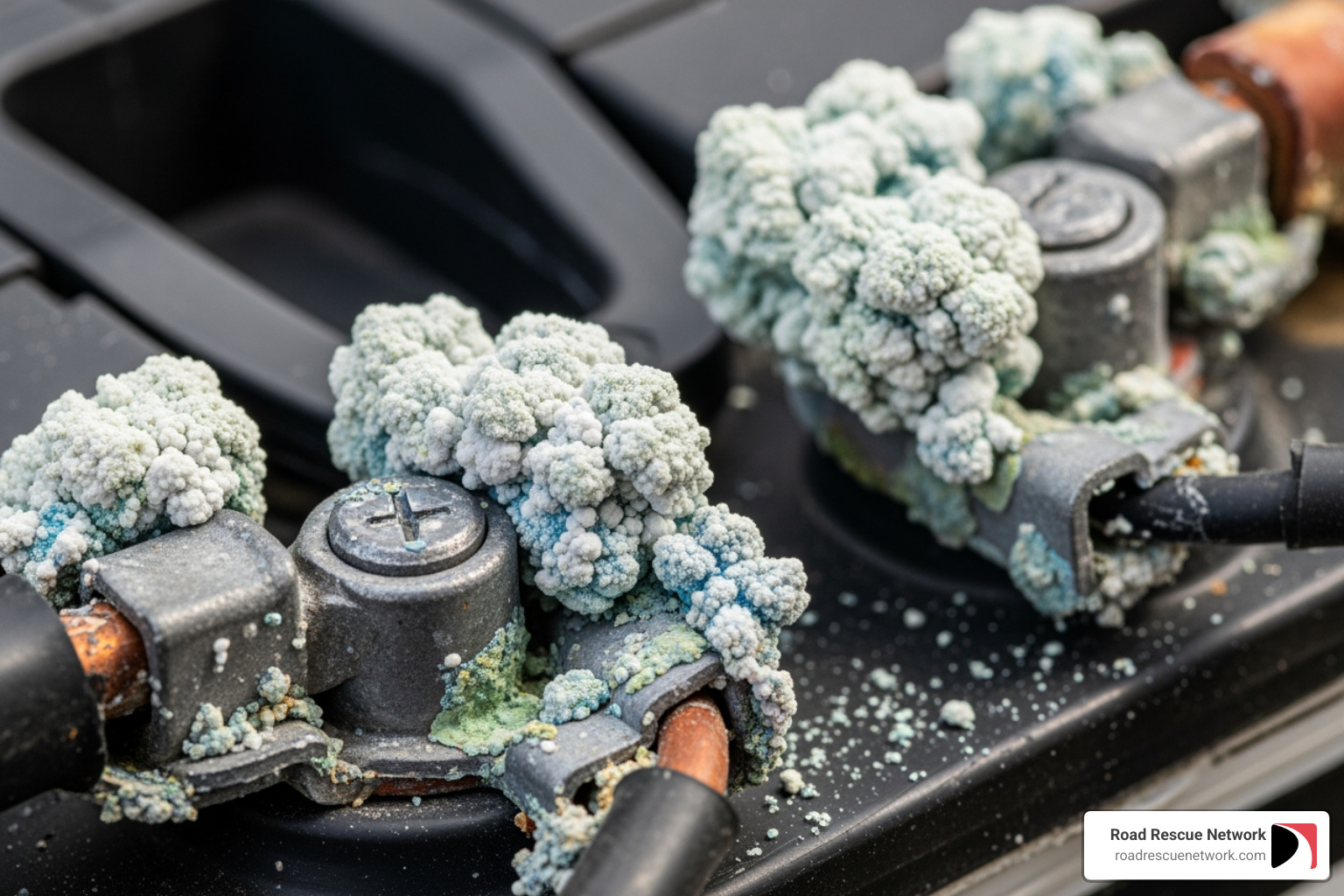
Even a fully charged battery is useless if the power can’t get through. Corroded or loose battery cables and connections are notorious for causing no-crank situations. A white, blue, or green powdery buildup around your battery terminals is corrosion, and it acts as an insulator, blocking electricity.
Check both ends of your battery cables to ensure the terminals are clean and tight. Sometimes, the problem is a loose connection where the negative battery cable attaches to the engine block or car frame (the main ground wire). A loose ground can cause a car won’t crank scenario even when lights and radio work perfectly.
If you see corrosion, it should be cleaned up. While professional help is recommended for safety, you can find a guide on how to clean corroded battery terminals. Always turn off your car and take all necessary safety precautions before working with battery components.
Signs of a Failing Alternator
Once the engine is running, the alternator recharges the battery and powers your car’s electrical systems. If your alternator is failing, your battery will slowly drain, eventually leading to a no-crank situation.
Here are tell-tale signs of a failing alternator:
- A squealing sound from under the hood, often caused by a loose or worn alternator belt.
- Headlights and interior lights that flicker or dim, especially when using many electrical components.
- A burning rubber smell from an overworked, slipping alternator belt.
- The clearest sign: your car dying shortly after a jump-start. If it runs for only a few minutes before shutting down, the alternator isn’t recharging the battery.
Driving with a bad alternator is risky. It will drain your battery, and your car could stall unexpectedly.
Diagnosing Why Your Car Won’t Crank: The Starting System
If the battery and its connections are good, the next place to look is the starting system. This includes the ignition switch, relays, the solenoid, and the starter motor, which all work together to spin the engine.
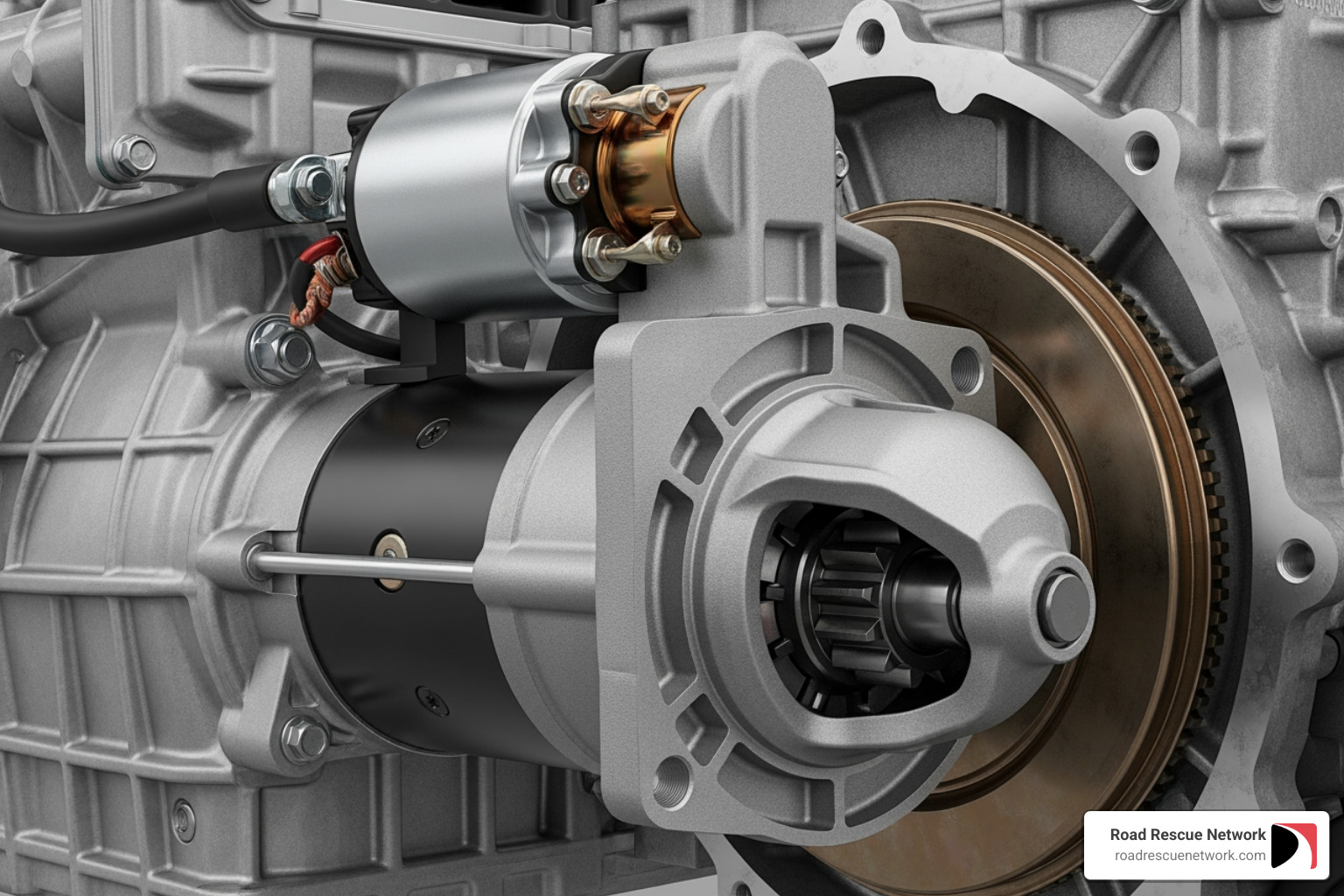
When you turn the key, the ignition switch signals the starter relay, which activates the starter solenoid. The solenoid then engages the starter motor, which spins the engine’s flywheel to start combustion. A failure in any part of this chain means your car won’t crank.
The Starter Motor and Solenoid: When Your Car Won’t Crank but Clicks
If you have a good battery but hear strange noises (or silence) when trying to start the car, the issue often points to the starter motor or solenoid.
- A single loud click usually means the solenoid is getting power but the starter motor isn’t turning. This can happen if the battery is still a bit weak or if the starter motor itself is failing.
- A rapid clicking noise is almost always a sign of a very weak or dead battery. There’s just enough power to activate the solenoid repeatedly but not enough to turn the starter.
- A grinding or whirring sound without the engine turning over suggests the starter motor is spinning, but its gear isn’t properly engaging with the engine’s flywheel. The starter or flywheel gear may be damaged.
- No sound at all could be the starter, but it also points to other issues like a faulty ignition switch, a bad starter relay, or a safety switch problem.
For older vehicles, a temporary fix is the ‘tap the starter’ method. If you can safely reach the starter motor, a gentle tap with a hammer while someone tries to start the car can sometimes dislodge stuck electrical contacts. This is a clear sign the starter motor needs replacement soon.
How a Faulty Ignition Switch Can Cause a No-Crank
The ignition switch is the command center that directs power to the starting system. If this component fails, your car won’t crank.
Symptoms of a failing ignition switch can be tricky:
- No power to the starter, resulting in silence when you turn the key.
- Dashboard lights flicker or go dark when you try to start the car, indicating an interruption in power flow.
- The key is hard to turn to the start position or feels sticky.
- Intermittent starting problems—the car starts fine one day and is silent the next.
- In rare cases, a failing switch can cause the car to shut off while driving, a serious safety concern.
Because the ignition switch is central to the car’s electrical system, it’s best to get a professional diagnosis if you suspect it’s the problem.
The Role of Safety Switches
Modern cars have safety switches to prevent them from starting in an unsafe condition, such as when in gear. These switches ensure the car only starts under specific, safe conditions.
- Automatic transmissions have a Neutral Safety Switch. It ensures the car only cranks when the gear selector is in Park (P) or Neutral (N). If this switch fails, the car won’t crank because it doesn’t think it’s in a safe gear. Try wiggling the shifter or starting in Neutral. If it starts in Neutral but not Park, the switch is likely the culprit.
- Manual transmission vehicles have a Clutch Start Switch. This requires you to fully depress the clutch pedal before the engine will crank. If this switch fails, or if the clutch isn’t pressed to the floor, the car won’t crank.
If you suspect a faulty safety switch is causing your car won’t crank issue, it’s wise to have a professional diagnose and replace it.
Electrical Gremlins and Security System Faults
Sometimes, the reason a car won’t crank is a hidden electrical issue or a security system fault. These “electrical gremlins” can be frustrating to diagnose in modern vehicles, which are essentially computers on wheels.
Blown Fuses or a Bad Starter Relay
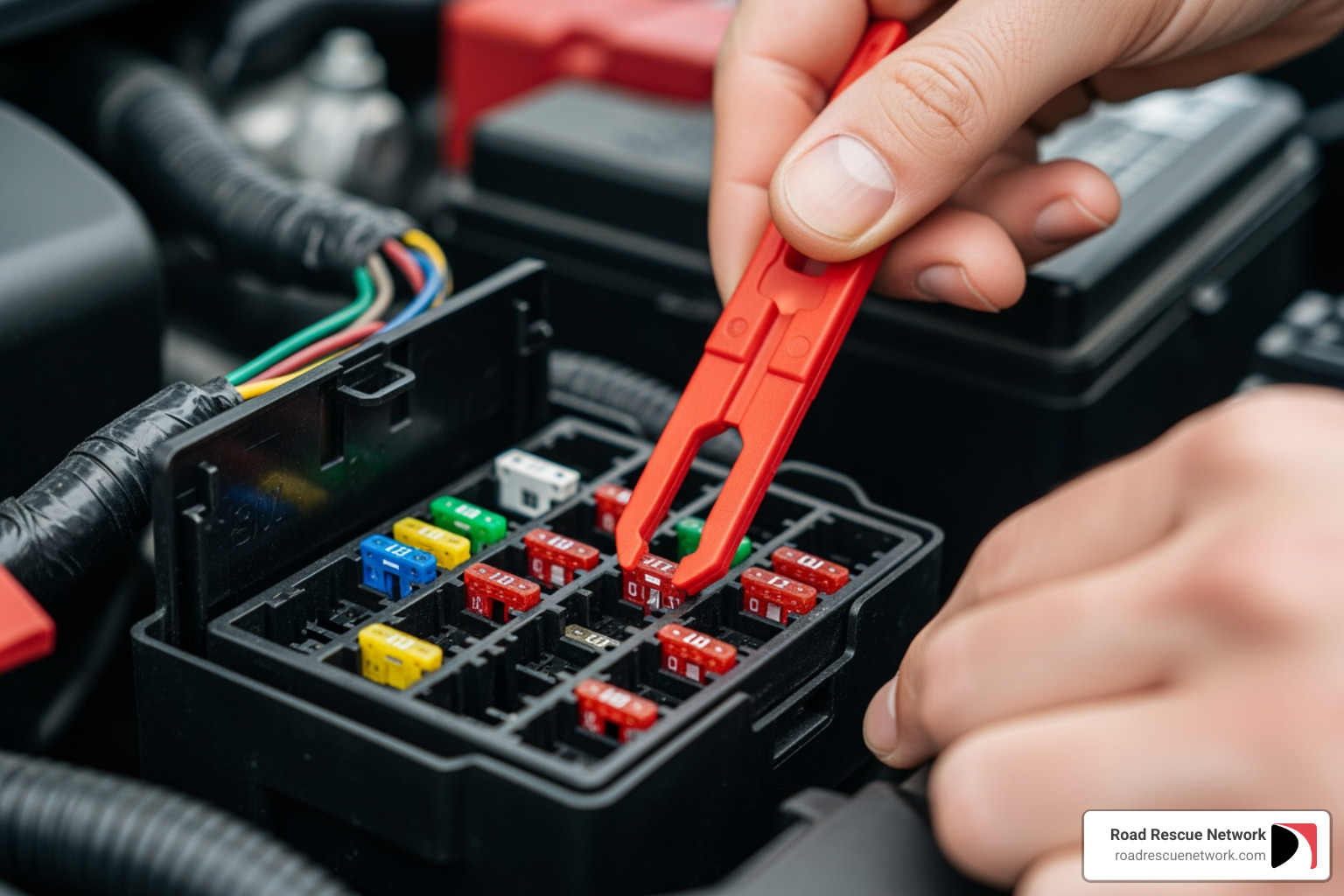
Your car’s electrical system is protected by fuses and relays. A blown fuse or a faulty starter relay in the starting circuit can easily prevent your car from cranking.
Fuses are safety valves that blow to protect expensive components from power surges. If the fuse for the starter or ignition system blows, power to the starter is cut off. You can find fuse boxes under the hood or inside the cabin (check your owner’s manual). A blown fuse will have a visible break in its internal wire.
The starter relay is an electromagnetic switch that uses a small signal from the ignition to send a large current to the starter motor. If this relay fails, the starter won’t get the power it needs. To diagnose a bad relay, you can try swapping the starter relay with an identical one from a non-essential system (like the horn). If the car starts, you’ve found the faulty relay.
Anti-Theft and Immobilizer System Issues
Modern cars have anti-theft systems, or immobilizers, that prevent the car from starting without the correct key. While a great security feature, it can cause issues if it malfunctions.
An immobilizer uses a transponder chip in your key or key fob to send a code to the car’s computer. If the code doesn’t match, the immobilizer prevents the engine from cranking. A flashing security light on your dashboard is often a sign that the immobilizer is active.
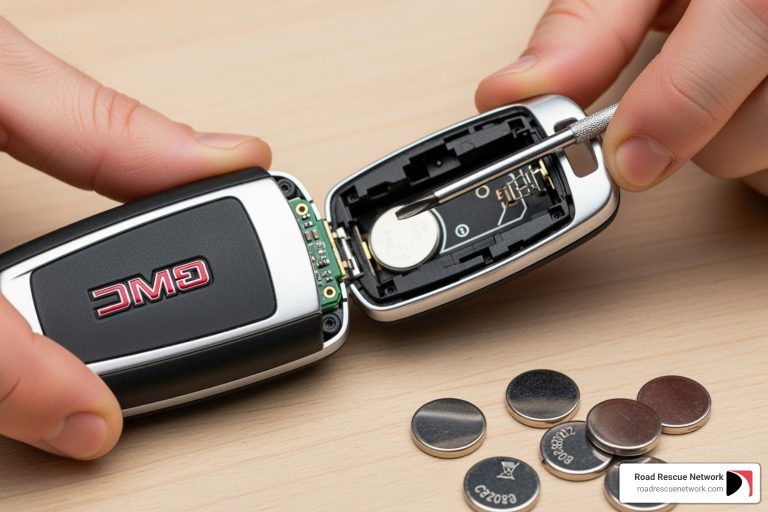
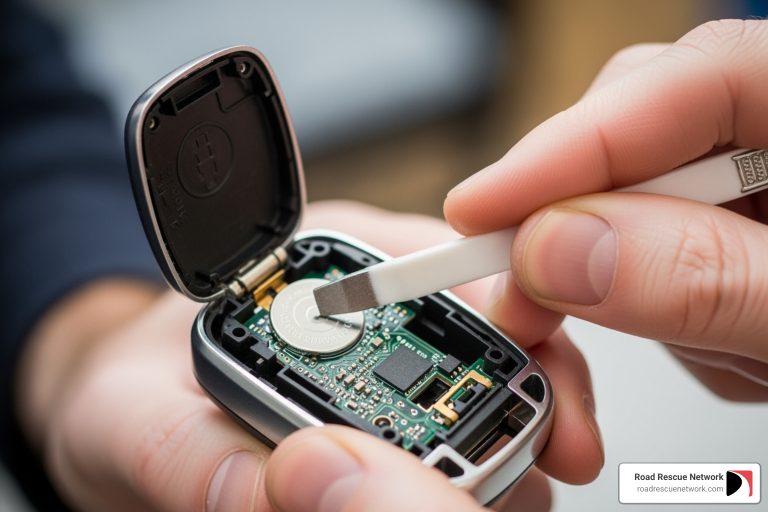
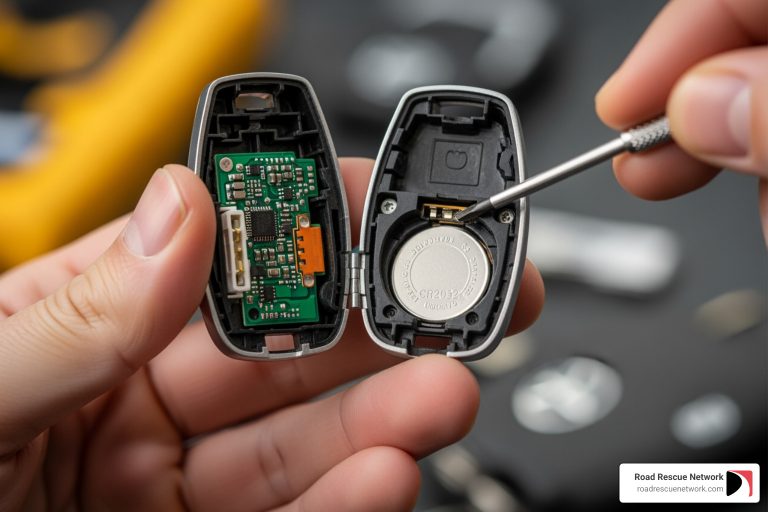
For cars with push-button start, a dead key fob battery is a common reason your car won’t crank. If the key fob can’t transmit its code, the car won’t start. Most vehicles have a backup method for starting with a dead fob, such as holding it against a specific spot on the steering column. Check your owner’s manual for this procedure. If you suspect your fob battery is the issue, we’ve got some helpful Tips for changing key fob batteries.
Sometimes, the car may lose sync with the key, or electronic interference can block the signal. Trying a spare key can help determine if the issue is with your primary key. If the anti-theft light is blinking and your car won’t crank, it’s a strong sign the immobilizer system is the problem, which often requires professional diagnosis.
Frequently Asked Questions about No-Crank Issues
When your car won’t crank, it can be confusing. Here at Road Rescue Network, we’ve heard it all. Let’s break down some of the most common questions.
Why won’t my car crank if the lights and radio still work?
This is a common and confusing situation. The reason is that accessories like your radio and lights require very little electrical power (amperage) to operate. The starter motor, however, needs a massive surge of power to turn the engine over. A weak battery may have enough power for the accessories but not enough to engage the starter. Similarly, corroded or loose battery connections can prevent the high amperage needed by the starter from getting through, while still allowing enough for the lights and radio.
What’s the difference between a single click, rapid clicking, and a grinding noise?
These sounds are important clues as to why your car won’t crank:
- A Single Loud Click: This usually means the starter solenoid is receiving power, but the starter motor isn’t turning. The cause is often a weak battery that has enough power for the solenoid but not the motor. It can also indicate a faulty solenoid or starter.
- Rapid Clicking Noise: This is a classic sign of a severely discharged or dead battery. There’s only enough power to make the solenoid click on and off rapidly.
- Grinding or Whirring Noise: This suggests the starter motor is spinning but isn’t properly engaging with the engine’s flywheel. The starter gear or the flywheel teeth may be damaged.
- No Sound at All: This could be a completely dead battery, but it also points to other issues like a faulty ignition switch, a bad starter relay, or a failed safety switch.
Can a bad alternator prevent a car from cranking at all?
Yes, a bad alternator is a common underlying cause of a no-crank situation. The alternator’s job is to recharge the battery while the engine is running. If the alternator fails, the battery will not be recharged and will eventually drain as it powers the car’s electrical systems. Once the battery is too weak, it won’t have enough power to turn the starter motor, and your car won’t crank. A key symptom of a bad alternator is the car dying shortly after being jump-started, as the battery isn’t being recharged.
When DIY Fixes Aren’t Enough
While DIY troubleshooting for a car that won’t crank can save time and money, knowing your limits is crucial. Working with your car’s electrical system can be dangerous. Batteries pack serious power, and a wrong move can result in shocks or burns. Always disconnect the battery first, avoid bridging connections with metal tools, and wear safety glasses and gloves.
Sometimes, despite your best efforts, your car still refuses to crank. This is when you should call in professionals. Guessing and replacing parts without a proper diagnosis can turn a simple fix into a much more expensive repair.
Professional technicians bring years of hands-on experience and specialized diagnostic equipment. Modern cars are complex, and many problems require scan tools that can read error codes and test components with a precision that’s impossible to achieve with basic tools.
There’s also the peace of mind that comes with a professional repair. You know the job is done right, the connections are secure, and you won’t be stranded again next week due to an incomplete fix.
If you’re stranded with a car that won’t crank, Road Rescue Network is here to help. We connect you with local rescuers 24/7 for jumpstarts, towing, and emergency roadside assistance across the hundreds of cities we serve. With no memberships or hidden fees, you get fast help when you need it most. Whether you need a simple jumpstart or a tow to a repair shop for professional diagnosis, we’ll get you taken care of. For any roadside emergency, including complex roadside repairs, we’re just a call away.

One Comment
Comments are closed.