The Ultimate Guide to Semi-Truck Towing Prices
Why Semi-Truck Towing Costs Matter More Than You Think
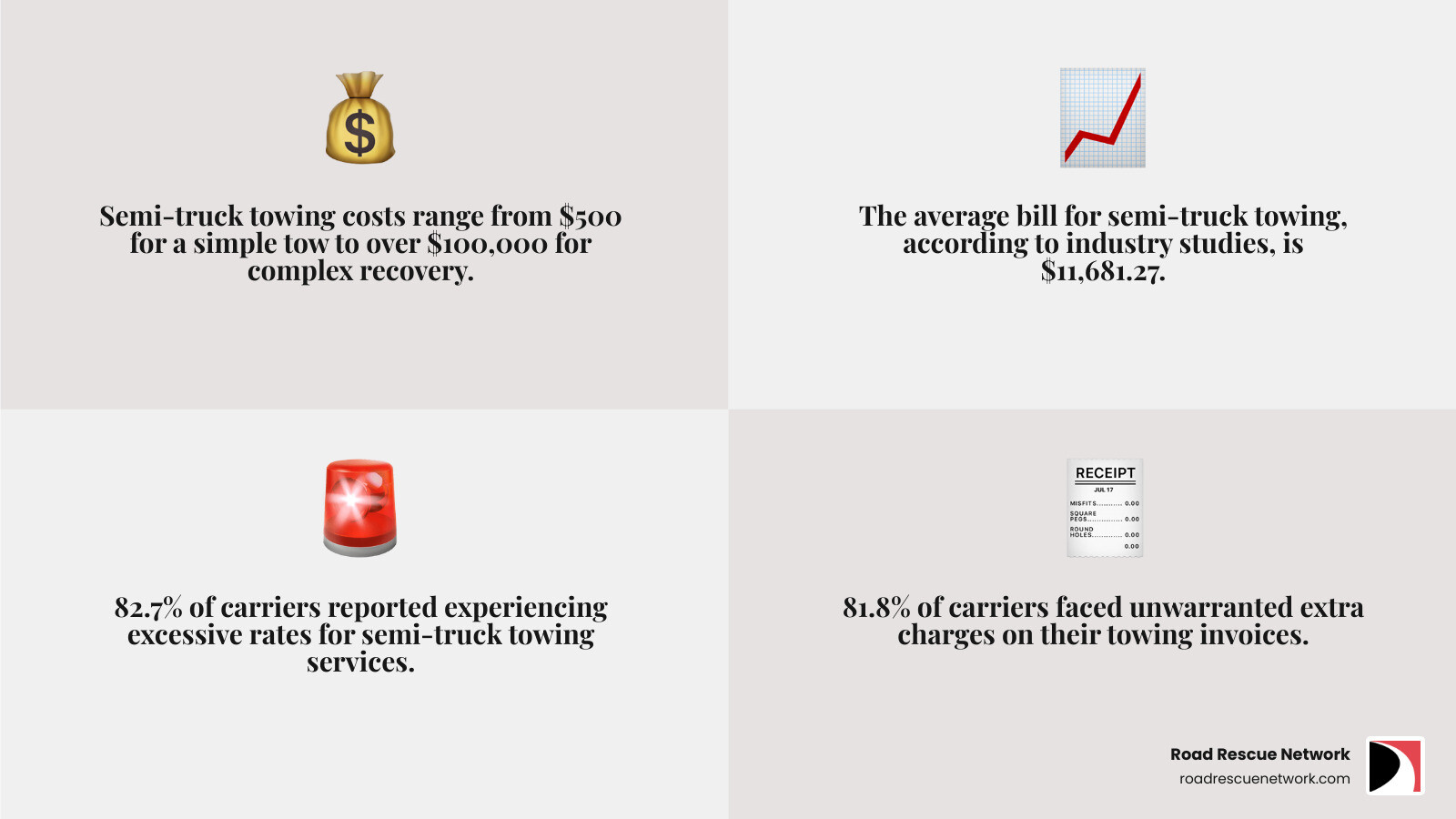
The cost to tow a semi truck can range from $500 to over $100,000, depending on the situation. Here’s a quick overview:
Quick Cost Overview:
- Simple tow: $500-$1,500 for basic service
- Hourly rates: $300-$700 per hour for standard towing
- Per-mile charges: $20-$50 per mile after initial hookup
- Hookup fees: $250-$500 just to connect your truck
- Complex recovery: $11,681 average according to industry studies
- Extreme cases: Up to $110,000 for hazmat accident recovery
When your semi-truck breaks down, you’re not just stranded; you’re facing a potentially massive bill. Unlike towing a car, semi-truck towing requires specialized heavy-duty equipment and trained operators, especially if you’re hauling a loaded trailer.
The numbers are shocking. A study by the American Transportation Research Institute found costs ranging from $250 to $110,000 for a hazmat crash recovery. The average bill was $11,681.27. The study also revealed that 82.7% of carriers have experienced excessive rates and 81.8% faced unwarranted extra charges.
The problem is that most drivers and fleet owners don’t know what to expect until they’re stuck with limited options. Understanding the cost structure for any situation—from mechanical failure to an accident—can save you thousands and protect you from predatory billing.
This guide breaks down everything you need to know about semi-truck towing costs, from standard rates to the factors that drive prices up and how to avoid being taken advantage of.
I’m Byron Tarlton, founder of Road Rescue Network. With over two decades in the transportation and towing industry, I know that understanding the cost to tow a semi truck is key to protecting drivers and fleet owners from financial exploitation during emergencies.
Breaking Down the Bill: What’s the Real Cost to Tow a Semi Truck?
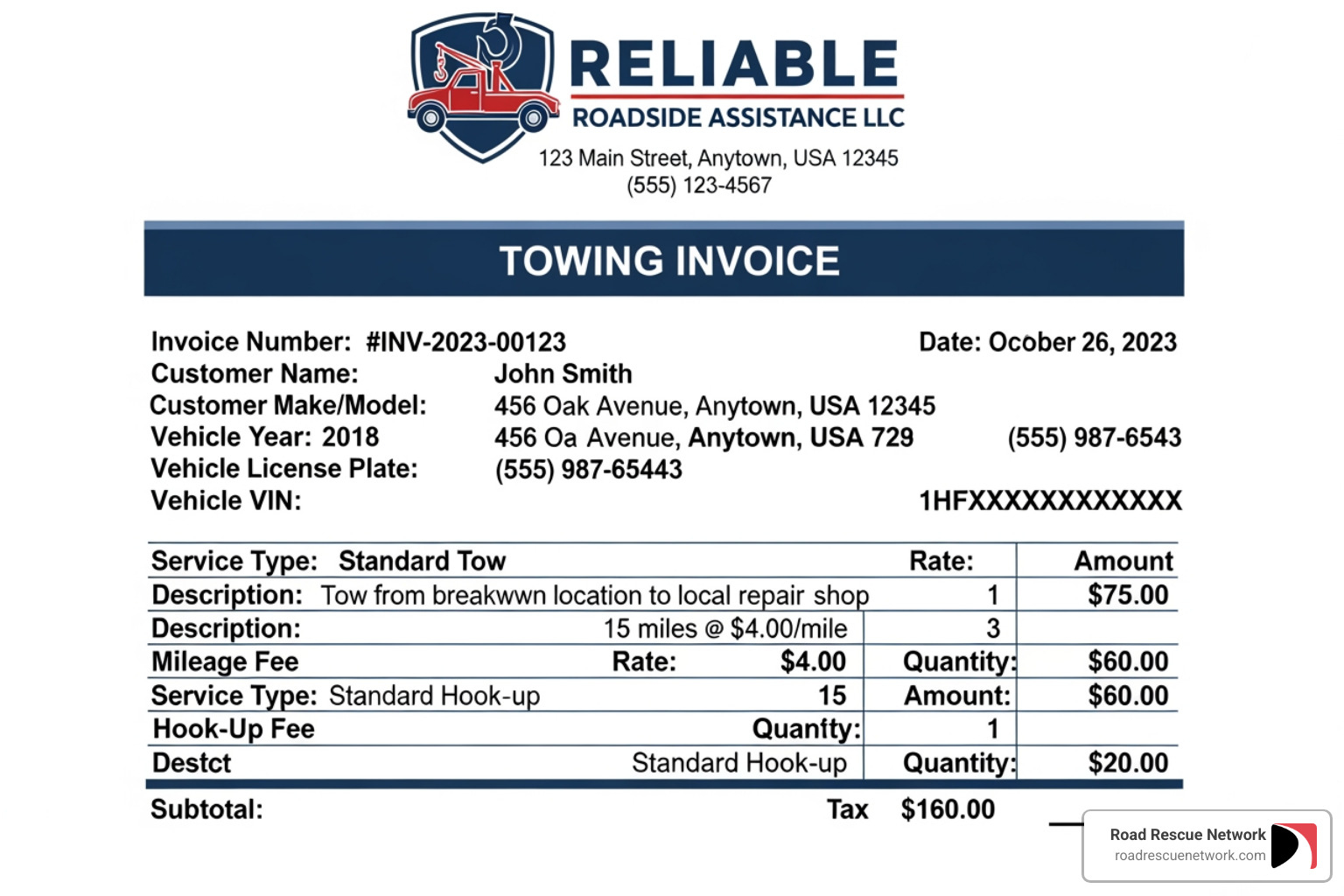
A semi-truck towing bill is rarely a single number. It’s a mix of base rates, add-on charges, and surcharges that stack up quickly. Understanding each line item is key to avoiding sticker shock.
Standard Towing Rates: Per Hour vs. Per Mile
Towing companies typically charge by the hour or by the mile, sometimes combining both.
Hourly rates of $300 to $700 per hour apply when a job is complex. If your truck needs winching from a ditch or requires careful maneuvering, expect hourly billing. The clock also runs while the crew waits for clearance or works through a complicated recovery.
Per-mile rates of $20 to $50 per mile are common for straightforward tows over longer distances after an initial hookup fee. For example, a 46-mile tow of just a truck might cost around $500, which breaks down to about $11 per mile plus hookup fees.
A simple breakdown on a flat highway will likely be billed per mile, while a jackknifed truck blocking traffic will fall into the hourly category.
The Anatomy of a Towing Invoice: Common Fees and Surcharges
Beyond the base rate, your invoice will likely include several additional charges:
- Hookup Fee: Ranging from $250 to $500, this is the cost just to connect your truck to the wrecker.
- Dispatch Fee: Some companies charge an extra $250 simply for sending a truck to your location.
- Timing Surcharges: After-hours, weekend, and holiday rates will significantly increase your costs.
- Other Fees: Fuel surcharges are nearly universal, and administrative fees cover paperwork. Any on-site work like pulling from a ditch or stabilizing a load adds labor charges.
Even for simpler situations like those handled by Light Duty Towing in Texas, these extra fees can be surprising. Always ask for an itemized quote before authorizing work.
Towing with a Trailer: The Added Expense
Towing a tractor with a trailer is more expensive, and the cost varies based on whether the trailer is loaded versus empty. A loaded trailer means more weight and risk, driving up the price. One driver reported a $7,200 pickup fee based on an 80,000-pound weight, with the total bill approaching $10,000 after mileage.
Sometimes the tractor and trailer require separate tows (bobtailing), which means two wreckers and two bills. One report cited $1,200 for a 40-mile tow when the truck and loaded trailer were moved separately. However, towing both units together can sometimes be cheaper; one driver paid $750 for a 35-mile tow of a combined unit.
Specialized services like Heavy Duty Towing in Arkansas are essential for these jobs, and their rates reflect the equipment, expertise, and risk involved.
Key Factors That Drive Up Semi-Truck Towing Costs
The final bill for a semi-truck tow depends on a web of variables. A simple mechanical failure on a sunny afternoon will cost far less than a jackknifed trailer in a midnight snowstorm.
The Situation on the Ground: Vehicle, Location, and Time
Your specific circumstances are the biggest cost driver. Vehicle weight and size dictate the need for expensive heavy-duty wreckers. The heavier the rig, the higher the cost.
Your location also plays a major role. In urban areas, you may face higher operating costs and traffic delays. In remote rural areas, the nearest tow truck could be 100 miles away, and you’ll pay for the travel time to reach you. Limited competition in rural areas can also lead to higher prices. Services like Medium Duty Towing in Idaho understand these challenges, but geography always impacts pricing.
Timing and weather are critical. Breakdowns at night, on weekends, or during holidays come with premium rates. Towing in a snowstorm or thunderstorm is more dangerous and time-consuming, which significantly increases the cost to tow a semi truck.
Heavy-Duty Towing vs. Recovery: Understanding the Difference
Many get blindsided by the price difference between a “tow” and a “recovery.”
A simple tow involves transporting a truck with a mechanical issue from a safe location, like a shoulder, to a repair shop. It’s relatively straightforward.
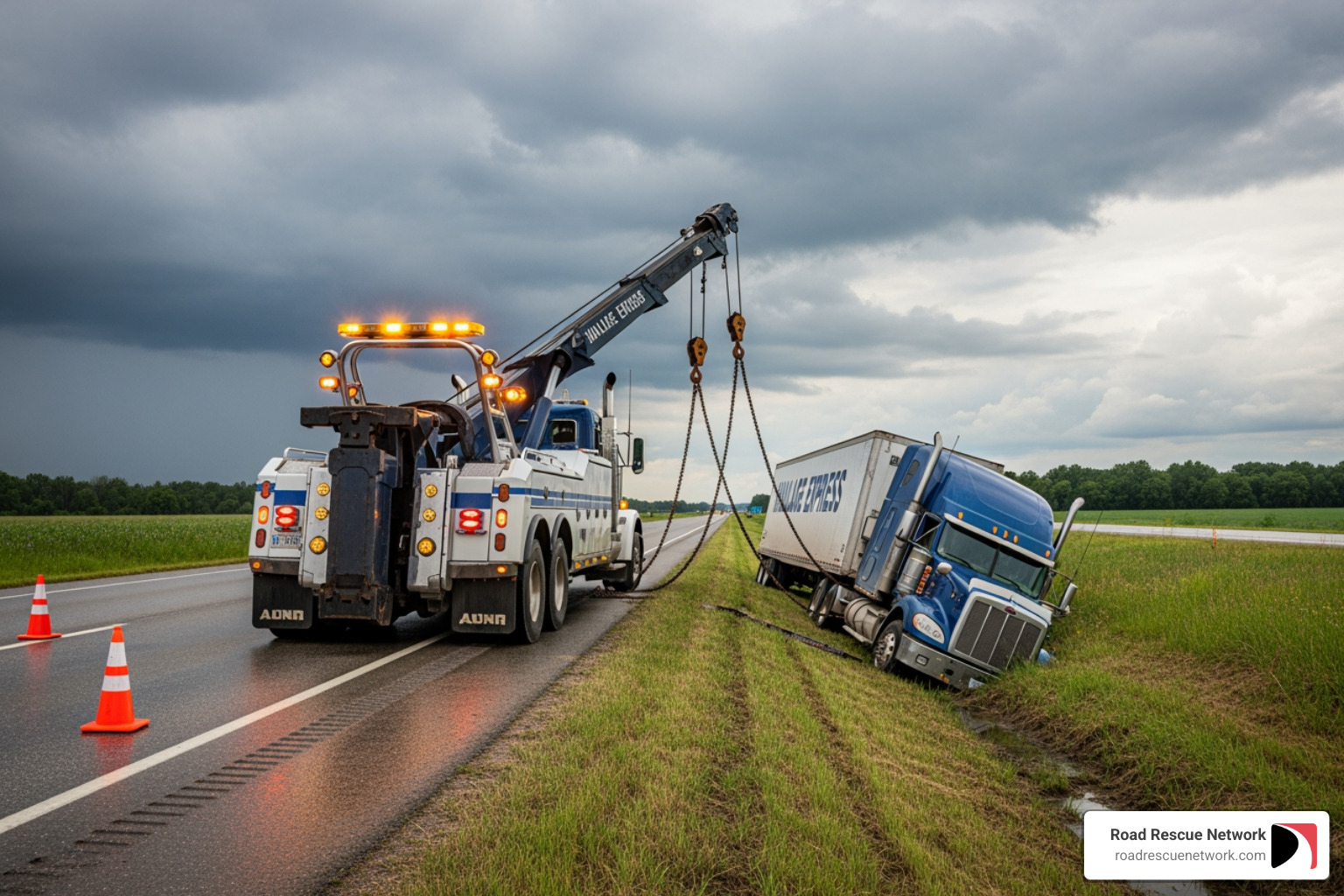
Recovery operations are required when a truck is not in a position to be easily moved. This includes situations where the truck is in a ditch, rolled over, or dangling off an embankment. These scenarios require specialized equipment and extensive labor.
- Winching: Using powerful cables to pull a truck back onto solid ground.
- Rollovers: These require a rotator tow truck—a mobile crane for heavy vehicles—which can cost $800 to $1,000 per hour for the equipment alone. A rollover recovery can easily surpass $30,000.
- Hazardous Materials: If a crash involves a hazmat spill, cleanup requires specialized crews and coordination with government agencies. The American Transportation Research Institute documented one such recovery costing $110,000.
The more complex and dangerous the situation, the higher the bill. Services like Heavy Duty Towing in Georgia are equipped for these challenges, but they come at a premium. Understanding whether you need a tow or a recovery helps you prepare for the cost.
The Dark Side of Towing: How to Spot and Avoid Predatory Practices
When your semi breaks down, you’re vulnerable to one of the trucking industry’s biggest threats: predatory towing. Some companies exploit a driver’s desperate situation to inflate bills and hold equipment hostage.

What is Predatory Towing?
Predatory towing occurs when a company charges excessive rates, adds bogus fees, or refuses to release your truck, trailer, or cargo until an outrageous bill is paid. These tactics can financially cripple a small carrier.
This isn’t a rare problem. A study on predatory towing by the American Transportation Research Institute found that 82.7% of carriers experienced excessive rates and 81.8% faced unwarranted charges. Nearly 30% of crash-related towing invoices showed signs of predatory billing.
The issue is worsened by a lack of competition in many rural areas and inconsistent state regulations, leaving drivers confused about their rights.
Red Flags and Proactive Steps for Drivers and Fleet Owners
Protect yourself by knowing the warning signs before you’re in a crisis.
- Watch for red flags: Be wary of high-pressure tactics, refusal to provide an itemized quote, demands for cash-only payment, or a tow truck showing up uncalled.
- Document everything: From the moment help arrives, take photos and videos of your truck’s position, the scene, the tow truck, and personnel. Note arrival and departure times. This documentation is invaluable if you need to dispute charges.
- Get it in writing: Always request a written, itemized quote before work begins. Never sign a blank work order or a document that doesn’t clearly outline services and costs.
- Pay smartly: Use a credit card or certified check instead of cash. This creates a transaction record and offers protection for disputing charges.
- Contact your insurer: If something feels wrong, call your insurance provider immediately. They have experience and leverage to negotiate on your behalf. For serious cases, seek legal counsel.
Fortunately, new regulations are being considered. The FTC recently proposed a rule to require all fees to be included in upfront quotes. However, preparation remains your best defense. Build relationships with reputable companies like those providing Heavy Duty Towing in North Carolina so you’re not scrambling for help when disaster strikes.
Smart Strategies to Manage and Reduce Towing Expenses
Facing a breakdown is stressful, but you can take steps to manage the cost to tow a semi truck. With the right strategies, you can protect yourself from surprise bills.

Leveraging Roadside Assistance and Service Agreements to Offset the Cost to Tow a Semi Truck
Think of roadside assistance as insurance for your peace of mind. Many commercial auto insurance policies offer roadside assistance add-ons that can cover a significant portion of your towing costs, often up to a certain limit. Some policies offer towing reimbursement, where you pay upfront and file a claim later.
Before you’re stranded, review your policy. Understand your coverage limits, deductibles, and the claim process. For fleet owners, service agreements with preferred heavy-duty towing providers can lead to negotiated rates and transparent billing. Becoming a regular customer gives you leverage. Even for lighter jobs handled by services like Light Duty Towing in Florida, having a plan saves time and money.
How to Find a Reliable and Cost-Effective Semi-Truck Towing Service
The best time to find a towing company is when you don’t need one. Pre-vetting companies is your best defense.
Research heavy-duty towing providers along your common routes. Look for companies with proven experience, positive reviews, and recommendations from other truckers. A reputable service will offer transparent pricing and be willing to provide clear, itemized quotes. Verify they have the proper heavy-duty equipment and are fully insured for commercial vehicles.
Once you’ve done your homework, build a provider network. Create and share a list of pre-approved towing services with your drivers. This avoids panicked decisions. The principle is simple: know who you’re calling before you need to call, whether for heavy-duty needs or services like Medium Duty Towing in Pennsylvania.
The Power of Prevention: Maintenance and Planning
The best way to reduce towing costs is to avoid needing a tow in the first place. Prevention is always cheaper than repair.
- Preventative Maintenance: Regular, thorough maintenance is your insurance against breakdowns. Consistently check fluids, brakes, tires, and electrical systems.
- Pre-Trip Inspections: A comprehensive check before every trip can reveal minor issues before they become catastrophic failures on the highway.
- Route Planning: Avoid notoriously rough roads or areas with limited services, especially during severe weather.
- Driver Training: Ensure drivers know basic troubleshooting to resolve minor issues on-site without a tow.
Proactive measures, like those promoted by providers of Heavy Duty Towing in Oklahoma, are always more cost-effective than reactive ones.
Frequently Asked Questions about Semi-Truck Towing Costs
We know you have questions, especially when facing a daunting situation like a semi-truck breakdown. Here are some of the most common inquiries we hear:
What is the average cost to tow a semi-truck for 100 miles?
Calculating an exact average is tricky due to all the variables, but we can provide a reasonable estimate. Considering a hookup fee of $250-$500 and a per-mile rate of $20-$50, a 100-mile tow could range from approximately $2,250 to $5,500. This estimate assumes a straightforward tow on a flat surface during business hours, without additional recovery or complex on-site work. If recovery services, after-hours charges, or multiple trucks are needed, the cost would be significantly higher.
Can I refuse a tow from a company I didn’t call?
This depends heavily on the circumstances and local regulations.
- Police-Initiated Tow: If your truck is involved in an accident or is creating a hazard (e.g., blocking traffic, spilling cargo), law enforcement often has the authority to call the nearest available tow company, regardless of your preference. In these situations, refusing the tow can lead to fines or further delays. Your best bet is to immediately inform the officer of your preferred towing provider and ask if they can be called instead.
- Private Property Tow: If your truck is on private property without permission, the property owner can have it towed. Regulations for private property towing can be less stringent than public road towing, sometimes leading to higher fees.
- Roadside Breakdown (Non-Hazardous): If your truck is safely off the road and not posing an immediate danger, you generally have the right to choose your towing company. This is why having a pre-vetted list of providers is so important.
Does my standard commercial auto insurance automatically cover the cost to tow a semi truck?
Not necessarily, and this is a crucial point many drivers and fleet owners overlook. While standard commercial auto insurance covers liability and often physical damage to your truck, it doesn’t always automatically include towing and roadside assistance for heavy-duty vehicles.
- Check Your Policy: You need to specifically look for coverage related to “roadside assistance,” “towing and labor,” or “towing reimbursement.”
- Add-ons: Many insurers offer these as optional add-ons or separate endorsements to your policy. These can be invaluable for managing the high cost to tow a semi truck.
- Policy Limits: Even with coverage, there will likely be limits on the amount reimbursed or the distance towed. Be aware of these limits to avoid unexpected out-of-pocket expenses.
- Trailer and Cargo: Ensure your policy also covers the towing of your trailer and any cargo, as these are often separate considerations.
Always consult with your insurance broker to understand exactly what your policy covers regarding semi-truck towing.
Conclusion
When your semi breaks down, the cost to tow a semi truck can be staggering, ranging from a few hundred dollars to over $100,000 for a complex recovery. These costs reflect the specialized equipment and expertise required to move massive vehicles.
As we’ve covered, the final bill is influenced by distance, vehicle condition, location, time of day, and whether you need a simple tow or a full-scale recovery. Unfortunately, a significant part of the financial pain can come from predatory practices. The American Transportation Research Institute found that over 80% of carriers have faced excessive rates or unwarranted charges.
Knowledge is your best defense. You can protect yourself by understanding fair pricing, documenting everything, demanding itemized quotes, and refusing to sign blank forms. Building a network of pre-vetted towing providers before you need them turns a crisis into a controlled response.
Prevention is always better than reaction. A solid roadside assistance policy, preventative maintenance, and thorough pre-trip inspections are your best financial protection against a major breakdown.
At Road Rescue Network, we believe in fast, transparent help without games or hidden fees. While we focus on connecting you with local rescuers for car emergencies, our philosophy of 24/7 service with no memberships and no surprises is what every driver deserves, whether in a sedan or a semi.
Your truck is your livelihood. Stay prepared, stay informed, and demand the fair treatment you’ve earned.