Don’t Fry Your Inverter: A Guide to EV Jump Starting
Understanding the Power: Peak Amps vs. CCA in an Electric Car Jump Starter
When you are shopping for an electric car jump starter, the packaging is often covered in numbers that look like alphabet soup. Understanding these ratings is the difference between buying a lifesaver and a paperweight.
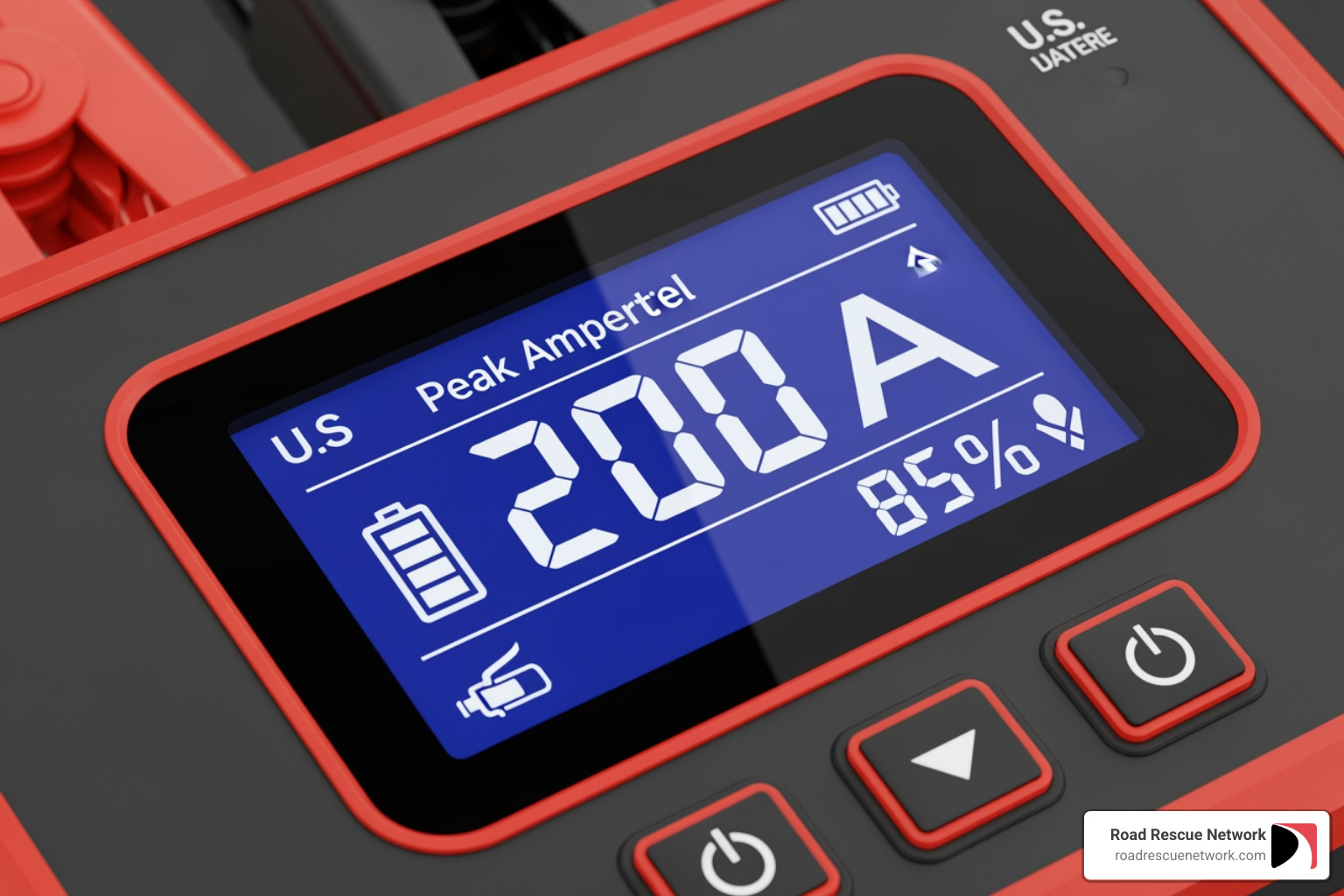
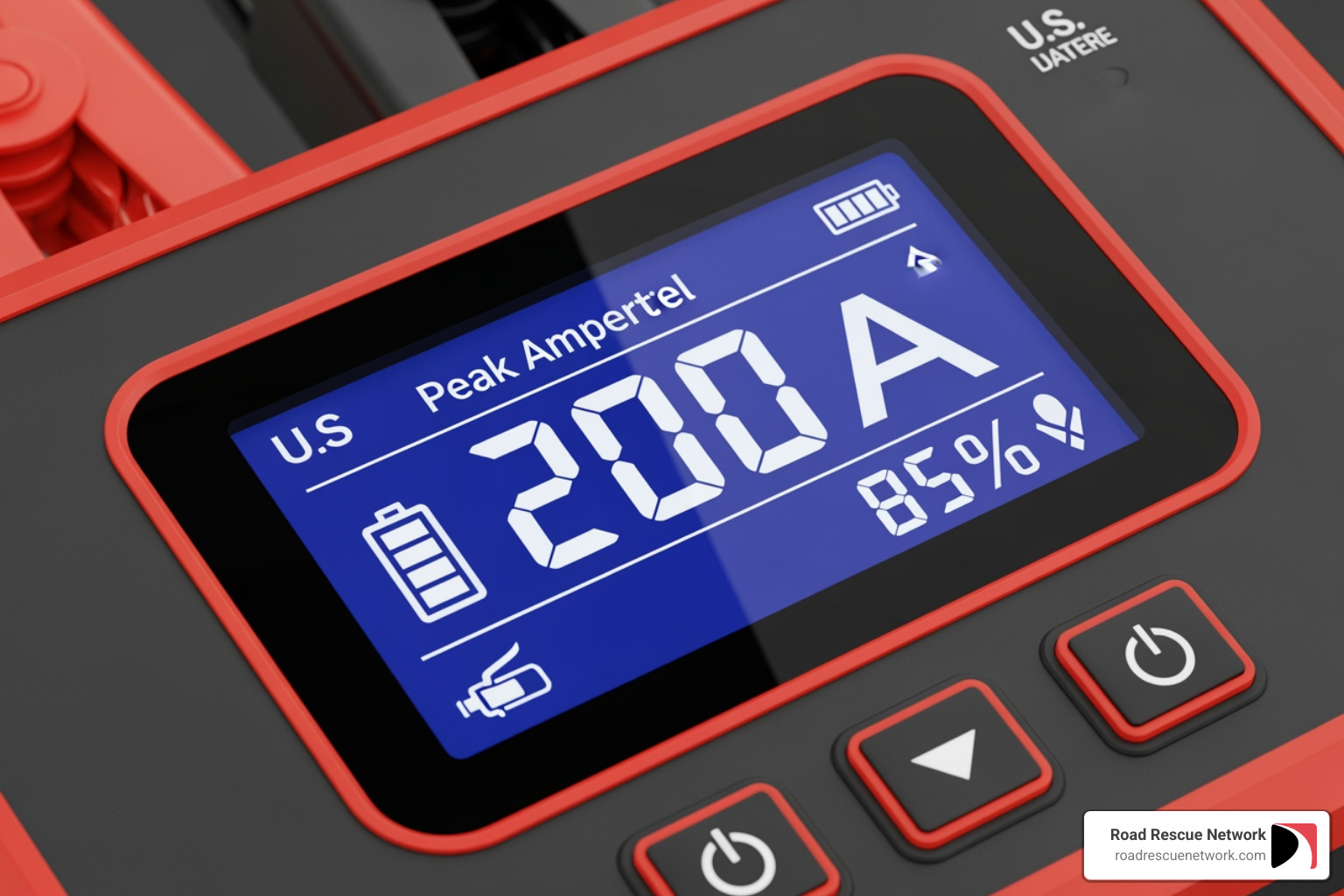
The most common number you’ll see is Peak Amps. This represents the maximum initial jolt of power the battery can deliver in a tiny fraction of a second (usually 20-50 milliseconds). While it sounds impressive, it’s a bit like a sprinter’s first step—fast, but it doesn’t tell you how long they can run.
For internal combustion engine (ICE) vehicles, the more critical numbers are Cranking Amps (CA) and Cold Cranking Amps (CCA). These measure continuous power over 30 seconds to ensure the starter motor can keep turning until the engine fires up. CCA is measured at 0°F, while CA is measured at 32°F.
| Feature | ICE Vehicle Needs | EV Needs |
|---|---|---|
| Peak Amps | High (1000A+) | Low to Moderate (500A+) |
| CCA/CA | Critical for engine cranking | Low importance |
| Duration | Sustained (30 seconds) | Instant (1-2 seconds) |
| Primary Goal | Turn heavy mechanical parts | Power up computers/relays |
Deciphering Energy Capacity (Wh)
While Amps tell us about “pushing” power, Watt-hours (Wh) or milliamp-hours (mAh) tell us about “staying” power. Think of this as the size of the fuel tank inside your electric car jump starter. A higher Wh rating means you can attempt more jump starts before the device itself needs a recharge.
For those of us living in places like Chicago, IL or Philadelphia, PA, where winter can be brutal, having a jump starter with a solid energy capacity is vital. If you find yourself stuck without one, you can always look for professional jumpstart services to get you back on the road.
Why EVs Require Lower Amperage
Here is the secret: your EV is much easier to “jump” than a gas truck. In a traditional car, the battery has to physically spin a heavy engine. In an EV, the 12V battery only needs to provide about 50-80 amps—just enough to wake up the onboard computers and “close” the high-voltage contactors.
Once those contactors click shut, the massive traction battery takes over, using a DC-DC converter to power the car and begin recharging the 12V battery. This is why even a small, pocket-sized jump pack can successfully start a dead Tesla or Mustang Mach-E. Even in smaller towns like Turley, MO, having this knowledge can save you from an unnecessary tow.
Choosing the Best Electric Car Jump Starter: Lithium vs. Lead-Acid
The “old school” jump starters are heavy lead-acid power stations. The “new school” is lithium-ion. For EV owners, the choice is usually clear, but there are trade-offs to consider.
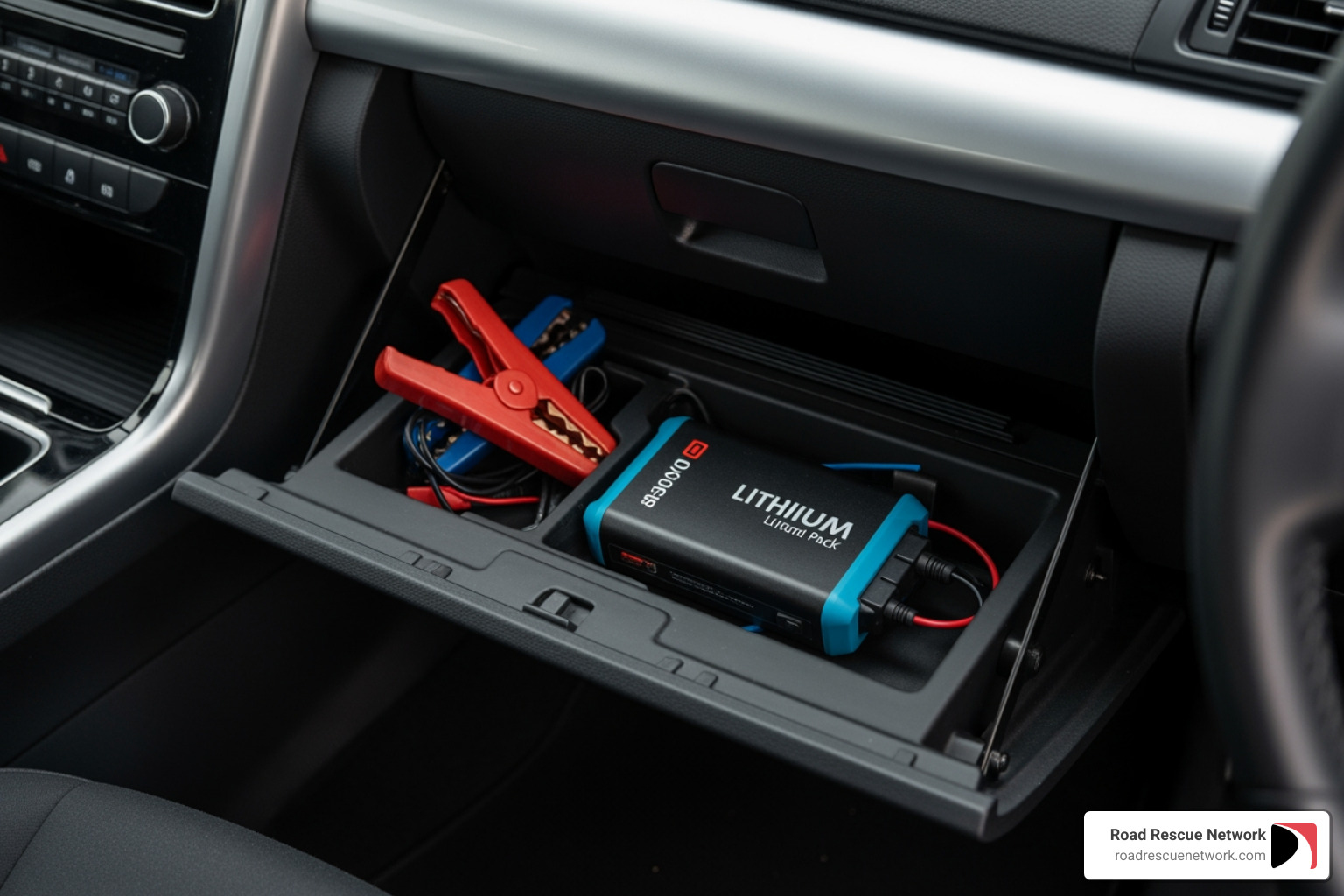
Lithium-ion units are the gold standard for portability. They are small enough to fit in your glovebox, hold their charge for months, and offer high energy density. However, they come with a specific risk: thermal runaway. This is a rare state where the battery cells self-heat uncontrollably, which is why quality lithium packs have built-in timers that cut power after a few seconds of high output.
Performance of a Lithium-Ion Electric Car Jump Starter
Because of the thermal runaway risk, most lithium-ion jump starters will only deliver their maximum amperage for 2 to 5 seconds. Fortunately, as we discussed, an EV only needs a quick pulse of power to wake up its systems. Lithium packs are also much faster to recharge via USB-C. If you’re traveling through Page, AZ, a lithium pack is a perfect companion for those long desert stretches.
Reliability of Lead-Acid Power Stations
Lead-acid jump starters are the heavy-duty “boxes” you often see in professional garages. They are much heavier and require more maintenance (they should be charged every 30 days), but they excel in extreme cold. If you are in a freezing climate like Nutter, NH, a lead-acid unit might be more reliable because it doesn’t suffer the same discharge issues as lithium when the mercury drops below zero.
Step-by-Step: How to Safely Use an Electric Car Jump Starter
Safety is paramount when dealing with any battery, but especially with the sensitive electronics of an EV. Modern electric car jump starter units come with “smart clamps” that offer reverse polarity protection (it won’t spark if you mix up red and black) and spark-proof technology.
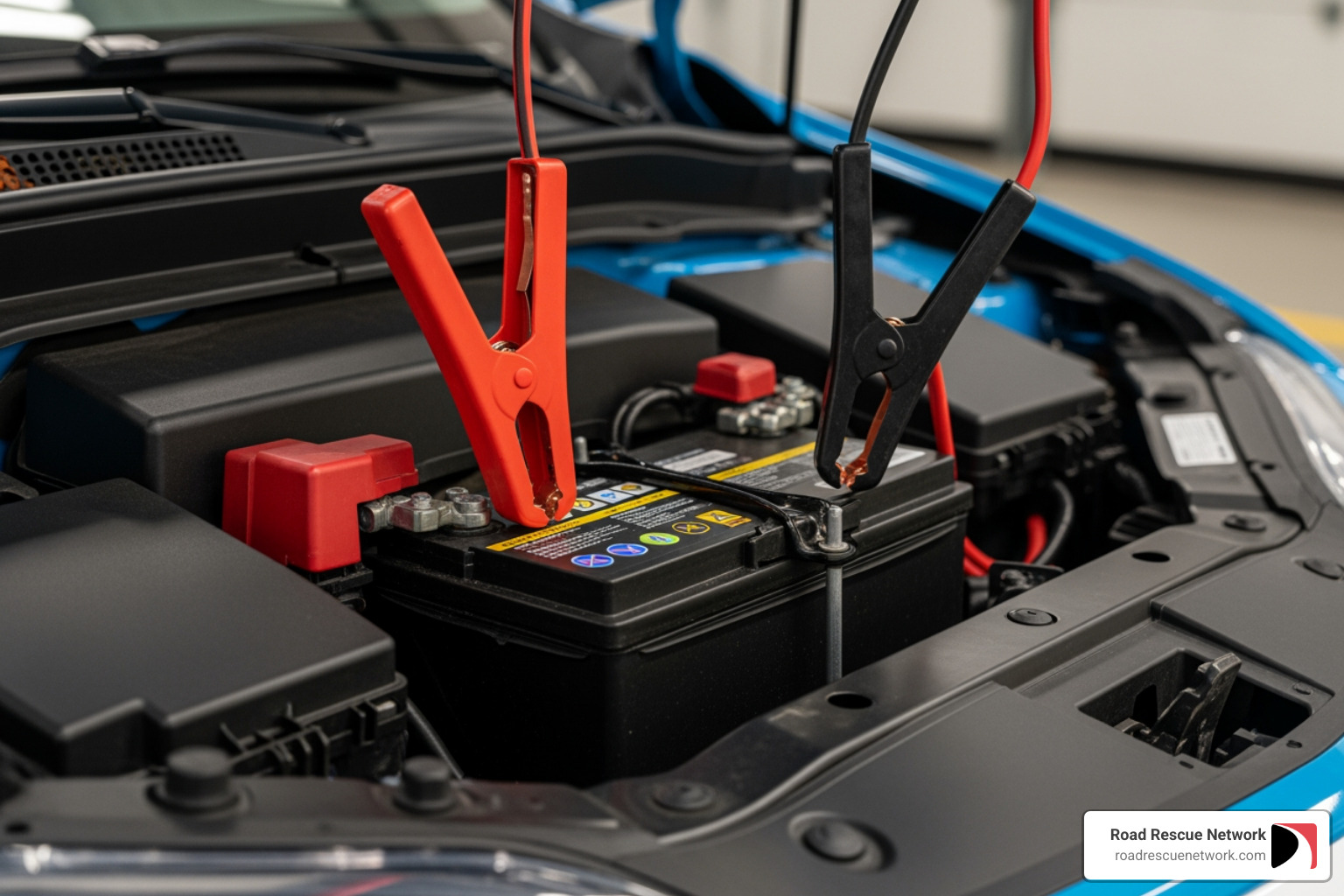
Connecting Your Electric Car Jump Starter Safely
- Locate the 12V Battery: Consult your manual. Some are under the hood, others are in the trunk or behind a panel in the “frunk.”
- Connect Red to Positive (+): Attach the red clamp to the positive terminal.
- Connect Black to Ground (-): Do not attach this to the negative terminal of the dead battery if you can avoid it. Instead, find a solid, unpainted metal part of the car’s chassis. This prevents sparks near the battery.
- Power On: Turn on the jump starter.
- Wake Up the Car: Wait a minute, then try to “start” the EV. You are looking for the dashboard to light up and the “Ready” light to appear.
Whether you’re in a busy city or a quiet spot like Fruit Ridge Center, MI, following this sequence ensures you don’t blow a fuse or damage an inverter.
Common Mistakes to Avoid
- Jumping from another EV: Most manufacturers advise against using one EV to jump-start another vehicle. The 12V systems in EVs are often smaller and not designed to handle the high-amp draw of a “donor” car.
- Ignoring the Manual: Every EV is different. Some require a specific “jump mode” to be activated via the touchscreen.
- Reverse Polarity: Even with protection, always double-check your connections.
If you’re unsure, don’t risk it. We see many DIY mistakes in places like Cascade, MO and Barnumton, MO. When in doubt, call for professional help.
Top Rated Models and Essential Features
When choosing an electric car jump starter, we recommend sticking to proven brands. Here are some top contenders we often see performing well in the field:
- NOCO Boost GB40: A fan favorite. It delivers 1000 amps and is incredibly reliable. It’s rated for up to 6.0L gas engines, which is overkill for an EV, but that extra headroom ensures it will wake up your car every single time.
- DEWALT DXAELJ16: This lithium unit is known for its rugged build and often includes a digital display that shows battery voltage—very helpful for diagnosing if your 12V battery is actually the problem.
- RYOBI ONE+: If you already own Ryobi power tools, their jump starter uses the same 18V batteries you use for your drill.
- UlBl X6: A powerhouse that offers 2500A peak current and can handle 50+ jumps on a single charge.
Multi-Function Features: Air Compressors and Power Banks
Many modern units are “emergency Swiss Army knives.” Features like built-in air compressors (often up to 150 PSI) are great for fixing a low tire in your driveway. Most also feature USB power banks to charge your phone and high-lumen LED work lights for nighttime emergencies. Expert battery advice from Batteries Plus suggests that while these features are great, they do drain the main battery faster, so keep an eye on your charge levels.
Maintenance and Storage for Longevity
To ensure your electric car jump starter works when you need it:
- Store it in a cool, dry place: Heat is the enemy of lithium batteries.
- Check the charge every 30-90 days: Even if you don’t use it, batteries naturally discharge over time.
- Clean the clamps: Use a wire brush to keep the copper contacts free of corrosion.
Frequently Asked Questions about EV Jump Starting
Can you jump start a Tesla with a standard jump pack?
Yes, absolutely. Most Teslas use a standard 12V lead-acid or lithium-ion auxiliary battery. However, newer Teslas (2022+) use a 16V system. While some 12V packs can still wake them up, you should check your manual to ensure compatibility with your specific year and model.
How many amps does an EV actually need to start?
While an ICE car might need 400-600A, an EV typically needs less than 100A. You are only powering the “brain” of the car so it can talk to the “muscles” (the traction battery).
Are jump starters with built-in air compressors reliable?
They are excellent for “topping off” a tire that is a few pounds low. However, they are not designed to inflate a completely flat tire from zero multiple times in a row, as the small motors can overheat.
Conclusion
Owning an electric vehicle means embracing new technology, but it doesn’t mean you’re immune to old-fashioned battery problems. Carrying a portable electric car jump starter is one of the smartest moves any EV owner can make. It provides peace of mind and keeps you from being stranded by a simple 12V failure.
At Road Rescue Network, we specialize in being there when things go wrong. Whether you’re in Houston, TX, Seattle, WA, or any of our hundreds of locations across the country, we provide 24/7 on-demand assistance with no memberships required. From jumpstarts to flat tires, our goal is to get you back on the road fast.
Stay safe with our roadside assistance safety guide and remember: your EV might be high-tech, but a little preparation goes a long way!