Don’t Get Towed for a Ride: Your Guide to Post-Accident Towing
Understanding Accident Car Towing: Your Immediate Steps
When you’re in a car accident and your vehicle is undrivable, getting it towed can add to an already stressful situation. Knowing the immediate steps to take can help you manage the aftermath, especially regarding towing.
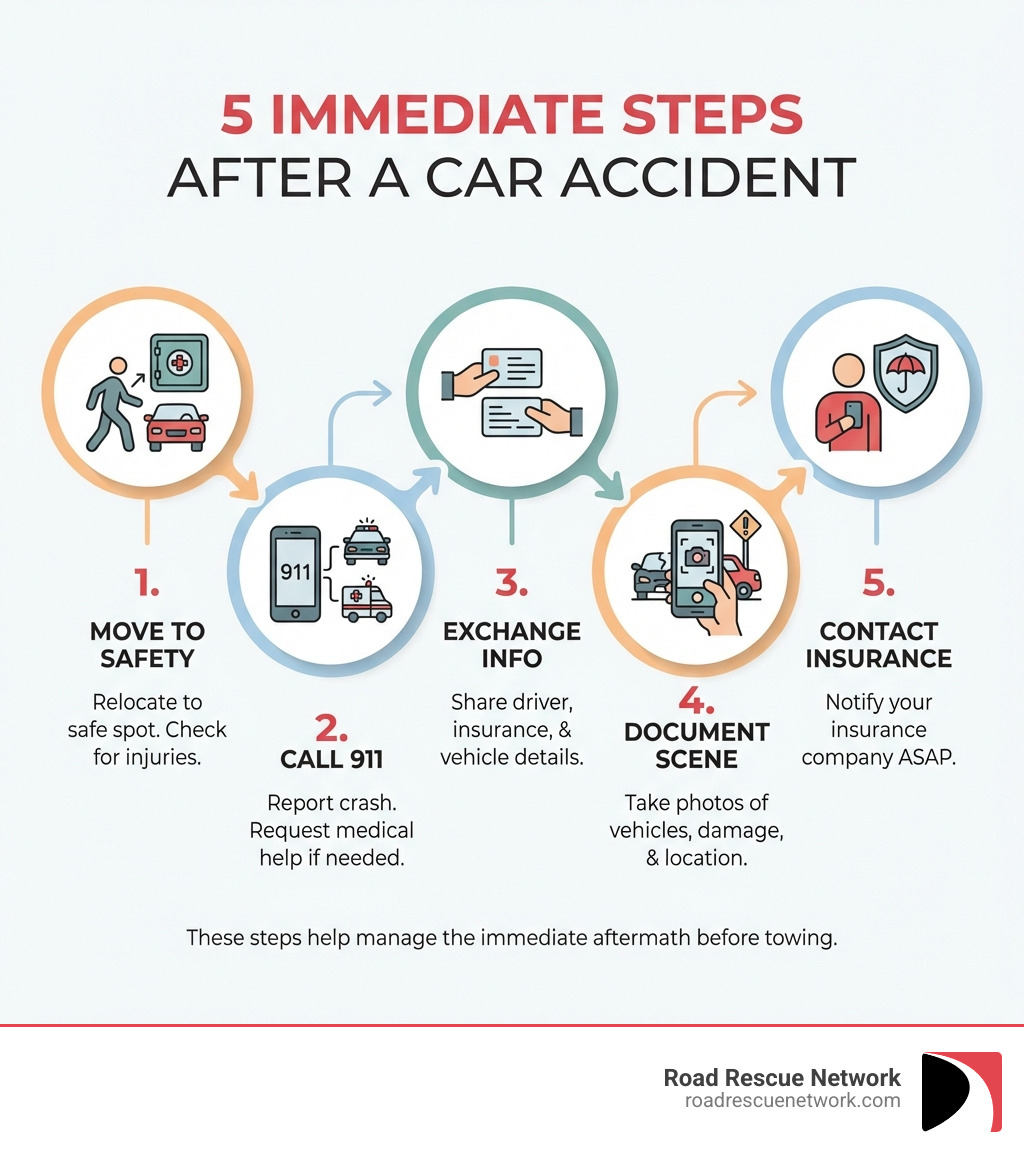
Here’s what to do immediately after a car accident:
- Stay Safe: Move to a safe location, check for injuries.
- Call 911: Report the accident to the police and get medical help if needed.
- Exchange Information: Get details from other drivers and witnesses (names, insurance, contact info).
- Document the Scene: Take photos of vehicles, damage, and surroundings.
- Contact Insurance: Notify your insurance company as soon as possible.
Experiencing an accident car towing situation can be incredibly stressful, turning a bad day worse. Whether it’s a minor fender bender or a major collision, the need for towing often comes with many unknowns. In the U.S., there were 6.1 million police-reported motor vehicle crashes in 2022, meaning many drivers will face this challenge. This guide will walk you through everything you need to know about accident car towing, helping you steer the process with confidence.
This guide is brought to you by Byron Tarlton, founder of Road Rescue Network. With decades of experience in towing and logistics, he understands the complexities of accident car towing and getting you back on track.
Accident car towing terms explained:
The Accident Car Towing Process: Who’s in Charge and Where Does Your Car Go?
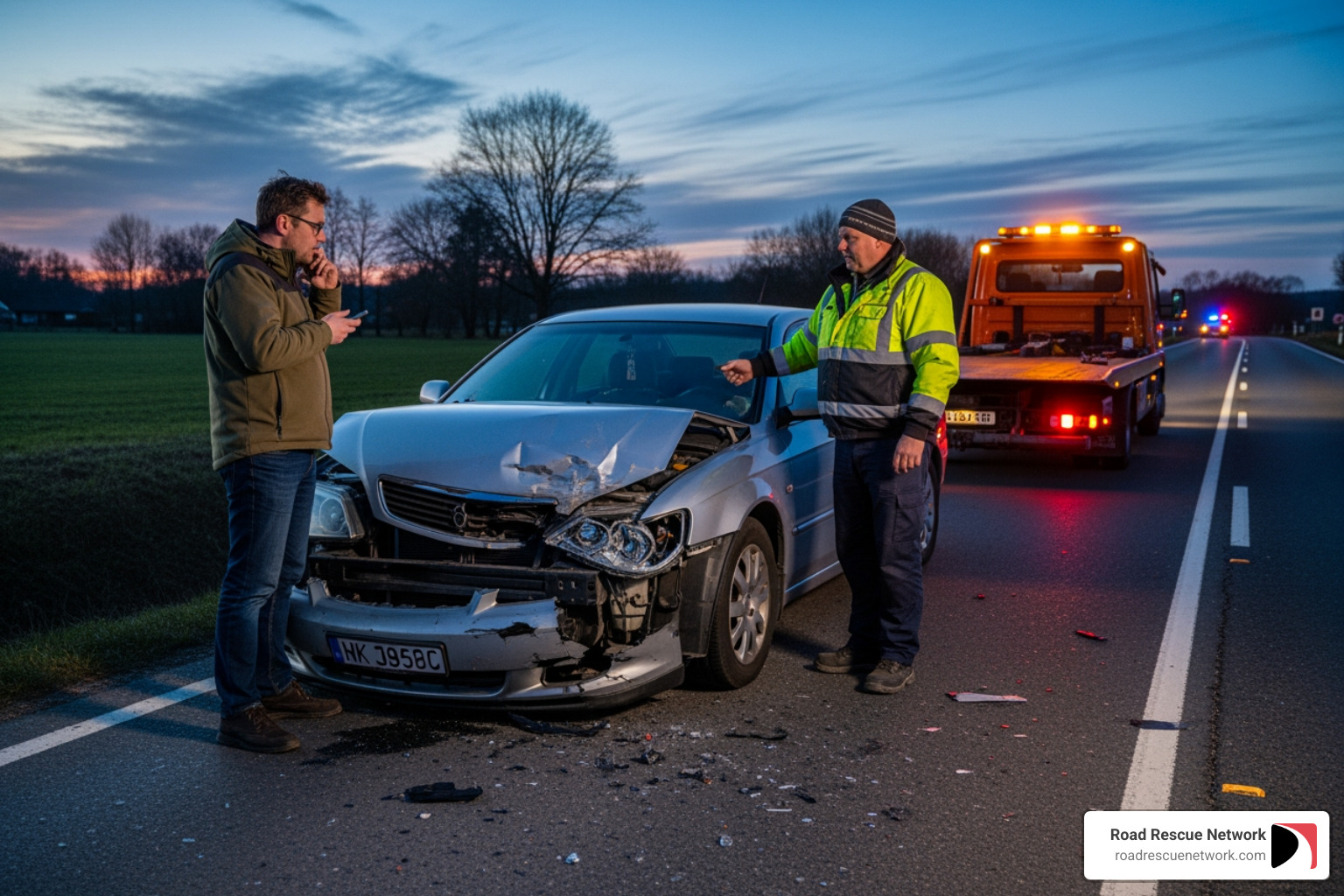
The moment after an accident, especially if your car is undrivable, can feel chaotic. Who takes charge of your vehicle, and where does it end up? Understanding the process of accident car towing is crucial for managing the situation effectively and minimizing stress.
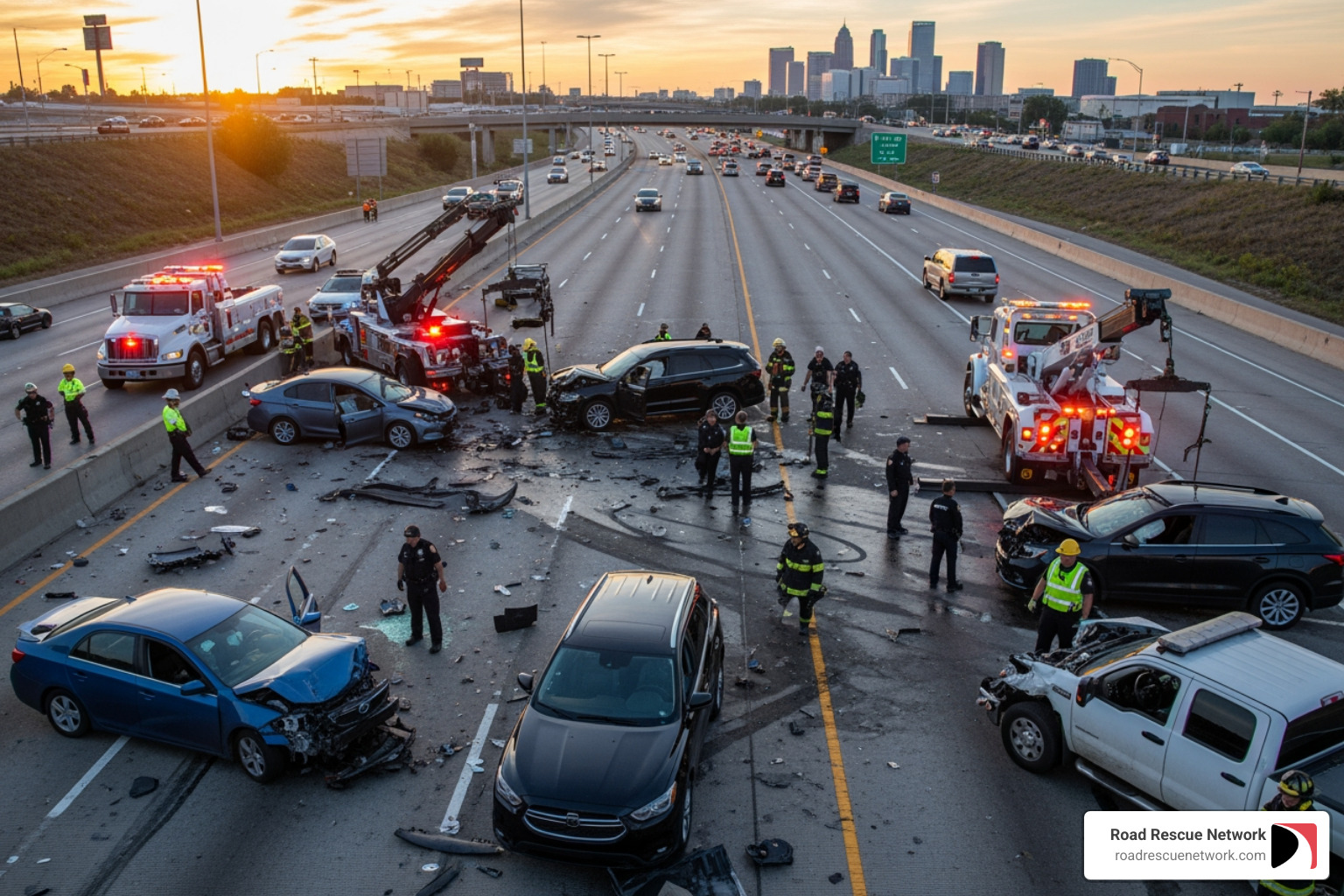
When an accident occurs, law enforcement often plays a significant role in coordinating the tow. If your car is blocking traffic or deemed a safety hazard, police will typically call for a tow truck to clear the scene. In many major cities where we operate, like New York City, there are regulated systems in place such as the Directed Accident Response Program (DARP) or the Rotation Tow Program (ROTOW). These programs ensure that licensed towing services are dispatched on a rotational basis, preventing tow truck drivers from racing to accident scenes and potentially soliciting services aggressively. This system helps ensure that only certified and vetted companies are responding to accidents.
However, even with police involvement, you often have a say in where your car goes. While approximately 70% of cars go from the accident scene to a tow yard, about 30% go directly to a body shop. Knowing this can save you time and money. If you’re able to communicate, you can often direct the tow truck driver to your preferred mechanic or auto body shop, rather than a tow yard. This is a key piece of information many drivers don’t realize they have control over.
Who Chooses the Tow Truck Company?
This is a critical question that can have significant financial implications. While police may dispatch a tow truck from their rotation list, you generally have the right to choose your own towing company, especially if you’re not severely injured and can make that decision.
In regulated areas, police departments maintain lists of certified towing companies and dispatch them based on a rotation system. This is designed to ensure fairness among towing companies and to prevent illicit practices. However, if your car is in a non-hazardous location, or if the police give you the option, you can request a specific company. For instance, if you have a pre-existing relationship with a trusted auto repair shop, they might recommend a towing service.
It’s important to be wary of unsolicited tow trucks that might appear at an accident scene. In the past, some companies would monitor police scanners to arrive at accident sites uncalled, hoping to get business. Today, with stricter regulations and police-managed rotation systems, this is less common but still something to be aware of. Only use tow trucks that have been officially called to the scene, either by the police or by you or your insurance company. If you’re looking for a reputable towing provider, services like Road Rescue Network can connect you with local, trusted rescuers instantly, without memberships or hidden fees, ensuring you get transparent and reliable service.
What Information Should I Get From the Tow Truck Driver?
Before your vehicle is moved, gather as much information as possible from the tow truck driver. This documentation will be invaluable for your insurance claim and for tracking your vehicle.
Here’s a list of essential information to get from the tow driver:
- Company Name and Address: The full legal name of the towing company and their physical address.
- Driver’s Name: The full name of the tow truck operator.
- Phone Number: A direct contact number for the towing company.
- License Plate Number: The license plate number of the tow truck.
- Itemized Receipt of Charges: A detailed breakdown of all fees, including hookup fees, mileage, and any potential storage charges. This is crucial for disputing charges later if necessary.
- Towing Destination Address: The exact location where your vehicle will be taken, whether it’s a tow yard, a body shop, or another facility.
Obtaining this information ensures transparency and gives you the necessary details to follow up on your vehicle and its associated costs. Don’t hesitate to ask questions and take photos of the tow truck and the driver’s credentials if you feel it’s necessary.
The Financial Aftermath: Understanding Towing Costs and Payment
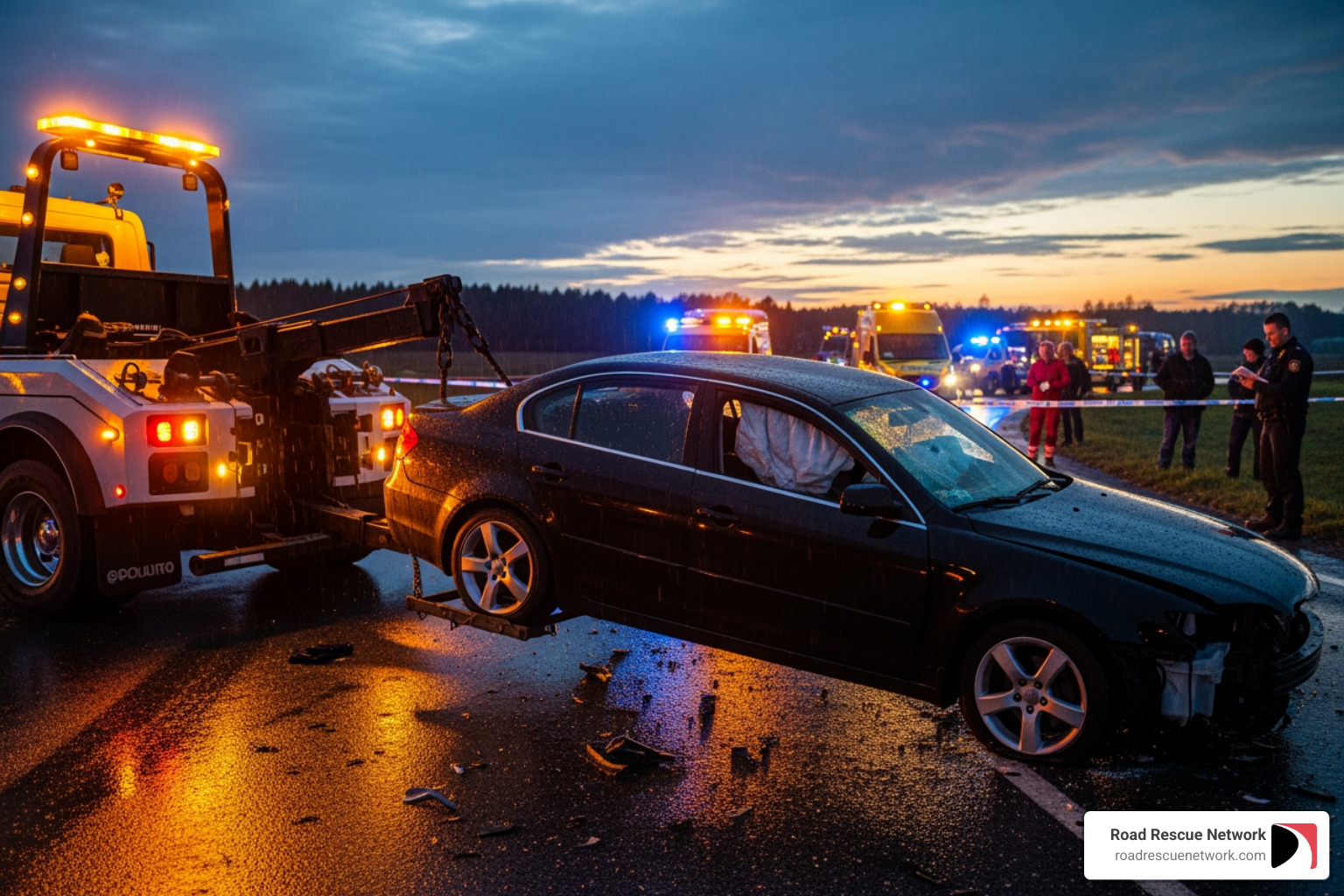
Once your car is hitched, the next big question usually revolves around money. How much will this cost, and who is responsible for paying? The financial aspect of accident car towing can be complex, involving various fees, insurance coverages, and potential disputes. We’re here to help you understand these costs and steer payment options.
Towing costs are not uniform and can vary significantly based on location, the type of tow needed, and the specific company. Generally, charges include:
- Hookup Fees: A flat fee for connecting your vehicle to the tow truck.
- Per-mile vs. Hourly Rates: Towing companies typically charge either by the mile or by the hour, but not both. For example, in Oklahoma, for vehicles under 8,000 pounds, the average cost for hookup is $81.25, plus either $75 per hour or $3.75 per mile (for the first 25 miles).
- Storage Fees: If your car is taken to a tow yard, daily storage fees will apply. These can add up quickly. In Oklahoma, maximum storage rates can range from $18 per day for outdoor storage to $30 per day for indoor storage for cars up to 20 feet. In New York City, towing companies can charge approximately $45 per day for storage fees.
- Administrative Fees: Some companies may add administrative charges, which can be around $30 in some areas.
- After-hours Release Fees: If you retrieve your car outside of regular business hours, you might incur an additional fee, such as a maximum of $15 in Oklahoma.
Who ultimately pays for these costs often depends on who was at fault for the accident. If another driver caused the accident, their liability coverage should cover the towing and storage fees. If you caused the accident, your own insurance policy (if you have comprehensive or collision coverage, or roadside assistance) would be the primary source of payment, or you might be responsible out-of-pocket.
Navigating the Costs of Accident Car Towing
Understanding the breakdown of towing costs is the first step in managing them. We’ve seen that average tow costs can include hookup fees, mileage or hourly rates, and daily storage.
States and cities often have regulations to prevent price gouging. For instance, in Oklahoma, there are specific maximum rates for towing and storage, which can be reviewed on the Oklahoma Corporation Commission website. Similarly, in New York City, licensed towing services for accidents and breakdowns are regulated, with specific programs and maximum rates. You can find more information about your rights and regulated rates by checking the official New York City Towing Guide.
To avoid excessive charges, it’s crucial to:
- Know your rights: Be aware of local regulations regarding towing fees.
- Direct the tow: If possible, have your car towed directly to a repair shop to avoid tow yard storage fees.
- Retrieve quickly: If your car must go to a tow yard, retrieve it as soon as possible to prevent daily storage fees from accumulating. Insurance companies typically have limits on how long they will cover storage.
- Get an itemized bill: Always demand a detailed receipt.
How Can You Pay for the Tow?
Payment for accident car towing can occur in a few ways, and knowing your options can alleviate immediate financial pressure.
- Payment at the scene: Sometimes, especially for smaller accidents or if you don’t have relevant insurance coverage, you might be asked to pay the tow truck driver directly.
- Insurance coverage: This is often the best-case scenario.
- Roadside assistance: If you have roadside assistance coverage through your auto insurance policy, it will typically cover towing after an accident, often up to a certain mileage limit or to the nearest qualified repair shop. This coverage is separate from collision or comprehensive.
- Collision/Comprehensive coverage: If your car is undrivable due to a covered accident, your collision or comprehensive coverage might cover the tow as part of the overall claim.
- Liability coverage of the at-fault driver: If another driver was at fault, their liability insurance should ultimately pay for your towing costs. You might pay upfront and then be reimbursed.
- Reimbursement options: If you pay out-of-pocket, keep all receipts. You can then submit these to your insurance company for reimbursement, or to the at-fault driver’s insurance company. In states like California, which is an “at-fault” state, the motorist who caused the accident is responsible for damages, including towing and storage fees.
- What if you can’t afford to pay immediately?: This is a tough spot. If liability is disputed or the other insurer is slow to investigate, it might be in your best interest to cover the tow and storage costs initially to prevent fees from mounting daily. However, if you genuinely can’t afford it, it’s important to understand the consequences, which we’ll discuss further.
Does roadside assistance cover towing after an accident? Yes, often it does. Roadside assistance typically covers services like towing (within policy limits), winching, jump-starts, locksmith services, and flat tire changes. While it’s considered a claim, it’s usually handled differently than a collision claim. It’s best to check your specific policy limits, as they might cover towing within a 15-mile radius or to the closest qualified repair shop beyond that distance.
Distinguishing accident towing from breakdown towing is important. While both involve towing, the cause dictates which part of your insurance policy (if any) will cover the costs. Roadside assistance is usually for mechanical breakdowns, flat tires, or running out of gas. Accident car towing is for vehicles damaged in a collision.
Your Car is at the Tow Yard: Now What?
If your car was towed to a tow yard after an accident, don’t despair, but do act quickly. This situation can be daunting, but understanding the steps involved in retrieving your vehicle is key to minimizing costs and hassle. About 70% of cars involved in accidents end up at a tow yard, so you’re not alone.
The first thing to do is determine the exact location of your vehicle, which you should have obtained from the tow truck driver. Then, you’ll need to arrange for its next steps: repair or total loss assessment.
- Retrieving personal belongings: You have the right to access your vehicle to remove personal belongings, even before paying any fees. Make sure to take out anything valuable, important documents, or items you’ll need immediately.
- Arranging secondary towing: If your car is repairable, you’ll want to have it towed from the tow yard to your preferred auto body shop or mechanic. This will incur another towing fee, but it’s often necessary to get the repair process started.
- Paying fees: You will typically need to pay the towing and storage fees accumulated at the tow yard before your vehicle can be released. Keep all receipts for these payments, as you’ll need them for your insurance claim or reimbursement from the at-fault party.
- Vehicle release procedures: Each tow yard will have specific procedures for releasing vehicles. This usually involves presenting proof of ownership (title or registration), a valid ID, and paying all outstanding fees.
- Mitigation of damages: This is a legal principle that requires you to take reasonable steps to minimize your losses after an accident. In the context of accident car towing, this means retrieving your vehicle from the tow yard as soon as possible to avoid accumulating excessive daily storage fees. Insurance companies will only cover “reasonable” storage periods, and prolonged storage could result in you being responsible for a portion of the fees.
Your Rights During an Accident Car Towing Situation
It’s empowering to know your rights when your car is towed. Towing companies, especially those dealing with non-consensual tows (like after an accident), are often regulated.
- Right to access your vehicle: As mentioned, you have the right to access your vehicle to retrieve personal items.
- Right to an itemized bill: You are entitled to a detailed, itemized bill listing all charges. This helps ensure transparency and allows you to dispute any charges you believe are unwarranted.
- Disputing charges: If you believe the charges are excessive or illegitimate, you have the right to dispute them. This process might involve contacting local consumer protection agencies, the Department of Motor Vehicles (DMV), or even seeking legal counsel. Keep all documentation related to your tow.
- State-specific regulations: Many states and cities have specific laws governing towing practices and rates. For example, New York City provides a comprehensive Towing Services Guide that outlines consumer rights when dealing with licensed towing services for accidents and breakdowns. Familiarize yourself with regulations in your area (e.g., New York, California, Oklahoma, Texas) to ensure you’re not taken advantage of.
What If I Can’t Afford the Towing and Storage Fees?
This is a challenging situation many drivers face. Daily storage fees can quickly escalate, and if you can’t pay, the consequences can be severe.
- Daily fee accumulation: Storage fees can range from $18 to $45 per day, or even more, depending on your location. These fees start accumulating almost immediately, sometimes even the day after the car is towed if it arrives after 6:00 PM.
- Towing company liens: If you don’t pay, the towing company can place a lien on your vehicle. This means they have a legal claim to your car until the debt is settled.
- Vehicle auction process: After a certain period (which varies by state, but can be as little as 30 days or up to three months), if the fees remain unpaid, the towing company can initiate a process to take ownership of your vehicle and sell it at auction to recoup their costs.
- Impact on credit: If the towing company sells your car at auction and the proceeds don’t cover the full amount owed, they might pursue you for the remaining balance. This could lead to debt collection agencies, lawsuits, wage garnishment, and significant damage to your credit score.
- Seeking legal advice: If you find yourself in this predicament, especially if the costs are exorbitant or liability is disputed, it may be beneficial to consult with a car accident lawyer. They can advise you on your rights and potential recourse, especially concerning statutes of limitations for legal action, such as those found in New York Civil Practice Laws & Rules § 214 for personal injury or Estates, Powers & Trusts § 5-4.1 for wrongful death, which could be relevant if you’re pursuing a larger claim.
The best course of action is always to address the situation as quickly as possible. If your car is a total loss and its salvage value is less than the accumulated fees, some towing companies might even refuse to release it to you, creating a complex problem. You might consider making a deal with a wrecking yard to take the vehicle off your hands, potentially covering some of the fees.
Frequently Asked Questions about Post-Accident Towing
We know you’ve got questions, and we’re here to provide clear answers to some of the most common concerns regarding accident car towing.
Who ultimately pays for the tow after an accident?
The short answer is, it depends on whose actions caused the accident. If you caused the accident, you or your insurance company will cover the costs of the tow. If it was caused by the other involved driver, they or their insurer are liable for this cost. This is a general principle applied in many states where we operate, including New York, as per information from the New York DMV.
Here’s a breakdown:
- At-fault driver’s insurance: If the other driver is found to be at fault, their liability insurance should pay for your towing and storage fees. This is ideal, but it can take time for their insurance company to accept responsibility and issue payment.
- Your payment and possible reimbursement: In many cases, especially if liability is disputed or to avoid accumulating daily storage fees, we recommend paying for the tow and storage upfront. Keep all receipts. You can then seek reimbursement from the at-fault driver’s insurance company or your own insurer through a process called subrogation.
- Subrogation process: Subrogation is when your insurance company pays for your damages (including towing) and then seeks to recover those costs from the at-fault driver’s insurance. If they are successful, you’ll typically be reimbursed for any deductible you paid.
- Paying upfront and seeking reimbursement: This is often the most practical approach to minimize storage fees and get your vehicle into a repair shop sooner.
How long can a towing company legally keep my car?
The length of time a towing company can keep your car varies significantly by state and local laws. Generally, they can hold your car until all outstanding towing and storage fees are paid. However, they cannot keep it indefinitely.
- State laws on vehicle storage: Most states have laws that dictate how long a towing company must hold an unclaimed vehicle before they can initiate a process to claim ownership through a lien. This period can range from 30 days to 90 days.
- Lien placement timelines: After a certain period of non-payment, the towing company will typically send a certified letter to the registered owner and any lienholders (like a bank that holds your car loan) notifying them of the outstanding fees and their intent to place a lien on the vehicle.
- Notification requirements before a sale: Before selling your car at auction, the towing company is usually required to send further notifications to all interested parties.
- Typically 30-90 days: While regulations vary, it’s common for towing companies to hold a vehicle for roughly 30 to 90 days before they can legally begin the process of taking title and selling it at auction. Some sources indicate they may hold it for up to three months before seeking permission from the city to impound and salvage it.
It’s imperative to retrieve your vehicle as soon as possible. As we’ve discussed, daily storage fees accumulate, and if they exceed the value of your car, you could end up owing money even after the car is sold, potentially impacting your credit.
What happens if the police tow my car after an accident?
When the police deem your vehicle a hazard or if you’re incapacitated, they will arrange for your car to be towed. This is often referred to as a “non-consensual” or “police-ordered” tow.
- Police impound lots: Often, police-ordered tows go directly to a police impound lot or a tow yard contracted by the police department. This happens when the vehicle needs to be removed from the scene quickly for safety or investigative purposes, and you’re unable to specify a destination.
- Evidence holds: In some cases, if the accident is severe or involves a crime, the police might place an “evidence hold” on your vehicle. This means your car cannot be released from the tow yard until the police investigation is complete. This can significantly prolong the time your car spends in storage and increase fees.
- Procedures for vehicle release: To get your car back, you’ll typically need to contact the police department that handled the accident to find out where your car was taken. They will provide you with the tow yard’s information. You’ll then need proof of ownership, a valid ID, and payment for all towing and storage fees to retrieve it.
- Contacting the correct police department: Ensure you know which law enforcement agency (city police, county sheriff, state highway patrol) responded to your accident, as this is who you’ll need to contact.
Even if the police order the tow, you are still responsible for the towing and storage fees unless another party’s insurance covers them. Acting quickly to retrieve your car is always the best strategy to mitigate costs.
Conclusion: Taking Control of the Towing Process
Navigating accident car towing can be a stressful and confusing experience, but being prepared and knowing your rights can make a world of difference. We’ve learned that immediate actions at the scene, understanding who chooses the tow company, knowing the costs involved, and acting quickly to retrieve your vehicle are all crucial steps.
Always remember to:
- Be prepared: Keep important documents and emergency contacts readily accessible.
- Know your rights: Understand local regulations regarding towing fees and your right to access your vehicle and receive an itemized bill.
- Act quickly to minimize costs: Daily storage fees can add up rapidly, so prompt action is your best defense against excessive charges.
For accident and breakdown towing needs, Road Rescue Network offers fast, reliable help without membership fees. We instantly connect you with local rescuers, ensuring you get the assistance you need when you need it most. Our goal is to make a stressful situation a little easier, providing transparent and efficient service.
Don’t let an unexpected tow turn into a bigger headache. Stay informed, stay calm, and know that help is just a call or click away.
Learn more about light-duty towing services.