Emergency Electric Car Chargers That Actually Work
When Your EV Battery Dies on the Road: Quick Solutions That Work
An emergency electric car charger is the difference between being stranded on the side of the highway and getting back on the road in under an hour. Here are the fastest solutions based on your situation:
Quick Answer: Best Emergency EV Charging Options
| Situation | Best Solution | Range Added |
|---|---|---|
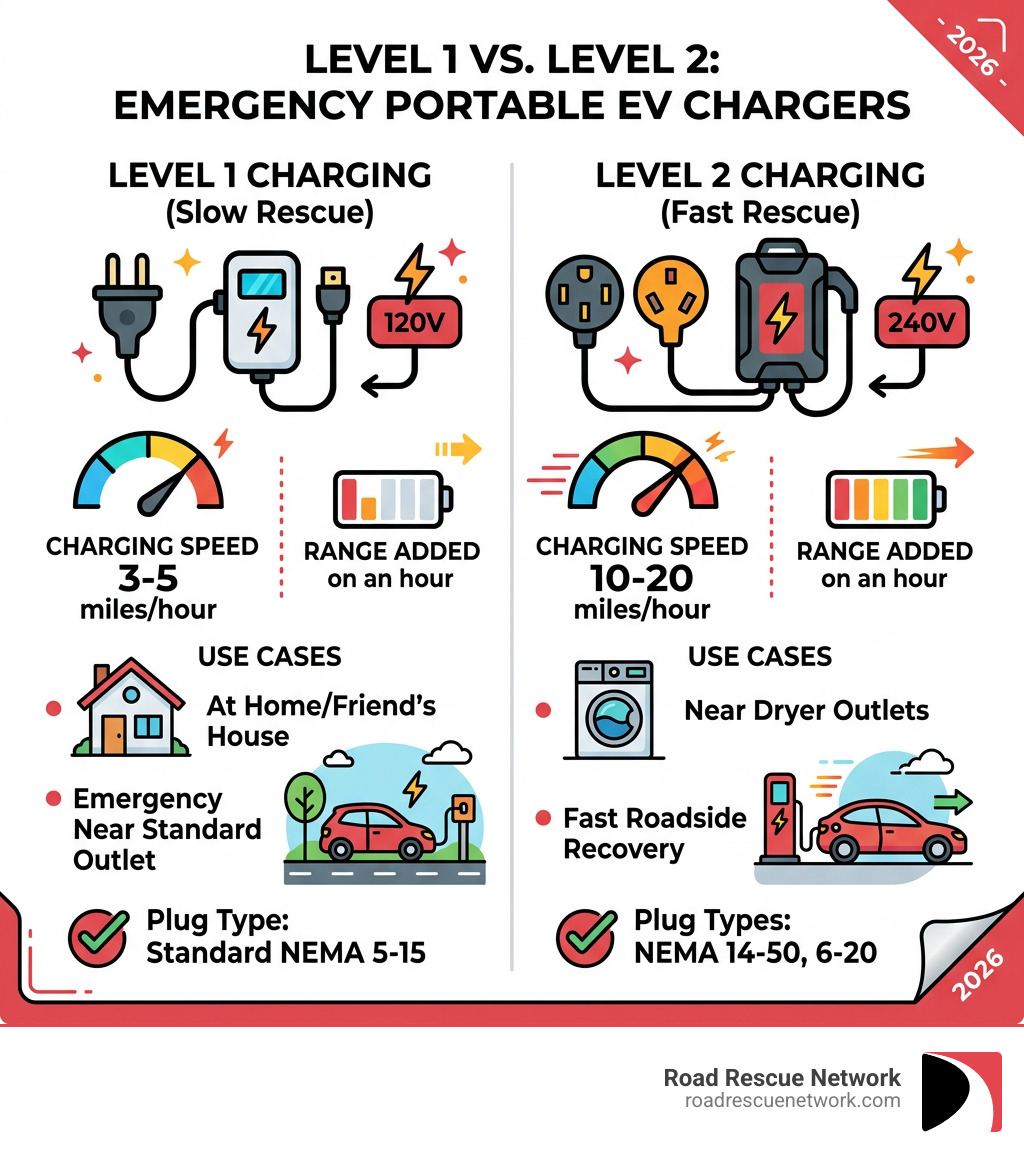
| Near any outlet (120V) | Level 1 portable charger (NEMA 5-15) | 3-5 miles/hour |
| Near a dryer outlet (240V) | Level 2 portable charger (NEMA 14-50 or 6-20) | 10-20 miles/hour |
| Truly off-grid, no outlet | Battery-powered mobile unit (e.g., SparkCharge Roadie) | Varies by unit |
| Stranded, no equipment | Call a mobile EV charging service | 20-45 miles in 60 min |
Picture this: your EV’s battery icon is blinking red, you’re miles from the nearest charging station, and the next exit has nothing but a gas station. It’s more common than most people think. A 2024 IEA survey found that 68% of EV breakdowns happen because of unexpected battery drain — not mechanical failure.
The good news? A compact portable charger stashed in your trunk can rescue you from most of these situations. And if you don’t have one, mobile EV charging services can dispatch a unit directly to your location.
This guide cuts through the noise and shows you exactly which emergency chargers are worth carrying — and what to do if you’re already stuck.
I’m Byron Tarlton, founder of Road Rescue Network and a veteran of the roadside assistance industry with over two decades of experience helping stranded drivers get back on the road fast. My background in fleet services and transportation logistics gives me a hands-on perspective on what actually works when you need an emergency electric car charger in a real crisis — not just in a product demo.
Why Every EV Owner Needs a Portable Backup
We’ve all been there—thinking we have just enough “juice” to make it to the next Supercharger in Los Angeles or a fast-charging hub in Chicago, only to realize the headwind or a sudden drop in temperature is eating our range faster than a teenager at a buffet. This is where the emergency electric car charger becomes your best friend.
The Reality of the Dead Battery
While the public charging network is growing, gaps still exist. If you’re traveling off-grid or through areas with sparse infrastructure, a dead battery isn’t just an inconvenience; it’s a total halt. Unlike a gas car, you can’t just walk to the nearest station with a plastic can. You need a way to bridge the gap. Carrying a Portable Level 2 EV Charger ensures that as long as you can find a 240V outlet (like those at RV parks or behind some commercial buildings), you can add meaningful range in a matter of hours.
Meaningful Range vs. Just “Getting by”
In an emergency, you aren’t looking for a 100% charge. You’re looking for enough range to reach a high-speed DC fast charger. A quality portable unit can provide 10 to 20 miles of range per hour. If you’re stranded 15 miles from a station, an hour or two of charging at a friendly local business or a campsite can save you a $200 towing bill.
Preparedness for Power Outages and Grid Failures
Natural disasters, like the hurricanes we’ve seen recently in Florida, often knock out public charging stations. In these scenarios, having your own portable equipment allows you to utilize home generators or neighbors’ power sources that might still be active. We’ve seen how critical this was during evacuations where mobile charging stations were deployed along routes like I-75 to keep traffic moving. Being your own “mobile station” is the ultimate level of emergency preparedness.
Travel Limitations and Weather Resistance
Cold weather is the silent enemy of the EV battery, often reducing range by 20% to 30%. If you live in a city like Denver or Minneapolis, a portable charger is an essential insurance policy. Most high-quality portable chargers are built with IP65 or IP67 weather resistance ratings, meaning they can handle rain and snow while you’re stuck waiting for a boost.
Choosing the Best Emergency Electric Car Charger

When you’re shopping for an emergency electric car charger, don’t just grab the first one you see. You need to balance power output with portability. If it’s too heavy or bulky, you’ll leave it in the garage—and that’s exactly where you don’t want it when you’re stuck in the middle of nowhere.
Power Output and Plug Types
The “emergency” part of the charger usually comes down to the plug. Most portable units come with a standard NEMA 5-15 plug (your typical household outlet) but offer an adapter for a NEMA 14-50 (dryer or RV outlet).
| Feature | Level 1 (NEMA 5-15) | Level 2 (NEMA 14-50 / 6-20) |
|---|---|---|
| Voltage | 120V | 240V |
| Amperage | 12-16 Amps | 32-40 Amps |
| Charging Speed | 3-5 miles per hour | 15-30 miles per hour |
| Best Use Case | Overnight or “trickle” rescue | Rapid roadside range addition |
Portability and Weight
For emergency use, look for chargers that weigh under 15 pounds and come with a dedicated Portable Fast EV Charger and Carry Bag. You want something you can easily pull out, plug in, and stow away without a workout.
Top Features of an Emergency Electric Car Charger
- Amperage Control: This is vital. If you’re plugging into an unknown circuit at a gas station or a friend’s house, you want to be able to dial down the amps to avoid tripping a breaker.
- Smart Displays: An LCD screen that shows real-time voltage, current, and temperature can tell you if the outlet you found is actually safe to use.
- Cable Length: Don’t settle for anything less than 20 feet. You can’t always park right next to the outlet in an emergency.
- RFID Cards: Some advanced portable units use RFID cards for security, ensuring no one else “borrows” your power if you have to leave the car unattended.
How to Store Your Emergency Electric Car Charger
Storage is about more than just throwing it in the trunk. EV chargers are sensitive to extreme temperatures. If you live in a place like Phoenix, the heat in a trunk can exceed 150°F, which can degrade the electronics over time.
- Use a Carry Bag: This prevents the cable from tangling and protects the “brick” from impact.
- Moisture Protection: Even if it’s weather-rated, keep the plugs dry when stored to prevent corrosion.
- Accessibility: Don’t bury it under your spare tire or heavy luggage. In a rainstorm, you want to grab it in seconds.
Top-Rated Portable Chargers for Roadside Use
With over 9,000 results for “portable electric car charger” on e-commerce sites, the market is flooded. We’ve narrowed down the top performers based on reliability, user reviews, and technical specs.
1. EVDANCE Level 1&2 Portable EV Charger
This is a fan favorite for a reason. It’s versatile, supporting both 120V and 240V. With over 600 units bought in the last month and a 4.4-star rating, users love its 25ft cable and the fact that it’s ETL listed for safety. It’s perfect for those who want one device that handles every possible outlet they might encounter.
2. AIMILER Level 2 EV Charger
If you need speed, this 32-Amp unit is a workhorse. It boasts a 4.7-star rating and is known for its rugged build. It’s excellent for those traveling between cities like Dallas and Houston where you might find 240V outlets at truck stops or RV parks.
3. Lectron Portable Level 1 Charger
For those on a budget or who just want a “just-in-case” trickle charger, Lectron is a household name. It’s compact, ETL certified, and uses a standard NEMA 5-15 plug. While slow (Level 1), it’s highly reliable for adding those few extra miles needed to reach a real station.
4. MUSTART 40 Amp Level 2 Charger
This is one of the more powerful portable units available. It can deliver up to 9.6kW of power, which is comparable to many home wall stations. It’s a bit heavier, but for owners of large EVs like the Ford F-150 Lightning, that extra amperage is a lifesaver.
5. SparkCharge Roadie (The Off-Grid King)
Sometimes, there simply is no outlet. The SparkCharge Roadie is a battery-powered, modular mobile charging unit. It’s often used by professional roadside services (like those we connect you with) to provide a DC fast charge without needing to be plugged into a wall. It’s the ultimate “gas can” for EVs.
Safety Standards and Compatibility Requirements
When you are pushing high voltage through a cable in the rain, safety isn’t optional. We always recommend looking for specific certifications before buying an emergency electric car charger.
UL and ETL Certifications
UL (Underwriters Laboratories) and ETL (Intertek) are the gold standards. These marks mean the charger has been independently tested to meet strict safety requirements. Avoid “no-name” chargers that lack these labels; they are a fire risk to both your car and the building you’re plugged into.
J1772 vs. NACS (Tesla)
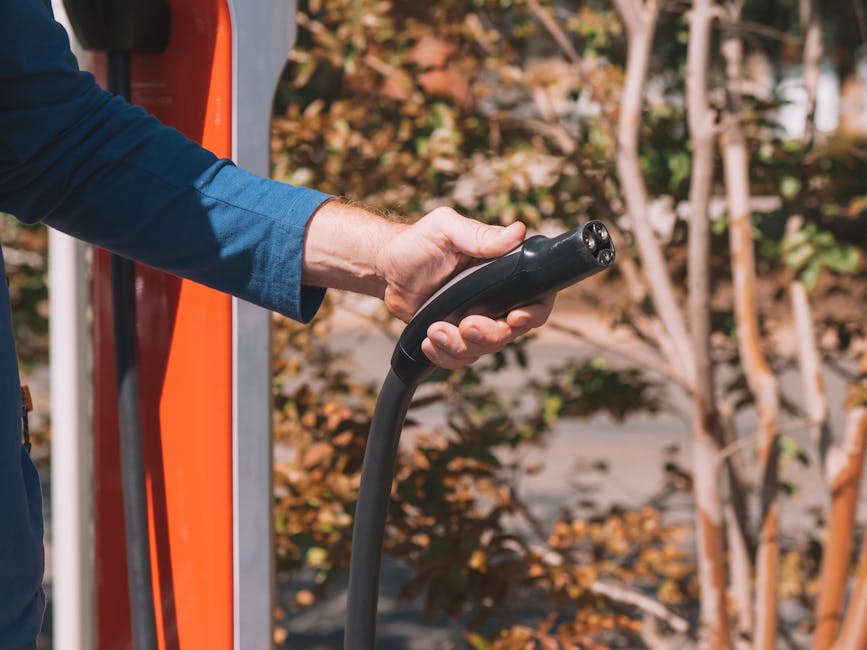
Most EVs in North America use the SAE J1772 connector. However, Tesla uses its own North American Charging Standard (NACS).
- If you drive a Tesla: You will likely need a J1772-to-Tesla adapter to use most third-party portable chargers.
- If you drive a non-Tesla: Most portable chargers will plug directly in. However, with many manufacturers switching to NACS in 2025, check your vehicle’s port type before buying.
Grounding and Overvoltage Protection
A good emergency charger will have built-in “Grounding Detection.” If the outlet you found in an old garage isn’t properly grounded, the charger will refuse to start, protecting your vehicle’s sensitive onboard electronics. It should also have overvoltage, overcurrent, and leakage protection to handle power surges.
Frequently Asked Questions about Emergency Charging
How much range can an emergency electric car charger add per hour?
It depends entirely on the voltage. On a standard 120V household outlet (Level 1), expect 3 to 5 miles per hour. On a 240V outlet (Level 2), you can get 10 to 30 miles per hour. For a 60-minute charge from a professional mobile service, you can typically gain 20 to 45 miles depending on your vehicle’s efficiency.
Can I safely use a portable EV charger in the rain or snow?
Yes, provided the unit has an IP65 or higher rating. However, the connection point (where the charger plugs into the wall) should always be kept dry. Most “bricks” are weather-sealed, but the standard NEMA plugs are not meant to be submerged or rained on directly.
Do I need special adapters to use these chargers with a Tesla?
Yes. Unless you buy a Tesla-specific portable connector, you will need a J1772-to-NACS adapter. These are standard with most Teslas, but it’s always smart to keep a spare in your emergency kit.
Conclusion: Driving with Peace of Mind
At Road Rescue Network, we know that range anxiety is the biggest hurdle for EV adoption. But with a solid emergency electric car charger in your trunk and a plan in place, you can drive with confidence. Whether you’re navigating the busy streets of New York or the long stretches between Austin and San Antonio, being prepared is half the battle.
If you find yourself stuck without a charger, or if the local outlet just isn’t cutting it, we provide fast, 24/7 on-demand roadside assistance with no membership fees. We instantly connect you with local rescuers in over 200 cities across the US to get you the boost you need.
Our Final Recommendation: Invest in a high-quality Level 2 portable charger with a NEMA 5-15 adapter. It’s the most versatile tool in an EV owner’s arsenal. Stay charged, stay safe, and we’ll see you on the road!