Fast, Reliable, and Always There: Choosing Your Roadside Assistance Plan
Why 24-Hour Roadside Assistance Plans Matter for Every Driver
Roadside assistance membership plans 24 hour provide critical support when car trouble strikes—day or night. These plans are designed to be a safety net, typically including services like towing, battery jump-starts, flat tire changes, lockout assistance, and emergency fuel delivery, all available around the clock across the United States and Canada.
Quick Comparison of Top Providers:
- AAA: Offers 3 tiers (Classic, Plus, Premier) with towing distances ranging from 5 to 200 miles, a limit of 4 service calls per year, and serves over 33 million motorists annually.
- Allstate Roadside: Features plans starting at around $5.50 per month, provides coverage for you in any car (including rentals), ensures 24/7 availability, and offers AARP discounts.
- Chevron Auto Club: Established in 1968, this provider includes valuable perks like trip interruption reimbursement and car rental discounts, even in its basic plans.
Car trouble doesn’t adhere to a 9-to-5 schedule. You might lock your keys in the car at 2 a.m. after a long flight, blow a tire on a deserted highway on a Sunday morning, or face a dead battery in a remote parking lot during a snowstorm. These moments are more than just stressful and inconvenient; they can be genuinely unsafe, leaving you vulnerable and exposed.
The right roadside assistance plan is meant to eliminate the panic of figuring out “who do I call?” and replace it with a single, reliable number. However, not all plans are created equal. Some offer basic towing that only covers a few miles, which might not be enough to get you to your trusted mechanic. Others provide comprehensive nationwide coverage with hotel reimbursements if you’re stranded far from home. The key is finding the balance between cost and coverage.
The core question: Which plan fits your driving life?
This guide breaks down what’s included in 24-hour roadside assistance memberships, compares the major providers, and explains the tiers, limits, and exclusions that matter. Whether you’re a daily commuter, a weekend road-tripper, or an RV enthusiast, understanding these differences will help you choose wisely.
If you want a broad overview of how roadside assistance fits into vehicle ownership, resources like the roadside assistance article on Wikipedia can provide helpful general background before you compare specific plans.
I’m Byron Tarlton, founder of Road Rescue Network, and I’ve spent over two decades building technology platforms in the transportation and roadside assistance industry. My experience developing digital infrastructure for various service providers gave me a unique insight into how traditional roadside assistance membership plans 24 hour work—and, more importantly, where they often fall short. I saw how annual commitments, service call limits, and long wait times could frustrate drivers who just needed immediate, straightforward help. This inspired the creation of a different model, one focused on on-demand assistance without the constraints of a membership.
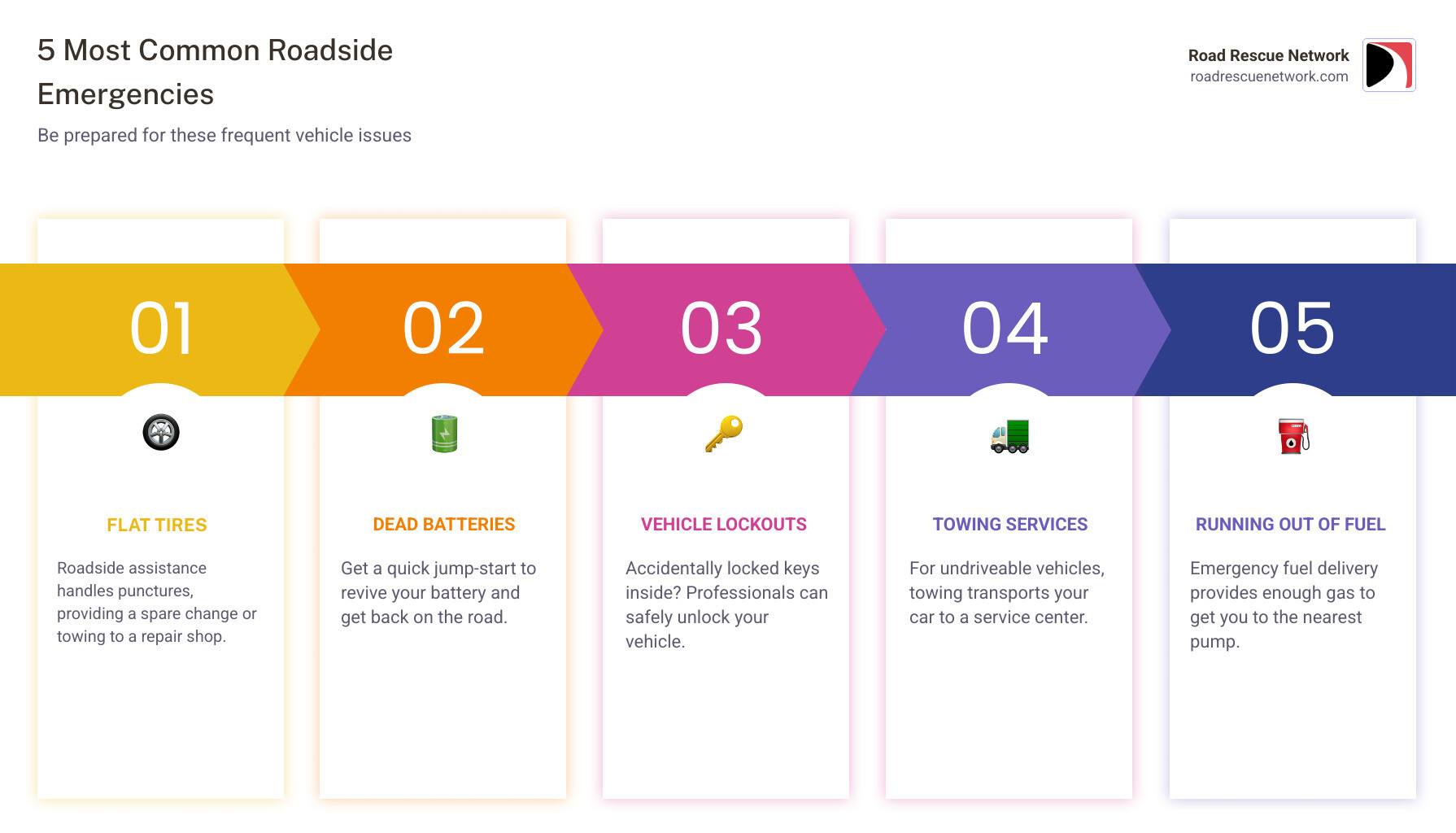
Roadside assistance membership plans 24 hour vocab to learn:
What’s Included in a 24-Hour Roadside Assistance Plan?
When we think about roadside assistance membership plans 24 hour, the first thing that comes to mind is usually a tow truck showing up to save the day. And while towing is definitely a cornerstone, these plans offer a suite of services designed to get us back on the road, or at least to a safe spot, no matter the hour. Understanding these core offerings is the first step in finding the perfect plan for our driving needs.
Core Emergency Services
At the heart of every reliable roadside assistance membership plan 24 hour are several essential services that tackle the most common vehicle breakdowns. These are the unsung heroes that prevent a minor inconvenience from turning into a major headache.
- Towing: This is often the most critical service. Whether our car has suffered a mechanical failure or isn’t safe to drive after an incident, towing ensures it gets to a repair shop or a location of our choice. Plans vary widely in the number of free towing miles offered. For example, some basic plans might cover only 5-7 miles, which may not be enough to reach your preferred mechanic. Premium options can extend to 100 miles or even a single 200-mile tow per year. It’s also good to know if the service uses flatbed tow trucks, which are often safer for all-wheel-drive and specialty vehicles. We provide Light Duty Towing in Virginia and many other states where we operate, ensuring your vehicle gets where it needs to go.
- Battery Jump-Start: There’s nothing quite like the silence of a dead battery when we’re in a hurry. Common culprits include leaving lights on, extreme temperatures, or simply an old battery reaching the end of its life. Roadside assistance plans quickly dispatch a technician to provide a jump-start, breathing life back into our vehicle. Many providers, like AAA, also offer mobile battery testing and replacement services, often with a warranty. If you’re in need of a boost, check out our Jump Start Service in Kansas and other service areas.
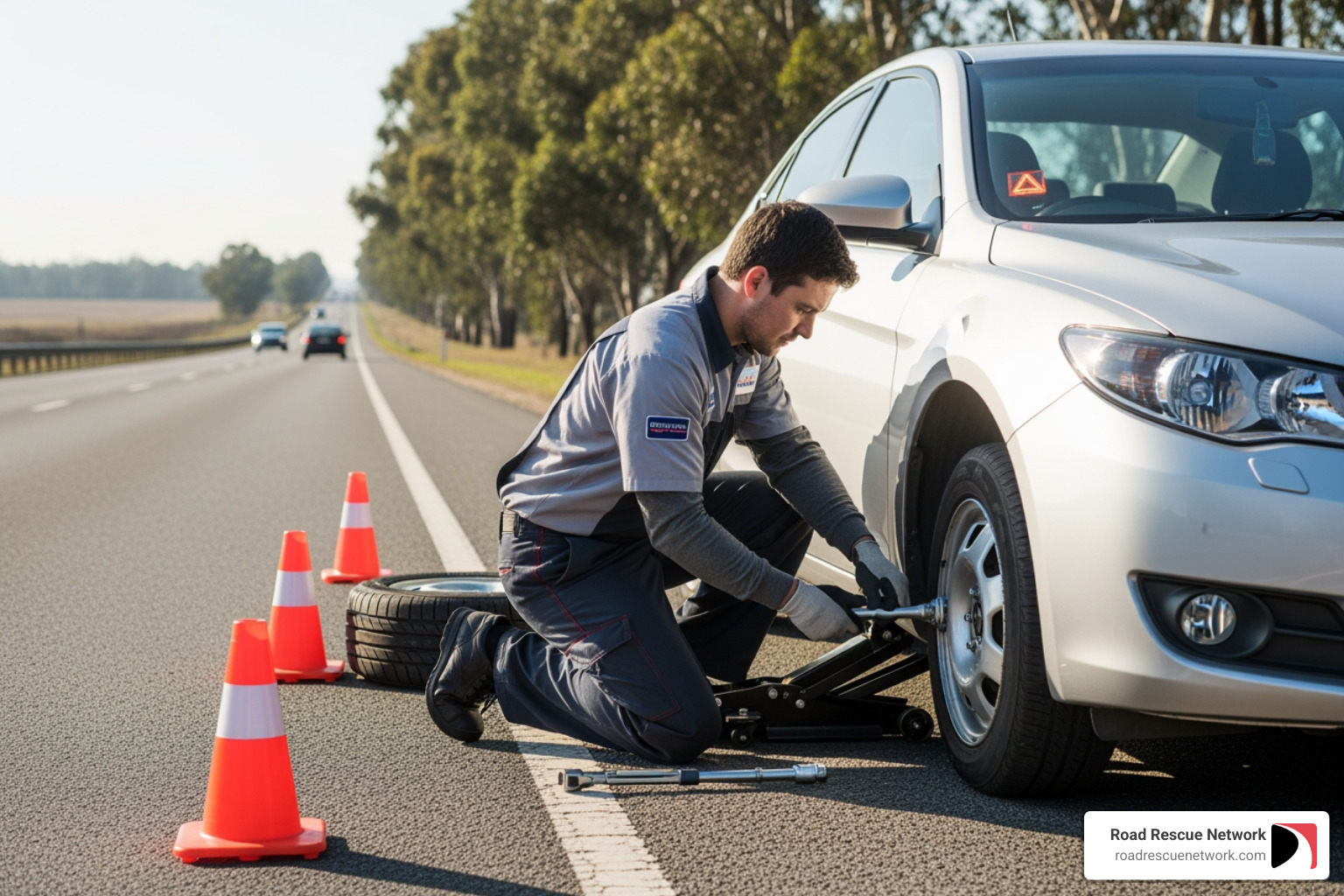
- Flat Tire Change: A flat tire can strike anywhere, anytime. Instead of wrestling with a lug wrench and jack on the narrow shoulder of a busy road, a technician can quickly and safely change it for you. They’ll install your vehicle’s inflated spare tire. It’s a good reminder to periodically check your spare’s condition and air pressure. If you don’t have a spare or it’s unusable, the service can tow you to a nearby tire shop. Our Tire Change in Nebraska is just one example of how we help drivers with this common issue.
- Lockout Assistance: Keys locked inside the car? It happens to the best of us, often at the most inconvenient times. Attempting to open up it yourself can lead to expensive damage to the door, window, or locking mechanism. Roadside assistance will send a professional with specialized tools to safely open your vehicle without causing harm. Some plans even cover a certain amount towards locksmith parts and labor if a new key is needed. If you find yourself locked out, our Lockout Service in New York and other locations are ready to assist.
- Emergency Fuel Delivery: Running on empty is a preventable but common mistake. Sometimes, we misjudge the distance to the next gas station or simply forget to fill up. Roadside assistance can deliver a few gallons of fuel directly to our location—typically enough to get to the nearest pump. While the delivery service is covered, you’ll usually have to pay for the cost of the fuel itself. We offer Fuel Delivery in Texas and numerous other states to get you back on your way.
- Winching/Extrication: If your vehicle slides into a ditch, gets stuck in mud, sand, or snow, winching service can pull it back to solid, accessible ground. This service is typically for vehicles that are within a certain distance of a paved road (e.g., 50-100 feet) and can be safely recovered without extensive effort.
Beyond the Basics: Additional Perks
While the core services are about immediate fixes, many roadside assistance membership plans 24 hour sweeten the deal with perks that offer broader peace of mind. These can be particularly valuable for frequent travelers or those who want extra protection.
- Trip Interruption Reimbursement: Imagine being on a road trip hundreds of miles from home, and your car breaks down, requiring an overnight stay for repairs. Some premium plans offer reimbursement for unexpected expenses like lodging, meals, and even a rental car if your vehicle is disabled for a certain period (e.g., over 24 hours, more than 100 miles from home). Chevron Auto Club is one provider known for including this benefit, reimbursing up to $1,000 for eligible expenses in such scenarios, showcasing how premium plans can offer significant value for travelers.
- Rental Car Discounts: Many membership plans come with exclusive discounts on car rentals from partner companies, which can be helpful if your vehicle is in the shop for an extended period or if you just need a temporary ride.
- Emergency Medical Transportation: In rare but serious situations, some high-tier plans offer coverage for emergency medical transportation if you’re injured in an accident far from home.
- Mobile Battery Testing: Beyond just jump-starts, some services offer comprehensive mobile battery testing. Technicians can assess the health of your battery and, if needed, provide and install a new one on the spot. This often comes with a nationwide warranty, ensuring you’re covered even if you travel.
Comparing the Best Roadside Assistance Membership Plans 24 Hour
Choosing the right roadside assistance membership plan 24 hour can feel like navigating a maze of different tiers, prices, and benefits. To help simplify things, let’s take a head-to-head look at three of the most popular providers in the United States: AAA, Allstate Roadside, and Chevron Auto Club. We’ll break down their offerings to see how they stack up, focusing on their 24/7 availability and core benefits. Each of these established companies offers a reliable, membership-based approach to roadside safety, but their plans differ in key ways that could make one a better fit for you than another.
Below is a comparison of their typical entry-level plans. Costs and specific details can vary by state and are subject to change, so it’s always best to confirm with the provider directly.
| Provider | Annual Cost (Basic Tier) | Towing Limit (Basic) | Service Calls Per Year | Unique Benefits |
|---|---|---|---|---|
| AAA | ~$65/year (Varies by region) | Up to 5 miles | 4 | Well-known brand, extensive service network, travel and retail discounts, DMV services. |
| Allstate Roadside | ~$89/year (Roadside Advantage) | Up to 10 miles | 5 | Covers the member in any car (including rentals and borrowed cars), AARP discounts available. |
| Chevron Auto Club | ~$60/year | Up to 15 miles | 3 | Includes trip interruption reimbursement even in the basic tier, long company history. |
As the table shows, the value of a plan depends heavily on your individual needs. A driver who stays close to home might find AAA’s 5-mile towing limit sufficient, while someone who frequently drives other people’s cars could benefit from Allstate’s person-centric coverage. Meanwhile, a road-tripper might see the trip interruption benefit from Chevron as a major plus. These plans provide a great sense of security for a fixed annual fee, but it’s important to be aware of the limitations, such as the cap on service calls and restrictive towing distances on basic tiers. For drivers who prefer not to be locked into an annual plan or worry about exceeding service limits, on-demand alternatives offer a pay-per-use model that can be more flexible and cost-effective.