Mobile Battery Service: The Ultimate Convenience for Car Troubles
Why a Dead Battery Doesn’t Have to Ruin Your Day
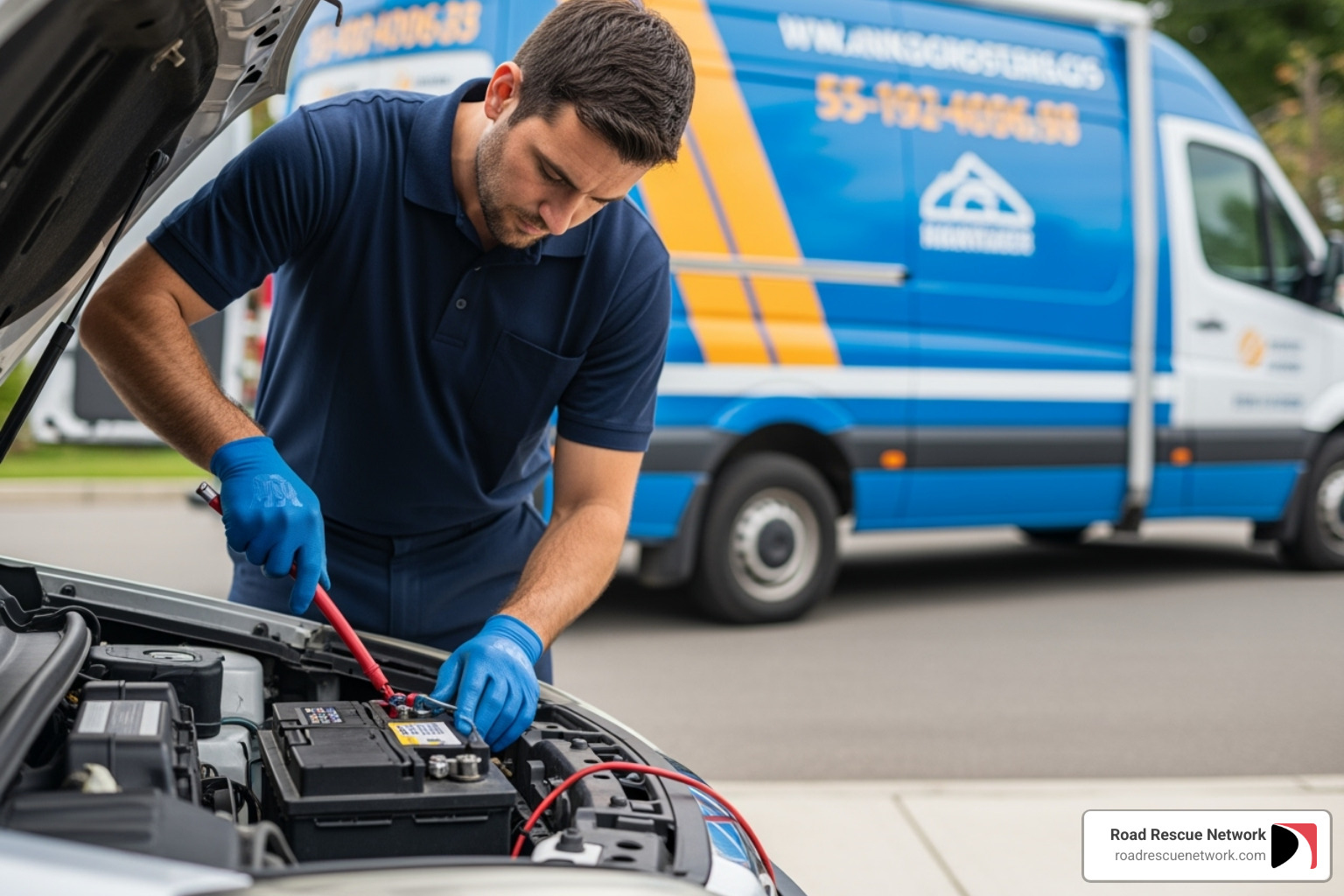
Mobile battery service brings professional technicians directly to your location to test, replace, and install a new car battery—whether you’re stranded at home, at work, or on the side of the road.
What You Get with Mobile Battery Service:
- On-site testing of your battery, starter, and charging system
- Professional installation of a new battery at your location
- Safe disposal and recycling of your old battery
- Typical service time: 30-60 minutes from arrival
- Available 24/7 in most areas
- Average cost: $300-$600, often comparable to shop prices without towing fees
You’re on your way to work, or to pick up the kids, or to catch an important meeting. You turn the key, and… nothing. Just a clicking sound. That sinking feeling of a dead battery is something millions of drivers experience every year, and it never happens at a convenient time.
The good news? You don’t have to call a tow truck or scramble to find a ride to an auto parts store anymore. Mobile battery service has transformed how drivers handle one of the most common car emergencies. Instead of your car going to the mechanic, the mechanic comes to you—with the right battery, the right tools, and the expertise to get you back on the road fast.
This guide walks you through everything you need to know about mobile battery replacement: how to spot the warning signs of a failing battery, what to expect during service, how pricing and warranties work, and how to schedule help when you need it most.
I’m Byron Tarlton, founder of Road Rescue Network, and I’ve spent over two decades building roadside assistance infrastructure across North America. Through our platform, I’ve seen how mobile battery service has become the fastest, most reliable solution for drivers facing unexpected breakdowns.
Understanding Your Car Battery: Lifespan, Warning Signs, and Common Issues
Your car battery does more than just start your engine—it’s the electrical lifeline that powers everything from your headlights to your radio. But batteries don’t last forever, and they’re surprisingly good at telling you when they’re struggling. Learning to recognize these warning signs can mean the difference between a quick mobile battery service call and being completely stranded.
The most obvious red flag is when your car won’t start at all. But smart drivers catch the problem earlier. A slow engine crank is usually the first clue—that sluggish, labored sound when you turn the key, like your car is waking up with a hangover. Dimming headlights or interior lights are another telltale sign, especially noticeable when you’re idling at a stoplight. Sometimes your check engine light will flicker on, triggered by voltage irregularities in your electrical system.
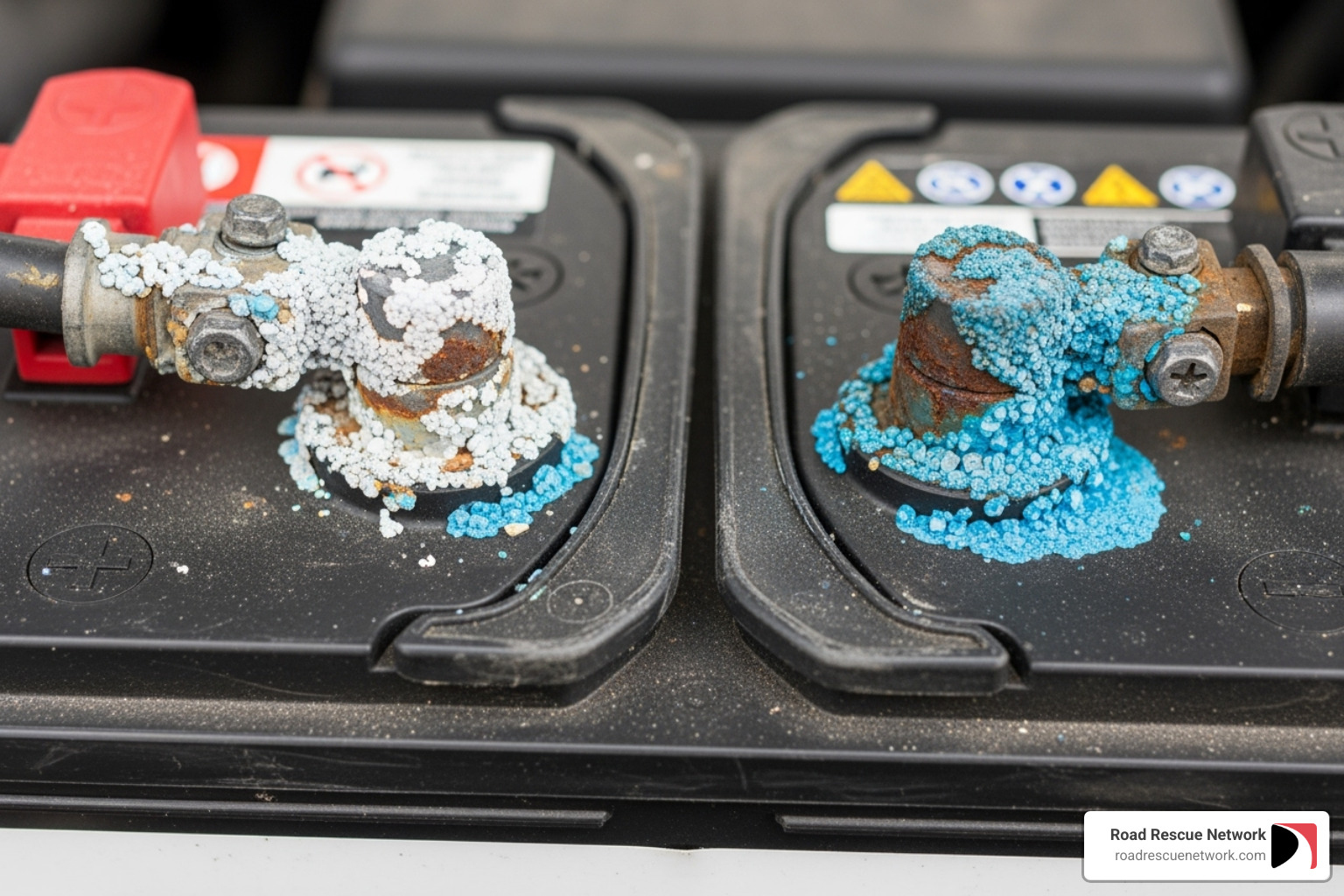
Then there are the physical warning signs. That rotten egg smell? That’s hydrogen sulfide gas escaping from a damaged or overcharged battery—not something you want to ignore. A swollen or bloated battery case means serious internal damage, often from overheating. And if you pop your hood and see white, crusty corrosion building up on the battery terminals, that’s battery acid residue that can interfere with your electrical connection.
Most car batteries live about 3 to 5 years, but that’s just an average. Your actual battery life depends heavily on how and where you drive. Frequent short trips are surprisingly hard on batteries because the alternator never gets enough time to fully recharge them. Extreme temperatures—both scorching summers and freezing winters—accelerate battery degradation faster than moderate climates.
The most common reasons batteries fail prematurely include extreme hot or cold weather (heat evaporates battery fluid while cold slows chemical reactions), a faulty alternator that fails to recharge the battery properly, parasitic drain from electrical components that keep drawing power after you’ve turned off the engine, and simple old age as internal components naturally wear out over time.
Just like with other roadside emergencies such as a Lockout Service, catching battery problems early means you can schedule service on your terms rather than waiting for a breakdown at the worst possible moment.
Regular vs. AGM Batteries: What’s the Difference?
Not all car batteries are created equal. The two main types you’ll encounter are regular flooded lead-acid batteries and AGM (Absorbent Glass Mat) batteries, and choosing the wrong one can cause real problems for your vehicle.
Regular batteries are the traditional, budget-friendly option. They’re filled with liquid electrolyte that you occasionally need to check and top off with distilled water. They work great for older vehicles with basic electrical needs, typically lasting 3 to 5 years. The downside? They’re more vulnerable to vibration damage, can leak corrosive acid if tipped over, and require periodic maintenance.
AGM batteries are the newer, more advanced technology. They’re completely sealed and maintenance-free, with the acid absorbed into glass mat separators instead of sloshing around as liquid. This makes them spill-proof, vibration-resistant, and longer-lasting—often 5 to 7 years or more. They also deliver higher cranking amps and recharge faster, which is why modern vehicles with start-stop technology, heavy electronics, or luxury features often require them.
| Feature | Regular (Flooded) Batteries | AGM (Absorbent Glass Mat) Batteries |
|---|---|---|
| Cost | Generally more affordable | More expensive due to advanced technology |
| Lifespan | Typically 3-5 years, can be shorter with poor maintenance | Often 5-7 years or more, more resistant to wear |
| Performance | Good for standard vehicle needs, consistent power delivery | Superior performance, higher cranking amps, faster recharging |
| Maintenance | Requires occasional checking of fluid levels and topping off | Maintenance-free, sealed design, no fluid checks |
| Best Use Case | Older vehicles, basic electrical needs, budget-conscious | Modern cars with start-stop technology, high electrical demands, luxury vehicles |
The catch? You can’t just swap one type for another based on price. Your vehicle’s manufacturer specifies which type you need based on your car’s electrical demands. Installing a regular battery in a car designed for AGM can lead to premature failure and electrical system problems. That’s why professional mobile battery service technicians always match the correct battery type to your vehicle’s specifications.
How Cold Weather Affects Your Battery
If you live anywhere with real winters, you know that cold weather and car batteries are mortal enemies. It’s not just that batteries struggle in the cold—they can actually become dangerous.
Here’s the science: at 32°F (0°C), your battery operates at only about 65% efficiency. The chemical reactions that produce electricity slow way down, meaning your battery has less cranking power right when your engine needs more power to turn over cold, thick oil. Meanwhile, the battery’s ability to accept a charge from your alternator also drops, so those short winter commutes leave it perpetually undercharged.
In severe cold, the battery’s electrolyte solution can actually freeze. If you see a battery that’s bulging, cracked, or has frost on the terminals, do not attempt to jump-start it. A frozen battery can explode when you try to charge it, spraying acid and causing serious injury.
To protect your battery when temperatures drop, park in a garage or covered area whenever possible—even an unheated garage is warmer than outside. Drive regularly for longer distances to give your alternator time to fully recharge the battery; those five-minute trips to the store aren’t enough. And if you live in an extremely cold climate, consider battery warmers or insulation wraps designed to maintain optimal operating temperature (just remember to remove external warmers before starting your engine).
The good news? If cold weather does claim your battery, you don’t need to brave the freezing temperatures yourself. Road Rescue Network’s mobile battery service brings a professional technician—and a fresh, properly-sized battery—right to wherever you’re parked.
The On-Demand Advantage: What is Mobile Battery Service and Why Choose It?
Remember when a dead battery meant calling a tow truck, waiting around, and then spending half your day at a repair shop? Those days are over. Mobile battery service flips that old script entirely—instead of your car going to the mechanic, the mechanic comes to you.
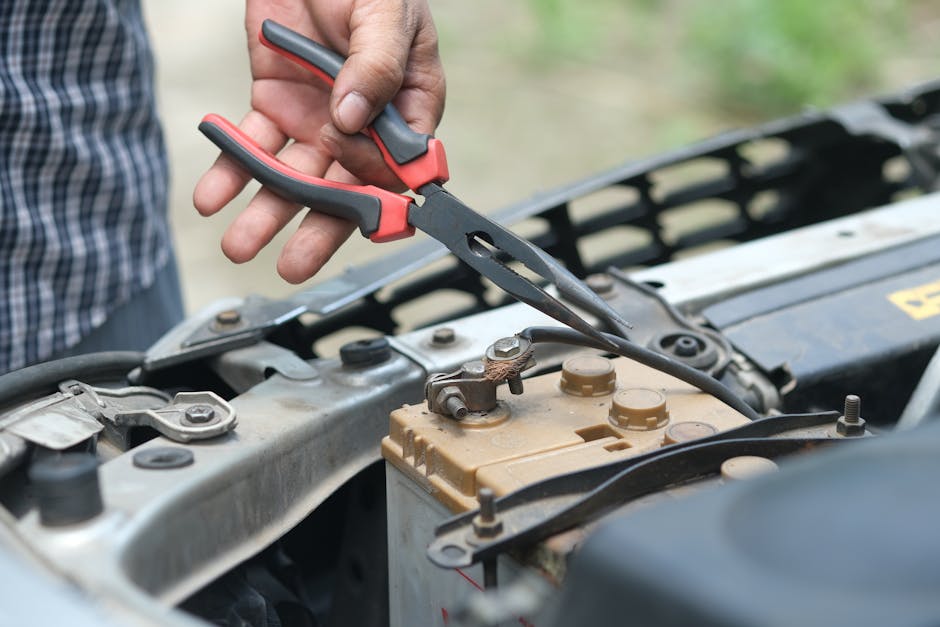
It works exactly how you’d hope it would. When your battery dies, you simply request service online or make a quick phone call. You tell them what kind of vehicle you’re driving and where you’re stranded—whether that’s your driveway, your office parking lot, or the grocery store. A qualified technician gets dispatched to your exact location, usually within the hour.
Once they arrive, they don’t just slap in a new battery and call it a day. They run a proper diagnostic test to confirm your battery is actually the problem. Sometimes what looks like a dead battery is really a faulty alternator or a bad starter, and you want to know that before spending money on a replacement. If your battery does need replacing, they’ll install a fresh one right there on the spot, making sure all the connections are clean and secure. They’ll even take your old battery with them and recycle it properly—no need for you to figure out hazardous waste disposal.
The whole process typically takes 30 to 60 minutes from the moment the technician arrives. That’s faster than most people can arrange a tow, let alone get to a shop and wait for service.
The advantages over the traditional shop visit are pretty clear. First, there’s the convenience factor—you don’t lose your entire morning or afternoon. You’re not scrambling to find someone to give you a ride or calling an Uber to get to the auto parts store. You can wait at home, at work, or wherever you happen to be.
Then there’s the cost savings. You’re not paying for a tow truck, which alone can run $75 to $150 or more. Many mobile services charge prices comparable to what you’d pay at a shop, sometimes even less when you factor in all the hidden costs of the traditional route. There are no towing fees eating into your budget, and with services like Road Rescue Network, there are no membership fees or surprise charges.
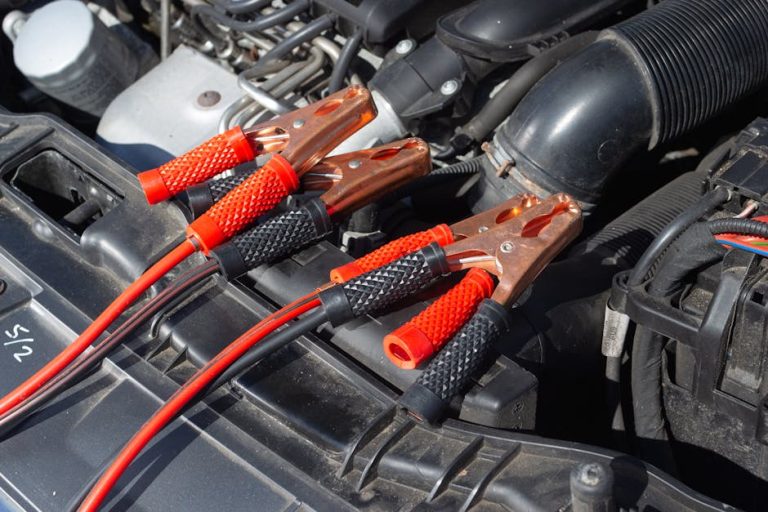
Safety matters too. If your battery is failing, trying to drive your car to a shop can leave you stranded somewhere far less convenient than your current location. And if you’re not experienced with jumper cables, attempting a DIY jump-start can be risky—batteries contain sulfuric acid and can spark or even explode if handled incorrectly.
The speed of service is another major win. Most mobile technicians can reach you within an hour, and the entire job is done in under an hour after that. Compare that to waiting for a tow, getting to a shop, and then waiting in line for service. You could easily lose half a day.
Just as we provide quick response for a Jumpstart Service when you need a boost or comprehensive Mobile Auto Repair for more complex issues, mobile battery service represents the modern approach to roadside emergencies—fast, convenient, and built around your schedule, not a shop’s.
What’s Included in a Typical Mobile Battery Replacement?
When you call for mobile battery service, you’re getting a complete solution, not just a battery swap. Here’s what a professional service includes:
- Comprehensive Battery Health Test: A thorough diagnostic to confirm your battery has actually failed and isn’t just discharged
- Starter and Charging System Check: Testing your alternator and starter to make sure a new battery will actually solve the problem
- Professional Installation of a New Battery: The right battery for your specific vehicle, installed correctly with clean, secure connections
- Safe Removal and Recycling of the Old Battery: Proper disposal of hazardous materials according to environmental regulations—no trips to the recycling center for you
This comprehensive approach means you’re not just getting a new battery—you’re getting peace of mind that your vehicle’s entire electrical system is working properly.
Navigating Costs, Warranties, and Service Providers
Let’s talk about the money side of things, because I know that’s often the first question on everyone’s mind when their battery dies.
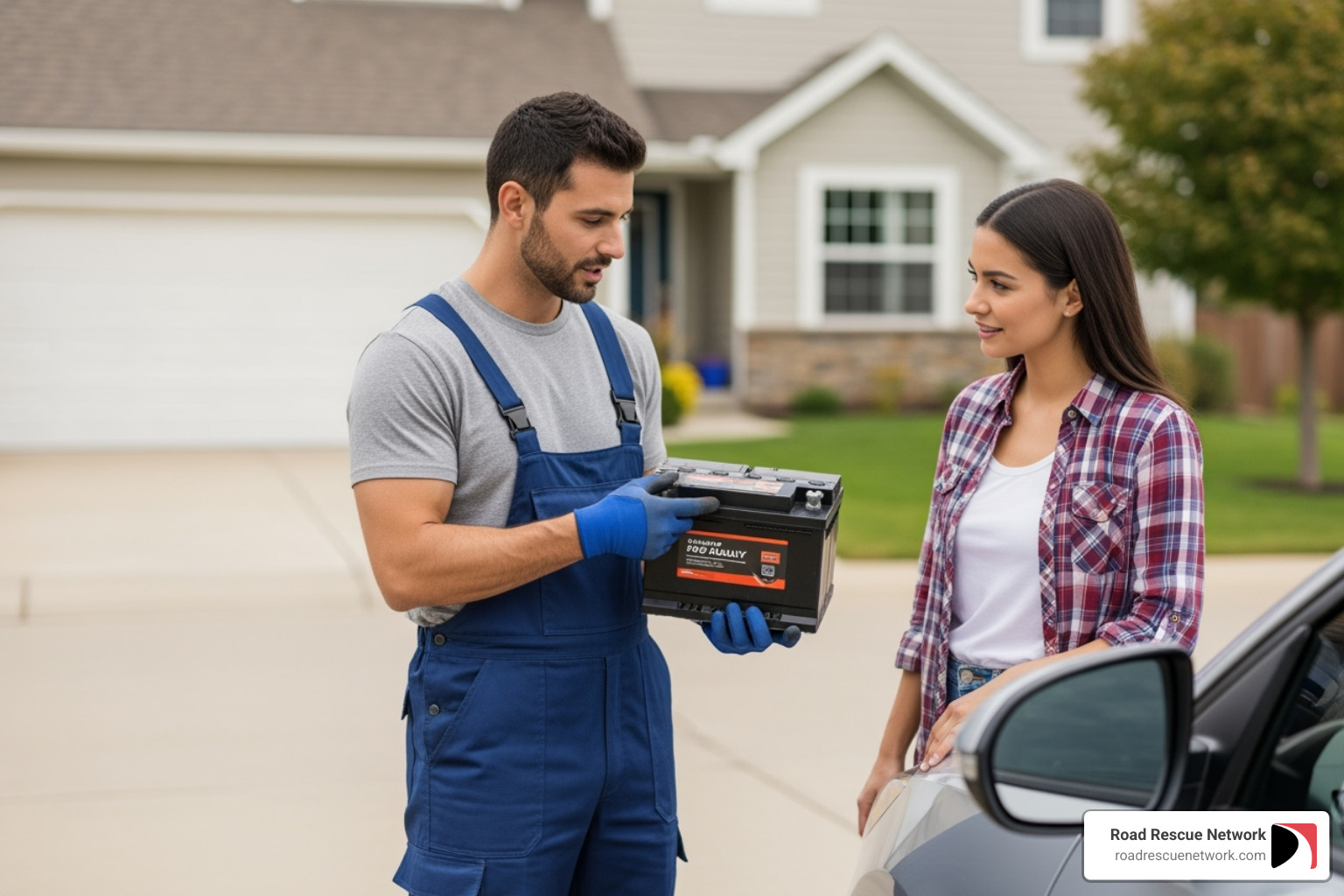
A typical car battery replacement—whether you go to a shop or use mobile battery service—usually runs between $300 and $600. I know that’s a wide range, but there’s a good reason for it. The final price depends on what kind of battery your car needs. If you’ve got a newer vehicle with start-stop technology, you’ll likely need an AGM battery, which costs more than a standard flooded battery. Luxury vehicles and those with complex electrical systems sometimes require specialized batteries too, which can push the price higher.
Here’s the thing about mobile service pricing that surprises most people: it’s often comparable to what you’d pay at a traditional shop, and sometimes even less when you factor in the full picture. Think about it—if your car won’t start, you’re looking at a tow truck bill that can easily run $100 to $200 or more, depending on how far you need to go. With mobile battery service, that cost simply disappears. The technician comes to you. No tow needed.
Most quality batteries come with solid warranties, typically a 3-year free replacement guarantee that’s honored nationwide. This means if your battery fails within that window, you get a new one at no charge, wherever you are. Some providers also include a labor warranty covering the installation work itself, which gives you additional peace of mind. Before you agree to any service, it’s always smart to ask about the specific warranty terms—what’s covered, for how long, and whether it’s honored everywhere or just locally. For more details on what to look for in a quality battery, you can check out resources from trusted automotive experts.
How to Get On-Demand Mobile Battery Service Now
When you’re staring at a car that won’t start, every minute counts. The good news? Getting help with mobile battery service is remarkably simple, and it’s designed to get a technician to your location fast.
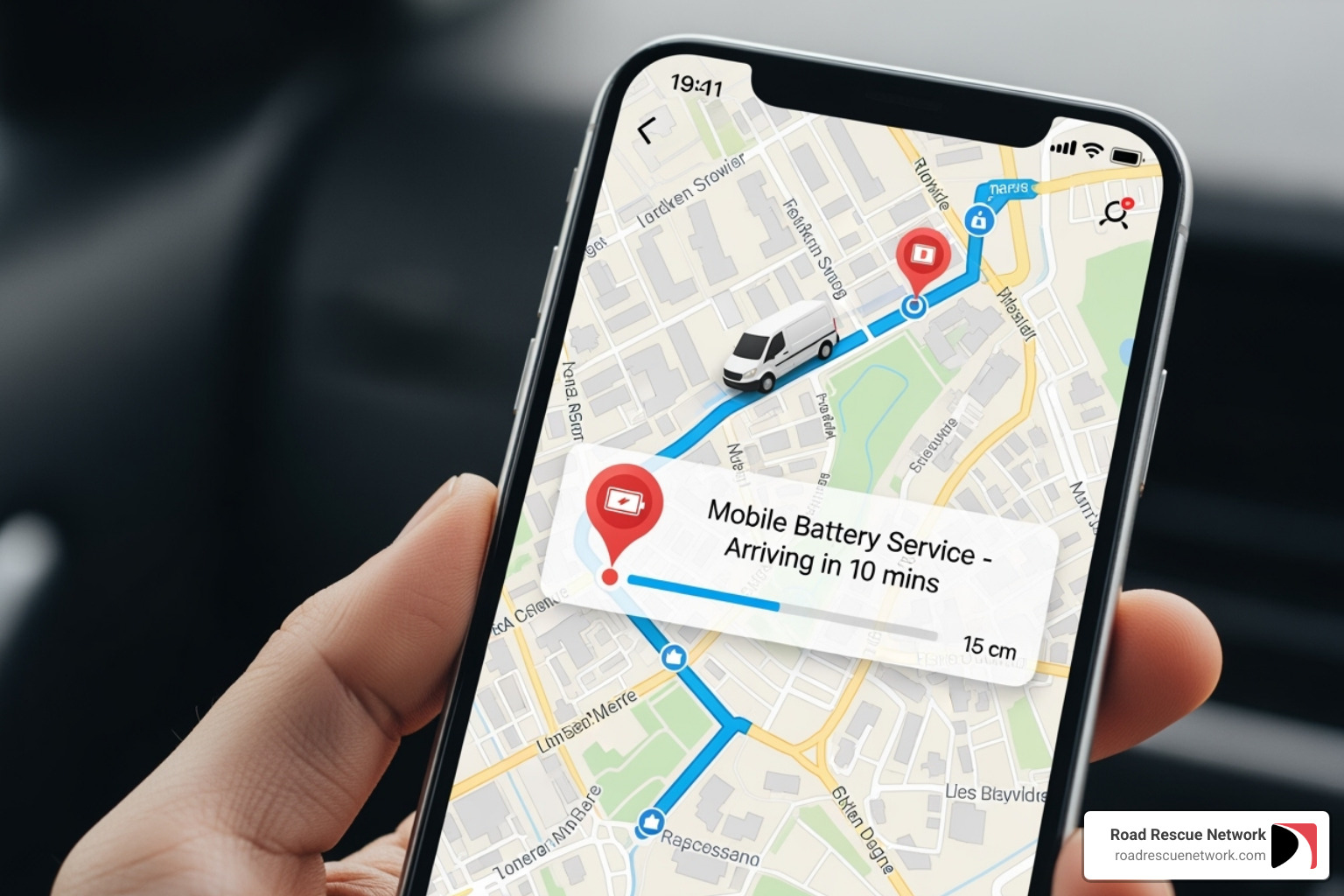
Scheduling your mobile battery service
Requesting mobile battery service is straightforward, whether you’re tech-savvy or prefer the personal touch of a phone conversation. Most providers offer two main ways to connect: you can submit an online request through a website or mobile app, or you can simply call a 24/7 dispatch center and speak directly with someone who can help.
At Road Rescue Network, we’ve built our platform specifically to eliminate the hassle. We instantly connect you with local, vetted technicians without requiring membership fees or subscriptions. There’s no waiting on hold or navigating complicated phone trees—just fast, direct access to help when you need it most.
Our service areas cover major cities like Los Angeles, Houston, Chicago, and New York, as well as countless smaller communities across the country. Whether you break down in a busy downtown or a quiet residential neighborhood, we have technicians ready to reach you. And because battery failures don’t care what time it is, these services operate around the clock—24/7 availability means you’re never alone when trouble strikes.
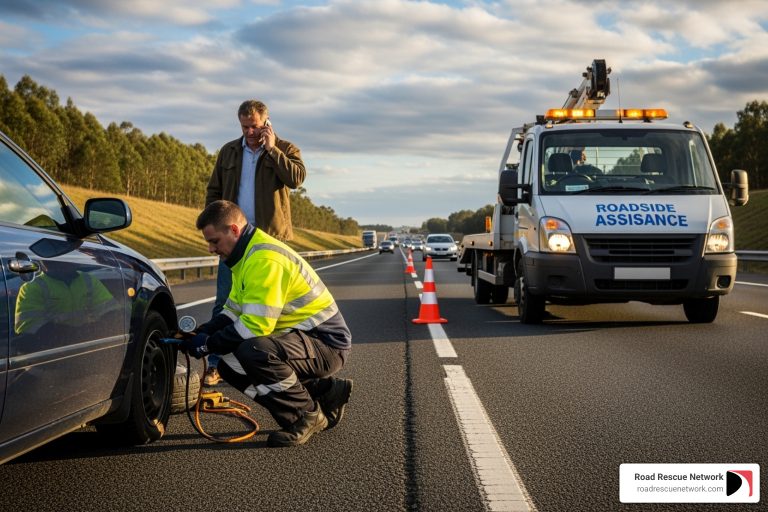
This same rapid-response approach powers our other emergency services, from Mobile Tire Repair to jumpstarts and lockouts. We understand that when you’re stranded, speed and reliability matter more than anything.
Information Needed for a Quick Quote
To get you the most accurate quote and ensure the technician arrives with exactly what you need, have a few key details ready when you call or submit your request. Your vehicle year, make, and model tells us which battery your car requires—a 2015 Honda Accord needs something different than a 2020 Ford F-150. The engine size can also matter, since some vehicles have different battery specifications depending on whether they have a four-cylinder or a V8.
Finally, provide your exact location—a specific address or clear cross-streets. The more precise you are, the faster we can dispatch a technician and the sooner you’ll be back on the road. Think of it as giving directions to a friend: the clearer you are, the easier it is for them to find you.
Having this information at your fingertips streamlines everything, turning what could be a stressful situation into a quick, manageable fix.
Frequently Asked Questions About Mobile Battery Replacement
When your battery dies unexpectedly, you probably have questions racing through your mind—especially if you’ve never used a mobile battery service before. We’ve helped thousands of drivers through this exact situation, and we hear the same concerns over and over. Here are the answers to what people ask us most often.
How long does a mobile battery replacement take?
Here’s the good news: you won’t be waiting around all day. From the moment the technician pulls up to your location, the entire process—testing your old battery, removing it, installing the new one, checking all your connections, and making sure everything’s working properly—typically takes 30 to 60 minutes. That’s it.
Think about it this way: in the time it would take you to arrange a tow, get to a shop, wait for your turn, and then wait for the actual work to be done, you could already be back on the road with mobile service. Most of our customers are genuinely surprised by how fast it is. You might even have time to grab a coffee or make a few phone calls while the technician works.
Is a mobile battery service more expensive than going to a shop?
This is probably the most common question we get, and it’s a fair one. At first glance, you might think having someone come to you would cost more. But when you look at the full picture, mobile service is often comparable or even cheaper than the traditional route.
Here’s what we mean: sure, you might find a battery at an auto parts store for a certain price. But then you need to factor in the tow truck fee—which alone can run $75 to $150 or more, depending on your location and distance. You also need to consider your time. How many hours will you lose dealing with the tow, waiting at the shop, and arranging transportation?
With mobile battery service, you get transparent, all-inclusive pricing. The cost typically covers the battery itself, professional installation, testing of your charging system, and proper disposal of your old battery. No surprise fees. No additional charges for coming to you. When you add it all up, mobile service delivers better value—not to mention you get to stay comfortable at home or work instead of sitting in a waiting room.
What happens to my old car battery?
This is an important question, and we’re glad people ask it. Your old car battery isn’t something you can just toss in the trash—it contains lead and sulfuric acid, which are serious environmental hazards.
When you choose mobile battery service, the technician handles everything for you. They’ll safely remove your old battery and recycle it according to all environmental regulations. This service is included as part of your battery replacement, so there’s no additional cost or effort on your part.
The battery gets transported to a proper recycling facility where the lead, plastic, and acid can be recovered and reused. In fact, car batteries are one of the most recycled products in the world—about 99% of their components can be recycled into new batteries or other products. You get peace of mind knowing you’re not contributing to environmental pollution, and you don’t have to figure out where to take a hazardous battery yourself.
Conclusion
A dead car battery doesn’t have to be the day-ruining crisis it once was. Thanks to mobile battery service, what used to mean hours of frustration—calling for a tow, waiting at a repair shop, rearranging your entire schedule—can now be resolved in less than an hour, right where you’re parked.
Throughout this guide, we’ve walked through everything from spotting the early warning signs of battery failure to understanding the differences between regular and AGM batteries. We’ve explored how cold weather can sap your battery’s power and why mobile battery service has become the go-to solution for millions of drivers who value their time and peace of mind.
The convenience speaks for itself: a professional technician arrives at your location, tests your battery and charging system, installs a new battery if needed, and recycles your old one—all while you stay exactly where you are. No tow truck fees. No waiting rooms. No juggling rides or missing appointments. Just fast, transparent service that gets you back on the road.
Whether you’re dealing with a battery that’s simply reached the end of its 3-to-5-year lifespan, or you’ve been caught off guard by an unexpected cold snap, help is available 24/7. Services like Road Rescue Network connect you instantly with local, vetted technicians without requiring memberships or hitting you with hidden fees.
The next time you turn your key and hear nothing but clicks, remember: you have options, and they’re better than ever. For immediate, membership-free roadside assistance, including battery replacement, get help from our mobile auto repair network now. We’re standing by around the clock to connect you with the help you need, because no one should be stranded over something as simple as a dead battery.