Motorcycle Accident Assistance: Legal and Medical Help for Riders
Why Motorcycle Accident Assistance Matters in Georgia
Motorcycle accident assistance can mean the difference between a full recovery and financial devastation after a crash. In 2018 alone, 154 Georgians lost their lives in motorcycle accidents, and approximately 80% of motorcycle crashes result in rider injuries. Despite making up only 2% of registered vehicles in Georgia, motorcycles account for 12% of all traffic fatalities.
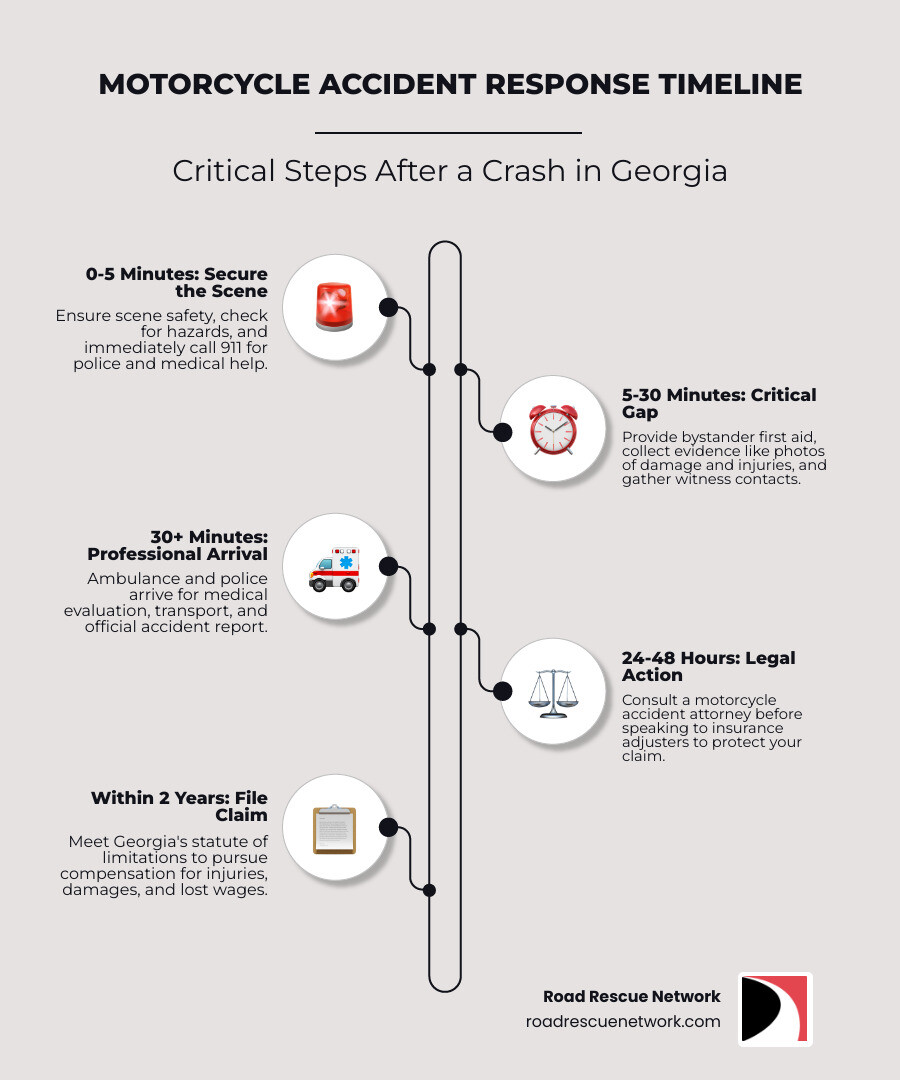
What to Do Immediately After a Motorcycle Accident:
- Call 911 – Get police and medical help to the scene
- Document Everything – Take photos of damage, injuries, road conditions, and witness contact information
- Get Medical Attention – Even if you feel fine, internal injuries may not show symptoms immediately
- Contact a Lawyer – Before speaking with insurance adjusters, consult with an attorney who specializes in motorcycle accidents
- Notify Your Insurance – But only after you’ve spoken with legal counsel
Types of Assistance Available:
- Medical: Emergency response, trauma care, rehabilitation support
- Legal: Free consultations, claims representation, statute of limitations guidance (2 years in Georgia)
- Financial: Compensation for medical bills, lost wages, pain and suffering, property damage
- Roadside: Towing services, accident scene management, 24-hour hotlines
The most critical period after a motorcycle crash is the 5-30 minute gap before an ambulance arrives. What happens during this window can significantly impact your injuries and your ability to recover compensation later.
I’m Byron Tarlton, and through my work building Road Rescue Network and coordinating emergency response systems across multiple states, I’ve seen how proper motorcycle accident assistance can protect both riders’ health and their legal rights. This guide covers the immediate steps, legal protections, and resources that injured motorcyclists in Georgia need to know.
Learn more about motorcycle accident assistance:
Immediate Steps and Motorcycle Accident Assistance at the Scene
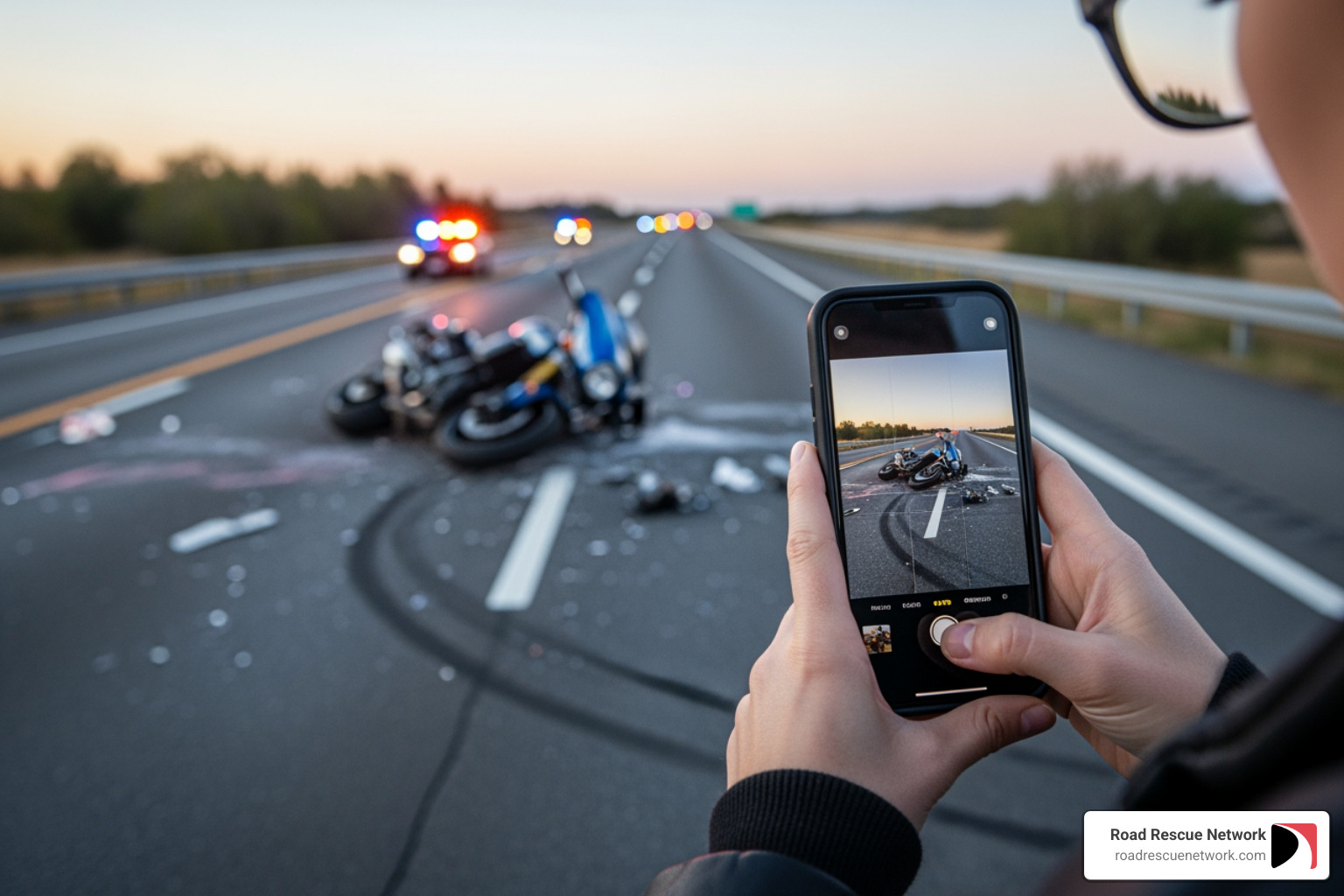
When the dust settles after a crash, the minutes that follow are chaotic. However, the actions we take in this “golden hour” dictate the success of both our physical recovery and our future legal claims. The very first priority is safety. If you are able, move yourself and your bike out of the flow of traffic to prevent a secondary collision.
Once you are in a safe position, your next step is to call 911. In Georgia, a police report is a foundational piece of evidence for any insurance claim. While waiting for the authorities, start gathering evidence. Use your smartphone to take high-quality photos and videos of the scene, including the position of the vehicles, skid marks, road hazards, and any visible injuries.
Don’t forget the human element. Collect names and contact information from any witnesses. Their unbiased accounts can be the “silver bullet” in a dispute over who was at fault. Throughout this process, maintain a professional demeanor. It is vital to avoid admitting fault or making detailed statements like “I didn’t see him” to the other driver or bystanders. Anything you say can be used by insurance companies to reduce your payout.
For those who want to be prepared before an accident happens, resources like Accident Scene Management – Motorcycle First Aid offer specialized training. They focus on the 5-30 minute gap before professionals arrive, teaching riders how to stabilize a scene and provide trauma care. You can even find specialized Trauma and First Aid Products designed specifically for the types of injuries motorcyclists face, such as heavy bleeding or road rash.
Professional Medical Motorcycle Accident Assistance Resources
Even if you think you’ve walked away with just a few scrapes, you must seek a professional medical evaluation. Adrenaline is a powerful mask; it can hide the symptoms of internal bleeding, organ damage, or concussions for hours or even days. Documenting your injuries immediately creates a direct link between the accident and your medical condition, which is essential for your claim.
For long-term recovery, organizations like M.A.R.I – Motorcycle Accident Rehabilitation Initiative provide support for injured riders and their families. While they are a non-profit, they emphasize the importance of peer-to-peer support during the rehabilitation process.
Another excellent resource is the HURT911® Card. This program provides a 24-hour accident hotline and can even offer rewards for information leading to the conviction of hit-and-run drivers. Carrying a medical info card or a specialized trauma pack ensures that if you are unconscious, first responders have immediate access to your allergies, blood type, and emergency contacts.
Legal Motorcycle Accident Assistance and Compensation
The legal side of motorcycle accident assistance is governed by strict timelines. In Georgia, the statute of limitations for personal injury claims is generally two years from the date of the accident. If you miss this window, you lose your right to seek compensation forever.
When you pursue a claim, you can seek several types of damages:
- Economic Damages: These cover tangible costs like hospital bills, physical therapy, lost wages, and future earning capacity.
- Non-Economic Damages: These address the “intangibles,” such as pain and suffering, emotional distress, and loss of enjoyment of life.
- Property Damage: Compensation for the repair or replacement of your motorcycle and safety gear.
Programs like Aid to Injured Motorcyclists | AIM Team Motorcycle Lawyers offer free legal services and emergency cards to help riders navigate these complex waters. Additionally, if your bike is stranded, professional motorcycle towing services can provide specialized assistance to get your vehicle to a safe location without further damage.
Navigating Georgia Motorcycle Laws and Liability
Georgia law (Title 40) treats motorcycles as motor vehicles, meaning riders have the same rights and responsibilities as car drivers. However, there are specific mandates you must follow to stay legal and protect your right to compensation.
- Helmet Requirements: All riders and passengers in Georgia must wear a DOT-approved helmet.
- Eye Protection: If your bike doesn’t have a windshield, you are legally required to wear eye protection (goggles or a face shield).
- Lane Usage: Motorcyclists are entitled to the full width of a lane. Other vehicles are prohibited from “lane sharing” with a bike.
- Lane Splitting: This is strictly prohibited in Georgia. You cannot ride between rows of stopped or moving vehicles.
Georgia follows a modified comparative negligence rule. This means you can still recover damages if you were partially at fault, provided your fault is less than 50%. However, your compensation will be reduced by your percentage of fault. For example, if you are awarded $100,000 but found 20% at fault for not wearing a helmet, your final check will be $80,000. If you are 50% or more at fault, you get nothing.
Understanding Injuries and Insurance Claims
Motorcycle accidents often result in “catastrophic” injuries because riders lack the protective cage of a car. Common injuries include:
- Road Rash: Severe skin abrasions that may require skin grafts.
- Biker’s Arm: Nerve damage in the arm caused by the instinct to catch oneself during a fall.
- Traumatic Brain Injury (TBI): Even with a helmet, the force of impact can cause concussions or permanent cognitive damage.
- Spinal Cord Injuries: These can lead to partial or total paralysis.
When dealing with insurance, be wary. Adjusters often use “biker bias,” assuming the motorcyclist was being reckless. They may offer a quick, low-ball settlement before the full extent of your injuries is known.
In terms of coverage, Medical Payments (Med Pay) is a vital optional add-on in Georgia. Unlike liability insurance, Med Pay covers your medical bills regardless of who caused the accident. This is especially important because some private health insurance policies have “motorcycle exclusions” that refuse to pay for injuries sustained while riding. If the cost of repairs exceeds the bike’s value, the insurance company will declare it a total loss, and you will be compensated for the actual cash value of the motorcycle minus your deductible.
Frequently Asked Questions about Motorcycle Accident Assistance
What are the most common causes of motorcycle accidents in Georgia?
Most accidents are caused by passenger vehicle drivers who simply “didn’t see” the motorcycle. Common scenarios include distracted driving (texting), cars turning left in front of an oncoming bike, and blind-spot collisions during lane changes. Road hazards like loose gravel, potholes, and “dooring” (when a parked car opens a door into a rider’s path) are also frequent culprits.
How does not wearing a helmet affect my compensation claim?
While not wearing a helmet doesn’t automatically bar you from recovery, it falls under the comparative negligence rule. If the insurance company can prove your head injuries would have been less severe with a helmet, a jury may assign you a percentage of fault, significantly reducing your payout.
How long does it typically take to settle a motorcycle accident case?
There is no set timeline. A simple case with clear liability might settle in a few months. However, complex cases involving severe injuries, disputed fault, or litigation can take two years or longer. It is usually best to wait until you have reached “Maximum Medical Improvement” (MMI) before settling, so you know the full cost of your future medical needs.
Conclusion
At Road Rescue Network, we understand that a motorcycle accident is one of the most stressful events a person can experience. While we specialize in providing on-demand, 24/7 roadside assistance—connecting you with local rescuers for towing or mechanical help without the need for expensive memberships—we also know that your recovery involves more than just moving your bike.
By understanding Georgia’s laws, utilizing resources like trauma training and specialized legal aid, and acting quickly to preserve evidence, you can protect your future. Whether you need a jumpstart in Atlanta or more info about light duty towing services after a mishap, having a plan for motorcycle accident assistance is the best way to ensure you can get back on two wheels as soon as possible. Stay safe, wear your gear, and remember that help is only a call away.