
Never Stranded: A Comprehensive Guide to Local Roadside Services
Why You Need Reliable 24/7 Car Help
24/7 car help is immediate roadside assistance available any time, day or night, to get you back on the road when your vehicle breaks down. Whether you’re dealing with a dead battery at 3 AM or a flat tire during your morning commute, these services send trained technicians to your location to fix the problem or tow your vehicle to safety.
What 24/7 Car Help Covers:
- Battery Jump Start – Get your dead battery running again
- Flat Tire Change – Spare tire installation on the spot
- Fuel Delivery – Emergency gas or diesel when you run out
- Lockout Service – Professional help when keys are locked inside
- Towing – Transport to a repair shop if the car can’t be fixed on-site
- Minor Repairs – Quick mechanical fixes to get you moving
Breakdowns don’t follow a schedule. For example, one driver’s review noted that help arrived in just 20 minutes, turning a day-ruining event into a minor inconvenience.
The good news? Using roadside assistance services typically won’t increase your car insurance rates. Most services are available whether you’re driving your own car, a borrowed vehicle, or riding as a passenger. You can request help through a simple phone call, mobile app, or online form.
The key is knowing what information to have ready (your location, vehicle details, and the problem), understanding what services are available, and choosing between on-demand options or traditional membership plans.
I’m Byron Tarlton, founder of Road Rescue Network, and I’ve spent over two decades building nationwide networks that connect stranded drivers with local service providers for immediate 24/7 car help. My experience has taught me that the difference between a minor inconvenience and a major crisis is often how quickly you get reliable help.
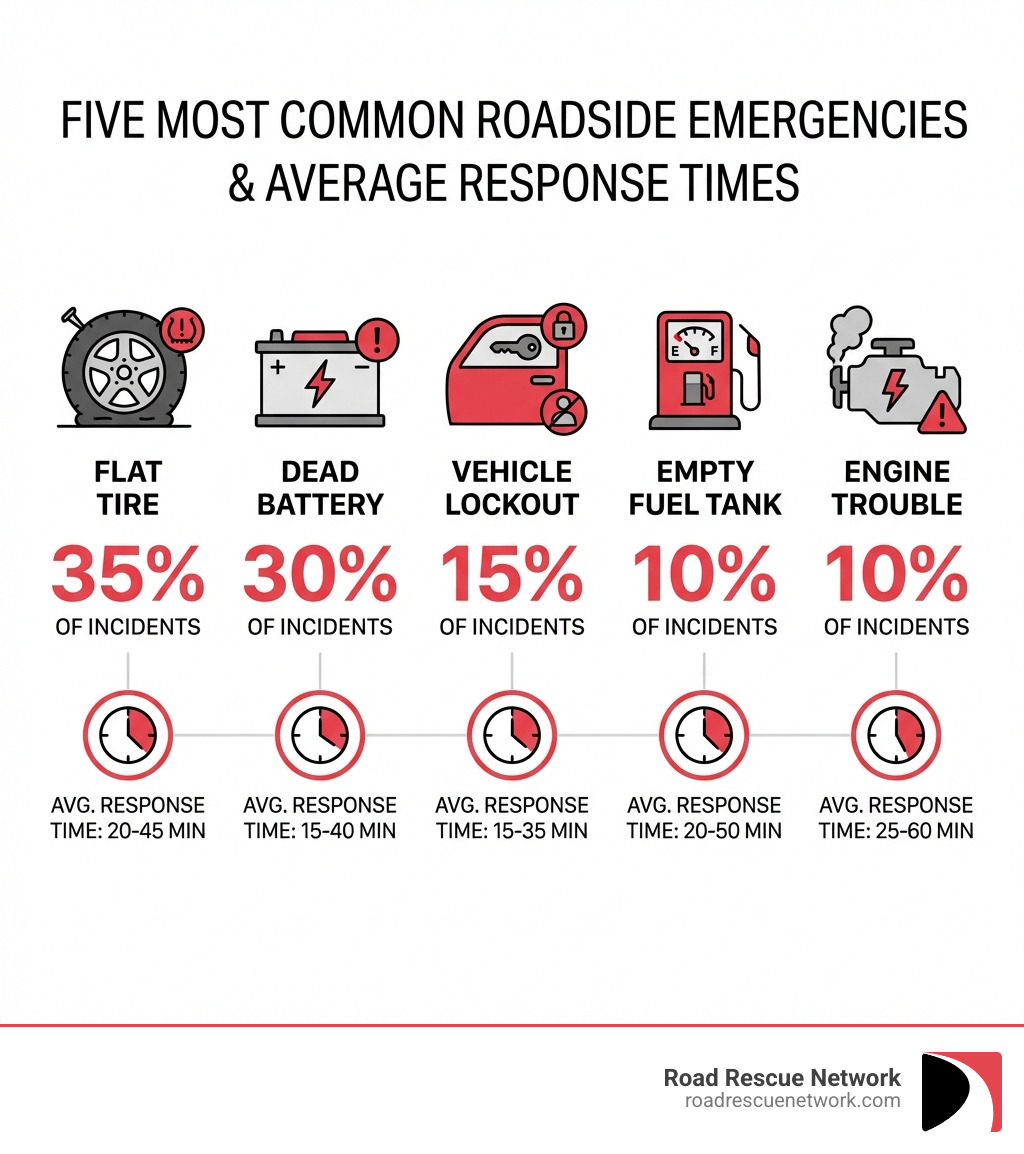
Simple guide to 24/7 car help:
What’s Included? A Breakdown of Common Roadside Assistance Services
Knowing what kind of 24/7 car help is available can turn a stressful car breakdown into a manageable one. Roadside assistance services provide peace of mind, ensuring you’re never left stranded. These services help you get back on the road quickly, whether it’s a simple fix or a more complex issue requiring a tow.
Typically, roadside assistance includes jumpstarts, tire changes, fuel delivery, and towing. Many providers offer help with breakdowns, dead batteries, flat tires, and lockouts. We at Road Rescue Network also offer a comprehensive suite of services to cover nearly any roadside emergency you might encounter.
If your car can’t be fixed on the spot, the technician will tow it to a repair shop or another preferred location. The goal is to get you and your vehicle to a place where the necessary repairs can be made.
Towing Services
Towing is arguably the most critical service offered under 24/7 car help. When your vehicle is incapacitated and cannot be safely driven, a tow truck becomes your best friend. Towing services are categorized based on the size and weight of the vehicle being transported.
-
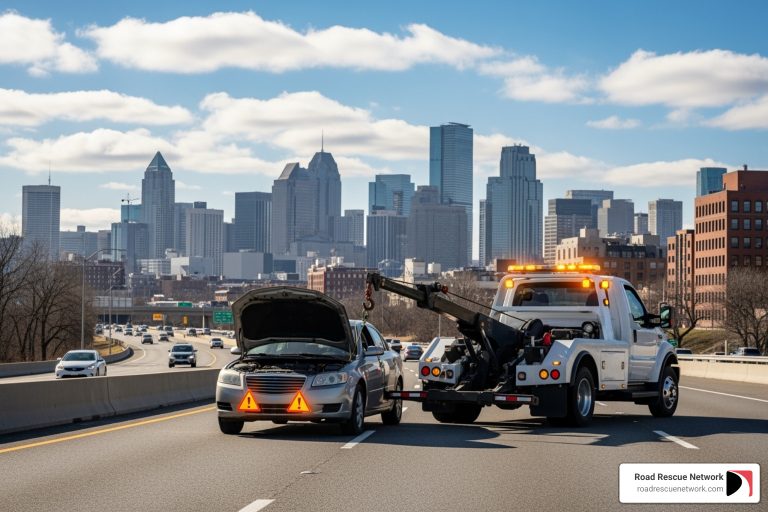
Light-duty towing: This typically covers standard passenger cars, SUVs, and light trucks. Most common breakdowns fall into this category. Whether you’ve had a minor fender bender or your engine decided to call it quits, a light-duty tow truck can safely transport your vehicle. We offer 24/7 Light Duty Towing in Minnesota and many other states to ensure you’re covered.
-
Medium-duty towing: For larger vehicles like heavier trucks, vans, and some RVs, medium-duty towing is necessary. These trucks have more robust towing capabilities to handle the increased weight. If you’re driving a commercial van or a larger personal vehicle, this is the service you’ll need. Check out our 24/7 Medium Duty Towing in Illinois for examples.
-
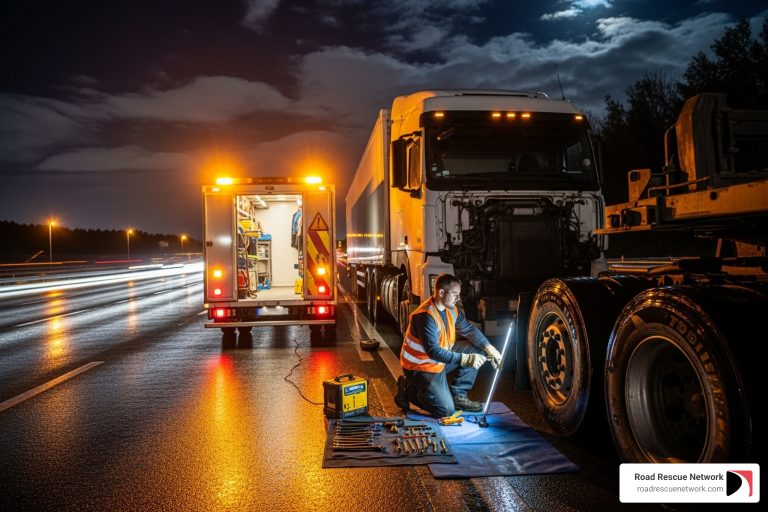
Heavy-duty towing: This specialized service is for the biggest vehicles on the road, such as semi-trucks, buses, and large construction equipment. These are powerful tow trucks designed for the heaviest loads and most challenging recovery situations. If you operate large machinery, knowing about services like our 24/7 Heavy Duty Towing in Virginia can be invaluable.
Many providers offer towing up to a certain mileage from the point of breakdown, or back to a designated service facility. Beyond these limits, additional charges may apply, depending on your plan or the service provider’s policy.
Tire Change and Repair
A flat tire can happen anytime, but 24/7 car help makes it a minor speed bump. If you have a flat, roadside assistance can help in a few ways:
-
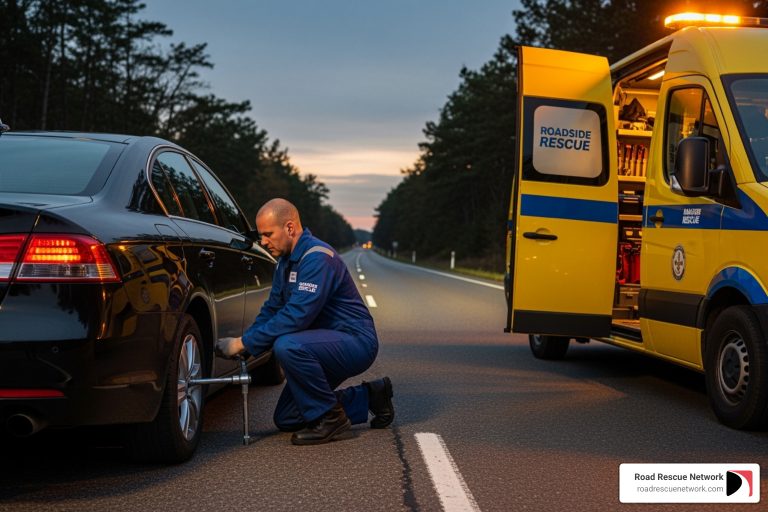
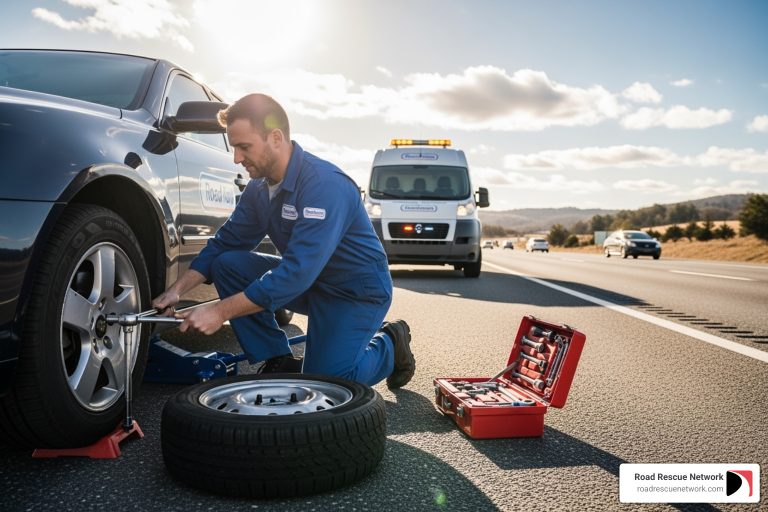
Spare tire installation: If your vehicle has a spare tire ready to go, a technician can quickly and safely replace your flat tire on the spot. This gets you back on the road with minimal delay, allowing you to drive to a tire shop for a permanent fix. For instance, we provide 24/7 Tire Change in Louisiana and other locations.
-
Puncture repair: In some cases, if the puncture is small and located in the tread area of the tire, a mobile technician might be able to perform a temporary repair to get you to the nearest tire service center. This is less common for roadside services but can be a lifesaver. Our 24/7 Mobile Tire Repair in Virginia and similar services across the nation are equipped to handle various tire issues.
It’s always a good idea to regularly check your spare tire’s pressure and condition, and ensure you have the necessary tools (jack, lug wrench) in your vehicle.
Battery Jump Start and Replacement
A dead battery is a common culprit for unexpected car trouble, often leaving you stranded when you least expect it. Thankfully, 24/7 car help has you covered.
-
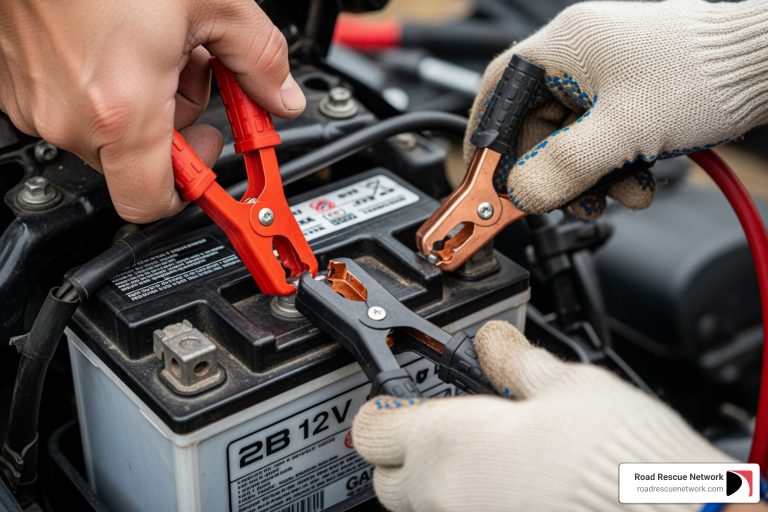
Jumpstart service: A technician will arrive with specialized equipment to give your car battery the boost it needs to start. This is usually a quick fix, allowing you to drive your car to an auto shop to have the battery checked or replaced. We offer swift 24/7 Jumpstart Service in California and across our service areas.
-
Battery testing: Many roadside assistance providers offer on-site battery testing. This can help diagnose if your battery is simply discharged or if it needs to be replaced entirely.
-
Mobile battery replacement: Some services can even test your battery and, if needed, install a new one right there on the spot. This may come with a warranty, providing an immediate, long-term solution if you’re far from a service center.
Fuel Delivery
Running out of gas happens, but it’s an easily solvable problem with 24/7 car help.
- Emergency fuel: Roadside assistance will dispatch a service vehicle with enough fuel (gasoline or diesel, depending on your vehicle) to get you to the nearest gas station. This isn’t a full fill-up, but just enough to safely reach a pump. You’ll typically only pay for the cost of the fuel itself, not the delivery service. We provide 24/7 Fuel Delivery in Michigan and many other locations to help you avoid a long walk.
This service is a huge convenience and much safer than trying to walk to a gas station with a fuel can, especially on busy roads or in unfamiliar areas.
Lockout Service
Locking your keys in your car can leave you feeling helpless, but 24/7 car help includes lockout services to get you back inside without damaging your vehicle.
-
Keys locked in car: A trained technician or locksmith will be dispatched to your location to safely open up your car. They use specialized tools to gain entry without causing any harm to your vehicle’s locks or windows. We offer 24/7 Lockout Service in Texas and numerous other cities to assist you.
-
Car key replacement: While less common for basic roadside assistance, some premium plans or specialized services might offer assistance with car key replacement or retrieval if your keys are lost or broken. However, the primary focus of standard lockout service is simply to get your vehicle open.
How to Get 24/7 Car Help When You Need It Most
When car trouble strikes, getting 24/7 car help is a straightforward process. Being prepared by knowing how to contact a provider and what information to have ready can make all the difference.

Step 1: How to Contact a Provider
Most modern roadside assistance providers offer multiple ways to request help, catering to different preferences and situations.
-
Phone call: This is the traditional method and often the most reliable, especially if you’re in an area with poor data reception. Many services provide a dedicated roadside assistance phone number so you can speak directly with a representative who can guide you through the process.
-
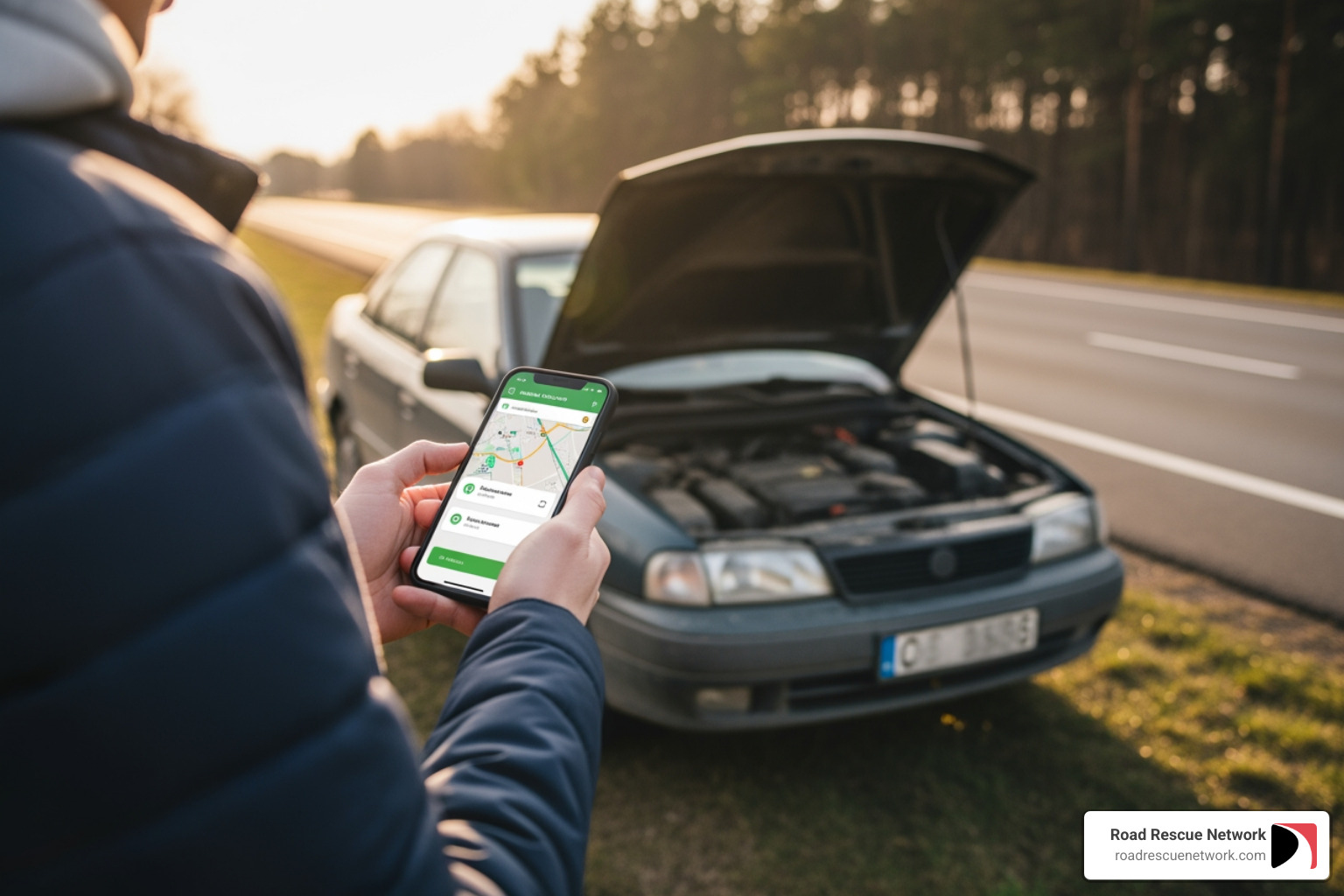
Mobile apps: Many providers, including Road Rescue Network, have dedicated mobile apps. These apps often allow you to request assistance with just a few taps, automatically detect your location, and even track the progress of your service vehicle. We at Road Rescue Network encourage using our app for faster requests and tracking your rescuer.
-
Online request forms: Some providers offer online portals where you can submit a service request through their website. This can be convenient if you have internet access but prefer not to make a phone call, or if phone lines are busy during peak times.
Step 2: What Information to Have Ready
Once you’ve chosen your contact method, having key information ready will speed up the process significantly.
- Your location: This is paramount. Be as precise as possible. Provide the street name, nearest cross street, highway number, mile marker, or any recognizable landmarks. If you’re using a mobile app, it might automatically detect your GPS coordinates, but it’s always good to confirm.
- Vehicle make and model: For example, “2018 Honda Civic” or “2020 Ford F-150.”
- License plate number: This helps the service provider identify your vehicle quickly.
- Description of the problem: Be clear and concise. Is it a flat tire? A dead battery? Did you run out of gas? Are your keys locked inside? The more details you can provide, the better the technician can prepare.
- Contact phone number: Ensure you provide a number where you can be reached while you wait for assistance.
If you’re a member of a service, you may also need your membership or account number. Don’t worry if you don’t have your physical card; many providers can verify your membership electronically. Always be prepared to present your driver’s license to the service driver upon arrival. If you don’t have your driver’s license, contact your provider immediately for instructions.
Step 3: What to Expect After Your Call
After you’ve provided all the necessary information, here’s what you can generally expect:
- Estimated Time of Arrival (ETA): The dispatcher will give you an estimated time for the service vehicle to arrive. ETAs can vary based on traffic, weather conditions, time of day, and the availability of technicians in your area.
- Service vehicle tracking: Many modern apps, including ours, allow you to track your service vehicle in real-time. This can be incredibly reassuring, as you’ll know exactly where your help is and when to expect them.
- Technician identification: The service technician should arrive in a clearly marked vehicle and present identification. This is a crucial safety measure.
- Staying safe on the roadside: While you wait, prioritize your safety. If possible, move your vehicle to a safe location away from traffic and turn on your hazard lights. If it’s dark, use flares or reflective triangles if you have them. Stay inside your vehicle with your doors locked until help arrives.
Understanding Your Coverage: Plans, Providers, and Limitations
Navigating 24/7 car help means understanding the different types of services available, from on-demand solutions to traditional membership plans. Each comes with its own benefits, cost structures, and limitations.
On-Demand 24/7 Car Help vs. Traditional Membership Plans
Let’s compare the two main ways to get roadside assistance:
| Feature | Road Rescue Network (On-Demand) | Traditional Membership/Insurance Plans |
|---|---|---|
| Cost Structure | Pay-per-use; no annual membership fees; transparent pricing. | Annual membership fees or an add-on to an existing insurance policy. |
| Coverage Scope | Specific service requested (e.g., tow, jumpstart, lockout). | Broad range of services included as part of a membership or policy. |
| Towing Distance Limits | Varies by service request, often flexible for direct payment. | Often includes a set number of covered towing miles, with additional charges for longer distances. |
| Number of Service Calls | Unlimited, as you pay for each service. | Typically a limited number of included service calls per year, with a service charge applying after that limit. |
| Membership Required | No membership required; ideal for infrequent users or emergencies. | Yes, usually requires an active membership or an insurance policy add-on. |
| Response Time | Emphasizes fast, on-demand dispatch. | Varies by provider and location, but generally aims for quick response. |
| Coverage for Others | Typically covers the specific vehicle for which service is requested. | Often covers the member, regardless of whether they are the driver or a passenger, and can extend to any car they are in, as long as they are with the car. |
Choosing between on-demand services like Road Rescue Network and traditional plans depends on your driving habits and preferences. If you rarely need assistance and prefer to avoid annual fees, an on-demand service might be perfect. If you drive frequently, travel long distances, or want comprehensive coverage for multiple vehicles or family members, a membership plan could offer better value.
Common Limitations and Exclusions
While 24/7 car help is incredibly useful, it’s important to be aware of potential limitations and exclusions that can vary by provider and plan:
- Service call limits: As mentioned, many membership plans cap the number of included service calls per year. Exceeding this limit will often incur a service charge.
- Towing mileage caps: Towing coverage usually has a mileage limit. If your vehicle needs to be towed further than the covered distance, you’ll be responsible for the extra cost per mile.
- Non-covered vehicles: While many services cover standard cars and light trucks, some may have limitations or exclusions for certain vehicle types like RVs, motorcycles, or commercial vehicles. Additional services might vary by region. It’s always best to check your specific plan.
- Pre-existing conditions: Some policies might exclude coverage for issues stemming from a vehicle’s pre-existing condition or lack of maintenance.
- Accidents: While roadside assistance covers breakdowns, services related to accidents (e.g., collision towing) might fall under your auto insurance policy’s collision coverage rather than basic roadside assistance.
- Geographic limitations: While many providers offer nationwide coverage, specific services or response times might vary in remote areas.
- Policy terms and state variations: Coverage limits and terms can differ significantly by state. Some insurers specify different dollar limits or daily caps for things like towing, meals, and lodging. Always consult your individual insurance contract or policy documents for definitive terms.
Roadside Assistance Options
You have several avenues for obtaining reliable 24/7 car help:
-
Road Rescue Network: We provide on-demand roadside assistance without the need for memberships or hidden fees. Our USP is fast, 24/7 service that instantly connects users with local rescuers for common emergencies like flat tires, jumpstarts, and lockouts. You only pay when you need us.
-
Insurance company add-ons: Many auto insurance providers offer roadside assistance as an optional add-on to your existing policy, often called “Towing & Labor Coverage” or similar. This can be a cost-effective way to bundle services, but remember to check the specific coverage limits and exclusions. You can often add this coverage online if it’s not already included in your policy.
-
New car manufacturer programs: Many new vehicles come with complimentary roadside assistance for a certain period (for example, for the length of the basic warranty). This is a great perk, but make sure to understand when it expires and what exactly it covers.
Frequently Asked Questions about 24/7 Car Help
We hear a lot of questions about 24/7 car help, and we’re here to clear them up. It’s natural to have concerns when you’re dealing with unexpected vehicle issues. Let’s tackle some of the most common inquiries.
Does using roadside assistance affect my car insurance rates?
This is a very common and understandable concern. The good news is, for the vast majority of cases, using roadside assistance does not affect your car insurance rates.
Here’s why:
- It’s not an at-fault claim: Roadside assistance services like jumpstarts, tire changes, or fuel delivery are generally considered maintenance or convenience services, not accident claims. Your insurance company typically won’t view these as indicators of risky driving behavior.
- Add-on coverage: If you have roadside assistance as an add-on to your insurance policy, you’ve already paid for the service. Using it is simply utilizing a benefit you’ve purchased.
- Standalone services: If you use an on-demand service like Road Rescue Network, it’s a direct transaction for a service, completely separate from your insurance policy.
However, there’s a small caveat: if a roadside incident leads to a larger insurance claim (e.g., a tow after an accident that requires significant repairs), that larger claim could impact your rates. But for typical roadside emergencies, you can breathe easy. For more information about how insurance claims work, you can visit the Insurance Information Institute.
Can I get help if I’m a passenger or in a borrowed car?
Yes, often you can! This depends entirely on your specific roadside assistance provider and the terms of your plan.
- Person-based coverage: Some roadside assistance plans are person-based, meaning the coverage follows the member regardless of which vehicle they’re in. This means if a friend gives you a ride or you borrow a car and it breaks down, your membership can often still be used to get help, as long as you are with the vehicle.
- Insurance add-ons: These typically cover the vehicle itself, regardless of who is driving, as long as they are an authorized driver. However, if you’re a passenger in someone else’s car that isn’t covered by your policy, your personal roadside assistance benefit might not apply. Always check your policy’s terms.
- On-demand services (like Road Rescue Network): Since you pay per service, you can request help for any vehicle you’re in, as long as you’re able to authorize and pay for the service. This offers great flexibility.
It’s always a best practice to check your specific provider’s policy to understand the full scope of your coverage.
What if my provider can’t fix my car on the spot?
Sometimes, the issue is more complex than a simple jumpstart or tire change. If a roadside technician determines that your car cannot be safely or effectively repaired on-site, the next course of action is almost always towing.
- On-site repair limitations: Technicians carry a range of tools and can perform minor repairs (like tightening a loose battery cable or checking basic fluid levels), but they aren’t equipped for extensive mechanical work. If the problem requires specialized tools, parts, or a lift, it’s beyond the scope of roadside assistance.
- Towing as the solution: In such cases, the service provider will arrange to tow your vehicle. This could be to the nearest qualified repair shop, your preferred mechanic, or even your home, depending on your towing coverage and the provider’s policy. For example, we offer 24/7 Mobile Auto Repair in Tennessee and other areas, but if the issue is too complex, towing is the next step.
- Transport to a certified repair shop: Many providers have networks of approved or preferred repair facilities. Towing your car to one of these shops can sometimes come with additional benefits, like priority service or discounts on repairs.
The goal is always to ensure your safety and get your vehicle to a place where it can receive the proper attention it needs to be fully operational again.
Conclusion: Your Go-To Solution for Roadside Peace of Mind
Being prepared for unexpected car trouble is one of the smartest things you can do as a driver. Knowing that 24/7 car help is just a phone call or a few taps away offers immense peace of mind, whether you’re commuting to work or starting on a cross-country adventure. We’ve explored the wide array of services available, from essential towing and tire changes to jumpstarts and fuel delivery, ensuring that most roadside emergencies have a swift solution.
We’ve also demystified the process of requesting help, highlighting the importance of clear communication and readiness with your vehicle’s details. Understanding the nuances between on-demand services and traditional membership plans empowers you to choose the option that best fits your lifestyle and budget. And rest assured, for most everyday breakdowns, calling for assistance won’t negatively impact your insurance rates.
The goal is never to be stranded. At Road Rescue Network, we pride ourselves on being your go-to solution for immediate, reliable roadside assistance. We bypass the need for memberships and hidden fees, connecting you instantly with local rescuers. Our commitment is to provide fast, transparent, and efficient service whenever and wherever you need it. Because when breakdowns happen, you deserve to be back on your way as quickly and effortlessly as possible.
Don’t let car trouble ruin your day. Be prepared, stay safe, and remember that help is always available.