Puncture Panic? How to Repair Your Car Tyre at Home
Why a Car Tyre Puncture at Home Doesn’t Have to Ruin Your Day
A car tyre puncture at home is a common problem that can often be fixed yourself with the right tools and knowledge. Here’s what you need to know:
Quick Answer for DIY Tyre Repair:
- Check if repairable: The puncture must be in the tread area (not the sidewall), smaller than 1/4 inch (6mm), and caused by a nail or similar object.
- Use a repair kit: Either a sealant and compressor kit or a plug kit.
- This is temporary: Drive a maximum of 50 mph for 50 miles, then get a professional repair.
- When to call a pro: For sidewall damage, large holes, or if you’re unsure.
Spotting a flat tyre in your driveway is a frustrating start to the day. You might have heard a thump, a rhythmic flapping sound, or noticed the car pulling to one side when you parked. In many cases a puncture at home is the result of sharp objects like nails, screws, or bits of glass picked up on your last trip, or from hitting potholes and other road hazards.
It is even more common to feel stuck now, as more than half of new cars do not come with a spare tyre to save weight and improve fuel efficiency. Instead, they come with temporary repair kits. As Consumer Reports notes, drivers are often surprised to find there is no spare in the boot.
The good news is that a tyre repair kit can fix roughly 80% of punctures as a temporary solution. If a sharp object like a nail or screw has punctured the tread, you can often handle it yourself. However, any DIY repair is temporary and requires a professional follow-up for safety.
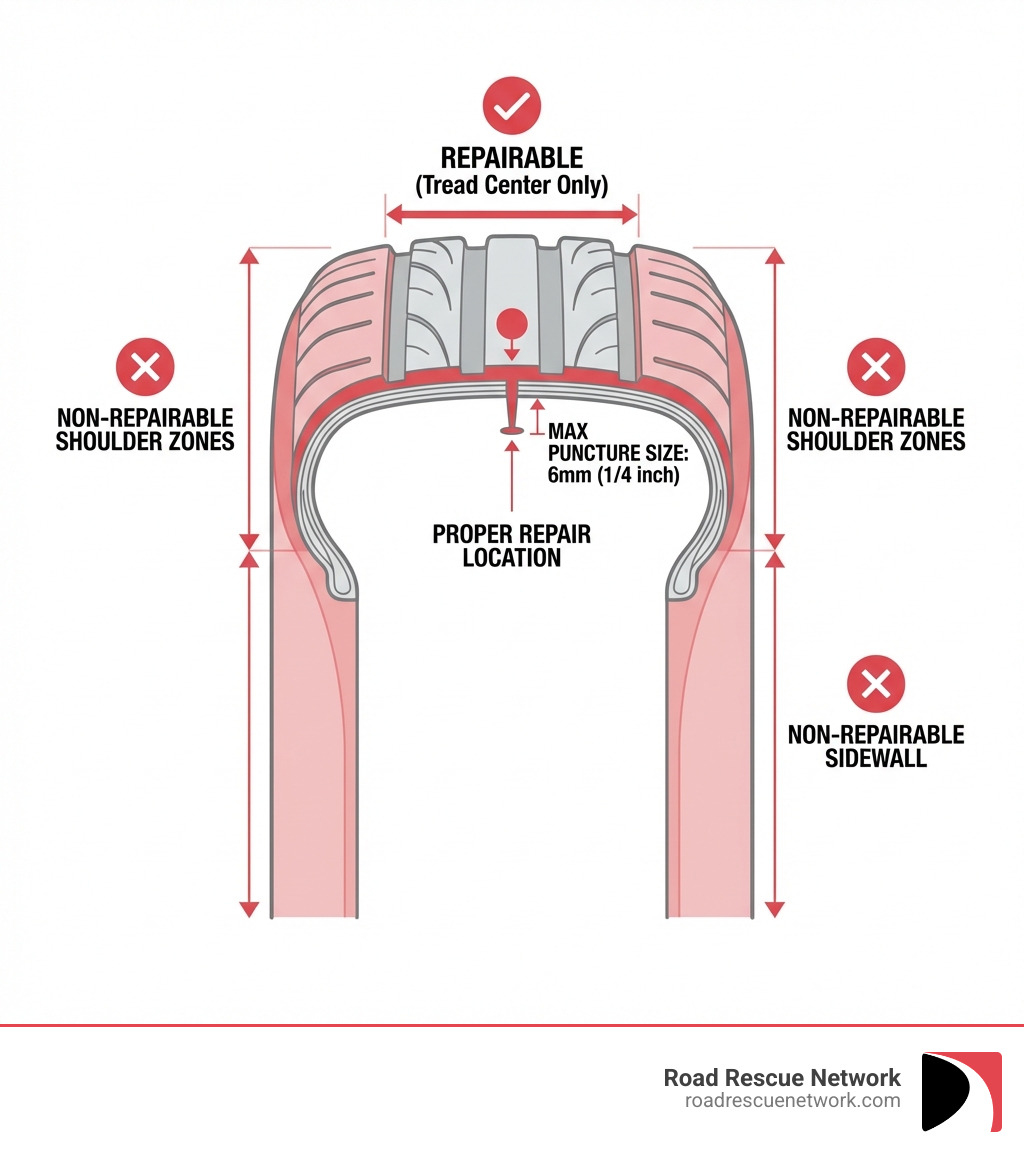
Not all punctures are fixable at home. Damage to the sidewall or shoulder of the tyre is unsafe to repair. The puncture must be in the main tread area and no larger than a quarter-inch in diameter. Also, if your tyre is old, has high mileage, or has been repaired before, you will likely need a replacement.
I am Byron Tarlton, founder of Road Rescue Network. With over two decades in roadside assistance, I have seen many drivers handle a car tyre puncture at home with basic tools. I have also seen when it is time to call for professional help. This guide will help you know the difference.
For more information, see our 24 hr mobile tire repair 24 hour guide.
First Steps: Assess the Damage and Prepare for Repair
When you find a flat tyre, your first action should be to ensure safety. Even in your driveway, a flat tyre can be hazardous.
Safety First
Before touching the tyre, secure your vehicle. Park on a flat, stable surface and engage the handbrake (put automatics in “Park”, manuals in gear). Turn on your hazard lights to make the vehicle visible. If you have them, place wheel chocks against the tyres that are not flat for extra security.
Locating the Puncture
Next, you need to find the puncture to see if it is repairable.
- Visual Inspection: Look for obvious culprits like nails, screws, or glass in the tread. You might hear a hissing sound if air is still escaping.
- The Soapy Water Trick: If you cannot spot the puncture, mix dish soap with water in a spray bottle. Inflate the tyre slightly and spray the solution over the tyre surface. Bubbles will form where air is escaping, pinpointing the leak.
- Nail or Screw in Tyre: If you find an object, do not remove it yet. Leaving it in can slow the air loss and make a temporary repair easier.
Is the Tyre Repairable?
Not all punctures can be fixed with a DIY kit. A repair is generally unsafe if you see any of the following issues:
- Location: The puncture is on the sidewall or shoulder (where the tread meets the sidewall). These areas flex too much for a safe repair. Only punctures in the central tread area are candidates for a DIY fix.
- Size: The hole is larger than 1/4 inch (6mm) in diameter.
- Tyre Condition: The tyre has visible bulges, cracks, or signs of internal separation. Driving on a severely underinflated tyre can cause hidden internal damage, making it unsafe to repair.
- Age and Wear: The tyre is over six years old, has been driven more than 50,000 miles, or the tread depth is below the legal minimum of 1.6mm. In these cases, replacement is the safer and more economical choice.
- Previous Repairs: The tyre has already been repaired multiple times.
- Run-flat Damage: Run-flat tyres often cannot be repaired like conventional tyres once their structure is compromised.
If your tyre has any of these issues, a DIY repair is not an option. You will need professional help or a full replacement. For assistance, you can refer to our guides like Tire Change in California.
How to Handle a Car Tyre Puncture at Home: Your DIY Repair Options
For a car tyre puncture at home, you have two main DIY options: a sealant and compressor kit or a plug kit. Both are temporary fixes.
| Feature | Sealant Kit (with Compressor) | Plug Kit (String/Rubber Plugs) |
|---|---|---|
| Ease of Use | Very easy, no tyre removal needed | Moderate, requires more precision and physical effort |
| Permanence | Temporary, professional follow-up is essential | Temporary, professional follow-up is essential |
| Cost | Often included with new cars; refills are affordable | Affordable and widely available |
| Puncture Size | Small punctures (up to 1/4 inch / 6mm) | Small to medium punctures (up to 1/4 inch / 6mm) |
| Puncture Location | Tread area only | Tread area only |
| Tools Needed | Kit (sealant bottle, compressor) | Kit (reamer, insertion tool, plugs, rubber cement), pliers |
Step-by-Step: Using a Sealant Kit
Modern cars often include a sealant and compressor kit. They are designed for ease of use.
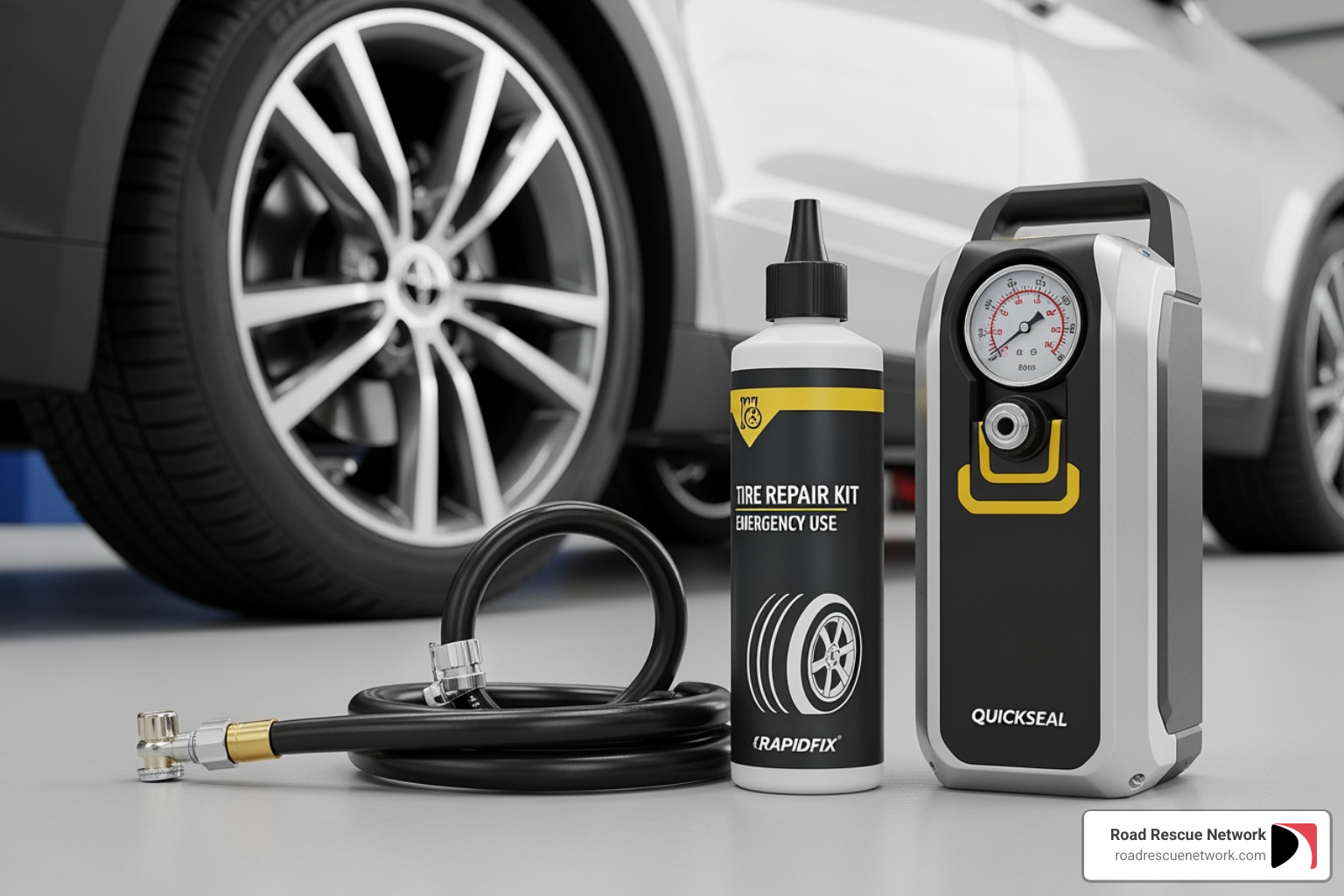
- Prepare: Check that the sealant has not expired. If a nail or screw is in the tyre, leave it in place. The sealant works by sealing around the object.
- Connect: Following your kit’s instructions, connect the sealant bottle to the tyre’s valve stem. Then, plug the compressor into your car’s 12-volt accessory socket. You may need to start the engine for power.
- Inflate: Turn on the compressor and inflate the tyre to the recommended PSI found on the sticker inside the driver’s door.
- Drive and Check: Drive slowly for 2 to 5 miles (under 30 mph) to spread the sealant. Pull over safely and re-check the pressure. If it holds, you are ready to drive to a garage. If it has dropped significantly, the seal has failed.
For more details, you can consult resources like How to change a car tyre or use a puncture repair kit.
Advanced DIY: Using a Tyre Plug Kit
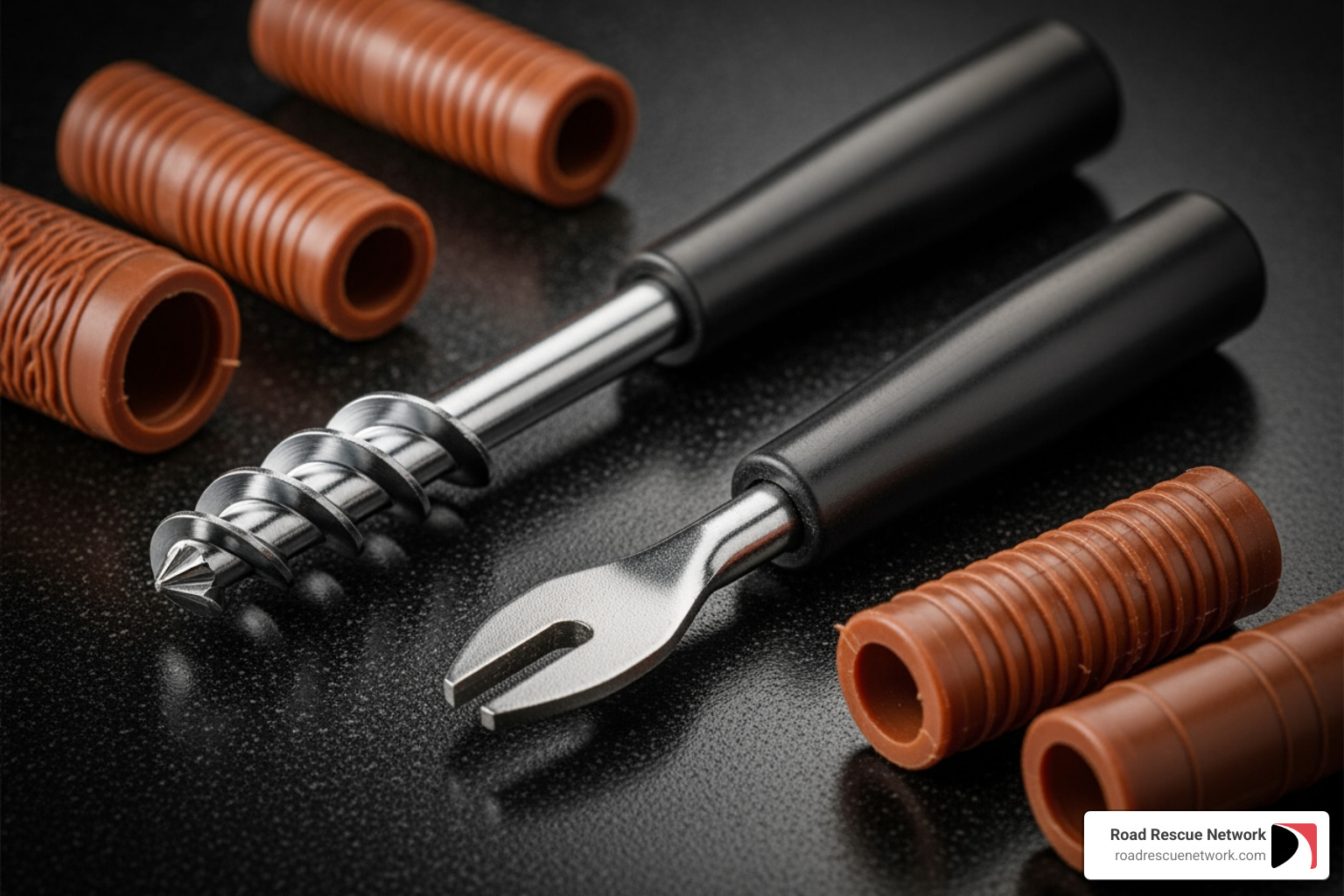
A tyre plug kit is another temporary solution for a car tyre puncture at home, suited for those comfortable with a more hands-on approach.
- Remove Object: Unlike with sealant, you must remove the object with pliers.
- Ream the Hole: Insert the reamer tool into the hole and twist it to clean and roughen the opening for better adhesion.
- Insert the Plug: Thread a rubber plug through the insertion tool. Apply rubber cement if your kit includes it. Firmly push the tool into the hole until about half an inch of the plug is left outside.
- Seal and Trim: Pull the insertion tool straight out quickly. The plug will remain, sealing the hole. Trim the excess plug material flush with the tread.
- Inflate and Check: Inflate the tyre to the correct pressure and check for leaks with soapy water. No bubbles mean a good seal.
A plug repair is temporary and requires a professional inspection. For assistance after a DIY fix, we offer services like Tire Change in Texas.
After the Fix: Limitations and Next Steps
Managing a car tyre puncture at home is a useful skill, but the job is not finished once the air is back in the tyre. Any DIY repair is a temporary solution designed only to get you to a professional tyre shop.
Driving on a Temporary Repair
After a temporary fix, you must change your driving habits immediately. These repairs are not designed for normal driving conditions.
- Speed and Distance Limits: Adhere to the strict limits of the repair kit, typically no more than 50 mph for a maximum of 50 miles. Exceeding these limits can cause the repair to fail.
- Reduced Lifespan: A DIY repair can reduce the tyre’s overall lifespan. Sealant can also make a permanent repair more difficult for a technician.
Get a Professional Inspection
The most crucial next step is a professional inspection. A technician will demount the tyre to check for internal damage that is not visible from the outside. They will then either perform a permanent “patch and plug” repair from the inside or recommend a full tyre replacement if the damage is too severe, poorly located, or if the tyre is old and worn.
Our network can connect you with local experts for a professional inspection, whether you are in Tire Change in New York or another one of our service areas.
Post-Repair Checklist
- Drive Cautiously: Stay below 50 mph and avoid harsh braking or sharp turns.
- Book a Professional Check: Schedule an appointment with a tyre shop immediately.
- Restock Your Kit: If you used a sealant kit, replace the single-use canister.
- Prepare for Replacement: Be aware that the tyre may need to be replaced for safety.
If you need help getting to a garage, our services, including Tire Change in Florida, can get you there quickly.
Prevention is the Best Cure: How to Avoid Future Punctures
Knowing how to handle a car tyre puncture at home is useful, but preventing one is better. Proactive maintenance can keep your tyres healthy and your drives smooth.
- Check Tyre Pressure Regularly: Improper inflation is a leading cause of tyre problems. Under-inflated tyres are vulnerable to damage, while over-inflated ones have reduced grip. Check pressure every few weeks when tyres are cold, using the manufacturer’s recommended PSI found inside the driver’s door jamb.
- Monitor Tread Depth and Condition: Worn tread increases puncture risk. The legal minimum is typically 1.6mm (2/32 of an inch), but performance degrades before that point. Regularly inspect treads for embedded objects, uneven wear, cracks, or bulges.
- Drive Carefully: You can reduce risk with conscious driving. Scan the road for debris, especially near construction sites. Avoid potholes and hitting kerbs, as impacts can cause punctures, blowouts, or wheel damage.
- Maintain Wheel Alignment: Proper alignment ensures even tyre wear, prolonging tyre life and improving handling. Have your alignment checked annually or if you notice the car pulling to one side or see uneven wear.
These preventative measures significantly reduce your chances of a flat tyre. For all your tyre needs, you can rely on services like Tire Change in Pennsylvania.
Frequently Asked Questions about Tyre Punctures
Here are answers to some common questions about tyre punctures.
What if my car has no spare tyre or repair kit?
Many new cars lack a spare tyre to save weight and improve fuel efficiency. If you have a flat and no way to fix it, your best option is to call for roadside assistance. Road Rescue Network connects you instantly with local professionals who can come to your location for a fix or a tow. We offer fast, 24/7 service with no memberships, whether you are in Mobile Tire Repair in Georgia or another service area.
Are pre-puncture sealants a good idea?
These are liquids injected into a tyre to proactively seal punctures. While appealing, they have risks:
- Masking Damage: They can hide serious issues that are slowly weakening the tyre.
- Wheel Imbalance: The liquid can distribute unevenly, causing vibrations and uneven wear.
- TPMS Interference: Sealant can damage Tyre Pressure Monitoring System (TPMS) sensors.
- Messy Repairs: They create a mess for technicians, potentially increasing repair costs.
For these reasons, most professionals recommend regular maintenance over pre-puncture sealants.
What are the standards for a permanent tyre repair?
Any car tyre puncture at home repair is temporary. A permanent repair must be done by a professional and involves:
- Demounting the Tyre: The tyre is removed from the wheel for a full internal inspection.
- Thorough Inspection: A technician checks for hidden damage inside the tyre.
- Internal Patch-Plug: The safest method is a combination patch and plug applied from inside the tyre. This seals the hole and reinforces the structure.
In countries such as the United Kingdom, professionals follow standards like BS AU 159 to decide what can be safely repaired. Punctures that are too large, on the sidewall, or have internal damage will require a full tyre replacement.
Conclusion: Back on the Road Safely
A car tyre puncture at home is a hassle, but with the right knowledge, you can perform a temporary fix to get moving again.
Remember these key takeaways:
- Safety First: Always secure your vehicle before starting a repair.
- DIY is Temporary: Home repairs are only to get you to a professional.
- Know Your Limits: Sidewall damage, large holes, or internal damage require a pro.
- Prevention is Key: Regular tyre checks and careful driving reduce your risk of flats.
While DIY is empowering, sometimes you need professional help. You might not have a kit, the damage may be unrepairable, or you may prefer an expert to handle it. That is where Road Rescue Network comes in. We provide fast, reliable, membership-free assistance for flat tyres in places like Missouri or Ohio, connecting you with local pros instantly.
Do not let a flat tyre deflate your plans. When in doubt, call the experts.
Get professional mobile tire repair help now