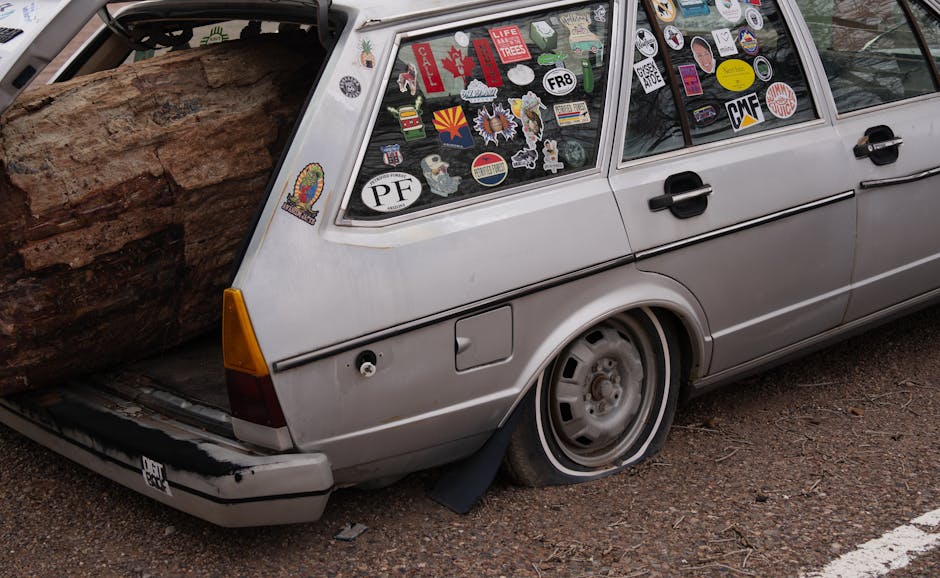
Quick Fix for a Flat Tire Emergency
Why Every Driver Needs to Know About Emergency Flat Repair
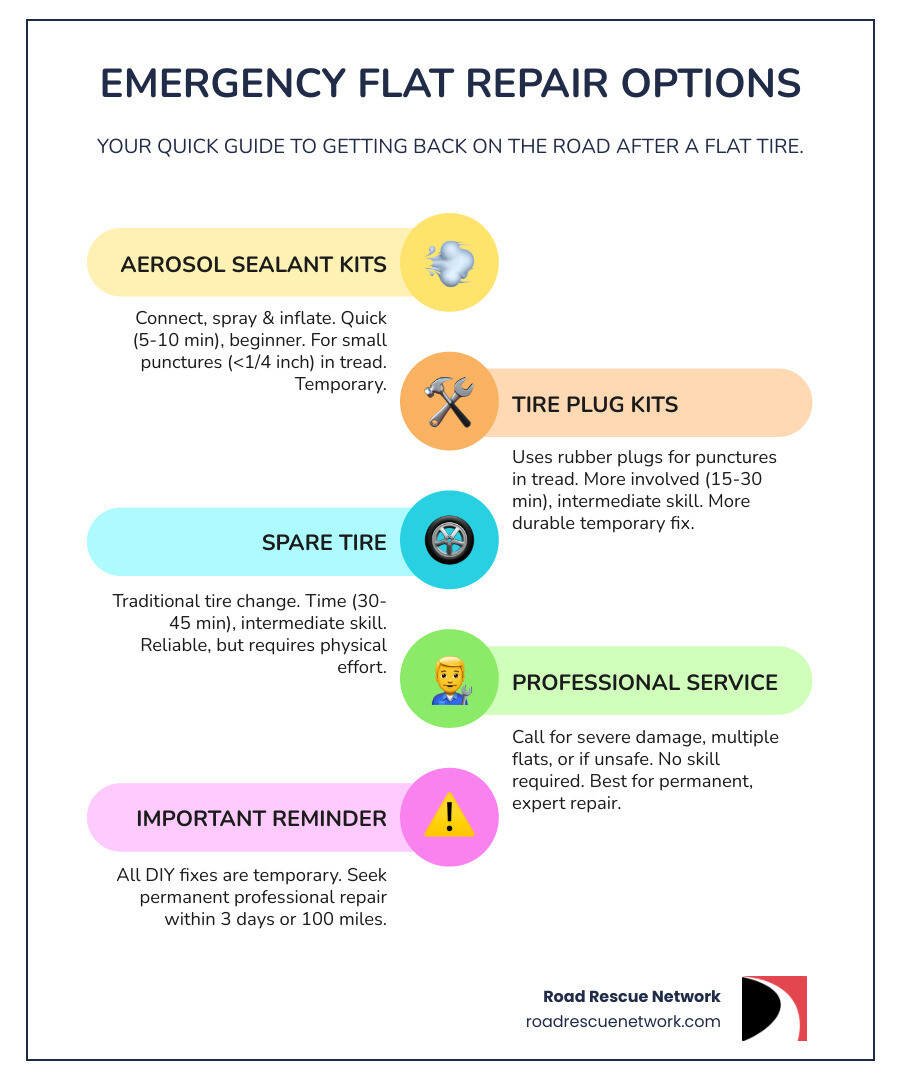
Emergency flat repair is the fastest way to get back on the road after a flat. Instead of waiting for a tow or struggling with a spare, modern repair products let you seal and inflate your tire in minutes, often without any tools.
Quick Options for Emergency Flat Repair:
- Aerosol Sealant Kits (Fix-a-Flat, Slime) – Connect, spray, and drive in under 5 minutes
- Tire Plug Kits – More durable DIY fix using rubber plugs and basic tools
- Spare Tire – Traditional backup requiring physical tire change
- Professional Service – Best for severe damage or when DIY isn’t safe
| Solution | Time Required | Skill Level | Cost Range |
|---|---|---|---|
| Aerosol Sealant | 5-10 minutes | Beginner | $13-$20 |
| Tire Plug Kit | 15-30 minutes | Intermediate | $10-$35 |
| Spare Tire | 30-45 minutes | Intermediate | Included with vehicle |
| Professional Help | Varies | None | $75-$150+ |
These emergency solutions seal small punctures (up to 1/4 inch) in the tire tread. They are temporary fixes to get you to a repair shop, not permanent solutions. Most products require a professional repair within 3 days or 100 miles.
I’m Byron Tarlton, founder of Road Rescue Network. With over two decades in roadside assistance, I’ve seen how knowing about emergency flat repair can turn a stressful breakdown into a minor inconvenience.
Emergency flat repair vocabulary:
What To Do When You Get a Flat Tire
Getting a flat tire is always a disruption, but a calm approach makes it manageable. An emergency flat repair is needed when you have a sudden loss of tire pressure from a puncture or pothole, making it unsafe to drive. Reacting safely and efficiently is key.
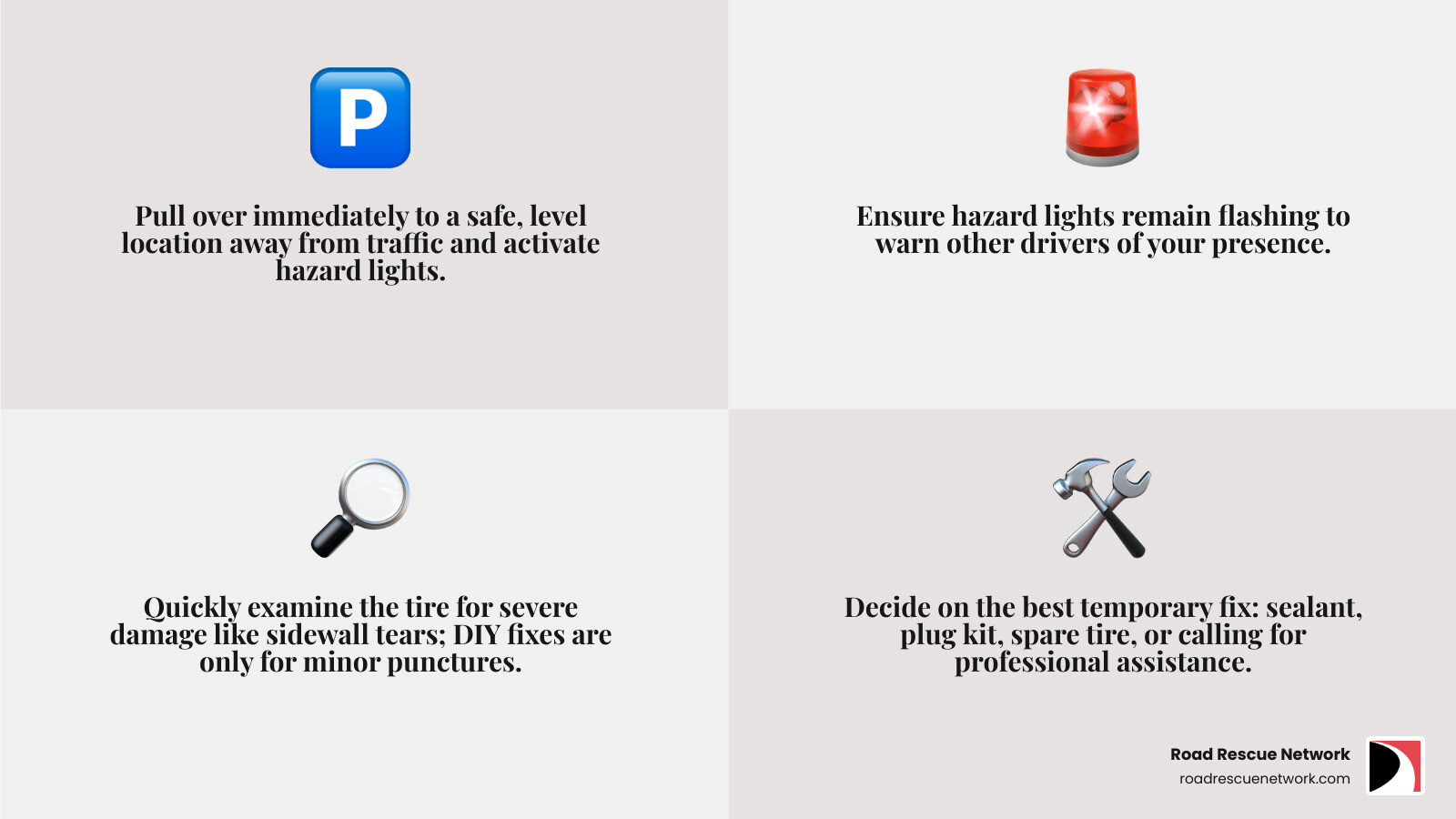
Here are the immediate steps to take when you experience a flat tire:
- Pull Over Safely: If you suspect a flat (vibration, flapping sound, or warning light), turn on your hazards. Find a safe, level spot away from traffic, like a shoulder or parking lot. Avoid stopping on curves or blind spots. Safety is the priority.

-
Activate Hazard Lights: Keep your hazard lights flashing to alert other drivers, especially at night or in bad weather.
-
Assess the Damage: Once stopped, inspect the tire. Is it shredded or just low? Can you see the puncture? This assessment determines your next step. DIY products won’t work on severe damage like large tears, sidewall gashes, or if the tire is off the rim.
-
Choose Your Repair Method: Based on your assessment, choose your emergency flat repair method:
- Using an aerosol sealant and inflator kit.
- Applying a tire plug kit.
- Changing to your spare tire.
- Calling for professional roadside assistance.
These are temporary solutions designed to get you to a tire shop for a permanent fix.
Your Guide to Emergency Flat Repair Products
When you’re faced with a flat, a quick solution is a game-changer. The most common DIY options you can keep in your car are aerosol sealants and tire plug kits.
Aerosol Sealant & Inflator Kits (Fix-a-Flat, Slime)
Aerosol sealants like Fix-a-Flat and Slime are popular because they’re easy to use and require minimal effort, getting you moving without a full tire change.
How Sealants Work: These aerosol cans contain a liquid sealant and a propellant. When connected to the valve stem, the sealant is injected into the tire. As you drive, the tire’s rotation and internal pressure force the sealant into the puncture, where it hardens to create a temporary seal.
Puncture Size Limits: Sealants are effective for small tread punctures, typically up to 1/4 inch (6mm), like those from nails or screws. They won’t fix larger cuts, sidewall damage, or tires off the rim.
Temporary Solution: Aerosol sealants are a temporary flat repair, not a permanent fix. Manufacturers recommend a professional RMA (Rubber Manufacturer’s Association) repair within 3 days or 100 miles. A technician can then properly inspect, patch, or replace the tire.
Cost Overview: These kits are affordable and good to keep in your trunk.
- A 12 oz. Fix-a-Flat (Compact) costs around $13.49.
- A 16 oz. Fix-a-Flat (Sedan | Coupe) costs about $15.49. You can find this size at retailers like Walmart.
- Larger sizes are available for Crossovers, Wagons (20 oz. for $16.99), and Trucks/SUVs (24 oz. for $19.99).
- Slime also offers kits, like a 15-minute Flat Tire Repair Kit for larger vehicles. Check out Slime’s options on Amazon.
TPMS Safety: Many modern sealants from Fix-a-Flat and Slime are “tire sensor safe.” These non-corrosive, water-based formulas won’t damage your Tire Pressure Monitoring System (TPMS). Always check the product’s label, as older formulas may pose a risk. A mechanic will still need to clean the sealant residue from the tire and sensor during the permanent repair.
Temperature Range: These products work in various conditions. Slime is effective from 5°F to 122°F (-15°C to 50°C). Fix-a-Flat’s range is 28.4°F to 113°F (-2°C to 45°C). This makes them reliable in most climates, from chilly Chicago winters to hot Dallas summers.
How to Use Sealant Kits for an Emergency Flat Repair
Using a sealant kit is straightforward. Here’s a step-by-step guide:
- Read the Instructions: Quickly read the instructions on the can.
- Shake the Can: Shake the can well to mix the sealant.
- Position the Tire: If possible, rotate the tire so the valve stem is near the top.
- Connect the Hose: Screw the sealant can’s hose firmly onto your tire’s valve stem.
- Inflate the Tire: Press the button to empty the can into the tire. Continue until the can is empty and the tire looks inflated enough to lift the rim off the ground.
- Disconnect: Quickly unscrew the hose from the valve stem.
- Drive Immediately: Immediately drive for 2-4 miles at a moderate speed (35-40 mph). This spreads the sealant inside the tire and forces it into the puncture to create a seal.
- Check Pressure: After driving, check your tire pressure with a gauge. Add more air if needed.
- Seek Professional Repair: Drive to the nearest tire service center. Inform the technician you used a sealant so they can properly clean the tire and sensor before making a permanent repair.
Tire Plug Kits: A More Hands-On Fix
For those comfortable with a hands-on approach, a tire plug kit offers a more robust temporary repair than a sealant.
What is a Plug Kit? A plug kit includes a reamer tool, an insertion tool, and rubberized repair cords (“plugs”). Some, like the CKAuto Universal Tire Repair Kit, offer a comprehensive toolset.
How it Works:
- Locate the Puncture: Find and remove the object with pliers.
- Ream the Hole: Use the reamer tool to clean and enlarge the puncture hole. This prepares it for the plug and requires some force.
- Insert the Plug: Thread a repair cord through the insertion tool. Apply rubber cement if included. Force the tool into the hole until about half an inch of the plug is visible.
- Remove the Tool: Pull the insertion tool straight out, leaving the plug in the tire.
- Trim and Inflate: Trim excess plug material flush with the tread. Use a portable air compressor to reinflate the tire to the recommended pressure.
When to Use a Plug Kit: A plug kit is suitable for punctures up to 1/4 inch (6mm) in the tire tread. They are not recommended for sidewall punctures.
More Durable Temporary Fix: A properly installed tire plug is a more durable temporary fix than sealant, but it’s not permanent. Get the tire professionally inspected and repaired soon. A shop will replace the plug with a permanent internal patch-plug.
DIY Kits vs. Spare Tires and Professional Help
Choosing the right emergency flat repair method depends on your situation, skill, and available tools. Let’s compare the options.
| Feature | Aerosol Sealant Kits | Tire Plug Kits | Spare Tire | Professional Service (e.g., Road Rescue Network) |
|---|---|---|---|---|
| Speed | Very Fast (5-10 min) | Fast (15-30 min) | Moderate (30-45 min) | Varies (response time + repair time) |
| Cost | Low ($13-$20) | Low ($10-$35 for kit) | Free (if included) | Moderate to High ($75-$150+ for mobile service) |
| Difficulty | Very Easy | Moderate | Moderate to Hard | None (they do the work) |
| Tools Required | None (self-contained) | Reamer, Insertion Tool, Knife, Air Compressor | Jack, Lug Wrench, Wheel Chocks | None |
| Puncture Size | Small tread (up to 1/4″) | Small tread (up to 1/4″) | Any repairable flat | Any repairable flat, or tire change/tow for severe damage |
| Damage Type | Tread only | Tread only | Any repairable flat | Any flat, including sidewall or large tears (may require replacement) |
| Repair Permanence | Temporary (3 days/100 miles) | Temporary (longer than sealant, but still temporary) | Temporary (donut spare) or Permanent (full-size spare) | Permanent (patch-plug) or Temporary (donut spare) or New Tire |
| TPMS Safe | Many formulas are | Yes | Yes | Yes |
Advantages of Emergency Repair Kits
Emergency repair kits offer significant benefits when you get a flat tire:
- Convenience: They’re compact and easy to store, saving you from hauling out a heavy spare tire and tools.
- Speed: Sealants get you back on the road in minutes. For example, Slime’s kit can repair and inflate a tire in 15 minutes, which is invaluable if you’re on a tight schedule or in an unsafe spot.
- No Tools Required (for sealants): Aerosol sealants require no tools or mechanical skills. While plug kits need basic tools, they are often easier to use than changing a spare tire.
- Lightweight: These kits add minimal weight to your vehicle compared to a full-size spare.
- Space-saving: Many modern cars use these kits instead of spare tires to save trunk space.
- Cost-effective: For under $20, you can have a reliable temporary fix, which is much cheaper than a tow or mobile service for a simple puncture.
Disadvantages and When to Use a Spare Tire
Emergency repair kits have limitations, so it’s important to know when a spare tire or professional help is a better option.
- Sealant Mess: Sealants create a sticky mess inside the tire that requires cleanup by a technician during the permanent repair. Even water-soluble formulas add an extra step for the professional.
- Limited Damage Repair: Neither sealants nor plug kits can fix sidewall damage, large gashes, or blowouts.
- Temporary Nature: The biggest disadvantage is their temporary nature. You must get the tire professionally inspected and repaired soon after. Driving too long on a temporary fix is dangerous.
- Spare Tire Reliability: A spare tire offers different reliability. A full-size spare lets you drive normally, while a “donut” spare is a stable, predictable temporary solution with speed and distance limits. In areas with long distances like Texas, a spare is invaluable. More info about tire change services in Texas.
Limitations and When to Call for Professional Help
While DIY solutions are great, it’s crucial to know when an emergency flat repair kit isn’t safe. Sometimes, calling a professional is the best choice.
Understanding the Limits of an Emergency Flat Repair
DIY products may be unsafe or ineffective in these situations:
- Sidewall Damage: Sealants and plugs only work on the tire’s tread, not the sidewall. The sidewall flexes too much for a temporary fix to hold. Sidewall damage almost always requires a new tire.
- Large Punctures: Sealants from Fix-a-Flat and Slime work on punctures up to 1/4 inch. They won’t seal larger holes or tears.
- Rim Damage: If your rim is bent or cracked, no sealant or plug will help. This requires professional attention.
- Expired Products: Tire sealants have an expiration date. Over time, the chemicals break down and become less effective. Always check the date on the can.
- Temperature Range: Extreme temperatures can affect sealant performance. Check the product’s operating range (e.g., Slime: 5°F to 122°F; Fix-a-Flat: 28.4°F to 113°F), as it may not work as intended in severe cold or heat.
- Driving Distance Limits: After a temporary fix, don’t drive indefinitely. Manufacturers recommend a permanent repair within 3 days or 100 miles. Exceeding these limits is risky.
If you’re unsure about the damage or face these limitations, err on the side of caution. For mobile tire repair in our service areas, like California or Maryland, we can help.
When to Call a Professional Mechanic
Sometimes, calling for help is the smartest move. Here’s when to contact a professional like Road Rescue Network:
- Damage is Too Severe: For sidewall damage, blowouts, or multiple punctures, a DIY kit is insufficient. A professional can perform a proper repair or recommend a new tire.
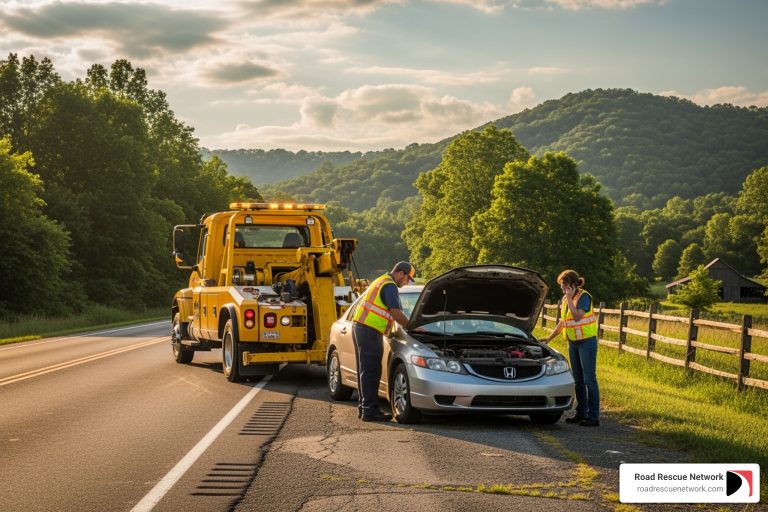
- Unsafe Location: If you’re in an unsafe location (busy highway, bad weather), call for help. Your safety is paramount. Our priority is getting you to safety in our service areas like Los Angeles, Chicago, and Houston.
- Uncomfortable with DIY: If you’re not confident using a kit or changing a spare, a professional can handle it quickly and correctly.
- Multiple Flat Tires: If you have more than one flat tire, you’ll need professional assistance.
- If the Temporary Fix Fails: If you’ve tried a sealant or plug and the tire is still losing air, it’s time for professional intervention.
- Cost of Professional Service: A mobile tire repair service from Road Rescue Network can cost $75-$150+, depending on location and job complexity. This includes assessment, a temporary fix, spare tire change, or arranging a tow if needed. Costs vary by area (e.g., Mobile Tire Repair in Indiana vs. Mobile Tire Repair in New York).
At Road Rescue Network, we provide on-demand roadside assistance for car emergencies like flat tires across our extensive service areas, including cities like Phoenix, Seattle, and Miami. Our USP is fast, 24/7 service with no memberships or hidden fees, instantly connecting you with local rescuers.
Frequently Asked Questions about Emergency Flat Repair
Here are some of the most common questions we get about emergency flat repair products:
Is Fix-a-Flat safe for my tires and TPMS?
Yes, modern formulas from Fix-a-Flat and Slime are generally safe for tires and TPMS (Tire Pressure Monitoring System).
- TPMS Safe Formulas: Newer formulas are water-based, non-corrosive, and compatible with TPMS sensors. Always check the label for “TPMS Safe.”
- Non-Corrosive: The formulas are designed not to corrode your tire or rim.
- Water-Based: Being water-based makes cleanup easier for mechanics during the permanent repair.
- Temporary Use Only: While the sealant is safe, it should not be left in the tire long-term. Get a professional repair done promptly.
How long can I drive after a temporary fix?
This depends on the type of fix and the damage.
- Fix-a-Flat Recommendation: For sealants like Fix-a-Flat, get a professional RMA (Rubber Manufacturer’s Association) repair within 3 days or 100 miles. This ensures the tire is properly inspected and repaired.
- Plug Kit Durability: A tire plug is also a temporary repair, though it may last longer than sealant. We advise a professional repair within a similar timeframe: a few days or 100-200 miles.
- Varies by Damage: The longevity of any temporary fix depends on the specific puncture.
- Get a Permanent Repair ASAP: The golden rule is to seek professional repair as soon as possible. Emergency repairs are not long-term solutions.
What are the best ways to prevent flat tires?
While some flats are unavoidable, many can be prevented with regular maintenance.
- Proper Inflation: Proper inflation is key. Both under- and over-inflation increase risks. Check your tire pressure monthly with a gauge, using the recommended pressure found on the driver’s door jamb sticker.
- Regular Tire Rotation: Rotate your tires every 5,000-7,500 miles as recommended by your vehicle’s manufacturer. This ensures even wear, extending tire life and reducing failure risk.
- Check Tread Depth: Use a penny to check your tread. If you can see all of Lincoln’s head, your tires are worn and more vulnerable to punctures.
- Avoid Road Hazards: Scan the road for potholes, debris, and other obstacles, especially in construction zones.
- Visual Inspections: Before you drive, walk around your car and look at your tires. Check for low inflation, nails, bulges, or cracks. Catching a slow leak early can prevent a flat tire emergency.
By following these preventative measures, you significantly reduce your chances of needing an emergency flat repair.
Don’t Get Stranded: Be Prepared for Your Next Flat Tire
We’ve covered the essentials of emergency flat repair, from immediate actions to DIY products and when to call for help. The key takeaway is preparation. A sealant, plug kit, or functional spare can save you time, stress, and money.
Emergency kits are temporary solutions for small tread punctures. They are not meant for sidewall damage or long-term use.
For severe damage, unsafe locations, or if you’re uncomfortable with a DIY fix, professional help is the safest choice. Road Rescue Network provides fast, dependable roadside assistance with no memberships or hidden fees in service areas like Los Angeles and Phoenix.
Don’t let a flat tire deflate your day. Be prepared, know your options, and drive with confidence. If you ever find yourself in need, remember you can always get fast, reliable roadside assistance from us, anytime, anywhere.