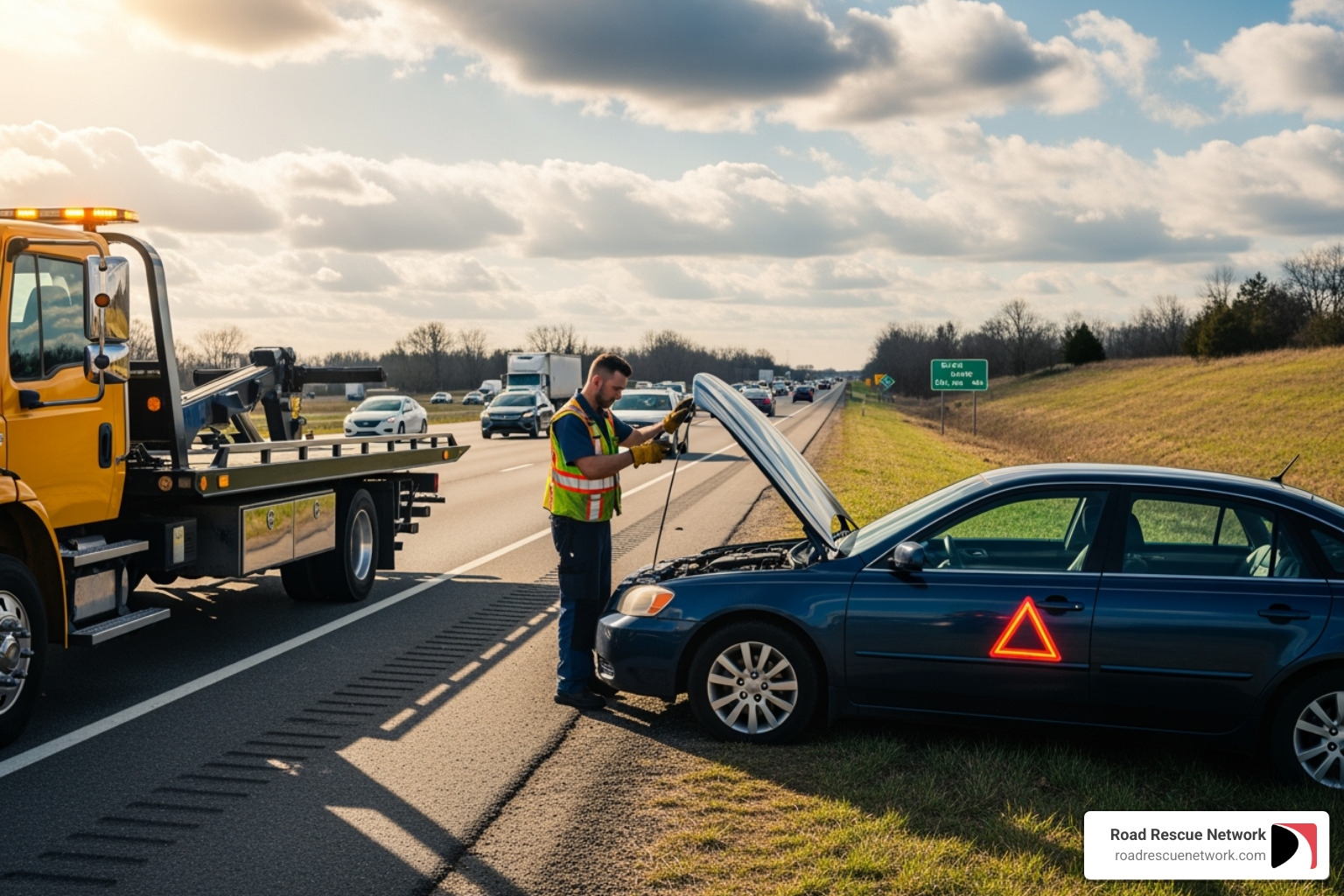
Quick Roadside Service: What to Expect from Top Providers
Your Safety Net on the Open Road
Roadside assistance provider services help drivers when their vehicles break down unexpectedly. Here’s what you need to know:
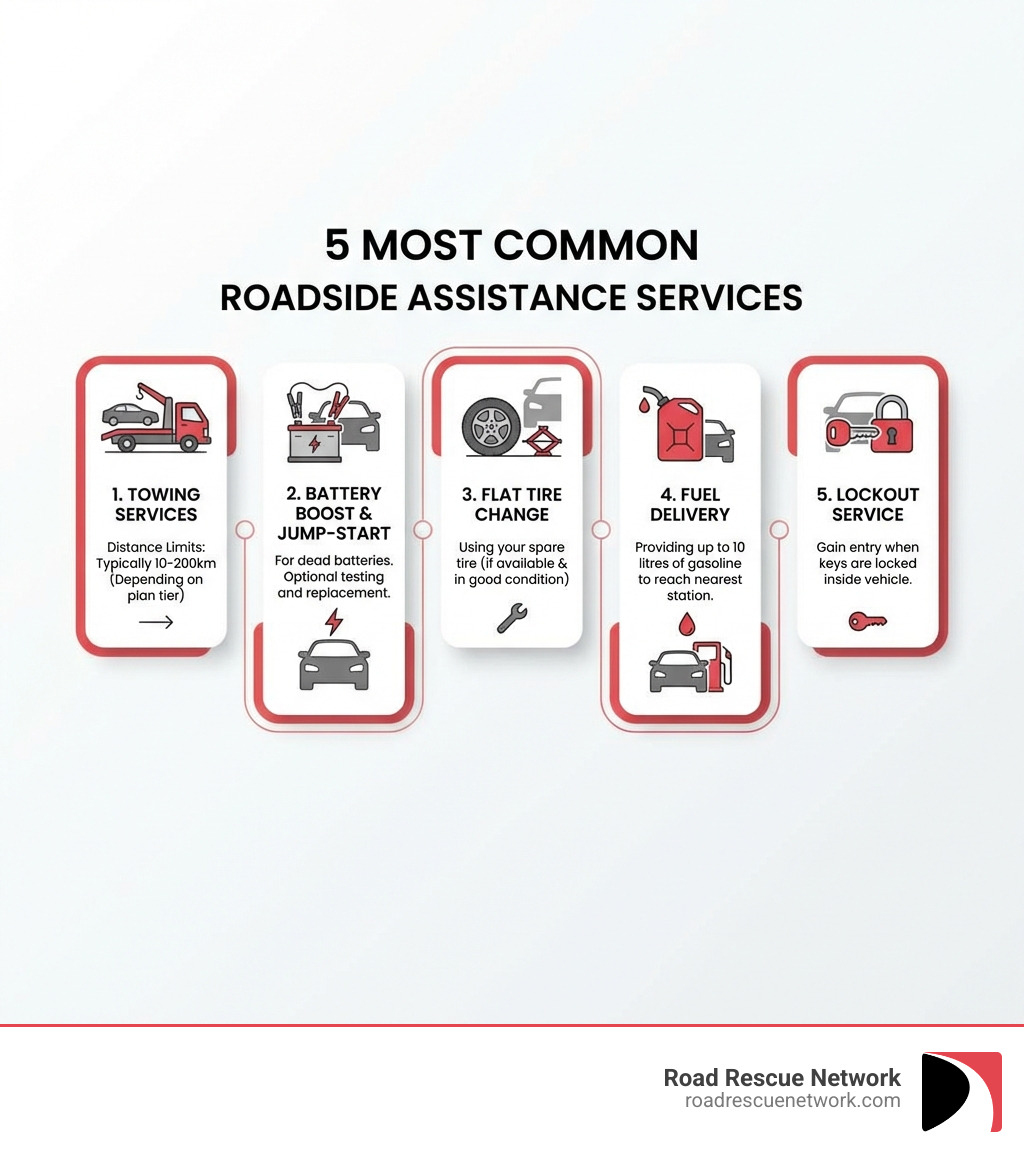
- Common Services: Towing, battery jump-starts, flat tire changes, fuel delivery, and lockout assistance
- Provider Types: Traditional memberships (CAA/AAA), insurance add-ons, or pay-per-use services
- Key Features: 24/7 availability, service network coverage, response times, and service call limits
- Average Costs: Membership plans start around $4-6/month, while out-of-pocket towing averages $109 in the U.S.
Cars break down at the worst possible times. A flat tire on the way to work. A dead battery in a parking lot. Keys locked inside your car when you’re miles from home. These moments are stressful, inconvenient, and sometimes unsafe.
According to AAA, they help more than 33 million motorists every year with these exact problems. Whether you’re driving your own vehicle, a rental, or even riding as a passenger in a friend’s car, knowing how to access reliable help can turn a crisis into a minor delay.
The roadside assistance industry has evolved significantly. You’re no longer limited to traditional membership programs. Today, you can choose from annual memberships, insurance policy add-ons, or on-demand services that you pay for only when needed. Each model has different costs, coverage limits, and response times.
Understanding what each provider offers helps you make the right choice for your driving habits, vehicle type, and budget. Some plans cover you as a person in any vehicle. Others tie coverage to a specific car. Some include extra perks like discounts at repair shops, while others keep it simple with just emergency services.
I’m Byron Tarlton, founder of Road Rescue Network, and I’ve spent over two decades building technology platforms in the transportation and roadside assistance industry. My experience connecting drivers with reliable roadside assistance provider networks has shown me exactly what matters most when you’re stranded: fast response, transparent pricing, and trustworthy service.
Core Services: What’s Included in a Standard Plan?
When your vehicle decides to take an unplanned break, a reliable roadside assistance provider comes to the rescue with a suite of essential services. These services are designed to get you back on the road quickly or, at the very least, to a safe location for repairs.
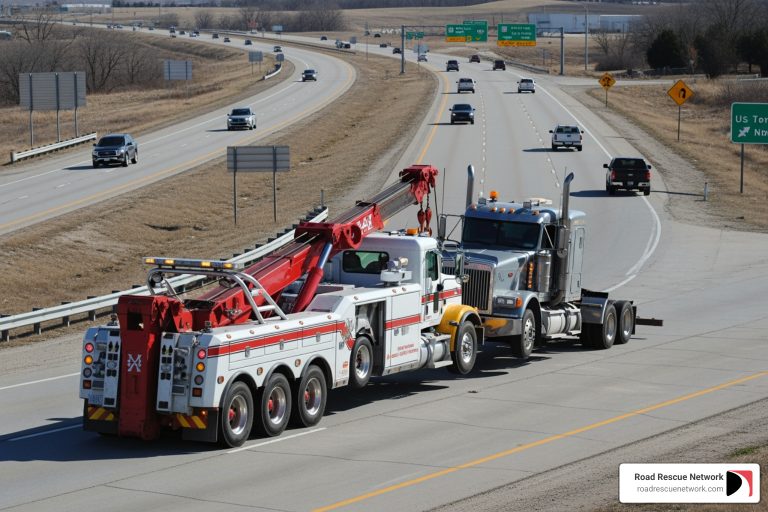
At the heart of any good roadside assistance plan are towing services. This is often the first thing people think of when their car breaks down. The average cost of a tow in the U.S. can hover around $109, with rates varying between $2.50 and $7 per mile, according to J.D. Power. Many providers offer limited free towing distances, like AAA’s basic plan covering up to seven miles, or unlimited towing back to their service facility. For our Canadian friends, providers like Intact Insurance and belairdirect typically offer towing up to a 50 km radius, while CAA’s basic membership might cover 10 km, extending to 200 km for higher tiers. Whether you need light duty towing in California for a passenger car or heavy duty towing in Kansas for a larger vehicle, it’s crucial to know your plan’s limits.
Next up, we have battery boosts. A dead battery is one of the most common and frustrating roadside issues. Imagine rushing to an appointment, only to find your car won’t start. Roadside assistance will dispatch someone to give your battery a jump-start. Some providers, like AAA, even offer a mobile battery service that includes testing your existing battery and, if needed, installing a new one with a nationwide 3-year free replacement warranty. For example, if you need a jump start service in Arkansas, help is just a call away.
A flat tire can deflate your plans faster than you can say “spare me!” Flat tire changes are a standard offering. The technician will typically install your vehicle’s spare tire. If you don’t have a spare, or if it’s not in good condition, they’ll usually tow your vehicle to the nearest repair shop. If you’re facing a flat tire in the Carolinas, a tire change service in South Carolina can quickly get you rolling again.
Running on fumes is never a good idea, but sometimes it happens. That’s where fuel delivery comes in. If you’ve unexpectedly run out of gas, a roadside assistance provider can bring you enough fuel (often up to 10 litres, as seen with Intact and belairdirect) to get to the nearest gas station. That some providers, like AAA, might not cover diesel fuel delivery. Should you need fuel delivery in Virginia, this service can be a real lifesaver.
Ah, the dreaded lockout! Keys dangling innocently from the ignition, just out of reach. Lockout services provide assistance to get you back into your vehicle. If the technician can’t manually open the door, some plans offer reimbursement for locksmith services. CAA, for instance, offers up to $50 for basic members and $100 for Plus members for locksmith assistance. If you find yourself needing lockout service in New Jersey, these services can prevent a lot of frustration.
Finally, for those trickier situations, we have winching and extrication. This service is for when your vehicle is stuck in a ditch, mud, or snow and needs to be pulled out. Providers like belairdirect offer winching, though they note additional charges may apply if standard emergency road service equipment cannot reach your vehicle. It’s always best to understand the specific conditions and potential costs associated with these more complex services.
Comparing Roadside Assistance Providers: Membership vs. On-Demand
Choosing a roadside assistance provider can feel a bit like picking your favorite ice cream flavor – there are so many options, and what’s best for one person might not be for another. Broadly, these services fall into three main categories: traditional membership models, insurance company add-ons, and pay-per-use services. Each has its own cost structure and coverage type, designed to fit different driving styles and preferences.
The Traditional Membership Model (e.g., CAA/AAA)
This is perhaps the most well-known model. Organizations like AAA in the U.S. and CAA in Canada operate on a membership basis. You pay an annual fee, and in return, you get access to their network of services. These providers often have tiered plans (Basic, Plus, Premier), with benefits increasing as you go up in price. The beauty of these memberships is that they typically cover the member, not the vehicle. This means you’re covered in any car you’re driving or riding in, whether it’s your own, a rental, or a friend’s car.
Beyond core roadside services, these memberships often come with a host of additional perks and discounts, such as rewards programs offering savings on travel, entertainment, and automotive services, or discounts at approved auto repair facilities. Many traditional providers also offer family plan options, ensuring all your loved ones are covered. Be sure to check the terms and conditions for specific details with any provider you are considering.
Insurance Company Add-Ons
Many auto insurance companies offer roadside assistance as an optional add-on or endorsement to your existing policy. This can be a convenient option, as it’s often bundled with your auto insurance and appears on a single bill. The monthly cost can be quite low compared to a standalone membership.
While appealing for its simplicity and affordability, it’s worth considering the potential impact on premiums. While usually minor, any additional coverage can sometimes influence your overall insurance cost. The convenience of having everything under one roof is a major draw. These plans typically include essential services like towing, jump-starts, flat tire changes, and lockout assistance, often with limits on the number of service calls per year. Customers can typically learn more about making an auto claim, which might include roadside assistance, through their insurer’s website, and many also allow you to request assistance online.
The Pay-Per-Use Model
For those who prefer flexibility and don’t want the commitment of annual fees or bundled insurance, the pay-per-use model is an excellent choice. This model, championed by services like Road Rescue Network, means no membership fees whatsoever. You pay only when service is needed, making it an ideal option for infrequent drivers, those with newer, more reliable cars, or anyone who simply doesn’t want to be tied down by an annual subscription.
The primary advantage here is that you’re not paying for a service you might rarely use. While the cost of a single service might be higher than the prorated monthly cost of a membership, it can still be more economical if you only need assistance once every few years. As we mentioned earlier, the average cost of a tow in the U.S. is around $109, and individual services can range from $2.50 to $7 per mile. This can be a significant out-of-pocket expense if you don’t have a plan. However, with a pay-per-use model, you get the benefit of professional help without the recurring cost. At Road Rescue Network, we pride ourselves on offering fast, 24/7 service with no memberships or hidden fees, instantly connecting users with local rescuers. This approach means you only pay for the help you need, precisely when you need it. You can see more details on the typical costs of towing from J.D. Power.
Key Factors in Choosing Your Plan
Deciding on the right roadside assistance provider is a personal choice, much like choosing the right pair of shoes – it needs to fit your specific needs and lifestyle. We encourage you to consider a few key factors to ensure you pick a plan that offers genuine peace of mind, not just another bill.
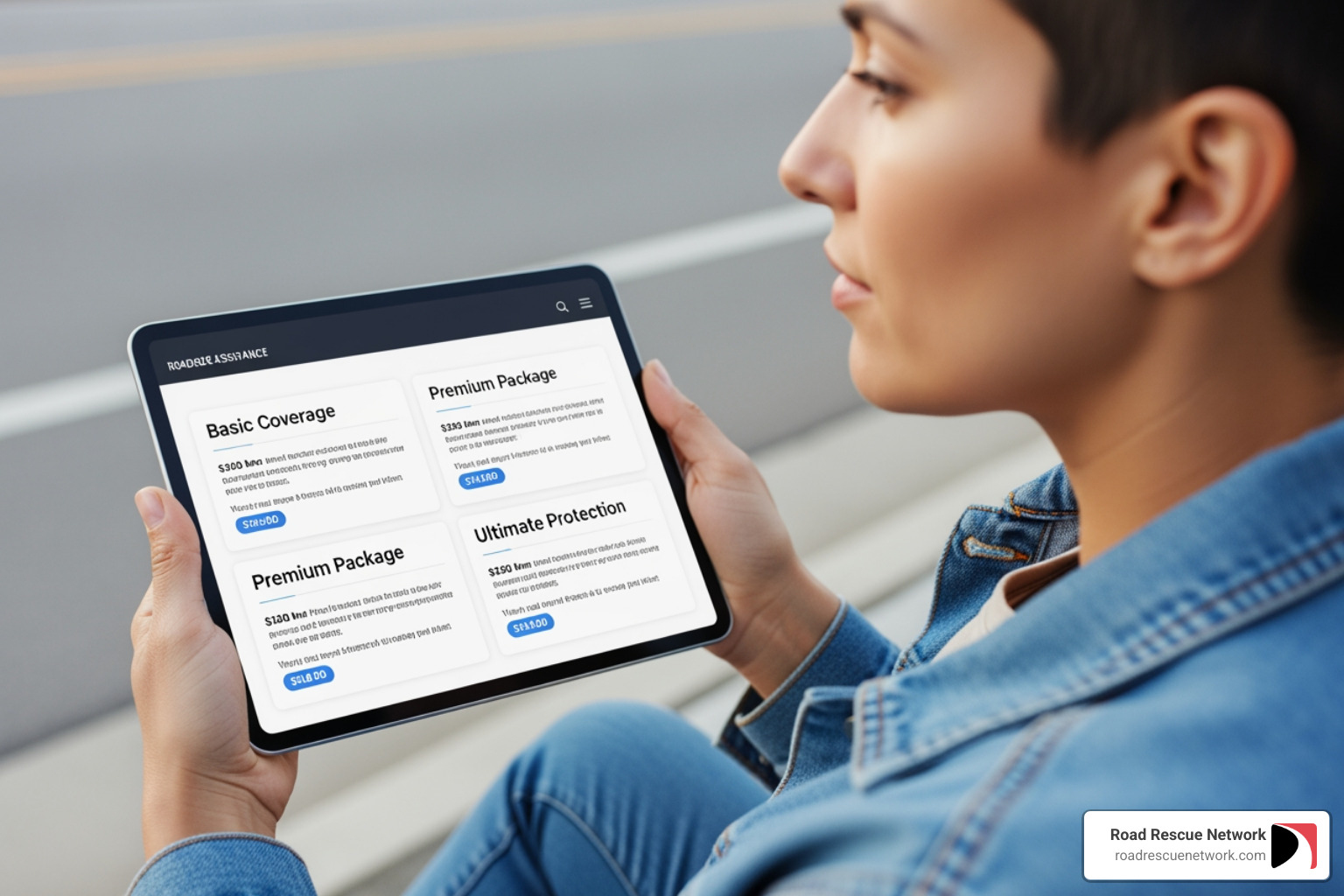
First, think about your driving habits. Are you a daily commuter, logging hundreds of miles a week? Or an occasional driver, mostly running errands close to home? Your mileage and routine will influence how often you might need assistance and how much coverage you require. Second, consider your vehicle age. A brand-new car might have factory roadside assistance, while an older vehicle could be more prone to unexpected breakdowns. Finally, your budget considerations play a significant role. Are you comfortable with an annual fee for comprehensive coverage, or do you prefer to pay only when a problem arises?
What to Look for in a Roadside Assistance Provider
When we look for a reliable roadside assistance provider, several features stand out as non-negotiable:
- 24/7 availability: Car trouble doesn’t keep business hours, so your assistance shouldn’t either. All reputable providers, including AAA, CAA, Intact, and belairdirect, offer round-the-clock service.
- Service network size: A large network means help is more likely to be available quickly, no matter where you are. Road Rescue Network, for example, relies on a vast network of local rescuers to ensure prompt service across numerous U.S. locations like New York, Los Angeles, Chicago, Houston, Phoenix, and many more.
- Average response times: When you’re stranded, every minute feels like an hour. While exact response times can vary based on location and demand, a provider’s commitment to speed is vital.
- Customer reviews: What do other drivers say? Their experiences can offer valuable insights into reliability and service quality.
- Coverage for different vehicle types: Do you drive a car, a motorcycle, or perhaps an RV? Not all plans cover all vehicle types. AAA offers assistance for RVs and motorcycles, though services vary by region. Intact Insurance also extends its roadside assistance to RV, motorcycle, ATV, and snowmobile policies. If you’re planning a trip and need mobile RV repair in Virginia, ensure your plan covers it.
Understanding Plan Limitations
Even the best plans have their limits. It’s crucial to read the fine print to avoid nasty surprises. Here are some common limitations we’ve observed:
- Service call limits per year: Many insurance-based plans, such as Intact and belairdirect, cap you at four service requests per policy term. AAA also typically allows up to four free calls per membership year, with charges applying thereafter.
- Towing distance caps: This is one of the most significant variations between plans. While some basic plans might cover only a few miles (e.g., AAA Classic up to seven miles, CAA Basic up to 10 km), higher-tier plans or insurance add-ons might offer 50 km (Intact, belairdirect) or even 200 km (CAA Plus). Going beyond these limits usually means out-of-pocket expenses.
- Common exclusions: Some services are simply not covered. For instance, AAA does not cover the delivery of diesel fuel; if your diesel vehicle runs out, they’ll tow you instead. Winching services might have additional charges if your vehicle is in a particularly difficult-to-reach spot. Providers may also decline service for vehicles deemed unsafe or those with certain modifications, so it’s always wise to review a provider’s member guide or terms of service.
- Coverage for accidents vs. breakdowns: Some plans primarily cover mechanical breakdowns, while others extend to accident-related roadside assistance, sometimes called “trip accident assistance” (like Canadian Tire and CAA).
- Services for specialty vehicles: While some plans cover motorcycles and RVs, specialized services like heavy duty towing in Kansas for commercial trucks might require a different type of plan altogether.
How to Use Roadside Assistance: A Step-by-Step Guide
When that unexpected moment strikes and your vehicle decides to take an unscheduled break, knowing how to efficiently request and receive help is paramount. Here’s our step-by-step guide to navigating the process, from breakdown to rescue.
| Step | Action |
|---|---|
| 1. Stay Safe | Pull over to a safe location, turn on your hazard lights, and stay in your vehicle if possible. |
| 2. Request Help | Contact your provider via their app, website, or phone number. |
| 3. Provide Info | Be ready with your location (cross-streets, mile markers), vehicle details (make, model, color), the nature of the problem, and your membership number if applicable. |
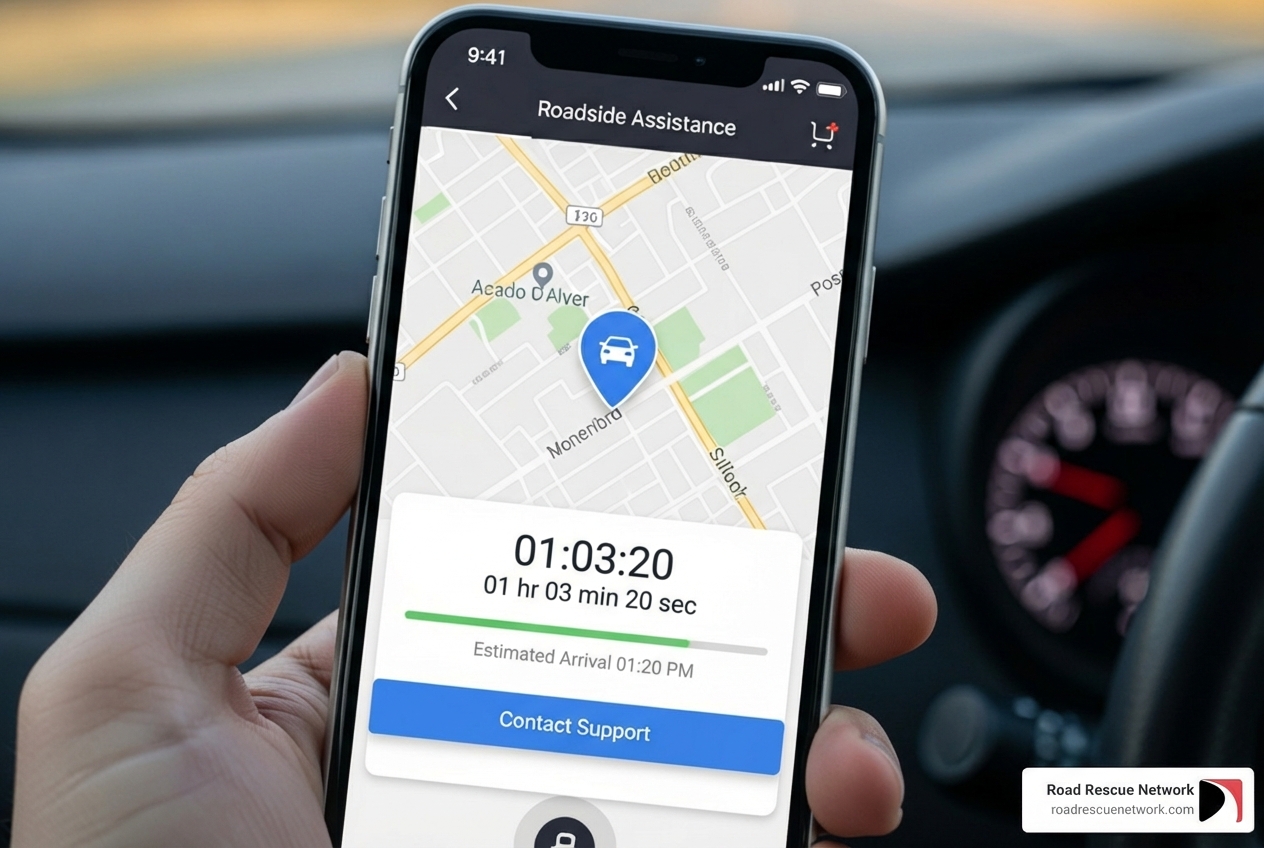
| 4. Wait for Help | You’ll typically receive an estimated time of arrival (ETA). Many apps now offer real-time tracking of the service vehicle. Stay in a safe place until help arrives. |
Requesting Service
How to contact: Phone call; Mobile app; Online portal. Many providers allow you to request service online through their website.
Information You’ll Need
Your location; Vehicle make, model, and color; Nature of the problem; Membership details if applicable.
What to Expect When Help Arrives
Safety precautions while waiting; Technician’s role; Verifying service details; Payment process for on-demand services.