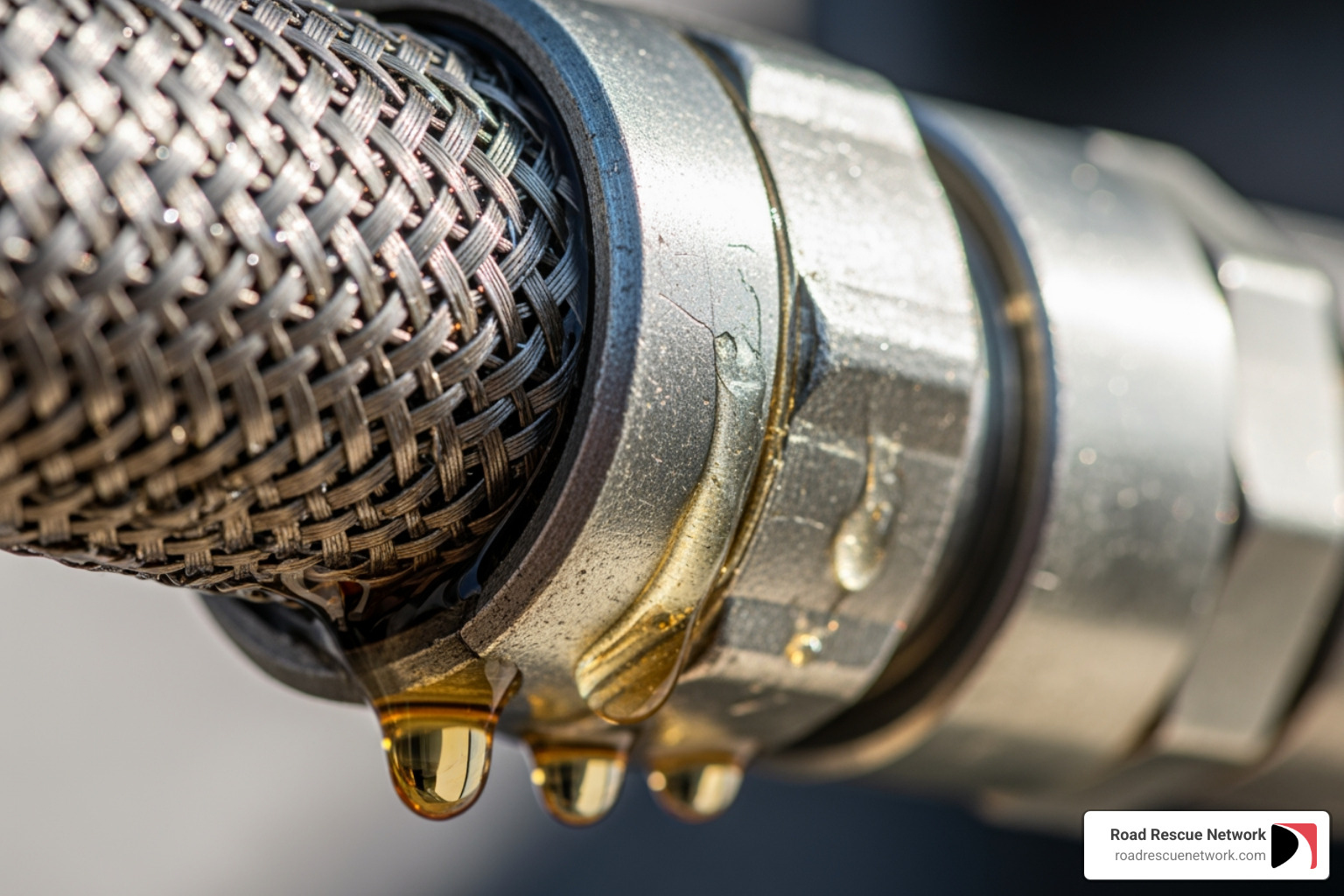
Stop the Drip: Expert Tips for Hydraulic Fitting Leak Repair
Why Hydraulic Fitting Leaks Demand Immediate Attention
Hydraulic fitting leak repair is a critical maintenance task that prevents costly downtime, protects the environment, and keeps your equipment running safely. A dripping fitting is more than a minor annoyance—it’s a sign of a problem that will worsen if ignored. Hydraulic leaks are a serious issue, with over 100 million gallons of fluid seeping into the environment annually in the U.S. from preventable leaks. This represents massive financial losses from wasted fluid, equipment damage, and unplanned downtime that can exceed $10,000 per hour.
Quick Answer: How to Fix a Leaking Hydraulic Fitting
- Depressurize the system completely and ensure it’s safe to work on
- Identify the exact leak source (fitting, O-ring, or thread)
- Disassemble the connection and inspect all components
- Replace worn O-rings or seals with exact specifications
- Apply appropriate sealant (if needed for thread type)
- Reassemble and torque to manufacturer specifications
- Test by gradually pressurizing and checking for leaks
The good news is that most leaks can be permanently fixed. The key is understanding why the fitting is leaking. A loose fitting might just need proper torque, but a damaged O-ring, corroded threads, or worn seal requires replacement. Quick fixes that don’t address the root cause typically fail within days or even hours.
I’m Byron Tarlton, and through my work building Road Rescue Network and managing heavy equipment, I’ve seen how a small hydraulic fitting leak can spiral into a major breakdown if not addressed properly. My experience coordinating emergency repairs for commercial fleets taught me that effective hydraulic fitting leak repair requires both immediate action and a systematic approach.
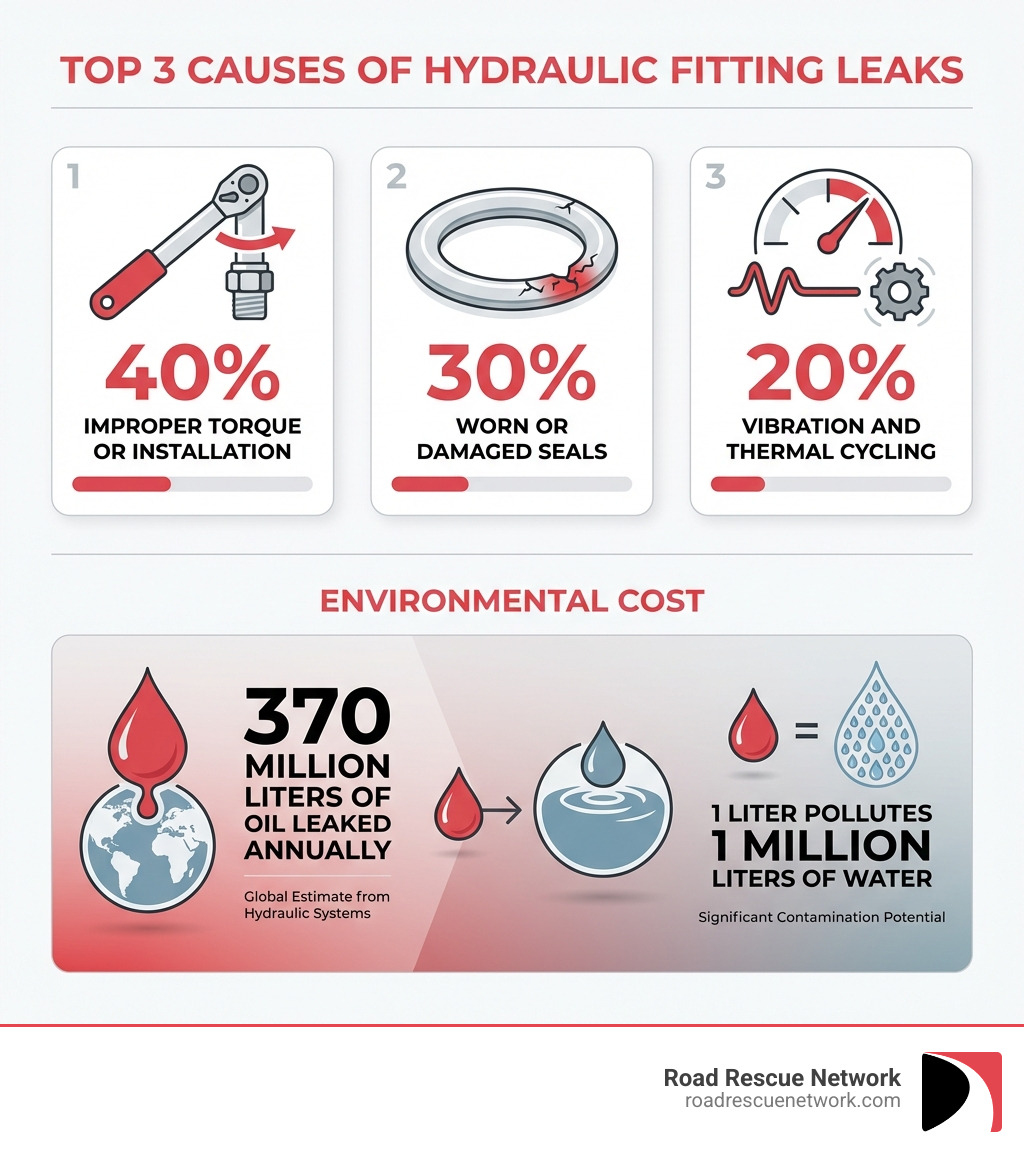
Handy hydraulic fitting leak repair terms:
Diagnosing the Drip: Common Causes and Leak Identification
When faced with a hydraulic leak, the first step is to figure out why it’s happening and where the fluid is escaping. This isn’t always straightforward, as fluid can travel along lines and drip from a point far from the actual source. Ignoring these early signs can lead to significant issues, as even small leaks can allow contaminants into your system.
The most common causes of hydraulic fitting leaks often stem from issues with installation or wear. Leaks are more frequently caused by incorrect fitting types or improper installation than by defective hoses or cracks. Here’s a rundown of what to look for:
- Improper Installation: Over-tightening damages threads and seals, while under-tightening fails to create a seal. Misaligning components is also a frequent culprit.
- Worn or Damaged Seals/O-rings: Seals and O-rings degrade over time from age, pressure, or heat. They can become brittle, cracked, or deformed, losing their sealing ability.
- Incorrect Torque: Both insufficient and excessive torque cause leaks. Insufficient torque leads to a poor seal, while excessive torque can damage the fitting or threads.
- System Vibration: Constant vibration from heavy equipment can stress plumbing, loosen connections, and cause fatigue in fittings and hoses.
- Corrosion and Contamination: Dirt, debris, or rust can compromise sealing surfaces and threads. Contaminated fluid also accelerates wear on seals and O-rings.
- High Temperature and Pressure Spikes: High temperatures (above 85°C) drastically reduce seal life. Temperature fluctuations cause expansion and contraction, breaking seals, while pressure spikes can stress fittings beyond their limits.
Understanding Fitting Types and Sealing Mechanisms
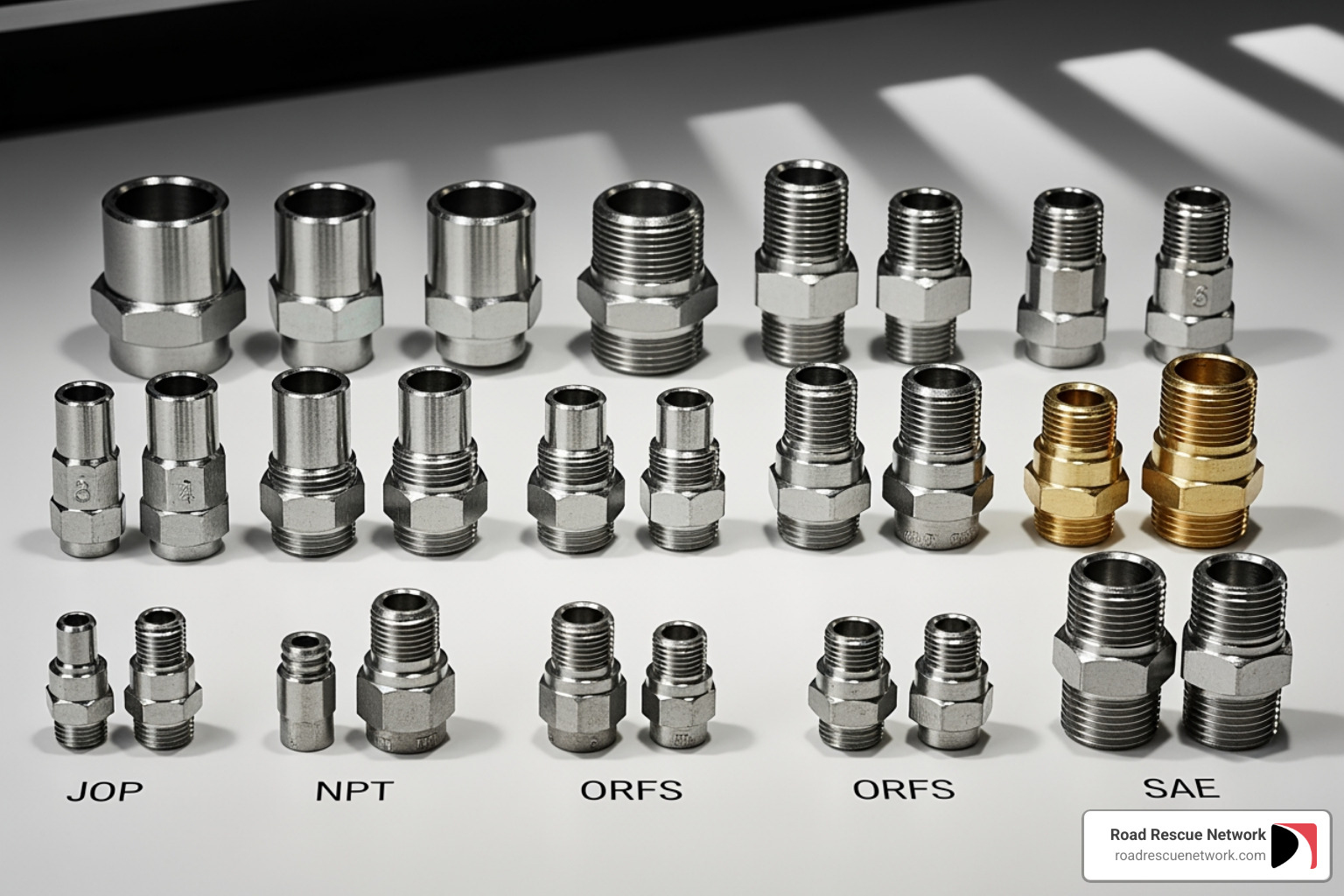
Different hydraulic fittings employ various mechanisms to create a seal, and understanding these is crucial for effective hydraulic fitting leak repair.
- JIC 37-degree Flare: A common metal-to-metal seal where a flared tube mates with a conical seat. Prone to weeping at high pressures, often due to incorrect torque.
- O-Ring Face Seal (ORFS): Uses an O-ring compressed between two flat surfaces, providing a highly reliable seal. Often preferred over metal-to-metal types.
- NPT Tapered Threads: Creates a seal by wedging tapered threads. The thread itself is a leak path, making NPT unreliable and not recommended for high-pressure systems.
- DIN Fittings: Common in European equipment, often using a 24-degree or 60-degree cone with a compression seal.
- Metal-to-metal seals: (e.g., JIC) Rely on precisely mated metal surfaces. Susceptible to imperfections, vibration, and incorrect torque.
- Elastomeric seals: (e.g., ORFS) Incorporate an O-ring for the highest seal reliability. The forgiving material handles minor imperfections and vibration well.
How to Pinpoint the Source of a Leak
Identifying the precise location of a leak is paramount. Hydraulic fluid can travel, so a drip at the bottom of an assembly might originate from a connection much higher up.
- Visual Inspection: Look for obvious signs of fluid, stains, or dust accumulation around fittings and connections.
- Cleaning the Area: Wipe down the entire suspected area thoroughly. A clean surface makes it easier to spot fresh leaks.
- Leak Detection Fluid: Apply a specialized leak detection fluid (soapy solution) to suspected areas. Bubbles will pinpoint the leak.
- UV Dye and Light Method: Add a UV reactive dye to the hydraulic fluid and inspect with a UV light to reveal even tiny leaks.
- Auditory Inspection (Hissing): A high-pressure leak can produce a hissing sound. A mechanic’s stethoscope can amplify these sounds.
- Tracing Fluid Paths from Top to Bottom: If you see fluid dripping, systematically check all connections and hoses above it. The source is rarely the lowest point of a visible drip.
Safety First: Essential Precautions Before You Begin
Working with hydraulic systems can be dangerous due to high pressures, hot fluids, and potential hazards. Safety should always be our top priority before attempting any hydraulic fitting leak repair.
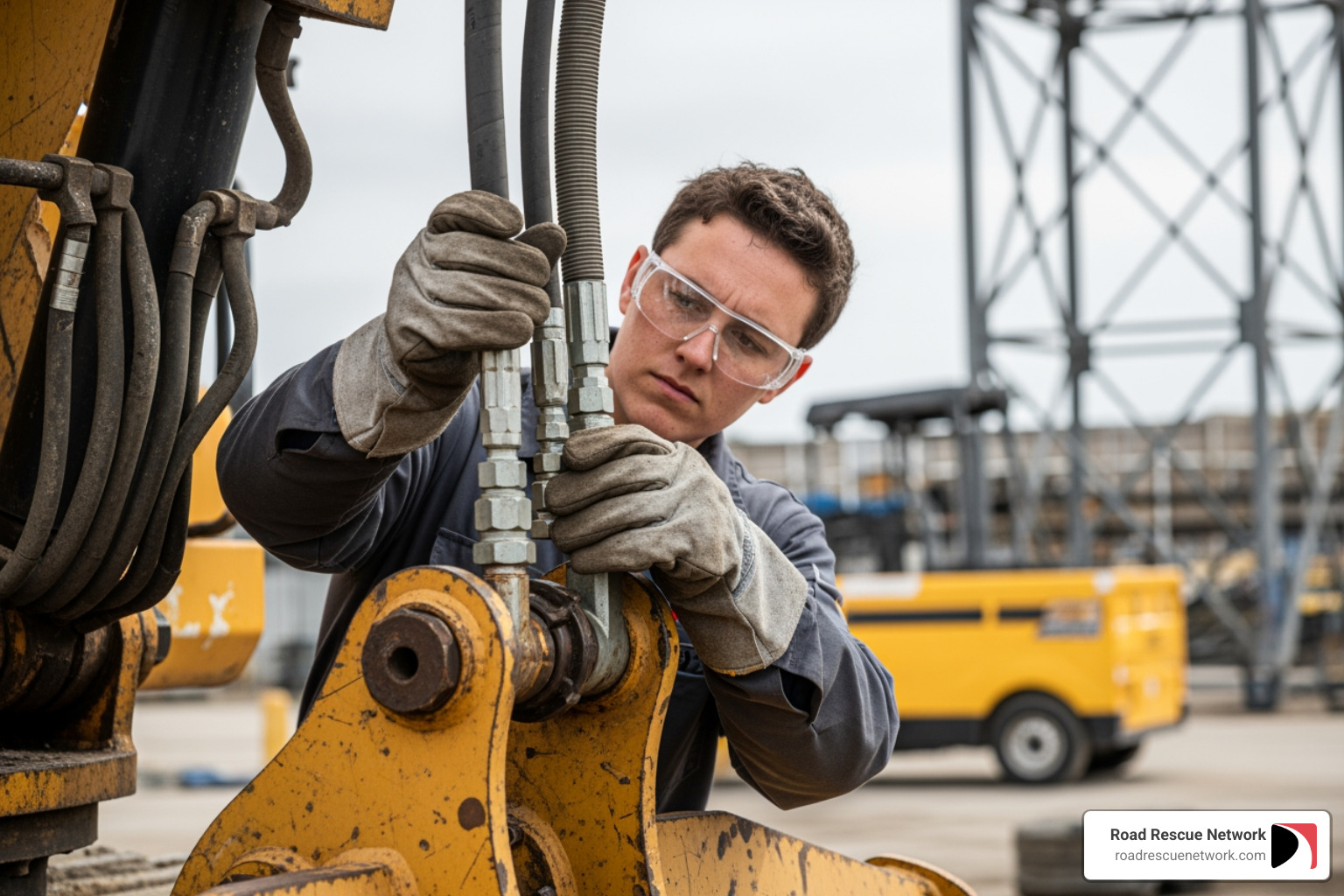
- High-Pressure Fluid Injection Injury: Hydraulic systems operate under immense pressure. A pinhole leak can release fluid at such high velocity that it can penetrate skin, causing severe internal injuries, tissue damage, and even amputation or death. Never use bare hands to check for leaks.
- Hot Hydraulic Fluid: Hydraulic fluid can become extremely hot during operation. Direct contact can cause severe burns. Allow the system to cool down before beginning any work.
- Personal Protective Equipment (PPE): Always wear appropriate PPE, including safety glasses or a face shield, heavy-duty gloves, and long sleeves.
- Fire Hazard: Hydraulic fluid is often flammable. Leaks can create a fire hazard, especially if they spray onto hot engine components or electrical systems. Keep fire extinguishers nearby.
- Slip Hazard: Leaked hydraulic fluid creates extremely slippery surfaces, posing a significant risk of slips, trips, and falls. Immediately clean up any spills.
How to Properly Depressurize a Hydraulic System
Before you touch any fitting or hose, it is absolutely critical to depressurize the entire hydraulic system. This eliminates the risk of high-pressure fluid injection and other hazards.
- Turn off Power Source: Shut down the hydraulic power unit or the machine’s engine completely. Engage lockout/tagout procedures if applicable to prevent accidental startup.
- Cycle Control Valves: With the power off, cycle all hydraulic control valves through their full range of motion several times. This releases any trapped pressure in cylinders, motors, and lines.
- Check Pressure Gauges: Verify that all pressure gauges in the system read zero. Do not rely solely on one gauge; check multiple points if available.
- Open Bleed Screws or Relief Valves: Many hydraulic components have bleed screws or relief valves designed to release residual pressure. Slowly open these to ensure all pressure is vented. Place a container to catch any fluid that may escape.
- Confirm Zero Pressure: Even after following these steps, exercise extreme caution. Gently try to loosen a fitting (with appropriate tools and PPE) to confirm there’s no residual pressure. If there’s any hiss or fluid spray, stop and re-depressurize.
Need on-site help in an emergency? Find hydraulic hose repair in Texas
Your Step-by-Step Guide to Hydraulic Fitting Leak Repair
This section provides a comprehensive walkthrough for a successful hydraulic fitting leak repair, from gathering tools to testing your work. Patience and precision are your best friends here.
Essential Tools and Materials for Hydraulic Fitting Leak Repair
Having the right tools and materials ready before you start will save you time and frustration.
- Torque Wrench: Absolutely essential for applying the manufacturer’s recommended torque, preventing both under and over-tightening.
- Standard Wrenches/Spanners: Ensure they are the correct size to avoid stripping fasteners.
- Replacement O-rings/Seals: Have new O-rings or seals on hand that match the exact size, material, and durometer of the originals.
- Compatible Fittings: If a fitting is damaged (cracked, stripped threads), it must be replaced with an identical part.
- Cleaning Solvent: A non-flammable solvent to remove old fluid, dirt, and debris.
- Lint-Free Cloths: For cleaning surfaces without leaving contaminating fibers.
- Thread Sealant (if applicable): PTFE tape or hydraulic pipe dope for tapered threads.
- Fluid Containment: Drip pans or absorbent mats to catch residual fluid.
Choosing the Right Sealant
The choice of sealant is critical and depends entirely on the type of hydraulic fitting you are repairing. Using the wrong sealant can cause more problems than it solves.
| Sealant Type | Description | Best For | Not Recommended For |
|---|---|---|---|
| Anaerobic Sealant | Cures in the absence of air, forming a strong, durable seal. Resists vibration and fluid pressure. | Tapered pipe threads (NPT/BSPT) in high-pressure applications. | Fittings with elastomeric seals (ORFS, JIC, compression). |
| PTFE Tape | (Teflon tape) A thin, white tape wrapped around threads. Acts as a lubricant and filler. | Tapered pipe threads (NPT/BSPT). | Fittings with elastomeric seals or metal-to-metal seals. |
| Hydraulic Pipe Dope | A paste-like sealant applied to threads. Offers good resistance to high pressure. | Tapered pipe threads (NPT/BSPT). Easy to apply and provides lubrication. | Fittings with elastomeric seals or metal-to-metal seals. |
Can I use thread seal tape for all hydraulic fittings? No. Thread seal tape (PTFE tape) is only for tapered pipe threads (like NPT). Using it on fittings that rely on an O-ring or a metal-to-metal seal (like JIC or ORFS) can prevent a proper seal and cause contamination if the tape shreds.
Can I use Teflon tape instead of a sealant for hydraulic fittings? Teflon tape is a type of sealant, but its use is restricted to tapered pipe threads. For other fitting types, you should never use it. Always refer to the manufacturer’s guidelines.
The 5-Step Repair Process
Once you’ve safely depressurized the system and gathered your tools, we can begin the hydraulic fitting leak repair.
- Disassemble the Connection: Carefully loosen the leaking fitting with the correct wrench, using a drip pan to catch residual fluid. Remove all components, noting their order.
- Clean and Inspect: Thoroughly clean all mating surfaces with solvent and a lint-free cloth. Inspect the fitting, port threads, and sealing surfaces for cracks, scratches, or damage. Examine the O-ring (if present) for any degradation; if it’s not perfect, replace it. Replace any damaged fittings.
- Replace Seals and Apply Sealant: Install a new, correctly specified O-ring, lightly lubricated with clean hydraulic fluid. For tapered threads (NPT), apply appropriate sealant like PTFE tape or pipe dope. For JIC fittings, ensure flare and seat surfaces are clean and undamaged.
- Reassemble and Torque: Hand-tighten the fitting to ensure proper thread alignment. Use a torque wrench to tighten to the manufacturer’s specification. For JIC fittings, a common method is to tighten until snug, then turn an additional 1/6 to 1/4 turn. Do not over-tighten, as this can damage threads, seals, and fittings.
- Test the Repair: After cleaning the area, gradually pressurize the system to operating levels. Inspect the fitting for any leaks. Perform an operational test by running the machine through its normal functions while monitoring the repair.
Find local hydraulic hose repair services in Florida
The Importance of Correct Torque Specifications
Applying the correct torque is a fundamental requirement for a leak-free hydraulic fitting leak repair.
- Prevents Over-tightening: Avoids stripping threads, crushing seals, and cracking fittings, which cause catastrophic failures.
- Prevents Under-tightening: Ensures components are compressed enough to create a seal that withstands pressure and vibration.
- Ensures Proper Seal Compression: For elastomeric seals (ORFS), it compresses the O-ring correctly without crushing it. For metal-to-metal seals, it ensures proper surface seating.
- Resists Vibration and Pressure: A properly torqued fitting maintains its clamping force, preventing loosening from vibration and pressure spikes.
Always refer to the equipment or fitting manufacturer’s service manual for specific torque values. For general guidance, you can refer to resources like the Parker Catalog 4300 Assembly/Installation section for recommended torque for various thread types and sizes.
Testing Your Hydraulic Fitting Leak Repair
After all the hard work, the final crucial step is to test your hydraulic fitting leak repair thoroughly to ensure it can withstand operational pressures.
- Gradual Pressurization: Do not immediately run the system at full capacity. Slowly increase the pressure to the operating level while observing the fitting.
- Operational Test: Once at operating pressure, run the machine through its normal work cycle. Dynamic movements can reveal leaks that static tests miss.
- Check for Visible Drips: Continuously monitor the repaired fitting for any visible signs of fluid weeping or dripping.
- Wipe with a Clean Cloth: Periodically wipe the area with a clean, lint-free cloth. If the cloth comes away with fluid, you still have a leak.
- Monitor System Performance: Keep an eye on system pressure and fluid levels. Unexplained pressure drops could indicate a subtle leak.
If the fitting continues to leak after using a sealant and proper torque, double-check your work. The issue might be a damaged port, an incorrect O-ring, or the fitting itself might need replacement.
Preventing Future Leaks: Long-Term Maintenance Strategies
The best way to deal with hydraulic fitting leaks is to prevent them from happening in the first place. Implementing a robust long-term maintenance strategy is key to avoiding costly downtime and ensuring the longevity of your hydraulic equipment.
- Regular Inspections: Make visual inspections a routine part of your maintenance schedule. Look for fluid stains, dust accumulation patterns, corrosion, and physical damage to fittings, hoses, and tubes. Pay close attention to connections during and after operation.
- Scheduled Maintenance: Follow manufacturer recommendations for scheduled maintenance intervals. This includes checking and replacing seals, O-rings, and potentially entire fittings before they fail. The average lifespan of a hydraulic hose is around 5 years, but this can be shorter with hard use.
- Proper Hose Routing: Ensure hydraulic hoses are routed correctly, without sharp bends, twists, or contact with abrasive surfaces. Improper routing can cause stress on fittings and lead to premature hose failure. Guidelines from organizations like NAHAD can help.
- Vibration Dampening Clamps: Vibration is a major culprit for loosening fittings and stressing components. Use appropriate clamps and supports to secure hoses and tubes, minimizing vibration transmission. Consider replacing problematic rigid tubes with flexible hoses in high-vibration areas.
- Maintaining Clean Fluid: Contamination is a silent killer of hydraulic systems. Use high-quality filters and maintain strict fluid cleanliness standards. Clean fluid prevents abrasive wear on seals, O-rings, and internal components of fittings.
- Monitoring Operating Temperatures: High operating temperatures can exponentially reduce seal life. Ensure your hydraulic system’s cooling system is functioning correctly and that fluid temperatures remain within the manufacturer’s recommended range (typically below 82°C or 85°C). A single over-temperature event can damage all seals in a system.
- Use Reliable Connectors: Where possible, choose connectors with elastomeric seals (like ORFS) over metal-to-metal or tapered thread connections (NPT), especially in high-pressure applications. These offer superior leak resistance.
By adopting these proactive measures, you can significantly reduce the incidence of hydraulic fitting leaks and extend the life of your equipment.
Get professional hydraulic hose repair in New York
Frequently Asked Questions about Hydraulic Fitting Leaks
We often hear common questions about hydraulic fitting leak repair. Here are some of the most frequent ones we encounter, along with our expert answers.
Can I just tighten a leaking fitting to stop the leak?
While a loose fitting can cause a leak, simply tightening it is often a temporary fix. Over-tightening can strip threads, crush seals, or crack the fitting, making the problem worse. It’s crucial to first check for underlying issues like a damaged O-ring or corroded threads, then tighten to the correct torque specification with a torque wrench.
Is it safe to use Teflon tape on all hydraulic fittings?
No. Teflon tape (PTFE) should only be used on tapered pipe threads (like NPT). Using it on fittings that seal with an O-ring (ORFS) or a metal-to-metal face (JIC) will prevent a proper seal and can introduce contaminants into the system if the tape shreds. Always match the sealant to the fitting type.
What should I do if the fitting still leaks after the repair?
If a fitting still leaks after a repair, depressurize the system and re-inspect your work. Check for:
- Damaged Threads: Look for stripping or corrosion on both the fitting and the port.
- Incorrect/Pinched Seal: Verify the O-ring is the correct size and material and wasn’t damaged during installation.
- Contamination: Ensure sealing surfaces are perfectly clean. Even a tiny particle can cause a leak.
- Fitting Damage: The fitting itself may have a crack or deformity and need replacement.
- System Issues: Persistent leaks could signal a larger problem like excessive vibration or pressure spikes, which may require professional diagnosis.
Conclusion
Mastering hydraulic fitting leak repair is an invaluable skill for anyone operating or maintaining hydraulic machinery. It’s not just about stopping a drip; it’s about safeguarding your equipment, protecting our environment, and ensuring the safety of your team. By correctly identifying the cause of the leak, diligently following safety protocols, and employing the right techniques and materials, you can achieve a durable, leak-free repair that contributes to the overall efficiency and longevity of your hydraulic systems.
A small investment of time and effort in proper maintenance and timely repairs can save you significant financial losses and headaches down the road. For complex issues or when you find yourself in a roadside emergency needing professional, on-site assistance, Road Rescue Network is here to connect you with expert technicians ready to get your hydraulic systems back in action.
Find 24/7 hydraulic hose repair services in your area