The Dreaded Flat: How to Avoid and Understand Trailer Tire Problems
Why Understanding Trailer Tire Failures Could Save Your Life
A blown trailer tire is more than just an inconvenience—it’s a serious safety hazard that can lead to loss of vehicle control, accidents, and even fatalities. According to the National Highway Traffic Safety Administration, over 500 traffic fatalities in 2022 were tire-related, including blowouts.
Quick Answer: What Causes a Blown Trailer Tire?
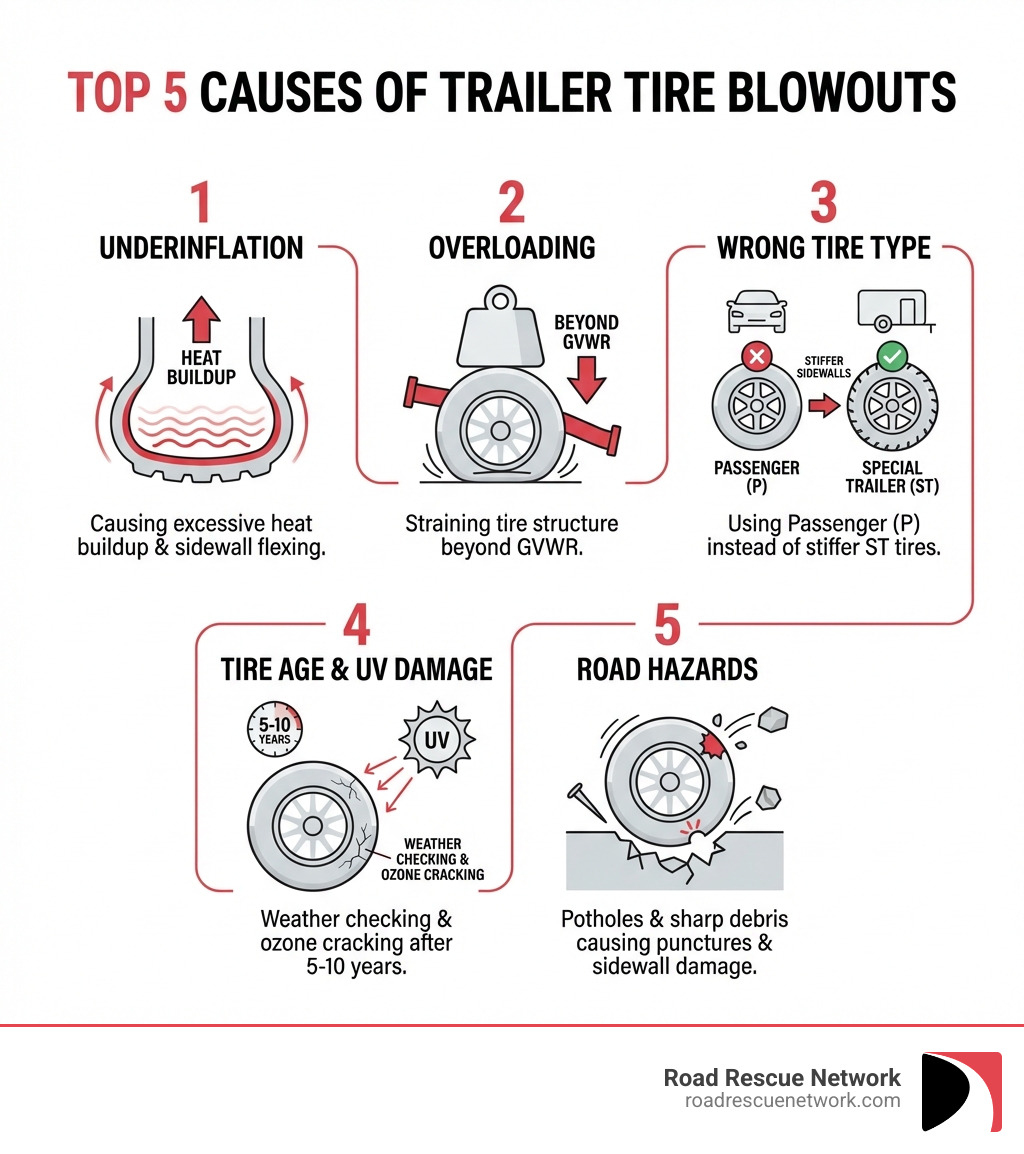
- Underinflation – Leading cause of heat buildup and failure
- Overloading – Exceeding tire weight capacity
- Age and Weather Checking – UV damage and ozone cracking over time
- Wrong Tire Type – Using passenger (P) tires instead of Special Trailer (ST) tires
- Road Hazards – Potholes, debris, and sharp objects
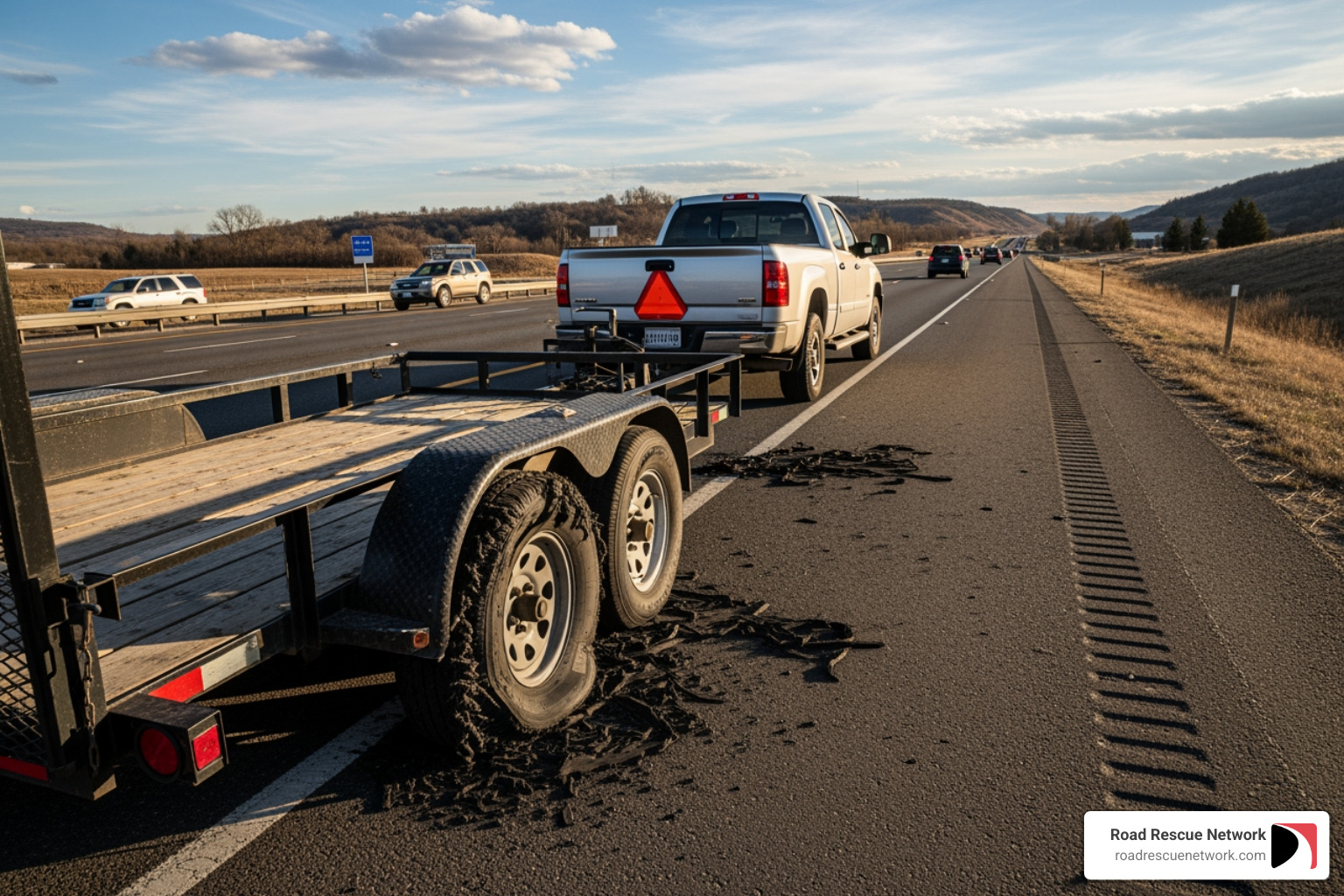
If you’ve ever been cruising down the highway and heard that sudden, jarring boom followed by a violent pull to one side, you know the fear that comes with a trailer tire failure. The vehicle vibrates. Your hands tighten on the wheel. Traffic rushes past as you try to maintain control and find a safe place to pull over.
The good news? Most trailer tire blowouts are preventable through proper maintenance, regular inspections, and understanding what causes them in the first place.
I’m Byron Tarlton, founder of Road Rescue Network, and I’ve spent over two decades in the transportation and roadside assistance industry. Through my work with Interstate Fleet Services and helping thousands of drivers deal with blown trailer tire emergencies, I’ve learned that education and preparation are your best defenses against this dangerous situation.
Know your blown trailer tire terms:
The Anatomy of a Failure: Why Do Trailer Tires Blow Out?
A blown trailer tire doesn’t happen without a reason. Often, it’s a culmination of factors putting immense stress on the tire’s structure. Understanding these primary causes is the first step in prevention.
Underinflation and Improper Tire Pressure
This is arguably the number one culprit behind most tire failures, especially for trailers. When a tire is underinflated, its sidewalls flex excessively as it rolls. This constant flexing generates tremendous heat, weakening the tire’s internal structure and eventually leading to a catastrophic failure or blown trailer tire. Think of repeatedly bending a paperclip—eventually, it breaks. The same principle applies to your tires.
Conversely, overinflation, while less common for blowouts, can lead to other problems. An overinflated tire has a smaller contact patch with the road, reducing traction and making it more susceptible to impact damage from potholes or debris. It also leads to uneven wear down the center of the tread.
Why is proper tire pressure so crucial? Not only does it prevent excessive heat buildup, but it also ensures optimal load capacity, improves fuel economy, extends tread life, and maintains the tire’s structural integrity.
Weather also plays a significant role here. Tire pressure changes with temperature, often by about 2 psi for every 10°F fluctuation. This means a tire properly inflated in cool morning temperatures can become significantly underinflated as the day heats up, especially during “tire-blowout season,” which typically runs from mid-May through early October when outside temperatures are highest. Always check your tire pressure when the tires are “cold” – meaning they haven’t been driven on for at least three hours. We recommend using a calibrated tire pressure gauge, not just kicking the tire or relying on visual inspection, as radial tires often don’t look underinflated even when they are. You can find the recommended PSI for your trailer on its placard or in the owner’s manual.
How Overloading Leads to a Blown Trailer Tire
Every trailer, and every tire on that trailer, has a specific weight rating it can safely handle. Exceeding your trailer’s Gross Vehicle Weight Rating (GVWR) or the individual load capacity of its tires puts enormous, undue stress on the tires. This stress translates to increased friction, greater heat generation, and ultimately, internal structural damage that can result in a blown trailer tire.
Overloading not only compromises tire safety but also negatively impacts handling, braking, and suspension components. Even if your tires appear to be inflated correctly, an overloaded condition can cause them to deflect more than they are designed to, leading to the same kind of heat buildup seen in underinflation. Always know your trailer’s weight limits and ensure your cargo is distributed evenly to avoid concentrating weight on specific tires.
ST vs. Passenger Tires: Why the Right Type is Crucial
Not all tires are created equal, and this is especially true when comparing trailer tires (designated “ST” for Special Trailer) with passenger vehicle tires (“P”). Using the wrong type of tire on your trailer is a common mistake that significantly increases the risk of a blowout.
Here’s a comparison of why ST tires are essential for trailers:
| Feature | ST (Special Trailer) Tires | P (Passenger) Tires |
|---|---|---|
| Construction | Stiffer sidewalls, often bias-ply or reinforced radial for heavy loads | More flexible sidewalls for comfort and traction on passenger vehicles |
| Load Capacity | Designed for higher load capacities and constant heavy loads | Lower load capacities, designed for varying loads and passenger weight |
| Speed Rating | Typically speed-rated to 65 MPH (104 km/h) under normal conditions | Higher speed ratings, but not designed for sustained heavy trailer loads |
| Tread Width | Often narrower tread width to fit under trailer fenders | Wider tread for greater road contact and handling |
| Sidewall Flex | Minimized flexing to reduce heat buildup when carrying heavy loads | More flex for a comfortable ride and better cornering |
| Bruise Resistance | Engineered to be more bruise-resistant from road hazards and impacts | Less emphasis on bruise resistance |
| Load Derating | No derating when used on trailers | Load rating is derated by 10% when used on a trailer |
Passenger vehicle tires are designed for ride comfort and traction, not the sustained, heavy, and often static loads of a trailer. Their more flexible sidewalls can generate excessive heat under trailer conditions, making them highly susceptible to a blown trailer tire. While some might consider using passenger tires for light trailers, their load capacity is significantly reduced (derated by 10%) when placed on a trailer. For optimal safety and performance, always use ST-designated tires on your trailer.
Weather, Age, and Road Debris
Beyond inflation and load, external factors like weather, tire age, and road conditions contribute to blowouts.
- Weather: As mentioned, hot weather exacerbates underinflation. But prolonged sun exposure (UV radiation) can also degrade the rubber compound, leading to “weather checking” or “ozone cracking” on the sidewalls and in the tread grooves. This visible cracking indicates the rubber is losing its elasticity and strength, making it vulnerable to failure. This is why we often see a “tire-blowout season” between May and October.
- Age: Tires don’t last forever, even if they look good and have plenty of tread. The rubber compounds degrade over time, losing flexibility and becoming brittle. This internal breakdown can occur unseen. You can find the manufacturing date of a tire by looking at its DOT code, a series of numbers and letters on the sidewall. The last four digits represent the week and year of manufacture (e.g., 2322 means the 23rd week of 2022). Most manufacturers and safety experts recommend replacing trailer tires every 5-7 years, and definitely no later than 10 years, regardless of visible tread. An old tire, even with good tread, is a ticking time bomb for a blown trailer tire.
- Road Debris: Potholes, sharp objects, construction debris, and even curbs can cause punctures, cuts, or internal damage to a tire that might not be immediately visible but can lead to a blowout later. Driving style, such as speeding or aggressive braking, also increases the risk of tire damage. The Federal Motor Carrier Safety Administration (FMCSA) found that over 8,000 trucks experience blowouts annually, and road hazards are often a contributing factor.
Your Pre-Trip Lifesaver: A Comprehensive Tire Inspection Guide
Prevention is always the best strategy when it comes to avoiding a blown trailer tire. A thorough pre-trip inspection can identify potential issues before they become dangerous problems. Make this a routine before every trip, and even daily on longer hauls.

Visual Inspection: Spotting Trouble Before It Starts
We recommend a systematic approach to visually inspecting your trailer tires:
- Look for Bulges and Blisters: These indicate internal damage, where the tire’s structure has separated. A bulge is a clear sign that a blowout is imminent.
- Check for Cracks (Weather Checking/Ozone Cracking): Inspect the sidewalls and the base of the tread grooves for small cracks. If you see extensive cracking, especially deep ones, it’s time for new tires.
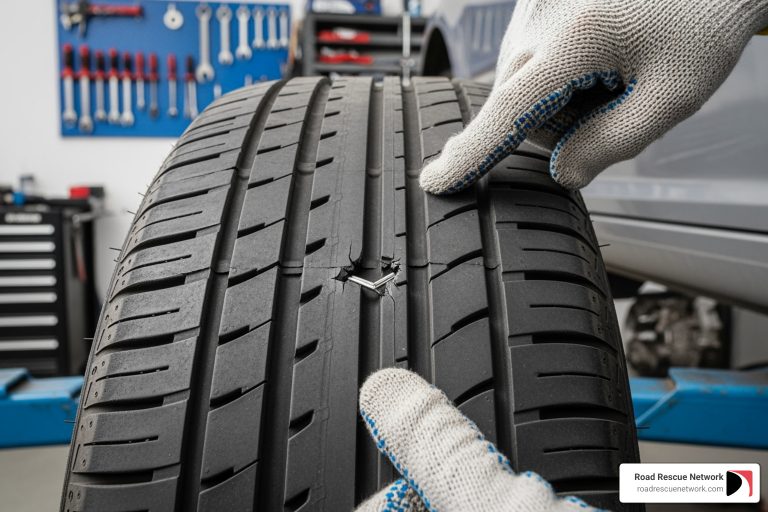
- Search for Cuts and Embedded Objects: Look for any cuts, gouges, or foreign objects (nails, screws, glass, etc.) embedded in the tread or sidewall. Even small cuts can compromise the tire’s integrity.
- Exposed Belts or Cords: If you can see the fabric or steel belts beneath the rubber, the tire is severely damaged and unsafe. It needs immediate replacement.
- Inspect Valve Stems: Ensure valve stems are not cracked or leaking.
Checking Tread Depth and Wear Patterns
Adequate tread depth is crucial for traction and safe braking, especially in wet conditions. It also helps the tire resist punctures.
- The Lincoln Penny Test: A simple way to check tread depth is with a penny. Place Abraham Lincoln’s head upside down into a tread groove. If you can see the top of his head, your tread is too shallow (less than 2/32 inch), and the tire needs to be replaced. For trailer tires, the minimum legal tread depth is 2/32 of an inch.
- Uneven Wear Patterns: Pay attention to how your tires are wearing. Uneven wear (e.g., more wear on one side, or excessive wear in the center or shoulders) can indicate issues like improper inflation, misalignment, or suspension problems. For example, overinflation often causes wear in the center, while underinflation causes wear on the outer edges.
- Wear Bars: Most tires have small raised bars molded into the tread grooves. When the tread wears down to be flush with these bars, it’s time for a replacement.

Verifying Tire Age and Lifespan
Even if your tires have plenty of tread and look good, their age can be a silent killer. Rubber compounds degrade over time.
- How to Read the DOT Date Code: Locate the “DOT” inscription on your tire’s sidewall. Following this, you’ll find a series of letters and numbers. The last four digits indicate the week and year the tire was manufactured. For example, “2322” means the tire was made in the 23rd week of 2022.
- Recommended Replacement After 5-7 Years: While some sources suggest up to 10 years, we recommend replacing trailer tires every 5-7 years from their manufacture date, regardless of visible wear. The internal structure and rubber elasticity deteriorate, significantly increasing the risk of a blown trailer tire.
- Dangers of Old Tires: An old tire might look perfectly fine on the outside, but its internal components can be severely compromised, making it prone to sudden failure under load and heat. It’s a risk not worth taking.
Emergency Protocol: What to Do When You Have a Blown Trailer Tire
Despite our best preventative efforts, a blown trailer tire can still happen. Knowing how to react immediately and safely can prevent a minor incident from escalating into a major accident. The experience can be jarring: a loud boom or bang, the vehicle pulling sharply to one side, and immediate vibration. According to the Large Truck Crash Causation study, over 8,000 trucks experience blowouts annually, highlighting the importance of preparedness. The first and most critical step is to stay calm.
Immediate Steps for a Blown Trailer Tire While Driving
When a trailer tire blows out, your vehicle’s dynamics change instantly. Here’s what to do:
- Do Not Slam the Brakes: This is counter-intuitive but crucial. Slamming on the brakes can cause the vehicle to swerve violently, potentially leading to a loss of control, especially with a trailer attached.
- Maintain a Firm Grip on the Steering Wheel: Hold the steering wheel with both hands, keeping it as straight as possible. Your vehicle will want to pull towards the side of the blown tire. Resist this pull with steady, firm steering.
- Gradually Decelerate: Slowly take your foot off the accelerator. Allow the vehicle to slow down naturally. If necessary, gently apply the brakes in a smooth, controlled manner.
- Briefly Accelerating to Regain Control (Advanced Technique): Some experienced drivers, particularly in larger vehicles, suggest a momentary, light application of the accelerator immediately after the blowout. This can help to momentarily stabilize the vehicle and maintain forward momentum, counteracting the drag from the blown tire, before gradually decelerating. This is an advanced technique and requires a calm and measured response.
- Activate Hazard Lights: As soon as you have the vehicle under control and are beginning to slow, turn on your hazard lights to alert other drivers to your situation.
Safely Pulling Over and Assessing the Situation
Once you’ve regained control and are slowing down, your next priority is to get off the road safely.
- Find a Safe, Level Location: Look for a wide shoulder, an exit ramp, or a parking lot. Avoid stopping on a curve, hill, or in heavy traffic if possible. The safer the location, the better for you and anyone assisting you. If you have dual tires and the inner one blows, you might be able to limp to the next safe spot, but stop immediately if you hear metal-on-metal banging, which indicates the tire carcass is hitting trailer cross members and causing damage.
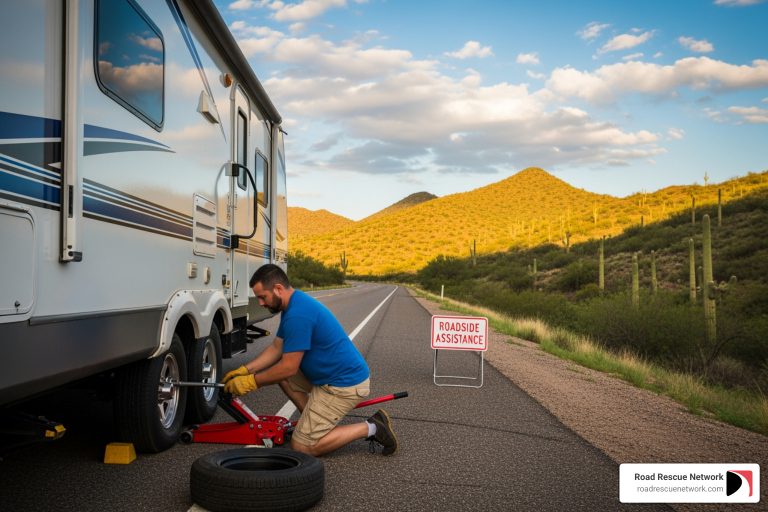
- Exit the Vehicle Away from Traffic: Once stopped, turn off your engine. When exiting your vehicle, always do so from the passenger side, away from the flow of traffic, for your safety.
- Set Up Reflective Triangles/Flares: Place reflective triangles or flares behind your trailer to warn oncoming traffic, especially at night or in low visibility conditions.
- Inspect the Damage: Take photos and videos of the blown trailer tire and any associated damage to your trailer (e.g., to the fender, wiring, or axle). This documentation can be helpful for insurance claims or reporting the incident. Note the location and potential causes if evident (e.g., large pothole, specific debris).
The Dangers and Legality of Driving on a Damaged Tire
Driving on a blown trailer tire or a completely flat tire carries significant risks and can have legal consequences.
- Risk of Wheel and Axle Damage: Continuing to drive, even for a short distance, on a flat or blown tire can severely damage your wheel, axle, and even the trailer’s suspension system. This turns a simple tire replacement into a much more expensive repair. A tire carcass hitting trailer cross members, for example, can cause hundreds or even thousands of dollars in repairs.
- Increased Risk of Losing Control: A severely damaged tire compromises your vehicle’s stability and handling, making it much harder to control, especially at speed or in an emergency maneuver.
- Legal Implications and ‘Out of Service’ Violations: Operating a vehicle with a flat tire, a blown trailer tire, a tire with low air pressure, or an audible air leak is illegal in most jurisdictions. Law enforcement can issue not only a ticket but also an ‘Out of Service’ violation, which means your vehicle cannot move until the tire is repaired or replaced. This applies to both commercial trucks and, in many cases, private trailers. We’ve seen this happen across our service areas, from New York to Los Angeles.
If you find yourself with a blown trailer tire and are unable to safely change it or perform a temporary repair, Road Rescue Network is here to help. We provide on-demand roadside assistance for car and trailer emergencies like flat tires, instantly connecting you with local rescuers with no memberships or hidden fees.
Frequently Asked Questions about Trailer Tire Safety
We often get asked similar questions about trailer tire maintenance and what to do in an emergency. Here are some of the most common ones:
What is the recommended tire pressure for my trailer?
The recommended tire pressure for your trailer tires is found on the trailer’s VIN placard or in the owner’s manual, not the maximum pressure listed on the tire’s sidewall. The tire sidewall lists the maximum cold inflation pressure for the maximum load, but your trailer’s specific requirements might be different. Always inflate your tires when they are “cold” (meaning they haven’t been driven on for at least three hours) for the most accurate reading. Using a calibrated gauge is essential, as “thumping” the tire is not an accurate way to check pressure. Proper inflation is key to preventing a blown trailer tire.
How often should I replace my trailer tires?
We strongly recommend replacing trailer tires every 5-7 years from their manufacturing date, regardless of how much tread they have left or how good they look. Even if a tire has never been used, the rubber compounds degrade over time due to exposure to oxygen, ozone, and UV light. This degradation leads to internal weakening, making the tire susceptible to sudden failure. Always check the DOT date code on the sidewall to determine the tire’s age. Of course, if you see significant damage like deep cracks, bulges, exposed cords, or severe uneven wear, replace the tire immediately, regardless of its age.
Can I repair a punctured trailer tire?
It depends on the location and extent of the damage. Minor punctures (e.g., from a nail or screw) in the tread area of the tire, away from the sidewall, can often be repaired safely by a qualified professional. However, any damage to the tire’s sidewall, shoulder, or bead area typically requires a full tire replacement. It’s also crucial to understand that ST (Special Trailer) tires are generally not recommended for plugging, as their construction and the stresses they endure are different from passenger tires. Always have a professional assess the damage to determine if a repair is safe or if a replacement is necessary to avoid a future blown trailer tire. Never attempt to repair a tire that has been driven on while severely underinflated or flat, as internal damage may have occurred.
Conclusion
The thought of a blown trailer tire can be daunting, but with the right knowledge and proactive steps, you can significantly reduce your risk. We’ve covered the primary causes, from underinflation and overloading to tire age and using the wrong type of tire. We’ve also emphasized the critical role of regular, thorough inspections as your best defense.
Even with the best preparation, unexpected events can occur. If you do find yourself facing a blown trailer tire or any other roadside emergency, Road Rescue Network is just a call away. We provide fast, 24/7 mobile trailer repair services, connecting you with local rescuers to get you back on the road safely and efficiently, without the hassle of memberships or hidden fees. Our goal is to turn that dreaded flat into a manageable inconvenience, wherever you are.
Get fast, on-demand help for a blown tire with our mobile trailer repair services