The Ignition Explained: From Key Turn to Engine Roar
Why Understanding Your Car’s Ignition System Matters
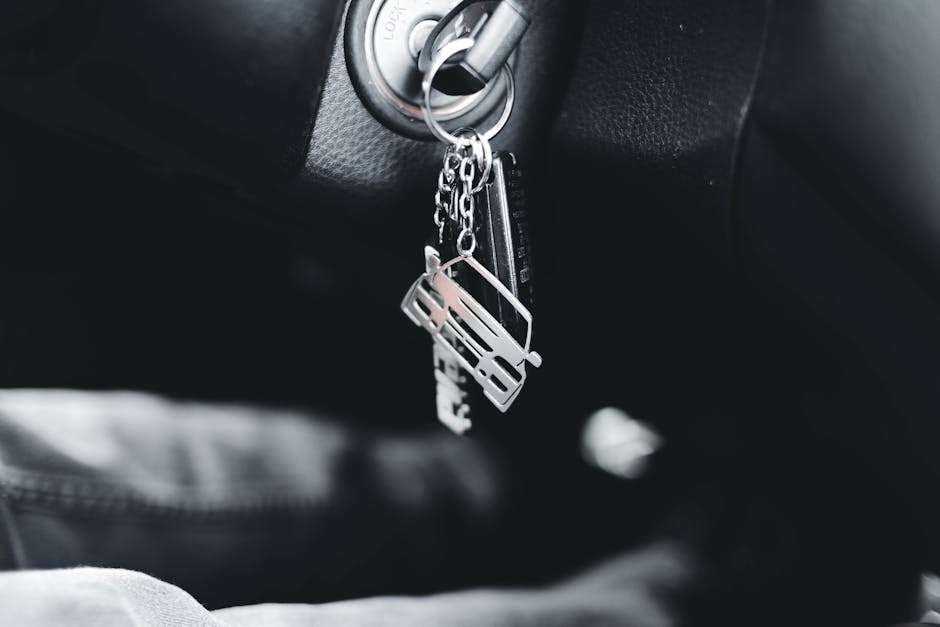
Keys in ignition systems are the gateway to your vehicle’s engine. When a key won’t turn, won’t come out, or the car won’t start, understanding the basics of your ignition can save you time, money, and frustration.
Quick Answer: What You Need to Know About Keys in Ignition
- Stuck Key: Usually caused by the shifter not being in Park, a locked steering wheel, a dead battery, or a worn key.
- Won’t Turn: Often due to steering wheel pressure, debris in the keyway, or worn tumblers.
- Emergency Fix: Wiggle the steering wheel while gently turning the key, ensure the car is in Park, and check for debris.
- When to Get Help: If DIY fixes fail, the key breaks off, or you notice persistent jamming.
Getting your key stuck is panic-inducing. Modern cars have complex safety features that can lock your ignition, while older systems have mechanical parts that wear down over time. The ignition system connects your key to the starter motor, electrical circuits, and the anti-theft system. Turning the key or pushing a button completes a circuit that tells your engine to fire up, but this simple action involves a surprisingly intricate process.
About the Author: I’m Byron Tarlton, founder of Road Rescue Network. With over two decades in roadside assistance, I’ve helped countless drivers with keys in ignition issues. I’ve seen what causes these problems and what actually works to fix them.
Keys in ignition terms at a glance:
How Your Car’s Ignition System Works
At its core, your car’s ignition system is a security and power delivery mechanism. It ensures only the correct key can start the vehicle and then routes power to bring the engine to life. The interaction between your keys in ignition and the car’s starting sequence is crucial, whether the system is mechanical or electronic.
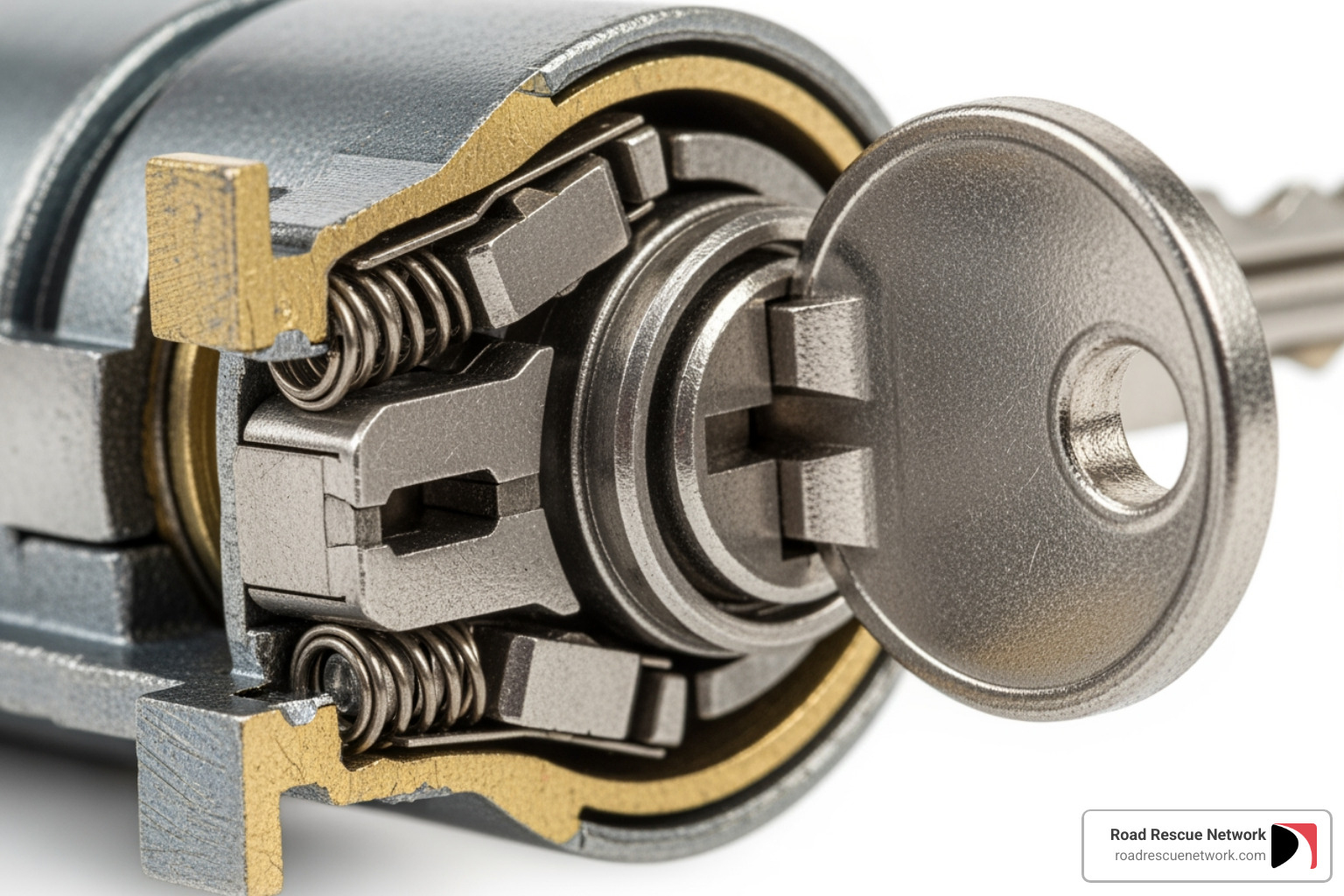
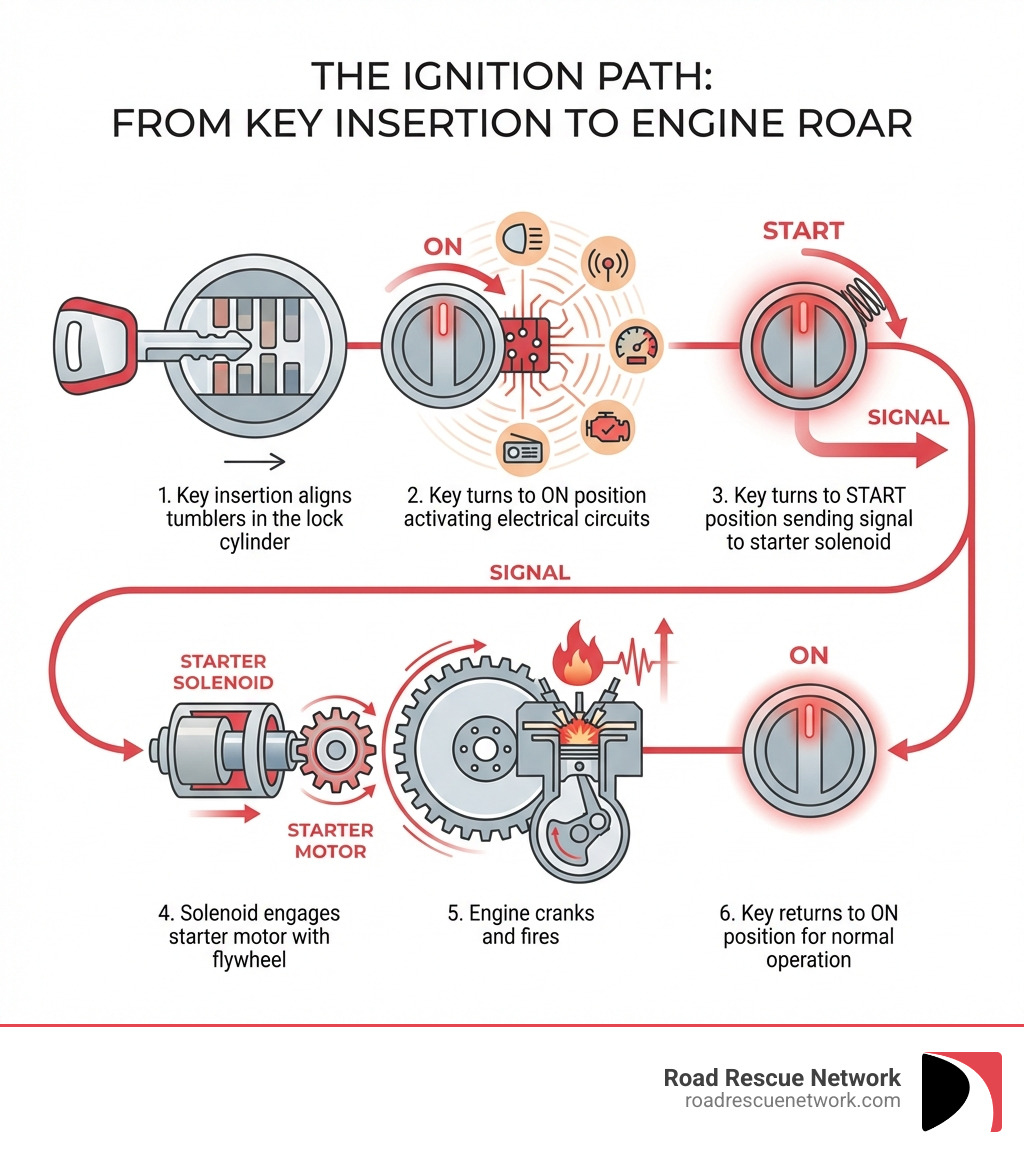
The process begins when you insert your key into the ignition lock cylinder. The key’s unique cuts align a series of small, spring-loaded tumblers or pins. If the key is correct, the tumblers align perfectly, allowing the cylinder to rotate. Over time, both the key’s edges and the internal pins can wear down, causing a poor fit and leading to a key that won’t turn or gets stuck.
Once the cylinder rotates, you can turn the key through several positions:
- LOCK/OFF: The engine is off, the steering wheel is often locked, and the key can be removed.
- ACC (Accessory): Powers non-essential electronics like the radio without the engine running.
- ON: Powers all essential systems, including the fuel pump and engine control unit (ECU), preparing the car to start.
- START: This momentary position sends a signal to the starter motor, which cranks the engine. The key springs back to ‘ON’ once the engine is running.
When the key turns to ‘START’, the ignition switch sends an electrical signal to the starter solenoid. This engages the starter motor, which turns the engine’s crankshaft, initiating combustion. Modern vehicles add another layer of security with a transponder chip in the key. This chip communicates a unique code to the car’s immobilizer system. If the code isn’t recognized, the engine won’t start, even if the mechanical key turns the cylinder. This anti-theft feature means replacing an ignition switch or key often requires professional programming.
What to Do When Your Key is Stuck in the Ignition
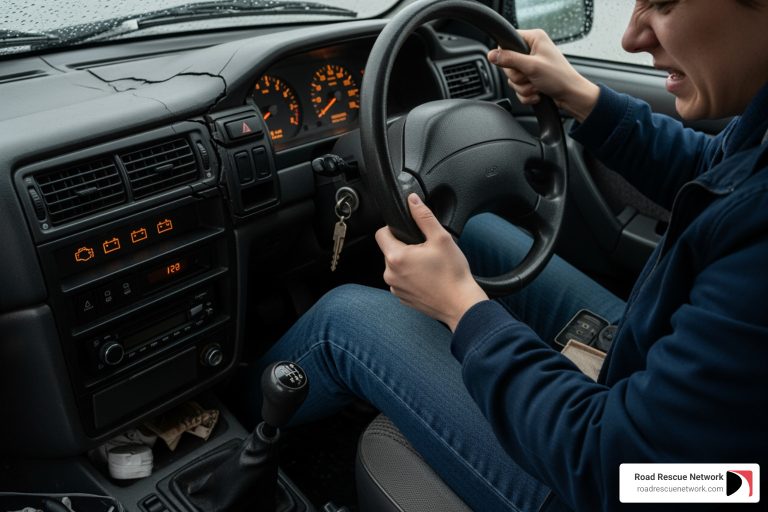
Finding your keys in ignition stuck is frustrating. Before using force, which can cause more damage, try these simple troubleshooting steps. Always ensure your vehicle is in a safe location with the parking brake engaged before you begin.

Common Reason #1: Shifter Isn’t in Park
In automatic cars, a common cause for a stuck key is the gear shifter not being fully in ‘Park’ (P). This is a safety feature to prevent the car from rolling away. Check that the shifter is firmly in Park. Sometimes, you may need to wiggle it or shift through the gears (with your foot on the brake) and back to Park to ensure it’s fully engaged. This often releases the key.
Common Reason #2: The Steering Wheel is Locked
If you turned the steering wheel after shutting off the engine, it may have locked. This security feature puts pressure on the ignition cylinder, preventing the key from turning or being removed. To fix this, gently wiggle the steering wheel back and forth while simultaneously trying to turn and remove the key. You should feel the lock release, freeing the key.
Common Reason #3: The Car Battery is Dead
A dead battery can cause your key to get stuck, especially in modern cars with electronic ignition systems. These systems require power to operate the solenoid that releases the key. If your dashboard lights won’t turn on and the car won’t crank, a dead battery is likely the culprit. A jump-start will usually provide enough power to the system to allow you to remove the key.
Common Reason #4: A Worn or Damaged Key
The problem might be the key itself. If it’s bent, or the cuts are worn down from years of use, it won’t align the ignition’s internal tumblers correctly. Debris or sticky residue on the key can also cause it to jam. Inspect your key for damage. If it looks worn or dirty, try your spare key. If the spare works, you know the original key needs to be replaced.
Preventing Future Ignition Problems
Proactive maintenance and good habits can significantly extend the life of your ignition system, saving you from future frustration. A little prevention goes a long way in keeping you on the road smoothly.
Best Practices for Your Keys in Ignition
How you treat your keys in ignition has a big impact. Here are some best practices:
- Avoid heavy keychains: The weight of a heavy keychain puts constant stress on the delicate ignition cylinder, causing premature wear. Keep only your car key and remote on a lightweight ring.
- Keep the steering wheel straight: When parking, try to leave the steering wheel straight to avoid putting pressure on the steering lock mechanism.
- Inspect your key: Periodically check your key for wear or damage. If the cuts look rounded or the blade is bent, get a new one made before it causes a problem.
- Keep it clean: Wipe your key clean occasionally and avoid using it for tasks like opening packages. Debris can build up in the keyway and cause jamming.
Safe Lubricants and How to Use Them
If your ignition feels stiff, the right lubricant can help. Use a graphite lubricant or a dry lubricant spray designed for locks. Puff a small amount of graphite powder or a short spray of dry lube into the keyway, then insert and turn the key a few times to distribute it. Do not use WD-40 or other oil-based lubricants; they attract dirt and grime, which will eventually make the problem worse. Use compressed air to blow out any loose debris from the keyway first.
The Dangers of Leaving Keys in the Ignition
Leaving your keys in ignition unattended is risky. The most obvious danger is theft, which may not be covered by your insurance if the car was left open uped with the keys inside. On some vehicles, it can also cause a parasitic battery drain, leaving you with a dead battery. Finally, many areas have unattended vehicle laws that carry fines for leaving a car running or with keys in the ignition. It’s always best to take your keys with you. For more details, you can review the Legal implications of leaving keys in an unattended vehicle.
Keyed vs. Keyless: Understanding Modern Ignition Systems
The way we start our cars has evolved from a purely mechanical turn of keys in ignition to sophisticated electronic systems. This has brought convenience but also new types of issues.
| Feature | Traditional Keyed Ignition | Modern Push-Button Start System |
|---|---|---|
| Reliability | Generally high, mechanical wear is primary failure point | High, but relies on electronics, battery, and signal integrity |
| Common Issues | Stuck/worn keys, worn ignition cylinders, steering lock | Dead key fob battery, signal interference, vehicle not detecting key |
| Repair Complexity | Often mechanical or electrical component replacement | Often involves sensor diagnostics, module replacement, programming |
How Push-Button Start Systems Work
Push-button start systems use a key fob that communicates with the car via radio frequency. When the fob is inside the car, the system authenticates it. To start the engine, you must press the brake pedal (a safety interlock) and then push the “Start/Stop” button. This tells the car’s computer to initiate the starting sequence.
If the key fob battery dies, manufacturers include a backup method. For example, many Ford vehicles have a specific spot in a compartment where you place the dead fob, allowing the car to read its chip directly and start. For more details, consult an Official guide on keyless starting.
Common Issues with Keyless Systems
While convenient, keyless systems have their own set of common problems:
- Key Fob Battery Dead: This is the most frequent issue. The car can’t detect the fob’s signal. Knowing the emergency start procedure for your vehicle is crucial.
- Signal Interference: Radio signals from cell phones or other electronics can sometimes interfere with the communication between the fob and the car.
- Vehicle Not Detecting Key: The car may intermittently fail to detect the key due to a faulty sensor or the key being in a “dead spot” within the cabin.
- Reprogramming Needs: Replacing a key fob or certain anti-theft components requires professional programming to sync them with the vehicle’s computer.
- Mechanical Key Blade Backup: Most key fobs have a hidden mechanical key. This is your backup for opening the door if the fob’s battery is dead.
Frequently Asked Questions about Ignition Issues
We get a lot of questions about keys in ignition problems. Here are some of the most common ones our experts at Road Rescue Network hear, along with our advice.
When should I call a professional for a stuck key?
While many issues are DIY-friendly, it’s time to call a professional locksmith or mechanic if:
- DIY fixes have failed: You’ve tried wiggling the steering wheel and checking the shifter, but the key is still stuck.
- The key is broken inside the ignition: Don’t try to extract it yourself; you could cause more damage. A professional has the right tools for the job.
- You experience persistent jamming: If your key gets stuck frequently, it points to an underlying problem that needs diagnosis.
- You suspect internal damage: Grinding noises or excessive resistance are signs of internal failure that require a specialist.
What are the signs of a worn ignition cylinder?
A worn ignition cylinder gives several warning signs before it fails completely. Look out for these:
- The key won’t turn smoothly and requires jiggling.
- The key feels loose or wobbly when inserted.
- You have difficulty inserting or removing the key.
- The car starts intermittently, requiring you to jiggle the key.
- The key gets stuck frequently.
If you notice these signs, it’s best to get the cylinder inspected to avoid being stranded.
Can I replace an ignition cylinder myself?
Replacing an ignition cylinder can be very difficult, especially on modern vehicles. While it might be a manageable DIY job on an older car without complex electronics, most newer cars present a major challenge: anti-theft system reprogramming.
If you replace the ignition cylinder, the new component and keys must be programmed to communicate with your car’s immobilizer system. This requires specialized diagnostic equipment that only dealerships or professional automotive locksmiths have. Without this step, your car will not start. Given the complexity and risk, we generally recommend professional help for this task.
Conclusion
Understanding your car’s ignition system, from the simple turn of keys in ignition to the sophisticated signals of a key fob, is essential for every driver. We’ve explored the intricate dance of mechanical tumblers and electrical circuits that bring your vehicle to life, as well as the common culprits behind frustrating stuck key scenarios. Knowledge is power, and a little bit of troubleshooting know-how can save you a lot of hassle.
The key takeaways are clear:
- Most stuck key issues can be resolved with gentle DIY fixes like wiggling the steering wheel or checking your gear shifter.
- Prevention is paramount. Avoid heavy keychains, keep your keys and keyways clean, and use proper lubricants to extend the life of your ignition.
- Be aware of the dangers of leaving your keys unattended, from theft to battery drain.
- Understand the differences between traditional keyed systems and modern keyless entry, and the unique challenges each presents.
But what happens when those DIY fixes don’t work, when your key breaks off, or when you’re facing a more complex ignition issue far from home? That’s where we come in. Road Rescue Network is dedicated to providing fast, reliable, on-demand roadside assistance for all your car emergencies, including lockouts and ignition troubles. We’re here to help you get back on the road safely and swiftly, with no memberships or hidden fees.
Don’t let a stuck key or an unresponsive ignition ruin your day. For fast, professional help, especially when you’re in a pinch, remember Road Rescue Network. We’re always just a tap away.
Get fast, professional help for car lockouts and ignition issues