The Ultimate Guide to Jump Starting a Car: Don’t Get Stranded!
Why Jump Start Help Matters: Getting Back on the Road Fast
Jump start help is a common need for drivers, and knowing what to do can save you time and frustration.
Quick Answer: How to Jump Start a Car
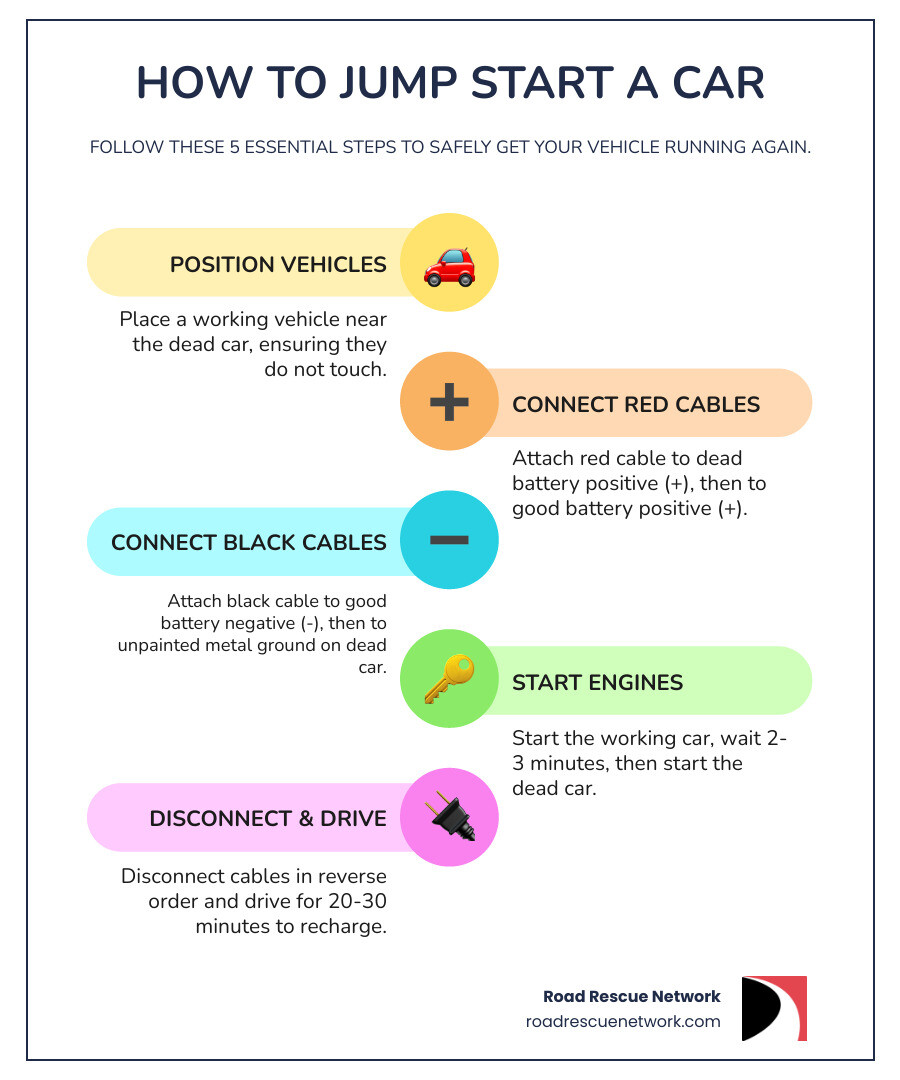
- Position a working vehicle near the dead car (don’t let them touch).
- Connect the red cable to the dead battery’s positive (+) terminal, then to the good battery’s positive (+) terminal.
- Connect the black cable to the good battery’s negative (-) terminal, then to an unpainted metal ground point on the dead car.
- Start the working car, wait 2-3 minutes, then start the dead car.
- Disconnect the cables in reverse order and drive for 20-30 minutes.
Hearing only a click when you turn the key means a dead battery has left you stranded. The good news is that jump-starting a car is a straightforward skill anyone can learn. With the right tools and knowledge, you can get your engine running in minutes.
The most important rule is to connect the cables in the correct order and follow safety precautions. Batteries contain flammable gases and can cause serious harm if mishandled, but a jump start is safe and effective when done right.
This guide covers the essential tools, step-by-step instructions, safety measures, and when to call for professional help.
I’m Byron Tarlton, founder of Road Rescue Network. With over two decades in the roadside assistance industry, I’ve helped countless stranded drivers. Road Rescue Network provides reliable jump start help and other emergency services without the hassle of memberships or hidden fees.
Simple guide to jump start help terms:
Before You Begin: Essential Tools and Safety
Before connecting any cables, gather the right equipment and review safety measures to protect yourself and your vehicle.
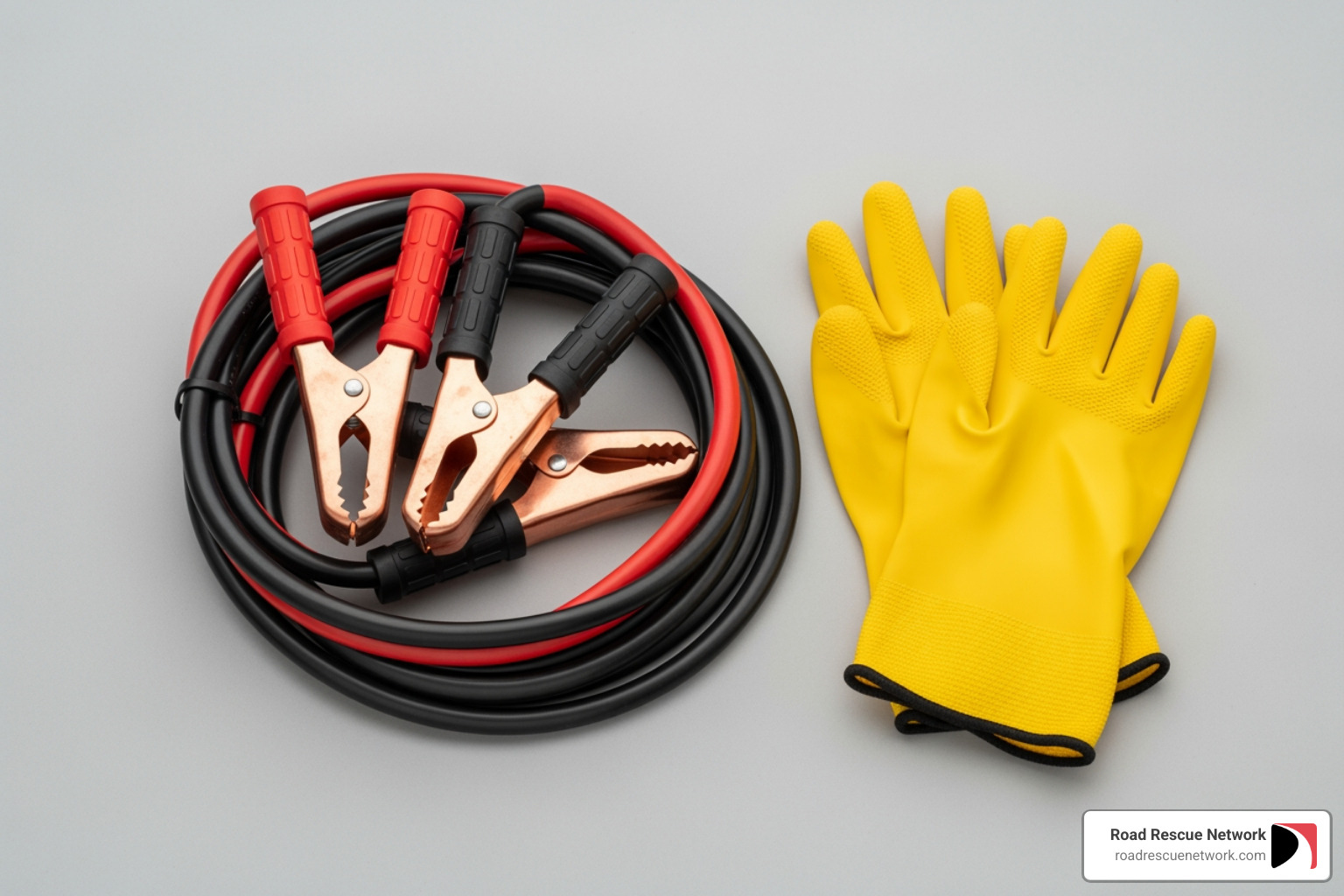
You’ll need a good set of jumper cables (4-6 gauge is best) that are 16-20 feet long. Also, have rubber work gloves and safety goggles to protect against battery acid and sparks. A clean rag is useful for wiping corroded terminals.
The most critical “tool” is a donor vehicle with a fully charged battery. Avoid using hybrid or electric cars as donors, as their electrical systems can be sensitive. If another vehicle isn’t available, a portable jump starter is a good alternative.
Finally, keep your car’s owner’s manual handy. It will show you the battery’s location (it might be in the trunk or under a seat) and the correct grounding points, which helps prevent damage to your car’s electronics.
Key Safety Precautions
Car batteries are dangerous, containing corrosive acid and flammable hydrogen gas. Ignoring safety can lead to serious injury or vehicle damage.
- No Smoking or Open Flames: Batteries release highly flammable hydrogen gas. Keep all ignition sources away to prevent an explosion.
- Check for Battery Damage: Inspect the dead battery. If it’s cracked, bulging, or leaking, do NOT jump-start it. Call for professional jump start help instead.
- Turn Off Electronics: Turn the ignition and all accessories (lights, radio, AC) off in both cars to prevent electrical surges and maximize power transfer.
- Engage Parking Brake: Set the parking brake on both vehicles. Put automatic cars in “PARK” and manual cars in “NEUTRAL.”
- Avoid Moving Parts: Keep hands, clothing, and tools clear of fans, belts, and other moving parts once the engines are running.
- Wear Protective Gear: Always wear safety gloves and goggles. If battery acid touches your skin or eyes, flush the area with water immediately.
- Prevent Shorts: Never let the metal cable clamps touch each other or any metal on the car once connected to a battery. This creates dangerous sparks.
- Clean Terminals: If terminals are corroded, use a wire brush to clean them for a better connection.
The Step-by-Step Guide to Jump Starting a Car
Let’s walk through the process of safely jump-starting a car.
First, position the vehicles. Park the donor car close enough for the jumper cables to reach, but ensure the vehicles are not touching. Turn off both cars, engage their parking brakes, and remove the key from the dead car’s ignition.
Open both hoods and locate the batteries, removing any plastic covers. Identify the positive (+) and negative (-) terminals. The positive terminal is usually larger and marked with a “+”, often with a red cap. The negative is marked with a “-“. Clean any corrosion off the terminals with a wire brush for a good connection.
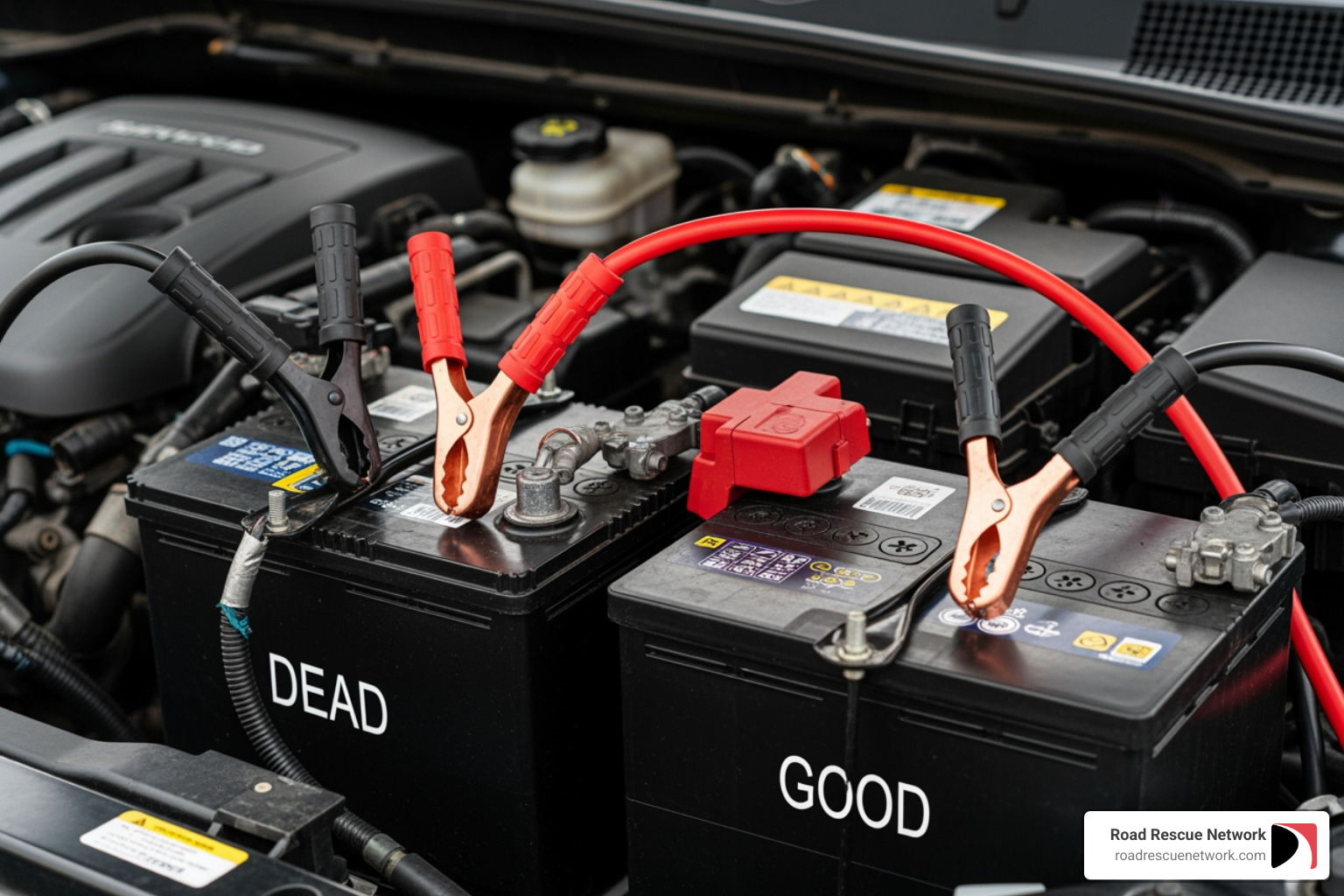
1. The Correct Order for Connecting Jumper Cables
Connecting the cables in the right sequence is critical to avoid sparks and electrical damage. Follow this order precisely:
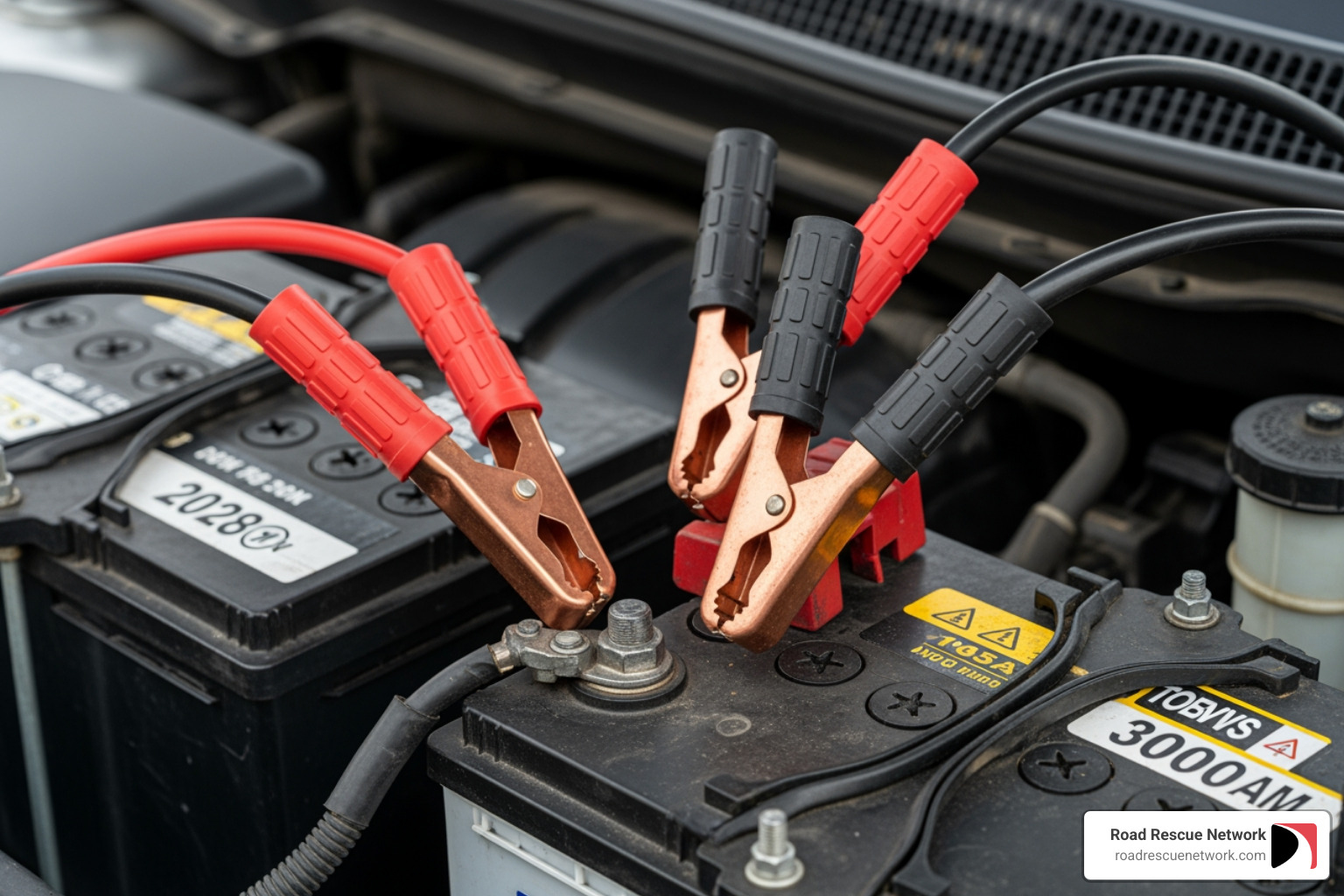
- Connect Red to Dead Positive (+): Attach one red clamp to the positive (+) terminal of the dead battery.
- Connect Red to Good Positive (+): Attach the other red clamp to the positive (+) terminal of the good battery.
- Connect Black to Good Negative (-): Attach one black clamp to the negative (-) terminal of the good battery.
- Connect Black to Unpainted Metal Ground on Dead Car: This is a key safety step. Attach the final black clamp to a clean, unpainted metal part on the dead car’s engine block or chassis, away from the battery. This ground point prevents sparks near the battery.
Once connected, check that cables are clear of moving engine parts.
2. Starting the Engines
With the cables correctly connected, it’s time to start the cars.
- Start the Working Car: Start the donor vehicle and let it run for 2-5 minutes to transfer some charge.
- Start the Dead Car: Try to start the car with the dead battery. If it starts, let both cars run for another 2-3 minutes with the cables connected.
- If it doesn’t start: Check that all clamps are secure. Let the donor car run for another 5-10 minutes to transfer more charge, then try again. If you hear a rapid clicking, the starter motor may be the issue. If the lights turn on but the engine won’t crank, it could be an ignition switch problem. In these cases, a jump start may not be enough.
For more detailed information, consult resources like the Chevrolet Spark Owners Manual – Jump Starting.
3. Disconnecting and Recharging
Once the car is running, disconnect the cables and recharge the battery.
- Disconnect in Reverse Order: To avoid sparks, disconnect the cables in the exact reverse order of connection:
- Remove the black clamp from the ground point on the jumped car.
- Remove the black clamp from the donor car’s negative (-) terminal.
- Remove the red clamp from the donor car’s positive (+) terminal.
- Remove the red clamp from the jumped car’s positive (+) terminal.
- How Long to Drive After a Jump Start: Drive your car for at least 20-30 minutes. This allows the alternator to recharge the battery. Don’t turn the engine off right away, as it may not have enough power to restart. Highway driving is ideal for efficient charging.
If you need frequent jump start help, your battery or charging system likely has a problem.
Troubleshooting & When to Get Jump Start Help
Sometimes a jump start doesn’t work, or you’re left wondering why the battery died. Understanding common issues and when to call for professional jump start help is crucial.
If your car won’t jump-start, consider these possibilities:
- Clicking Noise, No Start: A rapid clicking sound often points to a faulty starter motor, not just a dead battery.
- Electricals Work, No Crank: If lights and radio work but the engine won’t turn over, the issue could be the ignition switch or a blown fuse.
- Car Dies Immediately After Jump: If the car starts but dies after disconnecting the cables, your alternator is likely failing and not recharging the battery.
In these cases, or if you see a damaged battery, it’s time to call for professional help.
Common Reasons for a Dead Battery
Understanding why batteries die can help prevent future issues.
- Leaving Lights On: Accidentally leaving headlights or interior lights on is a classic battery drainer.
- Parasitic Draw: Faulty electronics can draw power even when the car is off, slowly draining the battery.
- Short Trips: Frequent short drives don’t give the alternator enough time to fully recharge the battery.
- Extreme Temperatures: Both hot and cold weather can shorten a battery’s lifespan and reduce its power.
- Old Age: Car batteries typically last 3-7 years. An old battery will struggle to hold a charge.
- Corroded Terminals: Corrosion can block the flow of electricity to and from the battery.
Signs Your Battery Needs Replacement, Not Jump Start Help
A jump start is often a temporary fix. If you notice these signs, your battery likely needs replacement:
- Dimming Headlights: Lights that seem weaker than usual indicate a struggling battery.
- Slow Engine Crank: If the engine sounds sluggish when you turn the key, the battery is weak.
- Frequent Jump Starts: Needing regular jump start help means the battery can no longer hold a charge.
- Swollen Battery Case: A bloated case indicates internal damage and is a safety hazard.
- Rotten Egg Smell: A sulfur smell means the battery is leaking and must be replaced immediately.
- Battery Warning Light: This dashboard light signals a problem with the battery or charging system.
If you see these signs, have your battery tested by a professional.
What to Do If You Can’t Jump Start Your Car
If you’ve tried everything and the car still won’t start, or if you’re uncomfortable with the process, call for professional jump start help. Repeatedly trying to jump a car with a deeper issue can cause more damage. Roadside assistance services like Road Rescue Network are designed for these situations. We offer fast, reliable jump start help across our service areas, including Phoenix, AZ, and Houston, TX, without memberships or hidden fees. Our 24/7 network connects you with local rescuers to get you back on the road.
Frequently Asked Questions about Jump Starting
Here are answers to some of the most frequently asked questions about jump-starting a car.
Are there differences in jump-starting hybrid or electric vehicles (EVs)?
Yes, there are important differences. Both hybrids and EVs have a 12-volt auxiliary battery that powers their electronics and can go dead.
- Hybrids: Most hybrids can be jump-started like a conventional car, but the 12-volt battery may be in the trunk or under a seat. It’s best to avoid using a hybrid as the donor vehicle.
- Electric Vehicles (EVs): An EV’s 12-volt battery can also be jump-started using a conventional car or portable starter. However, you should never use one EV to jump-start another.
Always consult your owner’s manual for the battery location and specific instructions before attempting jump start help on a hybrid or EV.
Is it safe to jump-start a car in the rain?
Yes, it is generally safe to jump-start a car in the rain, as a 12-volt system doesn’t pose a high risk of electrocution. However, take extra precautions. Keep the cable connections as dry as possible to prevent sparking and ensure a good connection. Work carefully, as surfaces will be slippery. If you’re uncomfortable, it’s always safer to call for professional jump start help.
Does jump-starting damage your car or battery?
When done correctly, a jump start is safe and will not damage your car. However, doing it incorrectly can cause significant damage.
- If Done Correctly: Following the correct steps simply gives your battery the boost it needs to start, allowing the alternator to take over.
- Risk of Damage if Done Incorrectly: Connecting the cables in reverse order (reverse polarity) can fry sensitive electronics in both cars. Allowing the clamps to touch can create voltage spikes that damage components. Attempting to jump a physically damaged battery can cause it to explode.
To avoid damage, strictly follow the correct procedure. When in doubt, call for professional jump start help.
Conclusion: Back on the Road Safely
A dead battery is frustrating, but knowing how to jump-start a car is a vital skill for any driver. By following the correct safety precautions and step-by-step process, you can often solve the problem yourself. Understanding why batteries fail and recognizing when a replacement is needed can also prevent future breakdowns.
However, a DIY jump start isn’t always possible or safe. If you don’t have the right equipment, see a damaged battery, or feel uncomfortable with the process, professional jump start help is the best choice.
At Road Rescue Network, we’re dedicated to getting you back on the road safely. Our 24/7 service offers fast assistance with no memberships or hidden fees. We connect you with local rescuers who can provide the expert jump start help you need, whether you’re in Green Valley, AZ, or any of our other service locations. Don’t let a dead battery ruin your day—know when to do it yourself and when to call the pros.
Get fast, reliable roadside assistance in Green Valley, AZ