
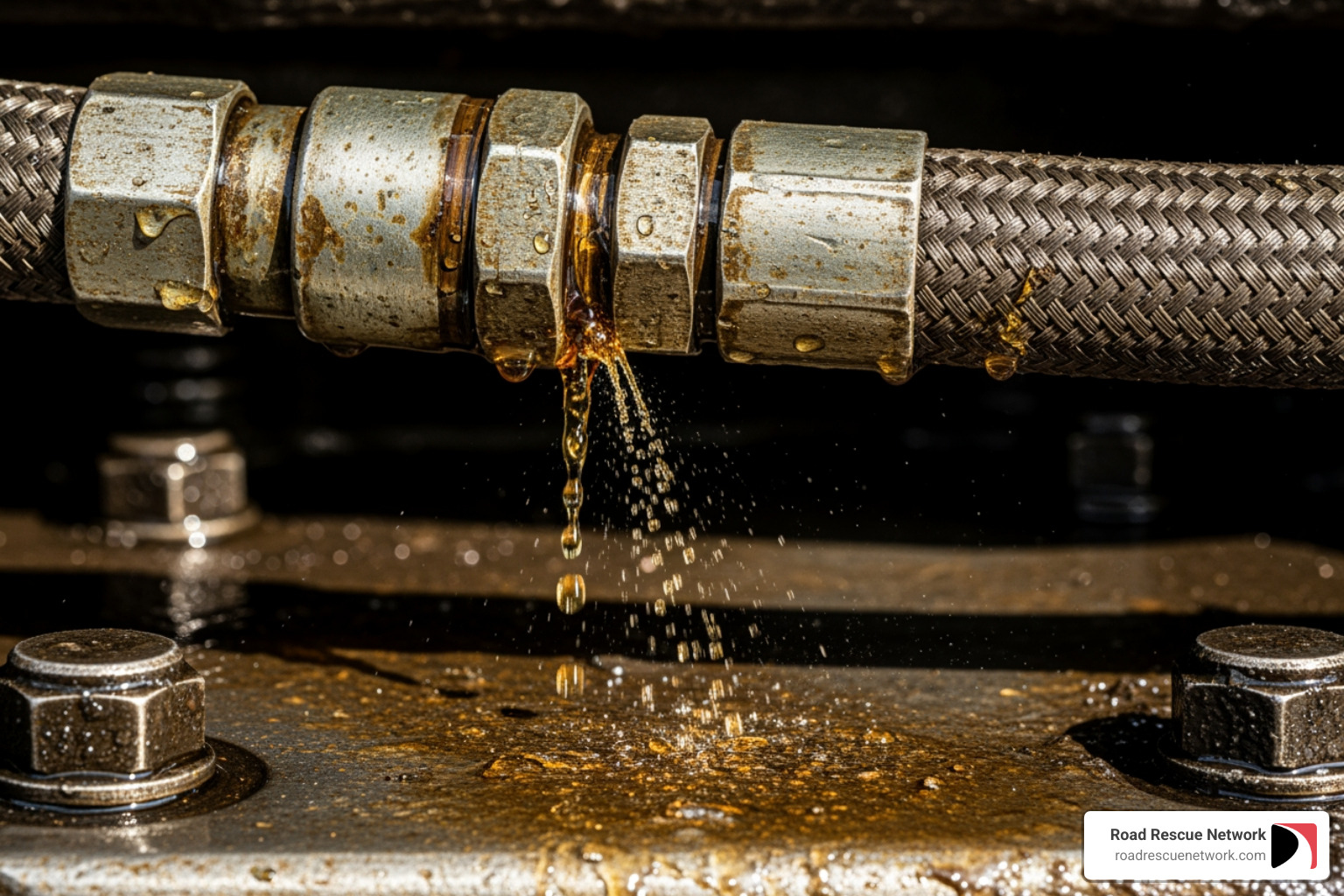
Your Go-To Guide for Hydraulic Leak Repair
Why Hydraulic Pipe Repair Can’t Wait
Hydraulic pipe repair is a critical task impacting uptime, safety, and your bottom line. A failed hydraulic line can halt productivity, create safety hazards, and cause thousands of dollars in damage per hour.
Quick Answer: Essential Steps for Hydraulic Pipe Repair
- Shut down and depressurize the hydraulic system completely
- Locate and assess the damage (leak, crack, or rupture)
- Remove the damaged section and clean all fittings thoroughly
- Match the replacement line using the S.T.A.M.P. method (Size, Temperature, Application, Media, Pressure)
- Install and torque fittings to manufacturer specifications
- Test at low pressure before returning to full operation
Imagine a critical operation halted by hydraulic fluid pooling beneath your equipment. That small drip is a major problem. Hydraulic systems operate under extreme pressure—often over 3,000 PSI—so even a tiny leak can escalate into equipment failure, environmental contamination, or serious injury.
The cost of ignoring hydraulic leaks isn’t just the puddle on the floor. Unresolved leaks strain your system, forcing pumps to work harder and accelerating component wear. A minor repair can spiral into a complete system breakdown, with repair bills dwarfing the cost of an immediate fix.
The challenge is that hydraulic pipe repair isn’t a simple patch job. High-pressure systems demand precision, proper materials, and strict safety protocols. Using the wrong hose diameter, pressure rating, or installation technique can turn a routine repair into a dangerous failure.
I’m Byron Tarlton, founder of Road Rescue Network. I’ve spent over two decades connecting equipment operators with expert technicians. Through managing Interstate Fleet Services and developing emergency response systems, I’ve seen how proper hydraulic pipe repair prevents catastrophic failures and keeps operations running safely.
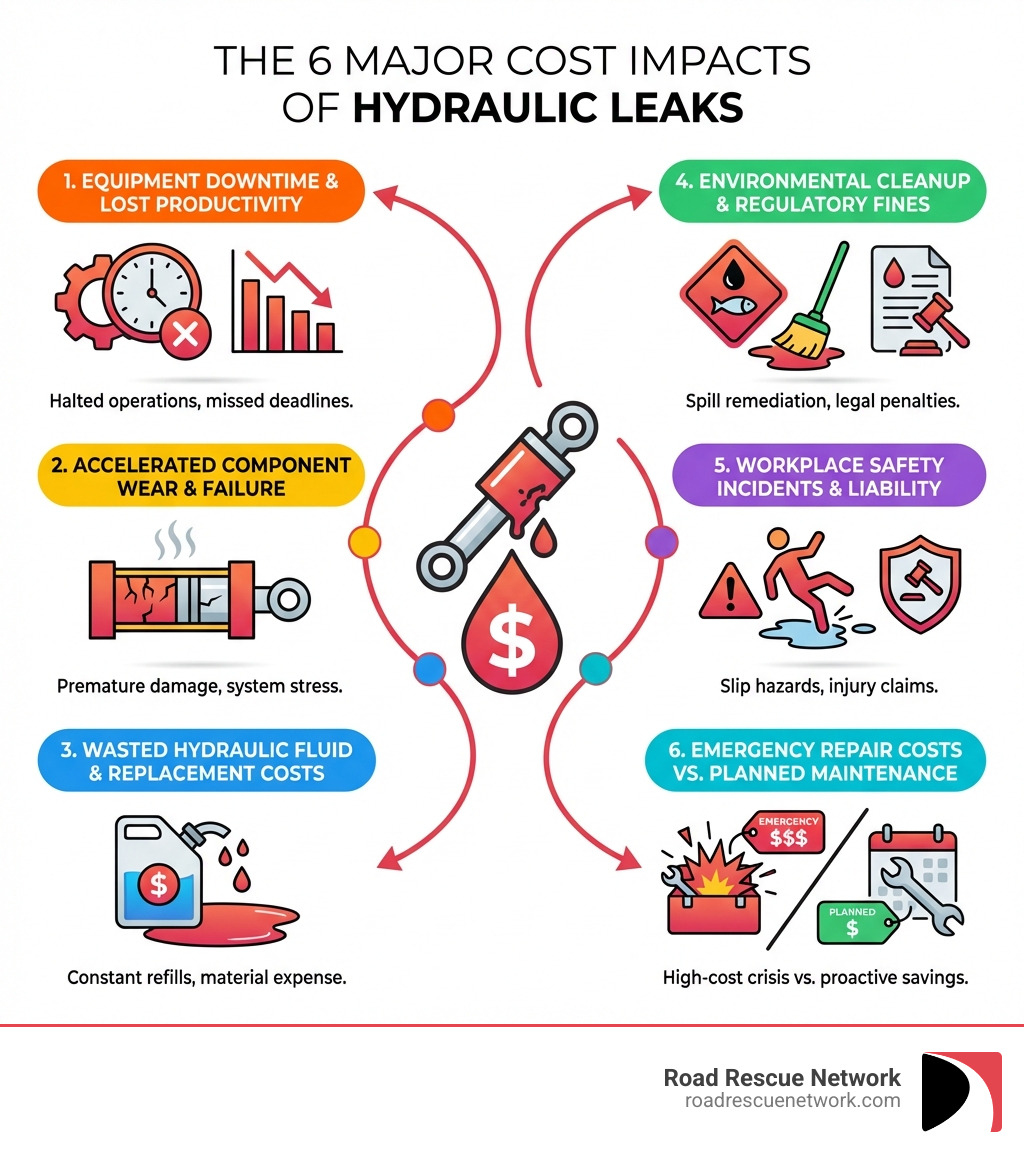
Hydraulic pipe repair glossary:
Recognizing the Red Flags: Signs and Consequences of Hydraulic Leaks
Recognizing the “red flags” of a hydraulic leak early can save you headaches, downtime, and money. While not always obvious, leaks always leave clues.
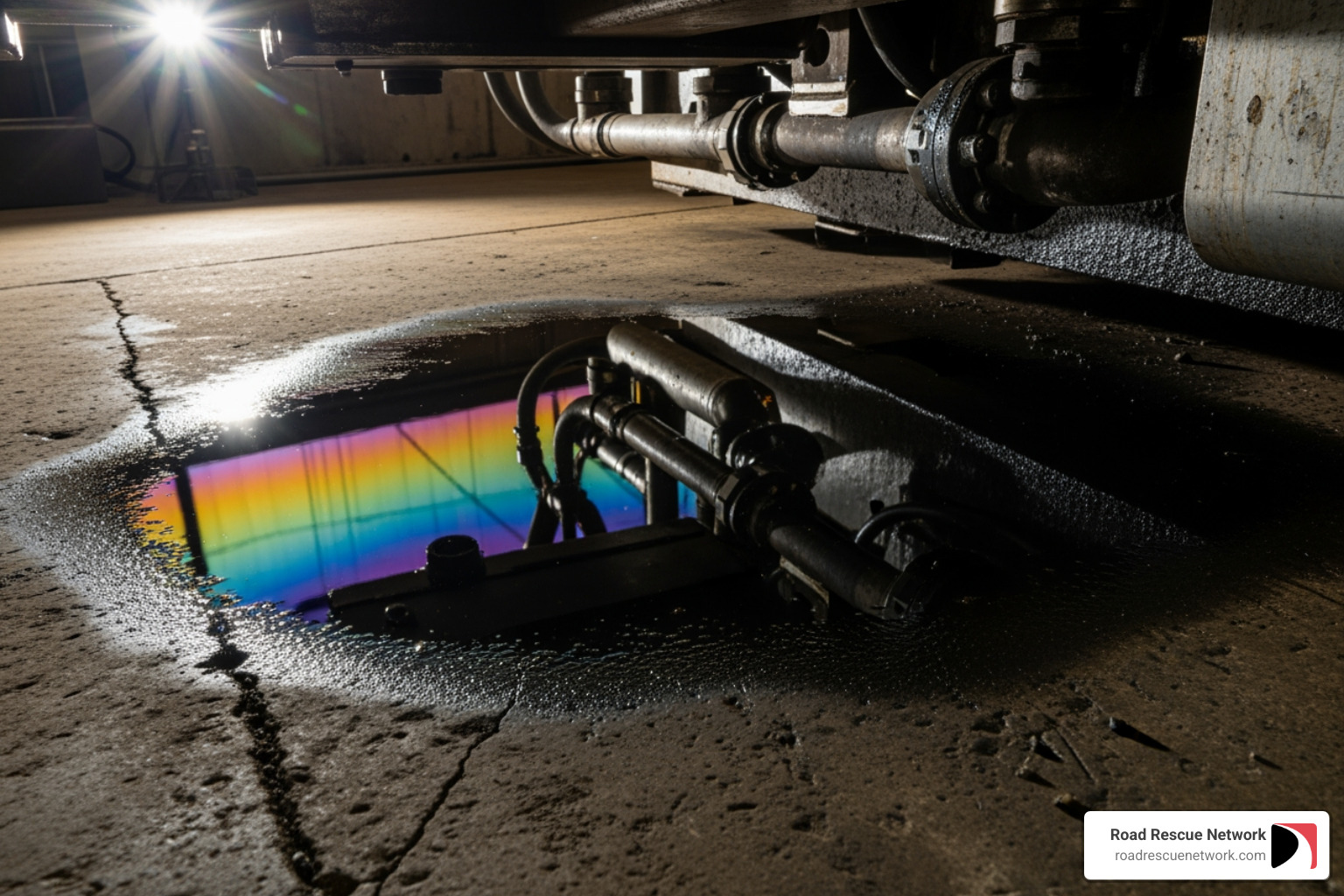
The most common sign of a hydraulic leak is visible fluid drips or puddles under machinery. Any fluid outside the system is a problem. You might also notice lowered fluid levels in the reservoir, requiring frequent top-offs, which indicates an unseen leak.
Beyond visible fluid, your equipment may signal a problem. Look for sluggish equipment performance, like slower movements or reduced lifting capacity, which can result from fluid loss. An increased system temperature indicates the system is working harder due to inefficiency from leaks. Finally, unusual noises, like a whining pump or hissing lines, can point to air entering the system or fluid escaping under pressure.
Ignoring these signs leads to serious consequences of ignoring leaks, including environmental contamination from toxic fluid, slip hazards for workers, and a fire risk if fluid contacts hot surfaces. As the experts at Noria Corporation emphasize, managing hydraulic system leakage is crucial for both operational efficiency and safety. You can learn more about detecting and managing leaks by visiting Detecting and Managing Hydraulic System Leakage.
Why You Must Act Quickly
When you spot a hydraulic leak, an immediate response is crucial. Delaying action causes greater system strain and can lead to extensive component failure. A small leak can compromise the entire hydraulic circuit, affecting pumps, valves, and cylinders, which significantly increases operational costs.
Think of it this way: a minor leak today could lead to a blown hose or a damaged pump tomorrow, costing far more than an immediate repair. As the research notes, neglecting hydraulic line leaks can lead to more extensive damage over time, and unresolved leaks strain the system, potentially causing component failures or even complete system breakdowns. The resulting repairs can be significantly more expensive than the initial repair of a leaky line.
Beyond the financial implications, there are serious safety risks. A compromised hydraulic system can lead to unplanned downtime, bringing projects to a grinding halt and affecting our productivity. We must act quickly to mitigate these risks and ensure the safety and efficiency of our operations. For more on why quick action is vital, check out act quickly.
The Dangers of High-Pressure Systems
Hydraulic systems operate under incredibly high pressures, often thousands of pounds per square inch. This immense power means any breach in a line, no matter how small, is extremely dangerous.
One of the most critical hazards is fluid injection injury. If we try to check for leaks with our bare hands, the pressurized fluid can penetrate the skin, even through a tiny pinhole. This is a severe medical emergency that can lead to tissue damage, amputation, or worse. The research clearly states: “Never use your hand to check for leaks, as this can cause a fluid injection injury.” We should always use a piece of cardboard or wood to safely detect leaks.
Beyond injection injuries, a sudden hose rupture can result in a powerful high-pressure spray of fluid that can cause severe burns, blindness, or knock someone off their feet. This uncontrolled release of energy can also lead to uncontrolled equipment movement, posing a crushing hazard to anyone nearby.
The high pressure fundamentally affects our hydraulic pipe repair methods. We can’t just patch things up; every repair must maintain the system integrity to withstand these extreme forces. This means using components rated for the specific pressure, ensuring proper installation, and meticulous attention to detail. The durability and leak-free nature of components are paramount for optimal performance and safety in such systems.
Safety First: Non-Negotiable Precautions for Hydraulic Repair
With hydraulic pipe repair, safety is a non-negotiable prerequisite. The immense pressures and hazards mean skipping a single safety step can have catastrophic consequences.
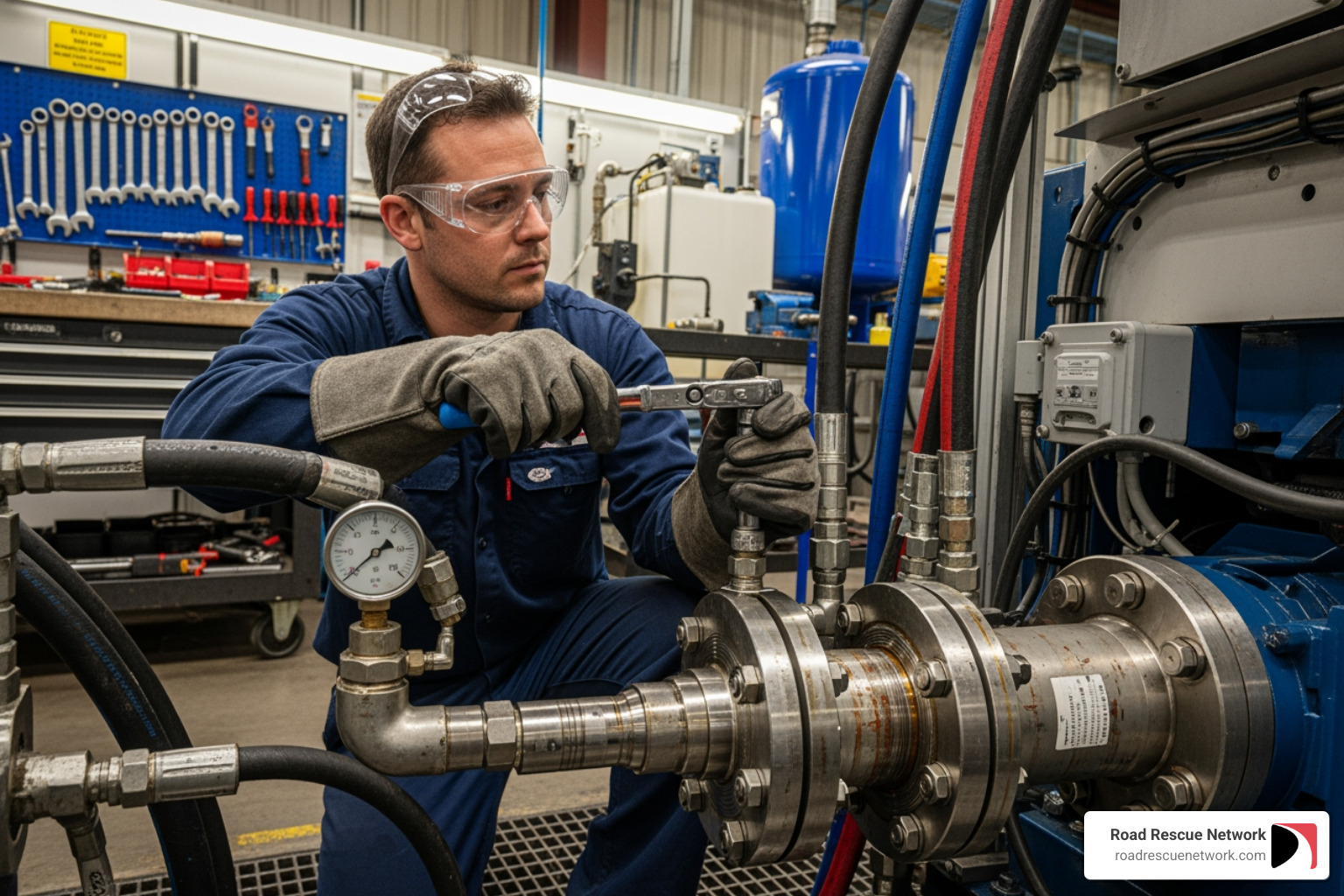
Your first line of defense is Personal Protective Equipment (PPE), including safety goggles or a face shield, heavy-duty gloves, and work attire that covers exposed skin.
Before touching any hydraulic line, you must ensure system depressurization. Turn off the power and operate the controls to relieve residual pressure. This is critical to prevent fluid injection injuries. Once depressurized, implement Lockout/Tagout procedures to ensure the system cannot be accidentally re-energized while you work.
Be mindful of handling hot fluids. Allow the system to cool before working, and always wear appropriate gloves. Any spills require immediate spill containment and cleanup to prevent slip hazards and environmental contamination.
Perhaps the most emphasized safety rule in hydraulics is: Never use your hand to check for leaks. As we discussed, high-pressure fluid can inject itself into the skin, causing severe injury. Always use a piece of cardboard, wood, or a specialized leak detector to safely identify the source of a leak. Finally, before loosening fittings or cutting lines, verify zero pressure throughout the affected circuit. This might involve using a pressure gauge or slowly cracking a fitting (while wearing full PPE and standing clear) to confirm no residual pressure remains.
These precautions are your shield against the inherent dangers of hydraulic systems.
The Ultimate Guide to Hydraulic Pipe Repair
When a hydraulic line fails, the goal is a reliable, long-lasting repair that restores equipment to full, safe operation. This section details the permanent replacement method, the recommended solution for long-term safety and reliability.
Step 1: Diagnosis and Preparation
The first step in any hydraulic pipe repair is proper diagnosis and preparation. You can’t work safely or effectively in a messy, poorly understood environment.
First, isolate the system by shutting down the equipment and following all Lockout/Tagout procedures. Once isolated, you can safely diagnose the leak source. It may be an obvious burst hose or a hidden pinhole leak. Dyed hydraulic fluid, like CITGO’s Mystik® JT-9™ LeakShield® AW Hydraulic Oil, can make leaks much easier to spot.
Once the leak is pinpointed, clean the area thoroughly to prevent contamination, which can cause costly breakdowns. Clean around the damaged line, fittings, and surrounding components.
Finally, gather the correct tools: wrenches (open-end, adjustable, torque), a replacement hose or pipe, appropriate fittings, and catch pans for residual fluid. Having everything ready makes the process smoother and safer.
Step 2: A Step-by-Step Hydraulic Pipe Repair Process
With the diagnosis complete and area prepared, you can begin the repair. This process focuses on replacing the damaged component to ensure system integrity.
First, remove the damaged line by carefully loosening the fittings. Use catch pans for any residual fluid. If only a coupling is damaged, you must cut off the defective end before fabricating a new hose assembly.
Next, carefully clean fittings and connections. Any old sealant, grime, or debris can compromise the new connection, so aim for a pristine surface.
Now, match the replacement line exactly. Hydraulic lines are engineered for specific conditions. Use the S.T.A.M.P. method to get it right:
- Size: The inside diameter (ID) must match the original.
- Temperature: The hose must be rated for the maximum fluid and ambient temperatures.
- Application: Consider how the hose will be used (flexing, abrasion, etc.).
- Media: The hose material must be compatible with the hydraulic fluid.
- Pressure: The new hose’s working pressure must meet or exceed the system’s maximum pressure.
Fabricating a new hose may require a hydraulic hose crimping machine for a secure connection. You can Watch how to use a hydraulic hose crimping machine to see how it works.
Step 3: Sealing, Securing, and Testing
With the correct replacement line, installation requires precision to ensure leak-free performance.
Carefully install the new line, following the original routing path. Proper hose routing is essential to avoid kinks and abrasion from contact with other components. Use clamps or ties to maintain proper routing. A hose that is too short is prone to failure.
Next, correctly torque fittings using a torque wrench. Over-torquing can damage fittings, while under-torquing causes leaks. Proper tightening is essential for the hydraulic system. Consult the manufacturer for torque specifications and use appropriate thread sealant or O-rings.
After installation, refill hydraulic fluid to the correct level with the proper fluid type.
Finally, begin testing. First, test the repaired line at low pressure to check for immediate leaks. Always check for leaks with cardboard, never your hands. Slowly increase pressure while inspecting new connections. If no leaks appear, proceed to a full system test, operating the equipment through its full range of motion while monitoring for leaks, noises, or performance issues.
Temporary Fixes vs. Permanent Replacement: What You Need to Know
In hydraulic pipe repair, understanding the difference between a temporary fix and a permanent solution is critical. A quick patch is an emergency measure, not a long-term answer. This section explores temporary options, emphasizing they are not permanent solutions.
| Feature | Temporary Patch | Full Replacement |
|---|---|---|
| Pros | Immediate, on-site solution; minimizes immediate downtime | Long-term reliability; restores full system integrity |
| Cons | Limited pressure tolerance; high risk of failure; not permanent | Requires correct parts; takes more time; potentially higher upfront cost |
| Lifespan | Very short-term (hours to days) | Long-term (years, matching original component life) |
| Safety | Reduced safety margin; potential for sudden, catastrophic failure | Optimal safety; designed for system pressures |
When you need reliable, long-term solutions for hydraulic pipe repair in places like Viboras, Texas, or Berlin Center Station, Ohio, our network of experts at Road Rescue Network is ready to connect you with professionals who prioritize permanent repairs. Find out more about our services in these areas: Hydraulic Hoses Repair in Texas and Hydraulic Hoses Repair in Ohio.
Can You Temporarily Patch a Hydraulic Hose?
Yes, you can temporarily patch a hydraulic hose, but you must understand the severe limitations. A patch is a short-term, emergency repair to be used only until a proper replacement is possible, such as to finish a task or move equipment to a safe location.
Temporary solutions often involve hydraulic repair kits with materials like epoxy putty or specialized clamps and sleeves. Products like the MT204 Ram-Wrap Pipe Repair System or HydraWrap® Pipe Wrap and Leak Repair are “first-aid kits” for pipes. For a pinhole, you can clean the area, apply an epoxy or resin, and let it cure. This is a stop-gap measure.
A temporary patch is for emergency use only. It buys time but doesn’t restore the system’s integrity or safety. You should immediately plan for a permanent replacement.
The Risks of Temporary Hydraulic Pipe Repair
While tempting, temporary patches have significant drawbacks and dangers. The most critical risk is their limited pressure tolerance. Most temporary repairs are rated for around 2000 PSI, far below the operating pressure of many hydraulic systems, making them prone to failure.
This weakness can lead to sudden failure. A patch can blow out unexpectedly, causing renewed downtime, equipment damage, and severe safety risks.
A temporary patch is not a permanent solution. Relying on it creates a false sense of security, leading to delays in permanent repair. This delay can cause more extensive system damage, making the final repair more complex and costly. Furthermore, unauthorized temporary repairs can void warranties. A temporary fix is a compromise that carries substantial risks.
Prevention and Professional Intervention
The best hydraulic pipe repair is the one you never have to make. Proactive measures and knowing when to call an expert are key to maintaining a healthy hydraulic system and avoiding breakdowns.
Best Practices for Preventing Leaks
Implementing best practices for preventing leaks is a strategic investment in your equipment’s longevity and operational efficiency. Follow these preventative tips:
- Check for abrasion and rubbing: Regularly inspect hoses for wear from rubbing against components or other lines. Reroute or add protective sleeves as needed.
- Monitor operating temperatures: Excessive heat degrades fluid and hoses. Ensure cooling systems are working correctly.
- Use correct hose length: A hose that is too short is prone to failure. Ensure enough slack to accommodate movement without strain.
- Follow manufacturer’s maintenance schedule: Adhere to recommended inspection intervals and fluid/component changes, including the 10 Hydraulic Reliability Checks You Probably Aren’t Making.
- Use quality fluids: Use the correct, uncontaminated hydraulic fluid. Dyed hydraulic fluid can make early leak detection easier.
- Implement hose management programs: Use systems for the digitization of asset management to track hose lifespan and maintenance schedules.
Adopting these practices can significantly reduce hydraulic leaks and extend equipment life.
When to Call a Professional
While some basic fixes are possible, calling a professional for hydraulic pipe repair is often essential.
Consult a professional for complex systems or if you lack the proper tools for a safe repair. Repeated failures in the same area often indicate an underlying issue a professional can diagnose, like improper system design or contamination.
When safety is a major concern, such as with extremely high-pressure systems, a professional’s expertise is paramount. For a guaranteed repair that restores equipment to full working order, often with a warranty, professional service is the best choice. Professionals offer expertise, specialized equipment, and warranty-backed repairs. For immediate, on-site service in locations like Susquehanna, Pennsylvania, or Six Mile, Georgia, Road Rescue Network connects you with skilled technicians. Explore our services: Hydraulic Hoses Repair in Pennsylvania and Hydraulic Hoses Repair in Georgia.
Frequently Asked Questions about Hydraulic Repair
What are the most common signs of a hydraulic line leak?
The most common signs of a hydraulic line leak include visible drips or puddles of fluid forming under or around your equipment. You might also notice a drop in the hydraulic fluid reservoir level, requiring more frequent top-offs. Other indicators can be sluggish or jerky equipment operation, a noticeable increase in system temperature, or unusual sounds like hissing from the lines or a whining pump, which can signal fluid escaping or air entering the system.
Is it safe to repair a hydraulic hose myself?
DIY hydraulic pipe repair is possible for individuals with specific training, the correct tools, and a thorough understanding of hydraulic systems and safety protocols, particularly concerning system depressurization. However, due to the extreme pressures involved (which can cause severe fluid injection injuries or uncontrolled equipment movement), a mistake can be catastrophic. For most situations, especially for critical or high-pressure systems, consulting a professional for repair is the safest and most reliable option.
How do I choose the right replacement hydraulic line?
Choosing the right replacement hydraulic line is critical for safety and performance. We always recommend using the S.T.A.M.P. acronym to ensure an exact match with the original:
- Size: Match the inside diameter (ID) of the hose.
- Temperature: Ensure the new hose is rated for both the fluid and ambient temperatures.
- Application: Consider how the hose will be used (e.g., flexing, abrasion, routing).
- Media: Verify the hose material is compatible with the specific hydraulic fluid.
- Pressure: Confirm the hose’s working and burst pressure ratings meet or exceed the system’s maximum operating pressure.
Never substitute a hose with a lower pressure rating or incompatible material, even temporarily.
Conclusion
We’ve covered how to recognize leaks and the difference between temporary and permanent hydraulic pipe repair. Prompt, proper repair is critical for equipment longevity, operational efficiency, and team safety.
Safety is paramount. Depressurization, proper PPE, and avoiding fluid contact are non-negotiable. While temporary fixes have a place in emergencies, permanent replacement is always superior for reliability and peace of mind.
Proactive maintenance saves money by preventing minor issues from becoming major breakdowns. When in doubt or facing complex repairs, the smartest move is to consult a professional.
For immediate, professional on-site assistance with your equipment’s hydraulic systems, Road Rescue Network is here to help. We connect you with local experts for reliable hydraulic pipe repair, minimizing downtime and getting you back on track safely. Find a local expert through our network: Find Hydraulic Hose Repair Services in Connecticut.