City Center ExitBOTH
Macon Central Business District
Major downtown Macon exit. Heavy commuter and box-truck volume during weekday peaks.
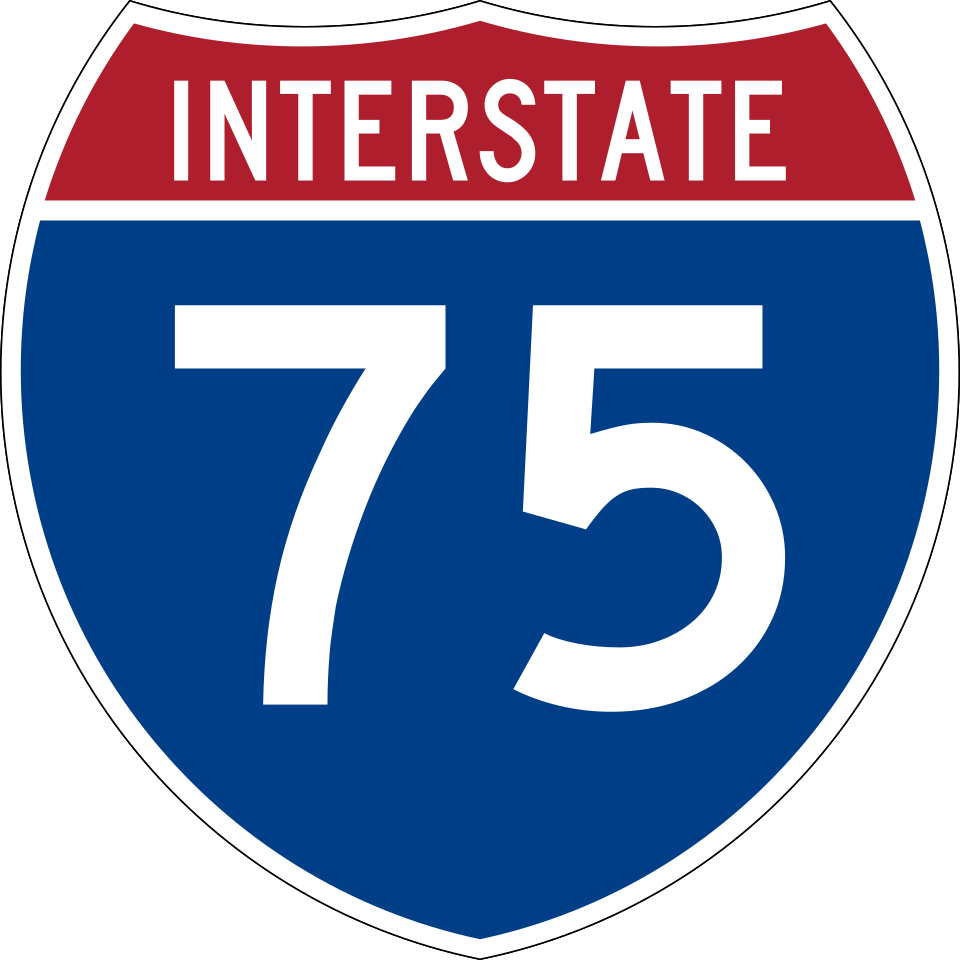
I-75 runs through Macon, GA and is one of the major freight corridors covered by Road Rescue Network's local rescuer network. The Atlanta-to-Florida spine and Macon's main north-south freight artery. Heaviest truck volume between exits 160 (Hardeman) and 171 (I-475 split); the 'Plant Bowen' viaduct over the Ocmulgee floods in heavy rain. Daily breakdown calls along the bypass merge.
Service coverage along Interstate 75 through the Macon-Bibb County Metropolitan Area. Click and drag to explore exits, mile markers, and named landmarks.
The Atlanta-to-Florida spine and Macon's main north-south freight artery. Heaviest truck volume between exits 160 (Hardeman) and 171 (I-475 split); the 'Plant Bowen' viaduct over the Ocmulgee floods in heavy rain. Daily breakdown calls along the bypass merge. Service calls on this corridor cluster around peak commuter hours and overnight long-haul windows. Road Rescue Network's rescuers stationed in and around Macon respond with average dispatch-to-arrival under 40 minutes for breakdowns on this stretch.
Beyond the I-75 corridor itself, our Macon network covers every freight artery into and out of the metro. Macon sits where I-75 and I-16 meet, the only east-west interstate connection between the Port of Savannah and the Atlanta-to-Florida corridor, which makes Macon one of the highest-volume freight crossroads in the Southeast. Robins Air Force Base and Geico's Macon regional center anchor the local employment base, but the freight economy runs on Savannah port drayage, Florida produce moving north, and Atlanta-bound consumer goods staging at the I-16/I-75 interchange. Ice storms most winters and summer afternoon thunderstorms are routine breakdown drivers.
Whether the breakdown is at a downtown interchange, a suburban exit, or a long stretch between cities, the closest verified, insurance-current rescuer in our Macon network is reached through one phone call. Coordination, dispatch, and ETA confirmation are handled by Road Rescue Network's 24/7 operations team.
Exits and mile markers where breakdowns and service calls cluster on the I-75 corridor.
Major downtown Macon exit. Heavy commuter and box-truck volume during weekday peaks.
Cluster of warehouses, distribution centers, and fleet yards. High volume of HD truck activity.
Where I-75 meets the outer ring road. Common breakdown zone for cross-traffic merges and high-speed segments.
Network providers staged for the corridor with insurance-current compliance and live availability status.
Patterns observed across recent dispatch data on this corridor by season, location, and traffic peak.
Middle Georgia averages one or two ice events a winter, the I-475 viaduct and the I-75/I-16 interchange flyovers freeze before any other surface in the region and an inch of glaze closes the city for 24 hours. Our local mechanics keep ice-rated air-line splices, dielectric grease for connectors, and traction chains for service trucks pre-staged at the Eisenhower corridor. Most calls during an ice event are battery, jump-start, and air-system thaw, not tows.
The I-75/I-16 interchange viaducts can take two inches of rain in 30 minutes during a July thunderstorm and the low spots flood out trucks regularly. We see daily ignition-and-electrical calls and stalls all summer, plus the cascade of service calls when GSP closes a ramp. Our service trucks carry 12V power-pack starts and waterproof relay/fuse-box service kits in the Macon fleet specifically for storm-flood season.
Depot-bound freight to Robins AFB and Warner Robins ALC runs through US-129 and I-75 around the clock, and the security-cleared portion of our Macon network handles the on-base and gate-house calls. We hold credentialing for Robins, Perry, and Warner Robins gate ingress, so a base-bound breakdown does not turn into a multi-hour wait at the gate-house.
Every service Road Rescue Network dispatches on the I-75 corridor. Each links to local response times and recent jobs.
| When | Service | Location | Response |
|---|---|---|---|
| Tuesday 02:48 ET | Mobile Truck Repair | I-75 N exit 165 Hardeman | 35 min |
| Monday 21:14 ET | Heavy-Duty Towing | I-16 W onramp at I-75 split | 41 min |
| Saturday 18:08 ET | Mobile RV Repair | Macon RV Park I-75 exit 171 | 62 min |
Average dispatch-to-arrival on the I-75 corridor through Macon is 35-45 minutes, with faster response inside the metro core. Confirmed ETA is provided at the time of dispatch.
Yes. Road Rescue Network has rescuers staged across the Macon metro covering the full I-75 corridor, from outer-ring exits inward through downtown and across all major interchanges.
Mobile truck repair, heavy-duty towing, mobile tire service, fuel delivery, lockout, jumpstart, winching/recovery, trailer repair, and specialized commercial services. Every rescuer in the Macon I-75 pool is insurance-current and DOT-compliant where applicable.
For no-shoulder or median breakdowns on I-75, our dispatchers coordinate with state police for safe-pullout protocol before the service truck rolls. Same response timing applies once the truck is in a safe location.
Yes. Every Road Rescue Network rescuer covering I-75 Macon maintains current general liability, automobile liability, workers comp, and (where applicable) garage-keepers insurance. We re-verify every renewal cycle.
Service coverage in cities along the Interstate 75 corridor near Macon.
Network rescuers accept all major credit cards, fleet cards, and consumer payment apps. Confirmed at dispatch.








I-75 is one of 6 freight corridors covered in the Macon-Bibb County Metropolitan Area. View the full Macon service hub for every roadside service, every corridor, and the complete rescuer network.
View Macon Service Hub →