City Center ExitBOTH
Eugene Central Business District
Major downtown Eugene exit. Heavy commuter and box-truck volume during weekday peaks.
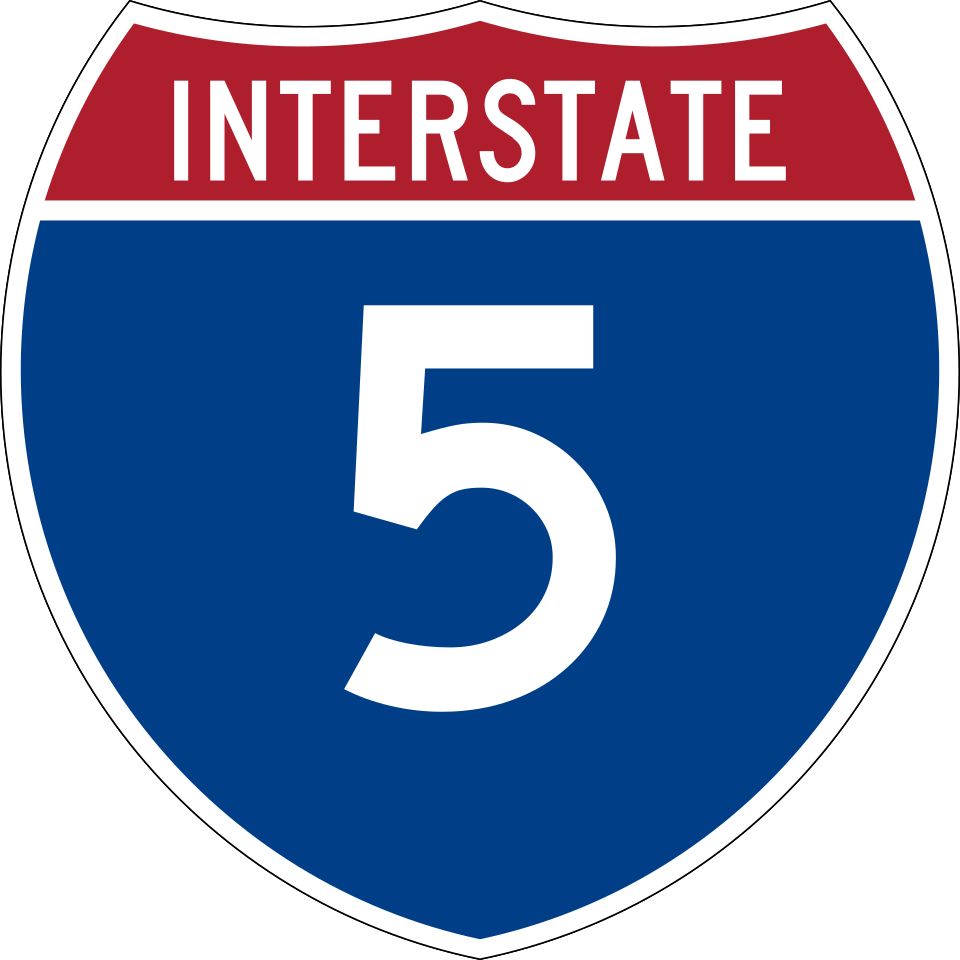
I-5 runs through Eugene, OR and is one of the major freight corridors covered by Road Rescue Network's local rescuer network. The Pacific Northwest backbone, Mexico to Canada, and Eugene's main north-south freight artery. Heavy congestion at the Beltline (Exit 195) and the Belt Line / OR-99 split; common breakdown zones at the Willamette River bridge and the Coburg curves north of town.
Service coverage along Interstate 5 through the Eugene-Springfield Metropolitan Area. Click and drag to explore exits, mile markers, and named landmarks.
The Pacific Northwest backbone, Mexico to Canada, and Eugene's main north-south freight artery. Heavy congestion at the Beltline (Exit 195) and the Belt Line / OR-99 split; common breakdown zones at the Willamette River bridge and the Coburg curves north of town. Service calls on this corridor cluster around peak commuter hours and overnight long-haul windows. Road Rescue Network's rescuers stationed in and around Eugene respond with average dispatch-to-arrival under 40 minutes for breakdowns on this stretch.
Beyond the I-5 corridor itself, our Eugene network covers every freight artery into and out of the metro. Eugene anchors the southern end of the Willamette Valley on I-5, the only continuous interstate down the Pacific Northwest coast. Add the OR-126 corridor west to the Oregon Coast and east over the Cascades, the Hyundai Glovis import-vehicle traffic from the Port of Astoria flowing through here, and a year-round agricultural freight pattern (grass seed, hazelnuts, blueberries, hop), and Eugene-Springfield is one of the busiest mid-size truck cities west of the Rockies.
Whether the breakdown is at a downtown interchange, a suburban exit, or a long stretch between cities, the closest verified, insurance-current rescuer in our Eugene network is reached through one phone call. Coordination, dispatch, and ETA confirmation are handled by Road Rescue Network's 24/7 operations team.
Exits and mile markers where breakdowns and service calls cluster on the I-5 corridor.
Major downtown Eugene exit. Heavy commuter and box-truck volume during weekday peaks.
Cluster of warehouses, distribution centers, and fleet yards. High volume of HD truck activity.
Where I-5 meets the outer ring road. Common breakdown zone for cross-traffic merges and high-speed segments.
Network providers staged for the corridor with insurance-current compliance and live availability status.
Patterns observed across recent dispatch data on this corridor by season, location, and traffic peak.
Eugene gets snow only a few days a year, but freezing rain hits hard once or twice every December and January. The Goshen elevated section south of town and the I-5 / OR-58 split ice over fast, and trucks rolling up from California without chain-ready equipment end up on the shoulder. Our local mechanics stage chain-tensioner spares and methanol-injection kits at the Coburg yards through winter; average response in icy conditions runs 55-65 minutes because scene safety has to come first.
Log trucks running OR-58 over the Cascades to Klamath Falls have a unique breakdown pattern, overheating on the climb, brake fade on the descent, and trailer-bunk sliding loads on the curves. We dispatch heavy-recovery rigs out of Springfield with extended-reach booms because the OR-58 shoulders are narrow and unpaved beyond the chain-up areas. Coordination with ODOT and OSP for safe-closure protocol is built into our dispatch flow.
Autzen Stadium home games turn the Beltline / Coburg corridor into a one-day port, charter buses, RV tailgaters, and food-truck reefer rigs all stack up between Friday night and Sunday morning. We pre-stage two extra service trucks and a heavy-duty wrecker at the Coburg TA every home weekend. Fan vehicle calls (RVs, charter buses) routinely outnumber freight calls 3-to-1 on Game Saturday.
Every service Road Rescue Network dispatches on the I-5 corridor. Each links to local response times and recent jobs.
| When | Service | Location | Response |
|---|---|---|---|
| Tuesday 04:11 PT | Mobile Truck Repair | I-5 N Coburg curves | 38 min |
| Monday 22:24 PT | Heavy-Duty Towing | OR-58 chain-up area | 51 min |
| Monday 13:39 PT | Commercial Tire Repair | TA Coburg | 33 min |
| Sunday 08:14 PT | Mobile RV Repair | Game-day RV lot Autzen | 56 min |
| Saturday 17:02 PT | Mobile Welding | International Paper Springfield mill | 50 min |
| Saturday 03:50 PT | Mobile Bus Repair | Lane Transit District yard | 67 min |
Average dispatch-to-arrival on the I-5 corridor through Eugene is 35-45 minutes, with faster response inside the metro core. Confirmed ETA is provided at the time of dispatch.
Yes. Road Rescue Network has rescuers staged across the Eugene metro covering the full I-5 corridor, from outer-ring exits inward through downtown and across all major interchanges.
Mobile truck repair, heavy-duty towing, mobile tire service, fuel delivery, lockout, jumpstart, winching/recovery, trailer repair, and specialized commercial services. Every rescuer in the Eugene I-5 pool is insurance-current and DOT-compliant where applicable.
For no-shoulder or median breakdowns on I-5, our dispatchers coordinate with state police for safe-pullout protocol before the service truck rolls. Same response timing applies once the truck is in a safe location.
Yes. Every Road Rescue Network rescuer covering I-5 Eugene maintains current general liability, automobile liability, workers comp, and (where applicable) garage-keepers insurance. We re-verify every renewal cycle.
Service coverage in cities along the Interstate 5 corridor near Eugene.
Network rescuers accept all major credit cards, fleet cards, and consumer payment apps. Confirmed at dispatch.








I-5 is one of 6 freight corridors covered in the Eugene-Springfield Metropolitan Area. View the full Eugene service hub for every roadside service, every corridor, and the complete rescuer network.
View Eugene Service Hub →