Exit 1ASB
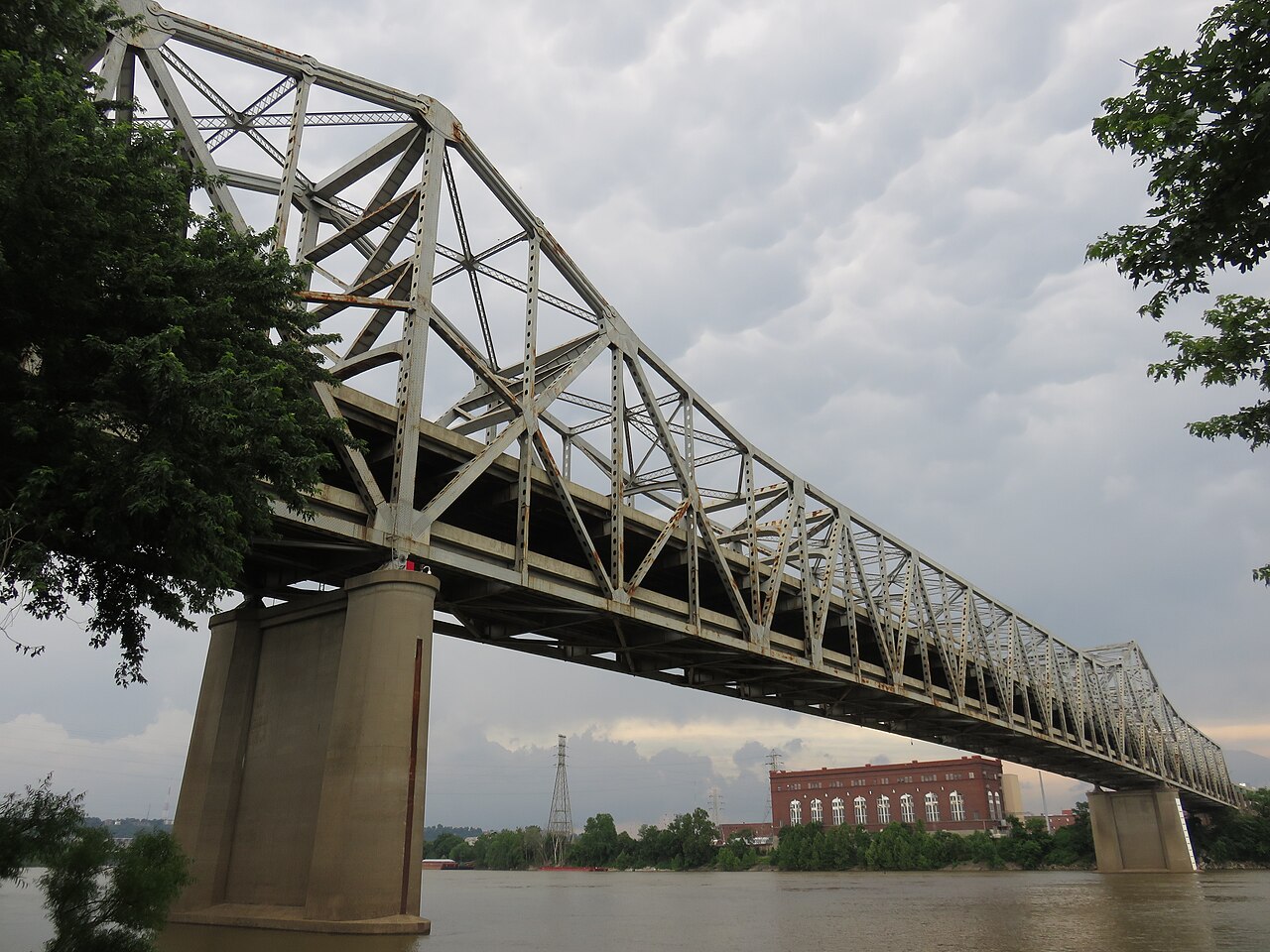
Brent Spence Bridge / I-75 South
Cincinnati's most congested truck crossing. Active police-escort protocol for breakdowns; no shoulder. Average response: 25-35 min.
The Cleveland-to-Louisville freight corridor through Cincinnati. 18 metro exits, two river crossings, and one of the busiest urban interchanges in the Midwest.
Service coverage along Interstate 71 through the Cincinnati Metropolitan Area. Click and drag to explore exits, mile markers, and named landmarks.
Interstate 71 enters the Cincinnati metro from the northeast in Mason, threads through Norwood and Walnut Hills into downtown, and crosses the Brent Spence Bridge into Northern Kentucky in tandem with I-75. For freight, this is Cincinnati's primary north-south artery, peak congestion runs 6-9am and 3-7pm, with the Lytle Tunnel approach and the Norwood Lateral split (I-71 / OH-562) accounting for most metro service calls.
Road Rescue Network's I-71 Cincinnati corridor is covered by rescuers stationed in Mason, Sharonville, Norwood, and downtown. Average dispatch-to-arrival on I-71 inside the metro runs 35-42 minutes, faster on the urban core (downtown to Norwood) and longer on the outer-belt segments approaching I-275.
The corridor crosses three states (Ohio, Kentucky, Indiana via I-265 connections) and intersects four other interstates: I-75 (Brent Spence Bridge), I-275 (Cincinnati outer belt, twice), I-74 (downtown junction), and OH-562 (Norwood Lateral). Each interchange is its own breakdown microclimate.
Exits and mile markers where breakdowns and service calls cluster on the I-71 corridor.
Cincinnati's most congested truck crossing. Active police-escort protocol for breakdowns; no shoulder. Average response: 25-35 min.
Downtown delivery zone. Tight clearances and parking restrictions. Most service calls here are box trucks and city-delivery operators.
Lytle Tunnel northbound entrance, common breakdown zone in summer due to grade + heat soak. Tow operators stage at Reading Rd egress.
Major freight split. Northbound trucks veer east on the Norwood Lateral toward I-75 N; southbound trucks merge from the Lateral. High call volume from the merge zone.
Norwood industrial park exit. Service-call cluster from the Sears tower industrial corridor.
Service road for several mid-size logistics operators. Older interchange with sharp ramp angles, frequent jackknife and rollover assists.
Blue Ash commercial district. High volume of last-mile delivery trucks; fuel-system calls predominate in winter.
Outer-belt junction. Trucks transitioning to/from the I-275 ring. Heavy AM and PM peak volume.
Mason industrial park access. Procter & Gamble outbound traffic. Service trucks stage at the Marathon truck plaza here.
Major distribution park exit. Kroger DC inbound. Average response from the Mason-stationed rescuers: 18-25 min.
Network providers staged for the corridor with insurance-current compliance and live availability status.
Patterns observed across recent dispatch data on this corridor by season, location, and traffic peak.
Brent Spence has zero shoulder and is one of the country's busiest truck crossings. Breakdowns require police-coordinated egress to a safe pullout, then a roadside fix or short tow. Our average notification-to-arrival on the bridge corridor is 25 minutes, with KSP and OSP dispatch handoffs handled by our 24/7 ops team.
Northbound I-71 climbs out of the river basin into the Lytle Tunnel, a long grade in 90°F+ summer afternoons exposes weak cooling systems. Coolant blowouts, water-pump complaints, and radiator-hose failures are weekly calls in July and August. Coolant + hose kits are stocked on every Cincinnati service truck.
The OH-562 / I-71 split (Exit 5) carries heavy peak-hour merge volume. Brake fade, air-system events, and minor collisions cluster here in rush hour. Rescuers staged in Norwood typically arrive in 20-28 minutes with both service truck and wrecker on-call.
Every service Road Rescue Network dispatches on the I-71 corridor. Each links to local response times and recent jobs.
| When | Service | Location | Response |
|---|---|---|---|
| Tuesday 03:14 ET | Mobile Truck Repair | I-71 N MM 15 (Mason) | 38 min |
| Monday 22:47 ET | Heavy-Duty Towing | I-71 S Exit 1A (Brent Spence) | 41 min |
| Monday 14:02 ET | Tire Service | I-71 N MM 12 (Blue Ash) | 28 min |
| Sunday 06:33 ET | Air Brake Service | I-71 S MM 8 (Ridge Ave) | 36 min |
| Saturday 19:21 ET | Lockout Service | I-71 N MM 19 (Western Row) | 19 min |
| Saturday 02:18 ET | Mobile Truck Repair | I-71 S MM 5 (Norwood Lateral) | 32 min |
Average dispatch-to-arrival on I-71 in the Cincinnati metro is 35-42 minutes. Inside the I-275 outer belt, response is typically 18-30 minutes. The Mason-Sharonville segment is fastest because of rescuer staging at Pilot West Chester and the I-71/I-75 corridor convergence.
Yes. The Brent Spence (where I-71 and I-75 share a southbound crossing) is one of our most-frequent service corridors. Breakdowns require coordination with Kentucky State Police and Ohio State Patrol for safe-pullout protocol; our dispatch team handles that handoff. Rescuers are positioned on both the Ohio and Kentucky sides.
By volume: cooling-system failures (especially summer in the Lytle Tunnel grade), tire blowouts (most common between MM 5-15 due to construction debris), air-system failures (winter, especially north of Mason), and brake events at the Norwood Lateral merge. Mobile truck repair handles 60-70% of these without a tow.
Yes. Heavy-duty wrecker coverage is dedicated for the I-71 corridor in Cincinnati with rescuers equipped for Class 8, double-decker car-haulers, and over-90,000-lb GVW recoveries. Average heavy-duty wrecker dispatch is 38-48 minutes.
MM 5 (Norwood Lateral split), MM 12 (Blue Ash / Pfeiffer Rd), MM 14 (I-275 interchange), and the Brent Spence / Exit 1A complex. Together these account for roughly 55% of all I-71 metro service calls.
Yes. Several Cincinnati rescuers maintain Mason and Sharonville staging to keep response times tight on I-71 between MM 12 and MM 25. For southbound calls between MM 0 and MM 5, downtown and Northern Kentucky rescuers handle dispatch.
Service-call dispatch fees on the I-71 corridor in Cincinnati run $150-$225 depending on time of day, location, and service type. Heavy-duty towing starts at $475 for in-metro moves. Confirmed quotes are provided before the truck rolls.
Service coverage in cities along the Interstate 71 corridor near Cincinnati.
Network rescuers accept all major credit cards, fleet cards, and consumer payment apps. Confirmed at dispatch.








I-71 is one of 6 freight corridors covered in the Cincinnati Metropolitan Area. View the full Cincinnati service hub for every roadside service, every corridor, and the complete rescuer network.
View Cincinnati Service Hub →