City Center ExitBOTH
Mason Central Business District
Major downtown Mason exit. Heavy commuter and box-truck volume during weekday peaks.
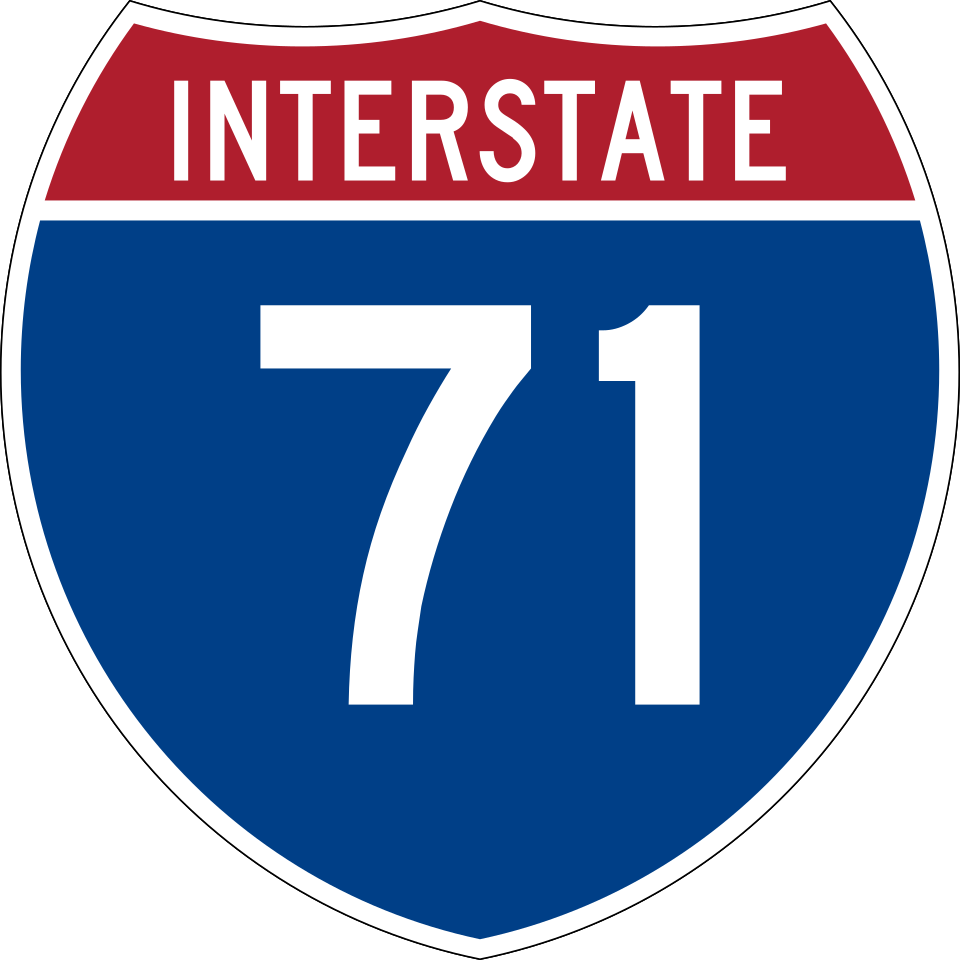
I-71 runs through Mason, OH and is one of the major freight corridors covered by Road Rescue Network's local rescuer network. North-south mainline connecting Cincinnati to Cleveland; this is the primary heavy-freight corridor through Mason. I-71 northbound grades (exits 24–29) are high-volume and weather-prone. Spring storms cause hydroplaning; winter ice creates jackknife zones. Southbound descent toward the Cincinnati basin is common for brake failure on loaded trailers. Average 8–10 breakdowns daily in peak season; response averaged 32 minutes.
Service coverage along Interstate 71 through the Cincinnati Metropolitan Area. Click and drag to explore exits, mile markers, and named landmarks.
North-south mainline connecting Cincinnati to Cleveland; this is the primary heavy-freight corridor through Mason. I-71 northbound grades (exits 24–29) are high-volume and weather-prone. Spring storms cause hydroplaning; winter ice creates jackknife zones. Southbound descent toward the Cincinnati basin is common for brake failure on loaded trailers. Average 8–10 breakdowns daily in peak season; response averaged 32 minutes. Service calls on this corridor cluster around peak commuter hours and overnight long-haul windows. Road Rescue Network's rescuers stationed in and around Mason respond with average dispatch-to-arrival under 40 minutes for breakdowns on this stretch.
Beyond the I-71 corridor itself, our Mason network covers every freight artery into and out of the metro. I-71 is the master artery for northbound freight from the Cincinnati port and southbound container traffic from Cleveland and the Great Lakes. Cintas's distribution operations alone move 2,000+ vehicle-days annually through Mason; their delivery fleet is a constant presence on I-71, SR 73, and SR 4. US 50 eastbound handles LTL headed to Clermont County industrial zones and regional commercial centers. World Distribution Services, TAGG Logistics, and Zenith Logistics operate multi-shift warehouse operations requiring immediate mobile repair response when delivery rigs break. Peak freight season (August–November) sees 18–20 calls per day across all service types.
Whether the breakdown is at a downtown interchange, a suburban exit, or a long stretch between cities, the closest verified, insurance-current rescuer in our Mason network is reached through one phone call. Coordination, dispatch, and ETA confirmation are handled by Road Rescue Network's 24/7 operations team.
Exits and mile markers where breakdowns and service calls cluster on the I-71 corridor.
Major downtown Mason exit. Heavy commuter and box-truck volume during weekday peaks.
Cluster of warehouses, distribution centers, and fleet yards. High volume of HD truck activity.
Where I-71 meets the outer ring road. Common breakdown zone for cross-traffic merges and high-speed segments.
Patterns observed across recent dispatch data on this corridor by season, location, and traffic peak.
A Cintas regional-delivery semi loses its transmission fluid seal during morning rush near exit 27. Driver limps to the shoulder; RRN dispatch immediately deploys a mobile repair unit from our south-side inventory. Transmission seal is replaced roadside, system pressure is verified, and the truck is back on route to its first delivery stop within 34 minutes. No lost freight window.
A flatbed carrying industrial machinery experiences brake fade on the I-71 descent between exits 24 and 21. Driver downshifts aggressively but feels brake temperature warning. RRN dispatch sends a mobile air-brake specialist and heavy-duty tower as backup. On-site air-brake re-torque and system flush: 29 minutes. Truck is deemed safe to proceed at reduced speed; second unit follows to Cincinnati.
Overnight freeze creates black ice on the I-71 exit 25 off-ramp. A refrigerated trailer heading north loses traction and slides into the median barrier. RRN dispatch deploys a heavy-duty rotator and winching crew. Trailer is carefully re-oriented and towed to the shoulder. Reefer electrical inspection reveals no compressor damage. Total recovery and roadside inspection: 56 minutes.
Every service Road Rescue Network dispatches on the I-71 corridor. Each links to local response times and recent jobs.
| When | Service | Location | Response |
|---|
Average dispatch-to-arrival on the I-71 corridor through Mason is 35-45 minutes, with faster response inside the metro core. Confirmed ETA is provided at the time of dispatch.
Yes. Road Rescue Network has rescuers staged across the Mason metro covering the full I-71 corridor, from outer-ring exits inward through downtown and across all major interchanges.
Mobile truck repair, heavy-duty towing, mobile tire service, fuel delivery, lockout, jumpstart, winching/recovery, trailer repair, and specialized commercial services. Every rescuer in the Mason I-71 pool is insurance-current and DOT-compliant where applicable.
For no-shoulder or median breakdowns on I-71, our dispatchers coordinate with state police for safe-pullout protocol before the service truck rolls. Same response timing applies once the truck is in a safe location.
Yes. Every Road Rescue Network rescuer covering I-71 Mason maintains current general liability, automobile liability, workers comp, and (where applicable) garage-keepers insurance. We re-verify every renewal cycle.
Service coverage in cities along the Interstate 71 corridor near Mason.
Network rescuers accept all major credit cards, fleet cards, and consumer payment apps. Confirmed at dispatch.








I-71 is one of 8 freight corridors covered in the Cincinnati Metropolitan Area. View the full Mason service hub for every roadside service, every corridor, and the complete rescuer network.
View Mason Service Hub →