01
Steel-deck rollback carrier
19-21 ft bed, deck winch, wheel-lift under-reach on most units
The default tow truck. All four wheels off the ground, so it is the right answer for AWD, EV, low-clearance, non-running, and collision vehicles alike.
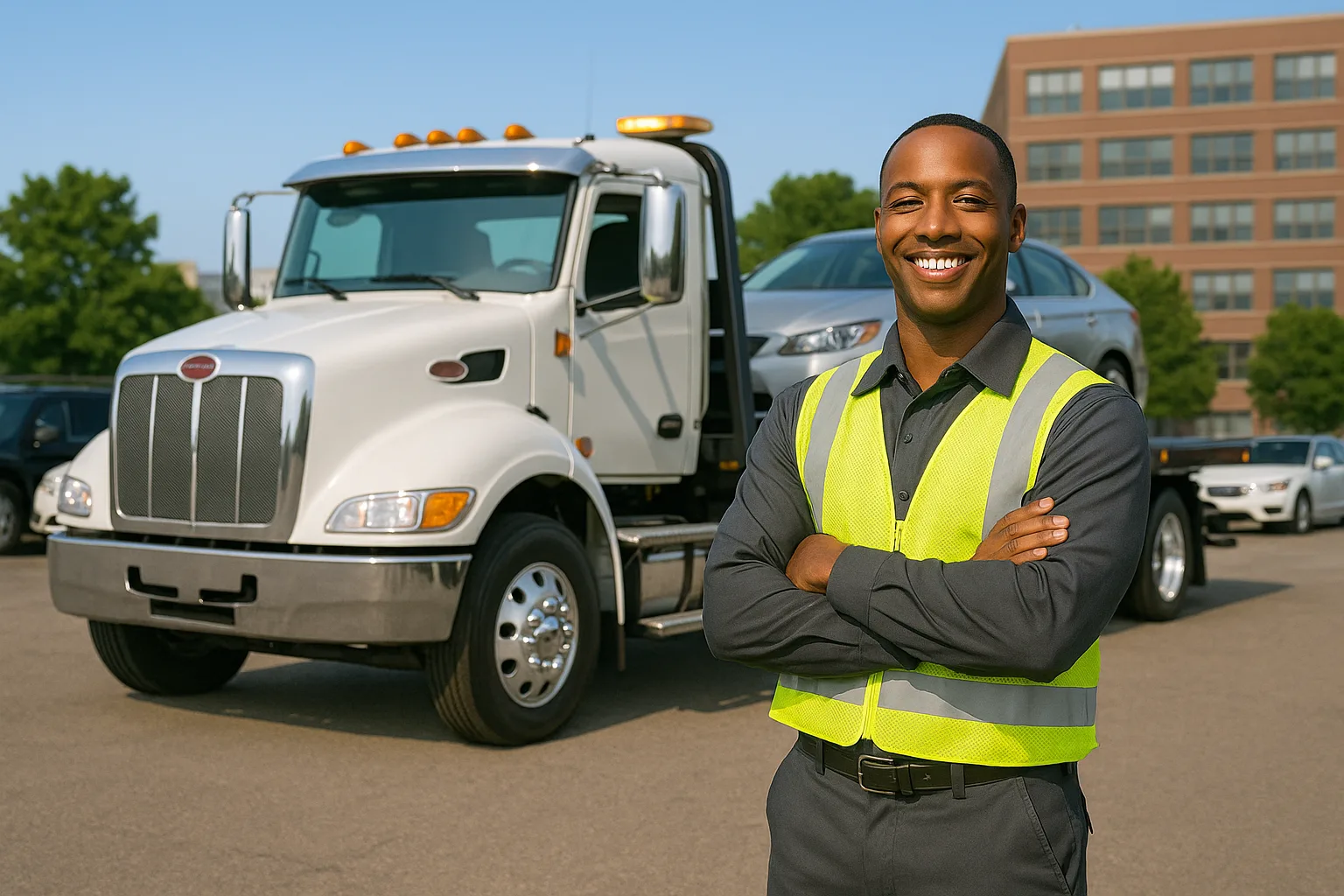
Need a tow truck in Downey? We get one to you fast for cars, pickups and vans, flatbed or wheel-lift depending on what yours needs. You name the destination before we move it. Traffic here is the hard part, not the hook — getting a lane closed and the unit clear takes longer than the pull most days. I-5, I-605, and I-710 all run through Downey, so most of our calls come off one of those. Freight around here moves for outfits like Kaiser Permanente Downey and Rancho Los Amigos National Rehabilitation Center, which is work that runs on a schedule.
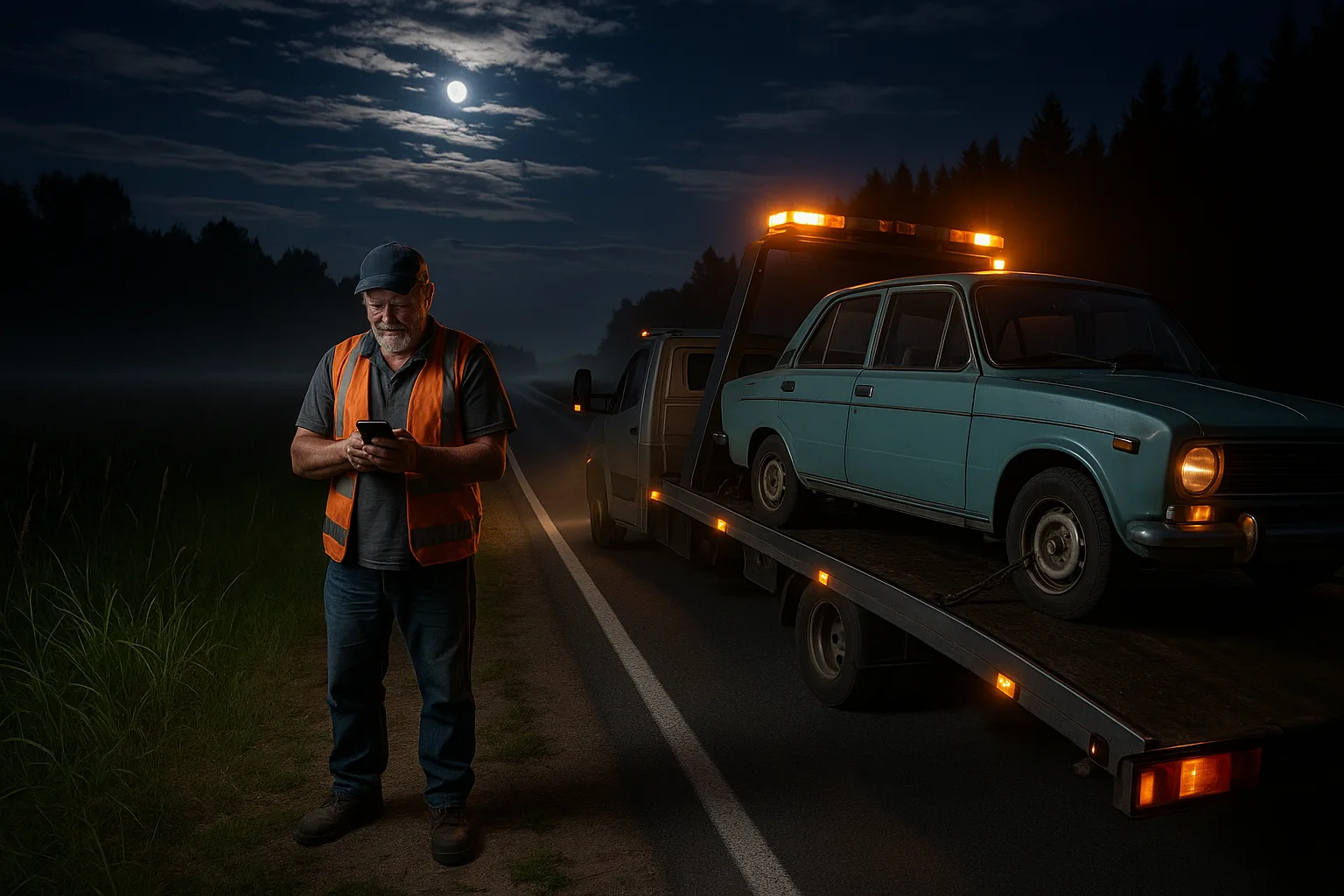
The truck that shows up decides whether your vehicle arrives undamaged. This is what the Downey network runs and the call each unit is sent on — worth knowing before you accept whatever is closest.
19-21 ft bed, deck winch, wheel-lift under-reach on most units
The default tow truck. All four wheels off the ground, so it is the right answer for AWD, EV, low-clearance, non-running, and collision vehicles alike.
Lighter deck, higher payload, shallower load angle
Two vehicles in one trip, or a lowered car that would scrape a standard approach. The payload headroom is what lets a loaded van ride without going overweight.
L-arm yoke, tire-only contact, compact footprint
Tight rowhouse blocks, parking decks with a height bar, and short repositioning moves where a full carrier cannot physically reach the vehicle.
Cab-controlled wheel-lift, single-operator hookup
Private-property and repossession work where the operator needs to hook without leaving the cab. Fastest pickup of any tow truck.
Rolling axle set placed under the non-lifted wheels
Carried on the wrecker so an AWD or 4WD vehicle can still be towed when no carrier is available. Keeps the drivetrain from spinning without a deck.
Hydraulic wheel skates for locked or missing wheels
Seized brakes, a wheel off the car, or a vehicle sitting in park with no power. The vehicle is rolled onto the deck sideways instead of being dragged.
Add-on ramp sections that flatten the load angle
Lowered, exotic, and slammed vehicles. Requested at booking — an operator who does not carry them will find out at the scene, and then you wait for a second truck.
Front chock, soft straps, drop-deck or ramp load
Any two-wheeler. A bike loaded with the same chains used on a car arrives bent, which is why this is dispatched as its own equipment type.
One call puts a towing unit on the road to you anywhere in Downey or out along I-5 and I-605. Tell us the road and which way you are pointed and we do the rest.
Cars, pickups, vans, motorcycles, and EVs across the Downey metro — on a flatbed carrier when the vehicle needs one, on a wheel-lift when it does not. Expand a category to see exactly what gets dispatched and why.
The whole vehicle rides on the deck with all four wheels off the pavement. The default across Downey for anything all-wheel-drive, low-clearance, electric, or already damaged — nothing drags, nothing spins, nothing gets added to the repair bill.
Two wheels lifted on an L-arm yoke that cradles the tires, never the bumper or control arms. Faster to hook and narrow enough for a Downey rowhouse street or a tight parking garage where a carrier physically will not fit.
AWD and full-time 4WD drivetrains cannot be towed with two wheels turning — it destroys the transfer case and center differential. Every AWD call in Downey goes on a flatbed, or on a wheel-lift with dollies under the trailing axle. No exceptions, whatever the last guy told you.
Front-wheel chock, soft straps over the triple tree, and a ramp or drop-deck load. Chains over a fairing or a strap on a handlebar bends what it touches — Downey riders get bike-specific equipment or the truck does not roll.
Transits, Sprinters, ProMasters, and box vans up to 14,000 lb GVWR, loaded or empty. Delivery and trades fleets across Downey run these all day, and a loaded one needs the deck length confirmed before dispatch.
Out-of-market moves on a carrier, priced by loaded mile once you are clear of the Downey metro rather than by the local hook-and-hourly. Relocations, auction pickups, and getting a breakdown home instead of leaving it three states away.
An EV moves on a flatbed with zero drive wheels on the ground — regenerative braking turns a spinning wheel into a generator feeding a pack that may already be faulted. Network operators in Downey carry EV-rated skates for a vehicle stuck in park with no 12-volt.
A crash-damaged or thermally-faulted pack is a separate call with its own staging, distance, and monitoring requirements. Downey operators coordinate with the fire service and the manufacturer's emergency response guide rather than simply loading and driving away.
Extended ramps, wood blocks, and a shallow approach angle so a splitter or side skirt never touches the deck. Tie-downs go to the manufacturer's designated points — a Downey strap over a control arm is how a $4,000 alignment claim starts.
Seized brakes, no keys, flat-spotted tires, or a project that has not moved in a decade. Winched onto the deck with skates or GoJaks under the locked wheels instead of dragged across a Downey driveway.
Zero-turn mowers, ATVs, golf carts, scissor lifts, and small utility trailers on a carrier deck. The common Downey landscape and contractor call when the tow vehicle itself is what broke.
Scheduled, non-emergency moves between Downey dealer lots, auction houses, body shops, and fleet yards — booked ahead, with condition photos on pickup and delivery so nobody argues about a scratch later.
Off the shoulder, into a ditch, over a curb, stuck in mud, snow, or sand. A Downey winch-out is billed as recovery time, not as a tow — and a vehicle pulled out straight often drives away instead of riding the deck.
Unplowed streets, alley ice, and vehicles slid into a bank. The first real Downey snow generates more tow calls in twelve hours than a normal week, so staged capacity matters more than any single truck's speed.
Non-rolling vehicles loaded with skates or a winch, fluids contained, debris swept. On a Downey public roadway the first tow is often assigned off a police rotation — the second move, to the shop you actually chose, is the one you control.
A proper jump pack on the correct terminals, then a charging-system check to see whether it is the battery or the alternator. Roughly a third of Downey "needs a tow" calls end here for a fraction of the cost.
Non-destructive entry on a locked vehicle, or enough fuel to reach a station. Both are dispatched on the same truck as the tow, so if the fix does not work the vehicle goes on the deck without a second wait in Downey.
Spare mounted roadside where the vehicle carries one. When it carries a mobility kit instead of a spare — increasingly the norm — the Downey call converts to a tow to a tire shop, and the operator arrives already knowing that.
Unauthorized vehicles removed from lots, apartment complexes, and reserved spaces at the property owner's request. Governed by posted-signage and notification rules in Downey — a compliant removal starts with the sign, not with the truck.
Getting a vehicle out of a Downey lot and to your shop or your driveway. The release process belongs to whichever authority ordered the tow; a private operator moves it only after that release is in hand.
You are generally entitled to your belongings out of an impounded vehicle even before the vehicle itself is released. Ask for it explicitly — the Downey lot is not obligated to volunteer the process.
Fenced, lit, camera-covered storage when the destination shop is closed or an insurer has not made a decision. Billed per day from arrival across Downey, which is why naming a destination up front is the cheapest call you can make.
Your vehicle goes where you say it goes — your mechanic, your dealer, your body shop anywhere in the Downey metro — not to whichever lot the truck happens to be based at.
Timestamped condition photos, an itemized invoice, and a written cause note formatted for a claim or a platform reimbursement. Downey rideshare and delivery drivers use these to get a tow paid for instead of eaten.
Rolling 30-day average dispatch-to-arrival, by service type, across the local rescuer network.
Almost every local tow is hook-up plus mileage — and then a short list of things that legitimately move it. These are the line items to expect on a Downey invoice, and the ones worth questioning.
$99 hook-up + $5-7 per mile
Standard rate for a car, pickup, or van on a flatbed or wheel-lift. Winching, after-hours, storage, and specialty equipment are separate lines — all of them are listed below. Heavy-duty and Class 8 recovery is priced differently and is not this rate.
$99 on our network. A flat charge for dispatching and connecting the vehicle, billed once. It does not change with distance, so it is the single biggest number on a short local tow.
$5 to $7 per mile, charged from pickup to drop. Ask whether mileage starts at your location or at the operator's yard — that one answer can double a suburban tow.
A carrier often costs more than a wheel-lift. For AWD, EV, low-clearance, and damaged vehicles it is not an upsell — a wheel-lift on those causes damage worth many times the difference.
Billed separately from the tow, usually per half-hour, once the vehicle is off the pavement. Pulling a car out of a ditch is labor; carrying it afterward is the tow.
Dollies, skates, and extended ramps may carry a line item. Mention AWD, a locked wheel, or a lowered car when you book and this gets quoted instead of discovered.
Overnight and holiday calls price above the daytime rate. Not a scam — it is a driver woken at 3 a.m. — but it should be disclosed on the phone, not on the invoice.
Standby while you retrieve belongings, wait for police, or decide on a destination is billable once it runs long. Deciding the drop location before the truck arrives keeps this at zero.
Per calendar day from arrival, and it starts the day the vehicle lands even if that is 11 p.m. The most common source of a shocking towing bill.
Retrieving a vehicle outside posted lot hours typically carries its own fee. Going the next morning instead is usually cheaper than the gate charge.
Police-ordered and private-property tows are priced under a regulated maximum rather than by agreement. If a tow you did not request exceeds that cap, that is a complaint to the regulator, not a negotiation.
A jumpstart, lockout, fuel drop, or tire change is priced well below a tow. Describing the symptom accurately is what lets dispatch send the cheaper answer first.
A club or manufacturer benefit usually covers hook-up plus a mileage allowance, with you paying the overage. Know your allowance before choosing a shop 40 miles away.
Road Rescue Network does not set a member operator's rates. What the network does is get you an itemized number before the truck rolls — including the mileage basis and the storage clock — so a tow never turns into a surprise.
The same crews that run Downey also cover Norwalk (4 mi), Bellflower (4 mi) and Pico Rivera (4 mi), so a call from either side of Los Angeles County reaches the same desk.
Each service links to local response times, rescuer coverage, and recent dispatched jobs in this metro.
A live map of every towing service in Downey metro, with real-time positions, ETAs, and dispatch status, available inside your dashboard.
Sign in to track network rescuers across Downey in real time, dispatch jobs, and confirm ETA before the truck rolls.
Each corridor has a dedicated breakdown landing page with service zones, exits, and recent dispatched jobs.
5 exits in Downey
The Santa Ana Freeway, Downey's main north-south freight artery between downtown LA and Orange County. The Lakewood Boulevard and Florence Avenue interchanges are top service-call zones with heavy drayage merge points.
3 exits in Downey
The San Gabriel River Freeway, running along Downey's eastern edge, connecting the I-5 to the I-405 and the Long Beach port drayage routes. A major truck corridor and chokepoint.
0 exits in Downey
The Long Beach Freeway, the primary port-drayage corridor west of Downey carrying containers north from Long Beach. The busiest goods-movement artery in the region and a constant source of service calls.
6 exits in Downey
Lakewood Boulevard, the major north-south arterial through Downey connecting the I-5 to the I-105 and the South Bay. High volume of city-delivery box trucks and drayage feeder traffic.
4 exits in Downey
Whittier Boulevard, the east-west surface arterial through Downey carrying local-delivery and distribution freight between the Gateway Cities. A key connector off the I-605.
0 exits in Downey
The Century Freeway, reached south, an east-west connector tying the I-710 drayage corridor to LAX-area air cargo and the South Bay.
Patterns observed across recent dispatch data in this metro, by service type and corridor.
Containers off the Port of Long Beach climb the I-710 corridor west of Downey on aging chassis, and a tire failure or air leak puts the box on a curfew clock with the terminal gate closing. Our dispatchers prioritize drayage calls and roll trucks stocked with chassis-spec tire sizes and air-line repair kits, because a missed gate window means demurrage charges stacking up by the day.
The basin traps summer heat over the Gateway Cities, and afternoon temperatures past 100 degrees radiate off the I-5 and I-605 pavement, blowing tires and boiling cooling systems on rigs crawling in drayage backups. We see tire blowouts and radiator-hose failures all through the warm months, and our Downey trucks carry coolant, hose kits, and the common tire sizes to resolve most on the shoulder.
The I-5/I-605 knot around Downey runs near-constant truck volume with limited shoulder, and a breakdown there backs up two freight freeways at once. A stalled rig means coordinating a CHP escort to a safe pullout before any wrench turns, and our dispatchers handle that handoff. We stage units close to the interchange because every minute a drayage rig sits there ripples through the port flow.
Towing is the most heavily consumer-regulated work in the industry, and almost nobody reads the rules until their car is already gone. Here is what governs a tow in Downey, California.
A tow you request is consensual and priced by agreement. A tow ordered by police or a property owner is non-consensual and priced under a regulated maximum. Which one happened determines what you can be charged and what recourse you have.
Most jurisdictions require conspicuous posted signage stating that unauthorized vehicles will be towed, who tows them, and where they go — before a removal is lawful. A tow from a lot with no compliant sign is frequently challengeable.
Outside a police-ordered move, you generally decide where your vehicle goes. An operator steering every vehicle to their own affiliated shop or lot is a signal to ask questions before you sign anything.
Your belongings are usually retrievable even while the vehicle itself is held for fees. Ask specifically — most lots will not offer.
You are entitled to an itemized invoice showing hook-up, mileage, storage, and every add-on as separate lines. A single lump sum with no breakdown is the thing to refuse at the counter, not later.
Drivers must move over or slow for a stopped tow truck showing amber lights. This is why an operator will sometimes reposition your vehicle before working on it — a shoulder is the most dangerous office in the industry.
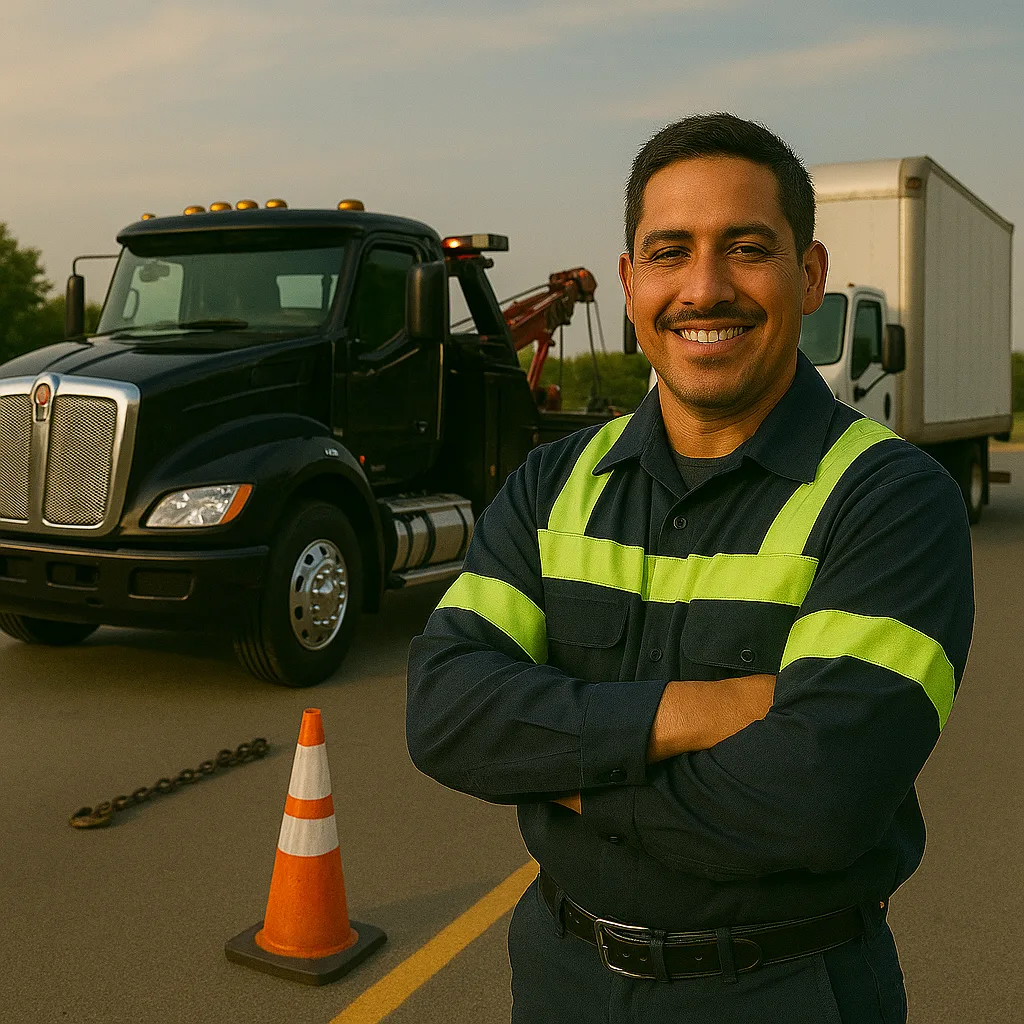
Most Downey calls are answered in about 41 minutes. You get a real time before anyone rolls, and the price before the work starts.
Downey sits in the Gateway Cities of southeast LA County, ringed by I-5, I-605, and I-710, the freeways that carry Port of Long Beach and LA drayage between the marine terminals and the Inland Empire warehouses. The city is squarely on the path of containerized imports moving inland, and its industrial corridors along Firestone Boulevard and the rail-served Rancho Los Amigos district keep trucks moving around the clock.
Downey is a city in southeastern Los Angeles County, California, United States, 13 mi (21 km) southeast of Downtown Los Angeles. It is considered part of the Gateway Cities. The city is the birthplace of the Apollo space program and Taco Bell. It is also the home of the oldest operating McDonald's restaurant in the world. As of the 2020 census, the city had a total population of 114,355.
Downey sits in the heart of the Gateway Cities, ringed by the I-5, I-605, and I-710 freeways that funnel Port of Long Beach drayage between the marine terminals and the Inland Empire. A drayage rig that loses air or throws a tire on those corridors is on a port-curfew clock, with the box due to clear the terminal gate. Road Rescue Network's Downey rescuers run 24/7 with response times built around the I-710 drayage spine and the I-5/I-605 freight knot that surrounds the city.
Anyone who's dispatched a truck through southeast LA County knows the summer heat the basin traps over the Gateway Cities, afternoons past 100 degrees that radiate off the freeway pavement and blow tires and boil cooling systems on rigs crawling in drayage backups. Our Downey mechanics see heat-stressed casings and radiator-hose failures all through the warm months, and they stock coolant, hose kits, and the common drive and trailer tire sizes to handle most on the shoulder. They know what a basin summer does to a loaded tractor.
Downey's freight economy runs on Long Beach port drayage, the Gateway Cities distribution belt, and the rail-served industrial corridors along the LA River, which produces breakdown patterns from chassis failures to reefer faults to brake trouble in the stop-and-go grind. Whether you're a fleet manager routing containers inland or an owner-operator stranded on the I-710, the nearest verified, insurance-current rescuer in our Downey network is one call away, handled by Road Rescue Network's 24/7 operations team.
Reviews collected from fleet customers and drivers after completed service calls in this metro.
“Drayage chassis sprung an air line on the I-710 with a curfew box. RRN tech rolled in 38, repaired it on the shoulder, got the driver through the Long Beach gate. They understand the port clock cold. Best in the Gateway Cities.”
“Cooling boiled over in the summer heat stuck in the I-5/I-605 crawl. Operator was there in 46 in triple-digit heat, found a safe pullout and got me clear. Professional in a brutal spot.”
“Chassis tire let go near the Coca-Cola DC. Service truck had the size in 38 minutes in heavy traffic. One star off because traffic stretched the ETA, but the work was solid and the box moved.”
Road Rescue Network's standard rate in Downey, California is $99 for the hook-up plus $5 to $7 per mile. A short local tow across the metro typically lands between $120 and $180 all-in. Winching, after-hours calls, storage, and specialty equipment such as dollies or extended ramps are billed as separate lines, and you get every one of them quoted before the truck rolls rather than after your vehicle is on the deck.
The $99 hook-up is the floor. It is charged once the truck is dispatched and connected, and it does not change with distance, so a two-mile tow and a ten-mile tow both start from the same number. That is why a very short move can feel expensive per mile and why combining a tow with a jumpstart or tire change on the same visit is far cheaper than two separate calls in Downey.
For a car, pickup, or van anywhere our network runs in California, it is $99 to hook plus $5 to $7 per mile. Rates above that generally mean one of three things: the tow was non-consensual, meaning police or a property owner ordered it and it is priced under a regulated maximum; the vehicle needed winching or recovery before it could be towed; or storage has started accruing daily. Heavy-duty Class 8 recovery is a different service with its own pricing.
Often you can. Roughly a third of calls that come in as "I need a tow" in Downey are resolved on the spot with a jumpstart, a lockout, a fuel drop, or a tire change, all of which cost well under a tow. If you carry a motor club membership or a manufacturer roadside benefit, it usually covers the hook-up plus a mileage allowance and you pay only the overage. If your vehicle has already been towed, the fee is owed — but ask for an itemized invoice, because storage starts the day of arrival and every day you delay retrieval adds to it.
That rule is about a vehicle towing a trailer, not about calling a tow truck. It is the guidance that you should not load a trailer beyond roughly 80 percent of your vehicle's maximum tow rating, leaving margin for braking, grades, and crosswinds. It has no bearing on what a tow truck charges — but exceeding it is a common reason a trailer ends up needing one.
Yes, on any tow you request. Tell dispatch the destination when you call and the vehicle goes to your shop, your dealer, or your driveway anywhere in the Downey metro. The exception is a police-ordered tow from a crash scene, where the first move goes where the responding authority directs — after that, the move from the lot to your shop is yours to choose.
Average response time in Downey is 41 minutes for mobile truck repair, though basin traffic swings it by time of day. Along the I-710 drayage corridor we stage units close; midday gridlock through the I-5/I-605 knot can stretch it. We track every call and post real averages.
Yes, the I-710 corridor and the I-5/I-605 interchange are our busiest service zones. We handle port-curfew chassis failures on the 710 daily and coordinate CHP safe-pullout escorts when a rig stalls in the interchange. Our trucks know the Lakewood Boulevard and Firestone interchanges by sight.
Every Road Rescue Network rescuer in Downey maintains current general liability, automobile liability, workers comp, and where applicable garage-keepers insurance. We re-verify each renewal cycle. Expired coverage means automatic suspension from dispatch.
Yes. We service national accounts with consolidated invoicing, fleet-card billing, and a single point of contact. Most national fleets onboard in under 48 hours. Reach out through the form on this page or call dispatch.
24/7/365. There is no after-hours surcharge across our network. Rescuers quote the same rate at 3am as at 3pm.
We dispatch routinely to the TA Commerce (I-5/I-710), the Pilot at City of Industry on SR-60, the 76 stop on Firestone Boulevard in Downey, and the Love's at Fontana on the Inland Empire side. Our trucks work the drayage corridors constantly.
Most DPF regen issues we resolve roadside with a forced regen and a cleaning of the differential pressure sensor. Full DPF removal and cleaning happens at our partner shops. We tell you upfront which path we're taking.
Standard service-call dispatch runs $170-250 in the Gateway Cities depending on time of day and service type. Heavy-duty towing starts around $490 for in-city moves. You get a confirmed quote before the truck rolls.
Yes. Several Downey rescuers run fleet-PM programs with scheduled visits to your yard or terminal. Tell us your fleet size and DOT inspection cadence and we'll match you with the right shop.
If we determine on-scene that the truck can't be fixed roadside in a reasonable window, we coordinate the tow with one of our heavy-duty network rescuers. Many service trucks dispatch alongside a wrecker so there's no second wait.
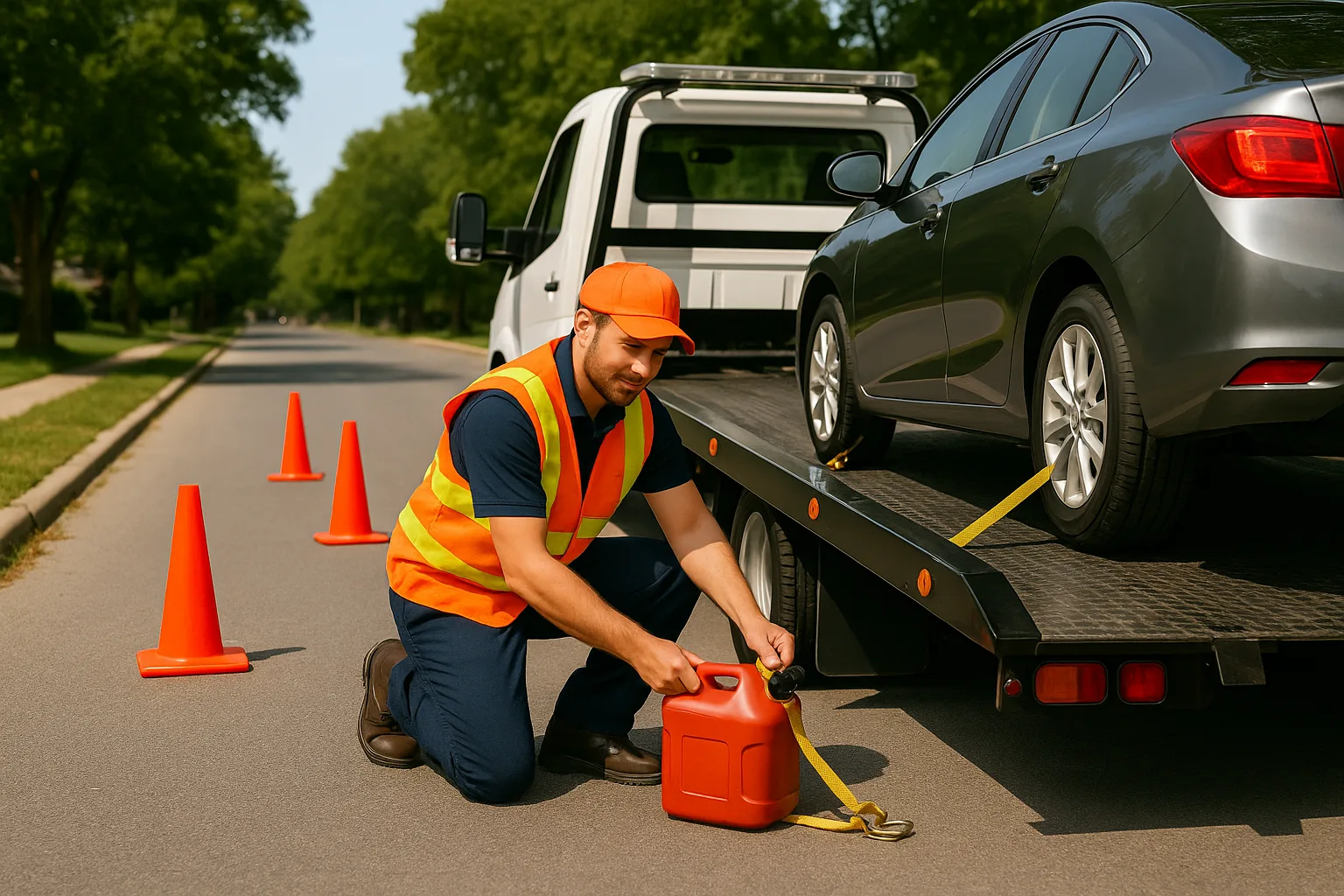
Downey runs about 114,219 people and sits in Los Angeles County, inside the Greater Los Angeles. We take the call, find the closest crew that actually does this work, and tell you what it costs before anyone turns a wheel.
Sample of recent dispatched service calls in this metro. Customer details removed; locations and response times preserved.
| When | Service | Location | Response |
|---|---|---|---|
| Tuesday 15:08 PT | Mobile Truck Repair | I-710 N near Florence Ave | 42 min |
| Monday 19:42 PT | Heavy-Duty Towing | I-5/I-605 interchange | 48 min |
| Monday 12:30 PT | Commercial Tire Repair | Coca-Cola DC Imperial Hwy | 37 min |
| Sunday 09:14 PT | Mobile Welding | Firestone Industrial District | 52 min |
| Saturday 16:38 PT | Mobile RV Repair | RV staging near Stonewood | 62 min |
| Saturday 03:50 PT | Mobile Bus Repair | Downey USD bus yard | 60 min |
| Sunday 13:24 PT | Fuel Delivery | SR-19 Lakewood Blvd at Firestone | 28 min |
| Wednesday 10:56 PT | Trailer Repair | Gardendale Industrial Park | 45 min |
Coverage in surrounding cities and metros across the same network of verified rescuers.
The same verified network of providers, dispatched 24/7 across every major California metro and freight corridor.
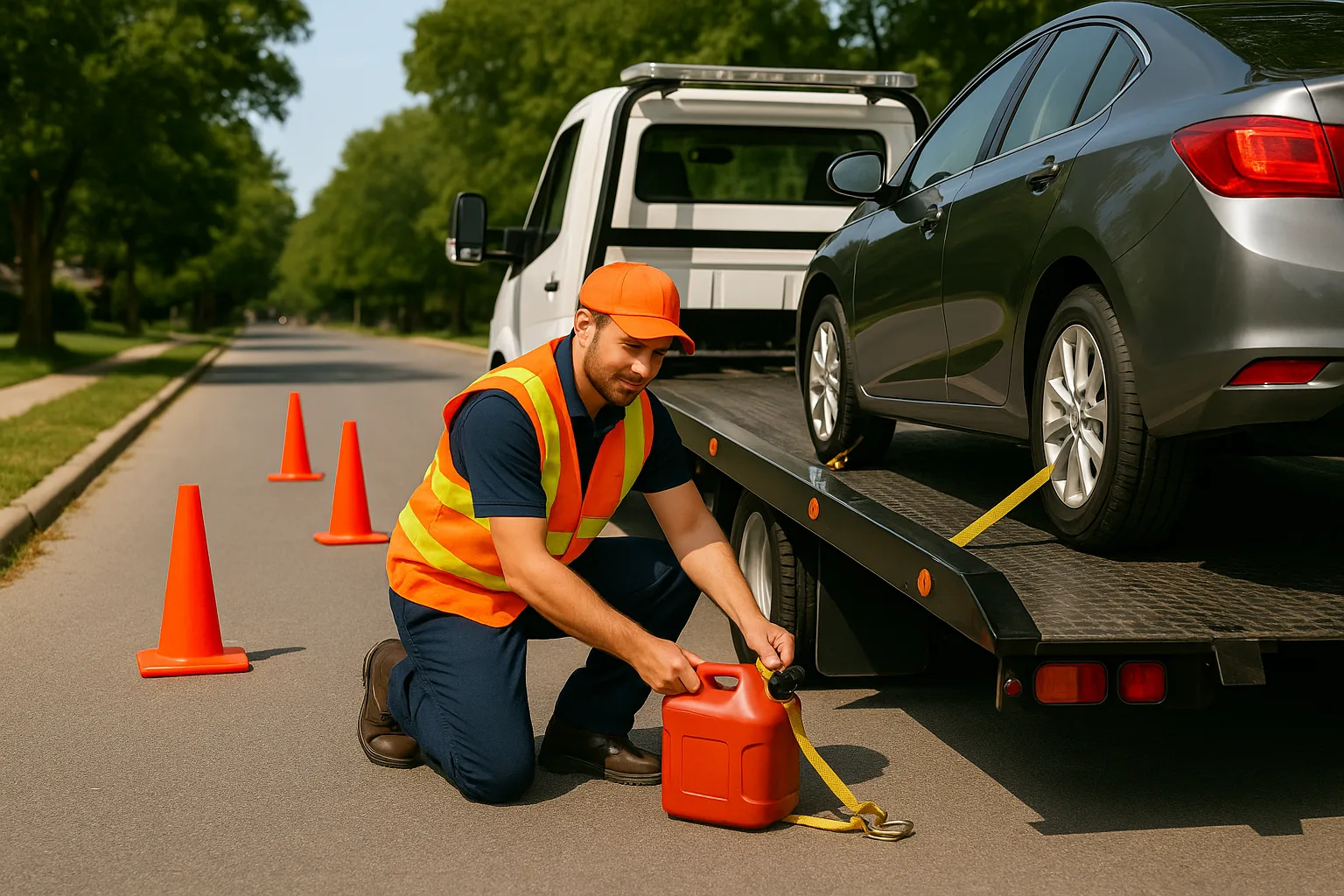
Whether the truck is sitting in Downey or out toward Pico Rivera, it is the same phone number and the same crews. One call, day or night.
Road Rescue Network is actively recruiting verified towing providers in the Downey metro. Heavy traffic, real fleet leads, no auction race-to-the-bottom, straight rescuer-to-customer dispatch with confirmed pricing.
We send Downey towing calls directly to verified rescuers in your service radius. Apply once. Insurance & DOT verified. Live dispatch, fleet accounts, transparent pricing, no motor-club shave-down.
Deep-dive guide on choosing the right provider, common pitfalls, and what to expect on a service call.
OpenOpen positions at our network rescuers, full-time, part-time, and 1099 contract.
OpenOn-site photos from recent calls, see the work, not just the marketing.
OpenNetwork technicians carry diagnostic equipment, OEM-spec tooling, and common-failure parts for every major towing brand on the road. Out-of-stock specifics order in within 24 hours.
Service trucks dispatch routinely to these locations across the metro freight corridors.
Shop on-site, drayage-heavy
View Directory Profile →
24/7 fuel, scales
View Directory Profile →
Tire Care center, Inland Empire side
View Directory Profile →High-flow diesel lanes
View Directory Profile →Truck parking north of basin
Local parts houses and diesel suppliers used by network mechanics for time-critical roadside repairs.
Heavy-duty parts, will-call
View Directory Profile →
Truck and trailer parts
View Directory Profile →
Engine parts and dealer service
View Directory Profile →Major shippers, distribution centers, and industrial freight nodes generating outbound and inbound truck volume.
Beverage distribution, reefer fleet
Retail distribution staging
Rail-served industrial freight
Drayage and distribution staging
Light-industrial and distribution cluster
Manufacturing and warehousing freight
Distribution staging near I-5
Three steps from the call to a cleared scene. Same flow whether you call from a fleet desk or the shoulder of an interstate.
Year, make, drivetrain, whether it rolls and steers, and where it needs to go. AWD, an EV, a lowered car, or a locked wheel changes which truck is correct — thirty seconds on the phone in Downey prevents the wrong truck arriving and a second wait.
We match a carrier or wheel-lift to the vehicle and send you the hook-up, the mileage basis, and the ETA before it rolls. No Downey driver should learn what a tow costs after their car is already on the deck.
Correct tie-down points, condition photos at pickup, and delivery to your shop, your dealer, or your driveway anywhere in the Downey metro. If storage is unavoidable, you get the daily rate in writing before the vehicle goes into the yard.
Network rescuers accept all major credit cards, fleet cards, and consumer payment apps. Confirmed at dispatch.