Grand Junction is the largest freight hub on Colorado's Western Slope, the I-70 / US-50 junction city where Front Range freight transitions to the Utah and Las Vegas lanes and where regional Western Slope outbound (peaches, wine grapes, oil-and-gas equipment, agricultural produce) loads onto the corridor. The Grand Junction Regional Airport, the Mesa County agricultural belt, and the Colorado River Valley energy supply chain all funnel through the I-70 / US-50 / US-6 stack. Add the steep mountain grades east toward Glenwood Canyon and the long climb west to the Utah line, plus summer wildfire smoke that closes the freeway, and the metro carries one of the most demanding freight envelopes per capita in the Mountain West.
Grand Junction is a home rule municipality that is the county seat of and the largest city in Mesa County, Colorado, United States. Grand Junction's population was 65,560 at the 2020 United States census, making it the most populous city in western Colorado and the 17th most populous Colorado municipality overall.
Grand Junction's freight economy is shaped by mountains in three directions and a desert in the fourth. I-70 east climbs out of the city toward De Beque Canyon, the Glenwood Canyon shelf, and the Continental Divide; I-70 west drops into the Utah desert toward Salt Lake City; US-50 carries Western Slope agricultural and energy freight south toward Delta, Montrose, and the San Juans. When a Class 8 truck breaks down on the I-70 west grade out of the Bookcliffs at the climb to the Loma rest area, every minute it sits is a Western Slope orchard or a Halliburton oilfield-equipment delivery slipping its window. Road Rescue Network's Grand Junction rescuers are pre-positioned along I-70, US-50, and the Mesa County industrial frontage so we can keep the corridor moving.
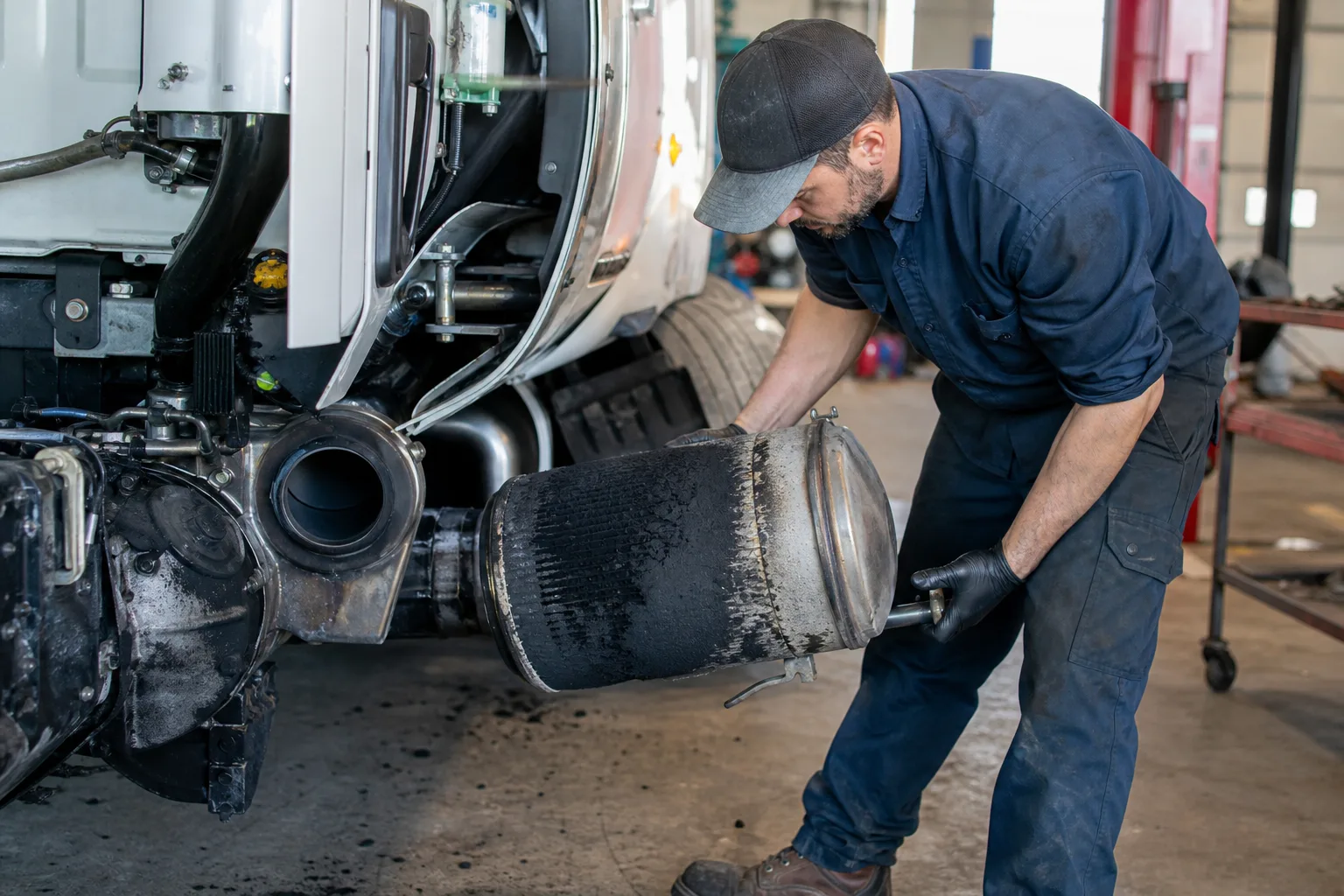
The mechanics in Grand Junction who handle heavy-duty calls every day live with mountain grades, summer wildfire smoke, and a winter cold soak that surprises lower-altitude drivers. Brake fade is the recurring summer-and-fall service call coming off Glenwood Canyon eastbound and the Bookcliffs westbound; engine cooling stresses on the long climbs hit weak radiators and water pumps; wildfire smoke routinely closes I-70 in late summer; and winter cold soak below 10°F exposes air-system dryers and battery banks. Our local fleet stocks brake-shoe rebuild kits, radiator hose sets, jump packs, and methanol-injection, every season has its own service-call pattern.
Whether you are a fleet manager dispatching from out of state with a truck stranded at the I-70 De Beque Canyon brake-check pullout, or an owner-operator on US-50 south of Grand Junction running a peach-harvest reefer trailer to Front Range receivers, the closest verified, insurance-current rescuer in our Grand Junction network is reached through a single phone call or service request. Coordination, dispatch, and ETA confirmation are handled by Road Rescue Network's 24/7 operations team.