01
Jump packs & battery testers
Heavy-duty boost, load and charging-system test
Every no-start. The test is what separates a jump from a battery replacement instead of guessing and returning.
Need roadside assistance in New York? We come to you — jump start, fuel, a flat, a lockout, a winch out of a ditch. Most calls we finish without a tow. Most calls here come off a highway at a bad hour, so where you are standing matters as much as how fast we get there. I-95, I-78, and I-87 all run through New York, so most of our calls come off one of those. Freight around here moves for outfits like JFK International Airport and Port Authority of NY/NJ, which is work that runs on a schedule.
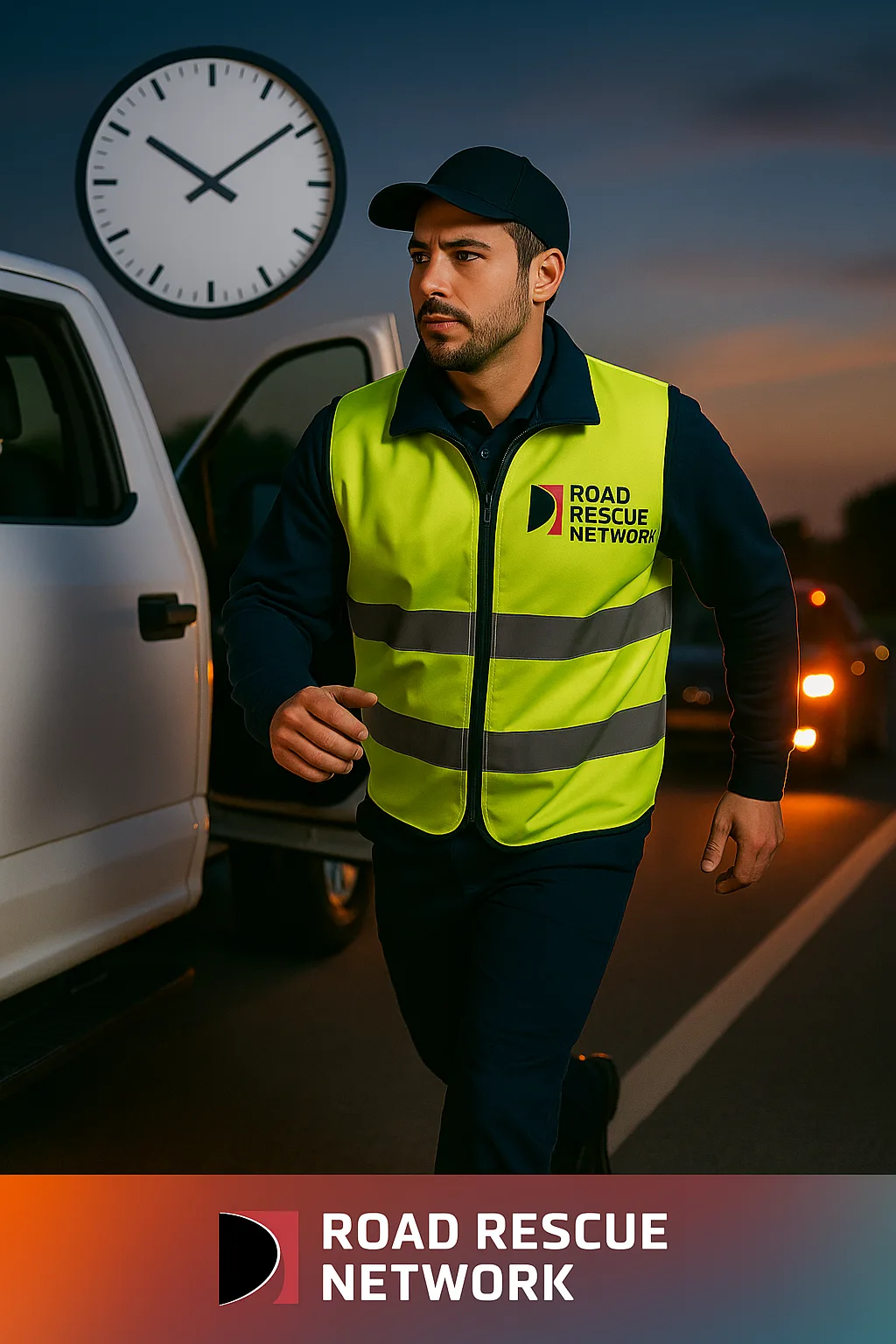
A roadside truck is stocked to end most calls without a tow. What it carries decides whether a New York driver leaves under their own power or waits for a second vehicle.
Heavy-duty boost, load and charging-system test
Every no-start. The test is what separates a jump from a battery replacement instead of guessing and returning.
Onboard compressor, gauges, plug and patch kits
Tires and commercial air system calls. Frequently ends the call outright.
Non-destructive entry, wedges, long-reach tools
Lockouts. Non-destructive matters — a damaged weatherstrip or bent frame costs more than the service call did.
Approved gas and diesel containers, priming gear
Out-of-fuel calls. Diesel run dry needs priming, which a can of fuel alone does not accomplish.
Rated winch, straps, snatch blocks, recovery points
Anything off the pavement. Rated gear and correct attachment points — improvised recovery is how people get hurt.
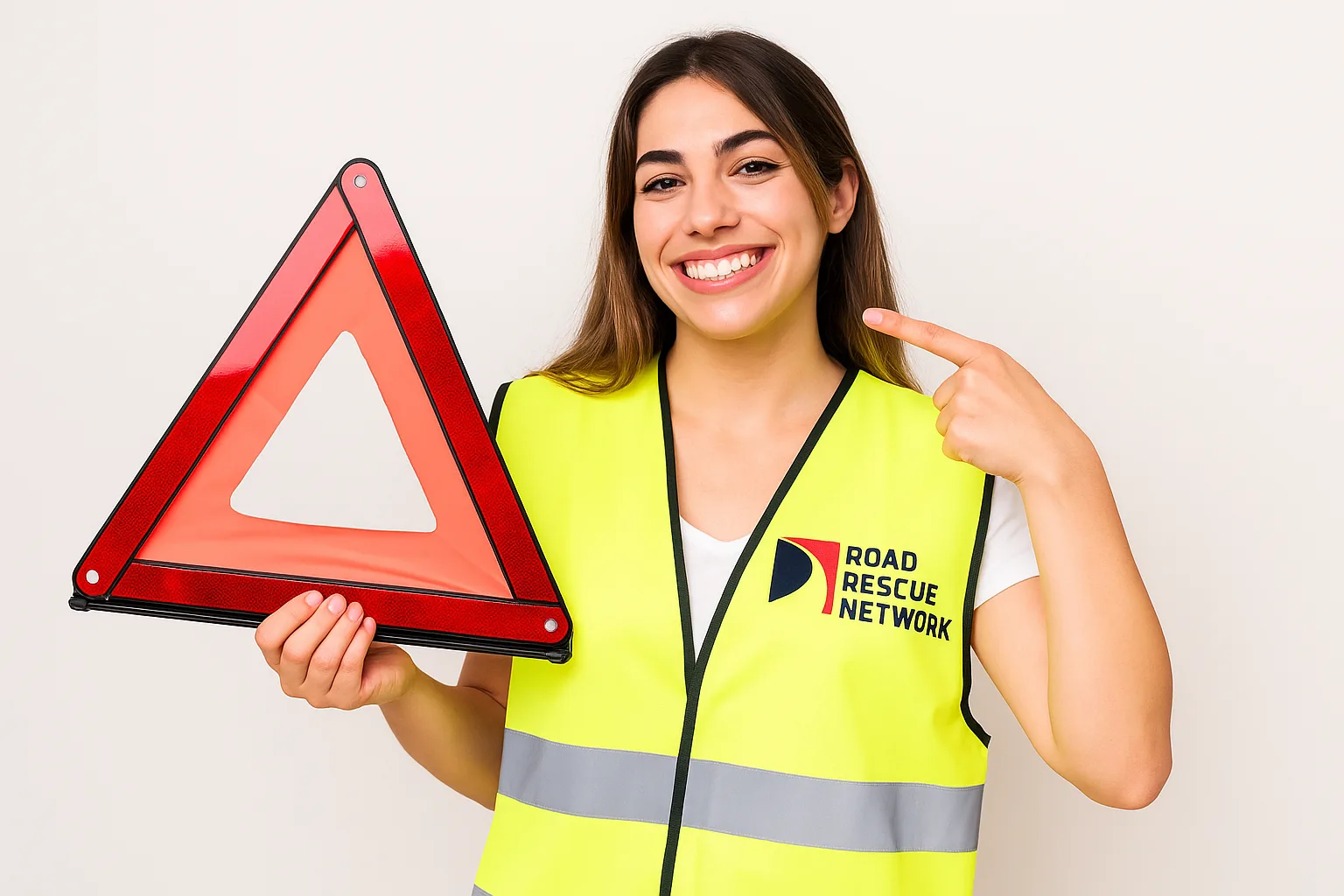
Cones, flares, reflective triangles, warning lights
Every live-roadway call, without exception. Secondary crashes are the real hazard at a breakdown.
Scene lighting and light tower
Night and low-visibility work. Being seen is a safety measure, not a convenience.
Batteries, belts, hoses, fuses, glad hands, lamps
Carried so the frequent failures end on the first visit rather than converting into a tow.
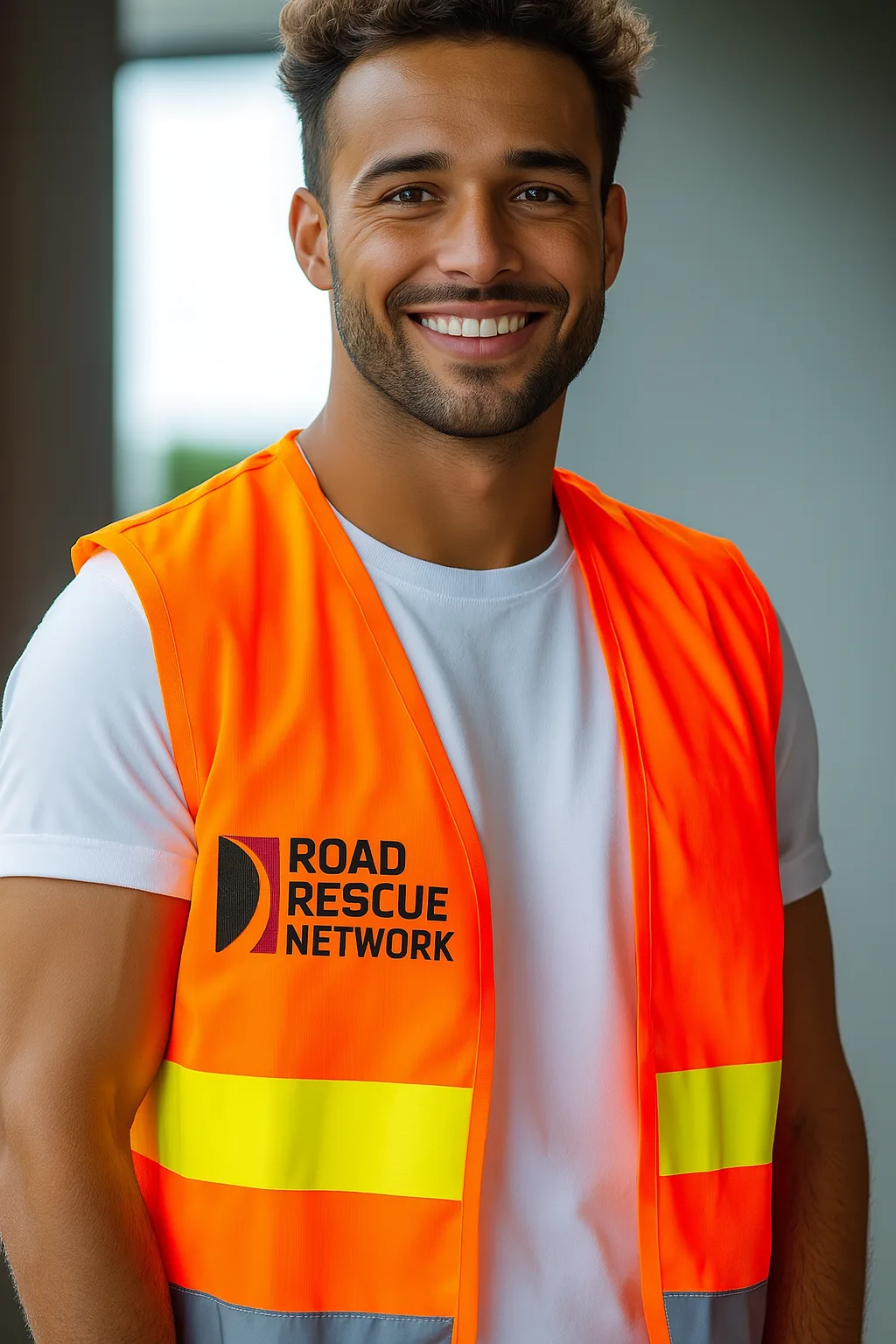
One call puts a roadside assistance unit on the road to you anywhere in New York or out along I-95 and I-78. Tell us the road and which way you are pointed and we do the rest.
One dispatch covering everything that strands a vehicle across New York — cars, pickups, RVs, and commercial trucks. Most roadside calls are resolved on scene without a tow, and knowing which is which before a truck rolls is the difference between a short bill and a long one.
Boost and battery testing on scene. The most common New York roadside call there is, and the one where a five-minute test tells you whether you need a jump or a battery.
When the battery will not hold, replacing it where the vehicle sits beats jumping it twice. A New York jump that dies again in an hour was never the repair.
Enough fuel delivered to reach a station, gas or diesel. A New York diesel run completely dry usually also needs priming, which a fuel can alone will not solve.
Non-destructive entry for cars, trucks, and RVs. The New York calls that matter most are a running vehicle with keys inside, or a child or pet locked in — those move to the front of the queue.
Assessment, coolant, and the honest call on whether the vehicle can be driven at all. Continuing to drive a New York overheated engine converts a roadside call into an engine replacement.
Separating a starter, an alternator, a fuel problem, and a security lockout on scene. Determines whether a New York vehicle leaves under its own power or on a truck.
Spare mounted and torqued where the vehicle sits. Straightforward in a New York parking lot and genuinely hazardous on a live shoulder, which is why position matters more than the tire does.
Increasingly common — many vehicles ship without one, and the ones that have one often have it flat. A New York plug or patch on scene, or a tow when the tire is beyond repair.
Puncture repair where the damage allows it. Sidewall damage and run-flat destruction do not allow it, and being told so honestly saves a New York second call.
Truck and trailer tires on the road, which is a different truck and different equipment than a passenger tire change anywhere in New York.
Seized lugs, locking lug keys, and stripped studs. The reason a New York tire change that should take fifteen minutes sometimes cannot be done at all.
Inflation and sensor faults. A New York slow leak found in a parking lot is maintenance; the same leak found at highway speed is a blowout.
Vehicles off the pavement — soft shoulder, ditch, mud, snow, or sand. A New York recovery pulled from the wrong angle damages more than it recovers.
Response after a collision, worked alongside New York law enforcement, including debris and fluid on the roadway and moving the vehicle to a safe location.
Cones, flares, and advance warning on a live roadway. Secondary crashes at New York breakdown scenes are the real danger, far more than the original failure.
Whether to stay with the vehicle or get behind a barrier. On a New York interstate shoulder the correct answer is frequently to get out on the passenger side and move away, and dispatch will say so.
Yards, construction sites, and unpaved access roads around New York where a standard flatbed cannot reach and a wrecker with winch capacity can.
Re-securing a shifted load before a New York commercial vehicle moves. A shifted load is an out-of-service condition, not a cosmetic problem.
Deciding on scene whether a New York truck is a roadside repair, a limp-in, or a tow. Getting that call right is worth more than the repair itself, because the wrong one means two dispatches.
A commercial vehicle that cannot build air is not moving. Frequently a cheap New York fix — a line, a glad hand seal, a valve — that otherwise becomes a tow.
Response when an inspection strands a vehicle where it stands. Nothing moves in New York until the defect is corrected, which makes these urgent by definition.
Light, medium, or heavy duty as the vehicle requires, to a New York destination you choose rather than the nearest lot the tow operator prefers.
Getting the person somewhere safe, which is the part most roadside coverage forgets. A New York shoulder at 2 a.m. is not a place to wait for a shop to open.
Continuous dispatch, because breakdowns are not scheduled. Most New York roadside volume lands outside the hours a shop is open, which is the entire premise.
Rolling 30-day average dispatch-to-arrival, by service type, across the local rescuer network.
Google shows "how much does emergency roadside assistance cost" on this search because page one deflects it. Here is what a New York roadside bill is actually made of — and where you might not need to pay at all.
Getting a truck and a technician to the vehicle. Charged once. This is the base of almost every pay-per-use roadside invoice.
The widest swing on this list. A jump start or a lockout is the low end; a winch-out from a ditch or a commercial air repair is a different service entirely.
A car, a loaded RV, and a Class 8 truck need different equipment and different operator qualifications. This is the single biggest multiplier on the bill.
Overnight, weekend, and holiday calls carry a premium tier. Most roadside volume happens outside business hours, which is when the premium applies.
Mileage from the responding operator, which is why a remote stretch of highway costs more than a metro parking lot for the identical service.
A live interstate shoulder requires advance warning and sometimes a second unit. Real cost, and not the place to economize.
Billed on time and equipment. Depth, angle, and whether the vehicle is loaded matter far more than the distance it has to move.
A battery, a belt, a hose, or a glad hand seal fitted roadside. Almost always cheaper than the tow that not having the part would have required.
Hook-up plus per-mile, and the class of truck required. Confirm the destination before it is hooked — a chosen shop beats the nearest lot.
Motor clubs, insurers, credit cards, and new-vehicle warranties frequently include roadside. Check before authorizing anything; you may already be covered.
Daily storage accrues fast once a vehicle sits in a lot. This is the line that surprises people, and it is avoidable by deciding the destination up front.
Not a cost at all. Many state DOTs run free service patrols on urban interstates during peak hours — see the regulations section below. If you are on a covered stretch, that call is free.
Road Rescue Network does not set a member operator's rates. What the network does is send the right class of truck the first time and tell you honestly on scene whether the vehicle can be fixed where it sits or needs to be towed — and point you at free state assistance where it covers you.
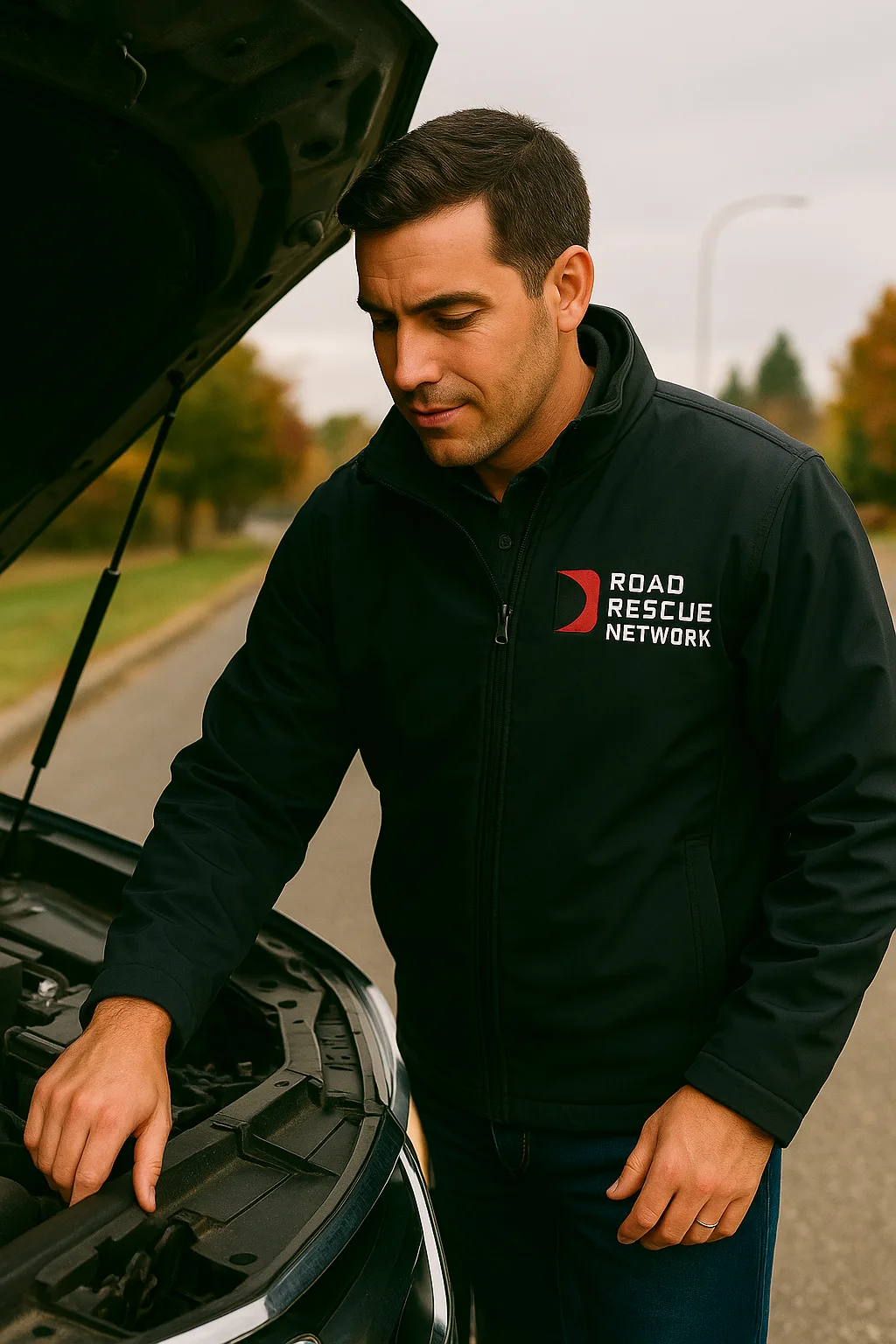
The same crews that run New York also cover Jersey City (4 mi), Newark (9 mi) and Yonkers (16 mi), so a call from either side of New York County reaches the same desk.
Each service links to local response times, rescuer coverage, and recent dispatched jobs in this metro.
A live map of every roadside assistance provider in New York metro, with real-time positions, ETAs, and dispatch status, available inside your dashboard.
Sign in to track network rescuers across New York in real time, dispatch jobs, and confirm ETA before the truck rolls.
Each corridor has a dedicated breakdown landing page with service zones, exits, and recent dispatched jobs.
19 exits in New York
The eastern seaboard's primary north-south freight corridor, running across the George Washington Bridge and through the Cross Bronx Expressway. The Cross Bronx is one of the most chronically congested freight stretches in the country and the single most-frequented zone for our NYC dispatchers.
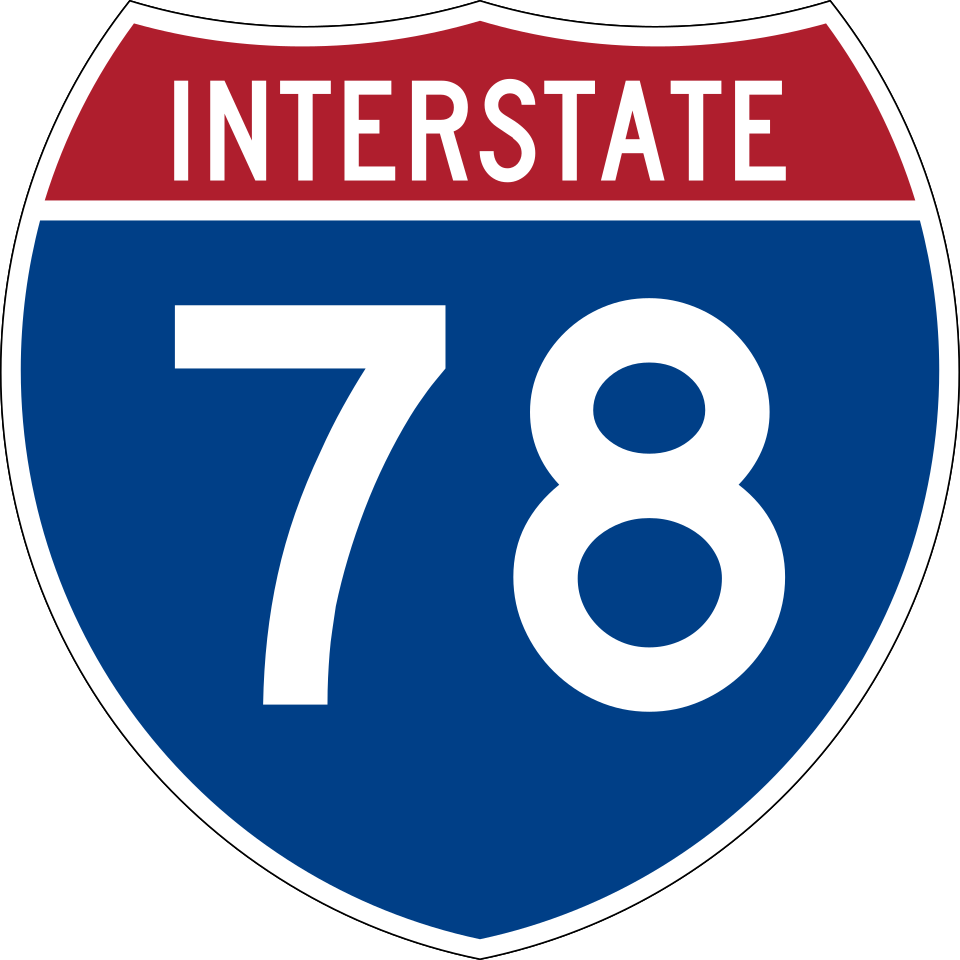
14 exits in New York
The primary truck access from Newark and the I-78 Holland Tunnel approach into Lower Manhattan and onward to Brooklyn. Heavy drayage volume out of Port Newark; common service points cluster near the Newark-Elizabeth port complex.
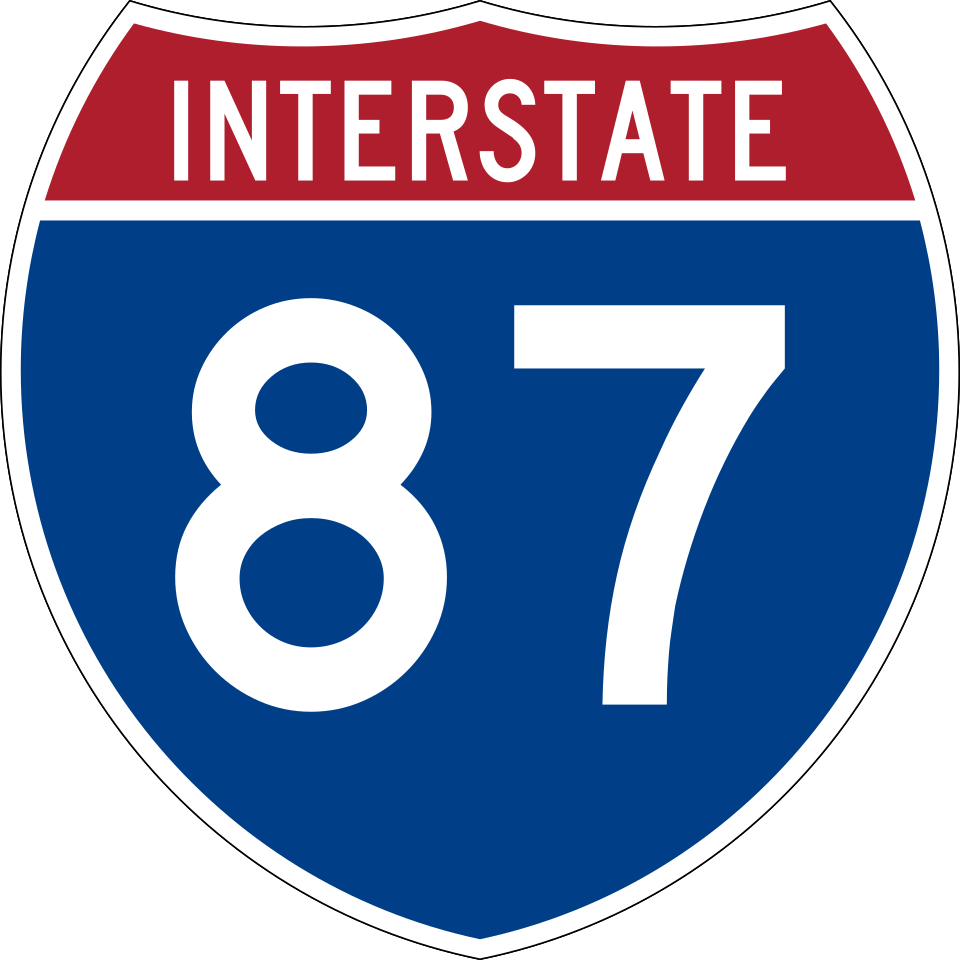
12 exits in New York
The Major Deegan and New York State Thruway connector, carrying traffic north out of the Bronx toward Albany. Frequent peak-hour breakdowns at the Yankee Stadium exits and the I-95 interchange.
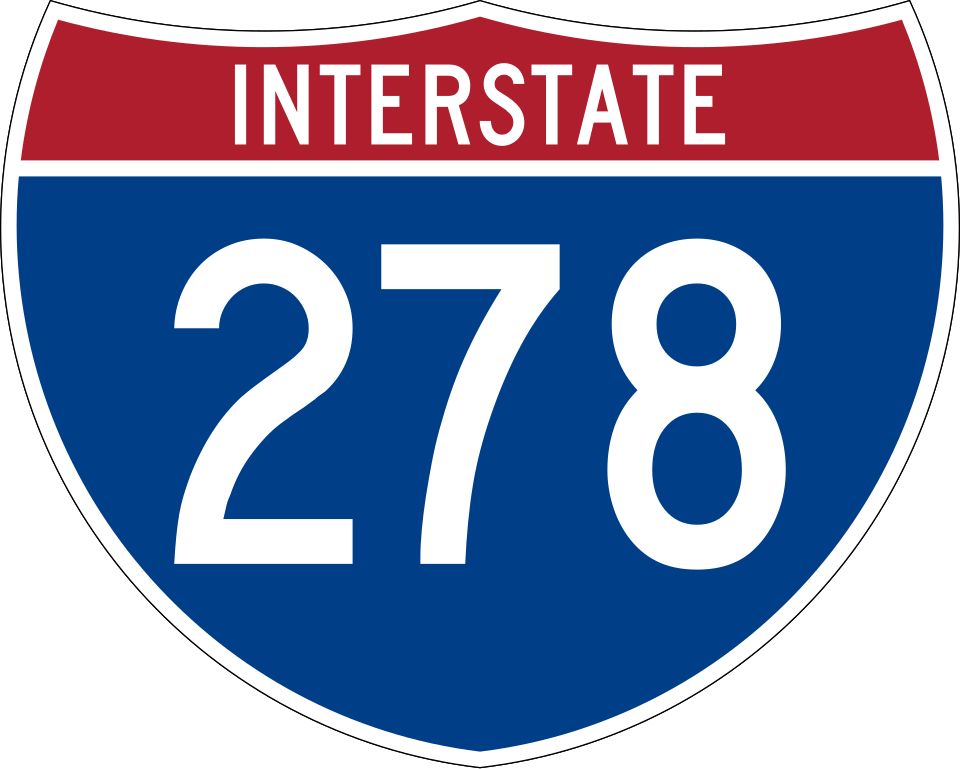
28 exits in New York
The Brooklyn-Queens Expressway and Verrazzano-Narrows Bridge carry the only continuous truck route across all five boroughs. Tight curves at the Kosciuszko Bridge and the BQE cantilever in Brooklyn Heights generate heavy service-call volume.
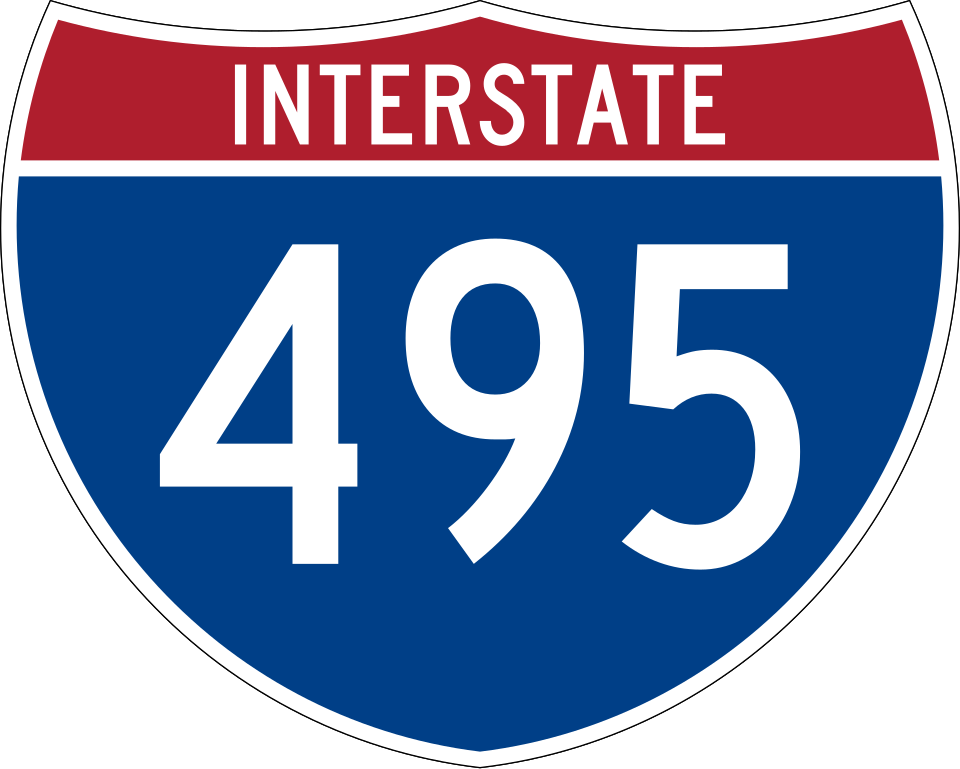
18 exits in New York
The Long Island Expressway, the primary east-west truck route through Queens and onto Long Island. The Maspeth industrial corridor and JFK approaches are the highest-volume service zones along the LIE.

11 exits in New York
An older surface-route alternative paralleling I-95 through the Bronx and into northern Manhattan. Frequently used by box-truck fleets avoiding tolls; common breakdown points along Boston Road and Bruckner Boulevard.
Patterns observed across recent dispatch data in this metro, by service type and corridor.
Drayage operators pulling out of Port Newark see chassis-tire failures almost daily on the cracked asphalt around the Goethals Bridge approach lanes. Our nearest tire-service unit averages under 30 minutes from notification to a Goethals or Outerbridge approach pullout, with the right size for the chassis pool already on the truck.
Single-digit nights along the Brooklyn-Queens waterfront combine with corridor wind-tunnel effects to freeze air systems weekly between January and March. Our local mechanics carry methanol-injection kits, air-dryer rebuild parts, and the right adapters for the curb-side parking the BQE shoulder forces. Most of these are roadside fixes, not tow-aways.
The Hunts Point cooperative market produce window opens at 4 a.m. and most loads need to be on the lot by 3:30 to avoid losing the slot. A breakdown on the Bruckner approach in the dark hours is a freight-revenue emergency. Our Bronx-stationed dispatch units pre-position around the market in the overnight run-up window so we can hit the 25-minute mark even on the hardest part of the night.
Two things worth knowing before you are on a shoulder in New York, New York: what the law requires of you and of passing traffic, and where help is already free.
Most state transportation departments operate free highway service patrols on urban interstates, typically during peak commuting hours, providing fuel, jump starts, tire changes, and relocation to a safe spot at no charge. Coverage is limited to specific corridors and hours, so it is worth knowing whether your route qualifies before you need it — check your state DOT, and note that 511 systems in many states can dispatch them.
Every state now has some form of Move Over law requiring drivers to change lanes or slow substantially for stopped emergency, tow, and service vehicles displaying warning lights. Many states have extended this to any disabled vehicle with hazard lights. These laws exist because roadside workers and stranded motorists are struck with grim regularity.
Federal rules require commercial drivers to activate hazard lights immediately on stopping and to place warning devices — reflective triangles — within ten minutes, positioned by road type. Failure to do so is both a citation and the specific circumstance in which stopped trucks get struck.
On a highway shoulder the safest position is usually out of the vehicle, exiting on the side away from traffic, and behind a barrier or well up an embankment. The exception is heavy traffic with no safe egress, where staying belted inside is safer. Dispatch will tell you which situation you are in if you ask.
Roadside assistance is commonly bundled into auto insurance policies, credit cards, motor club memberships, and new-vehicle warranties, and most people who have it do not know they do. Checking before you authorize a pay-per-use call takes two minutes and frequently makes the call free.
In most circumstances outside a police-ordered tow after a collision, you have the right to name where your vehicle goes. Deciding before it is hooked avoids a storage lot you did not choose and the daily fees that follow — this is the single most common avoidable roadside cost.
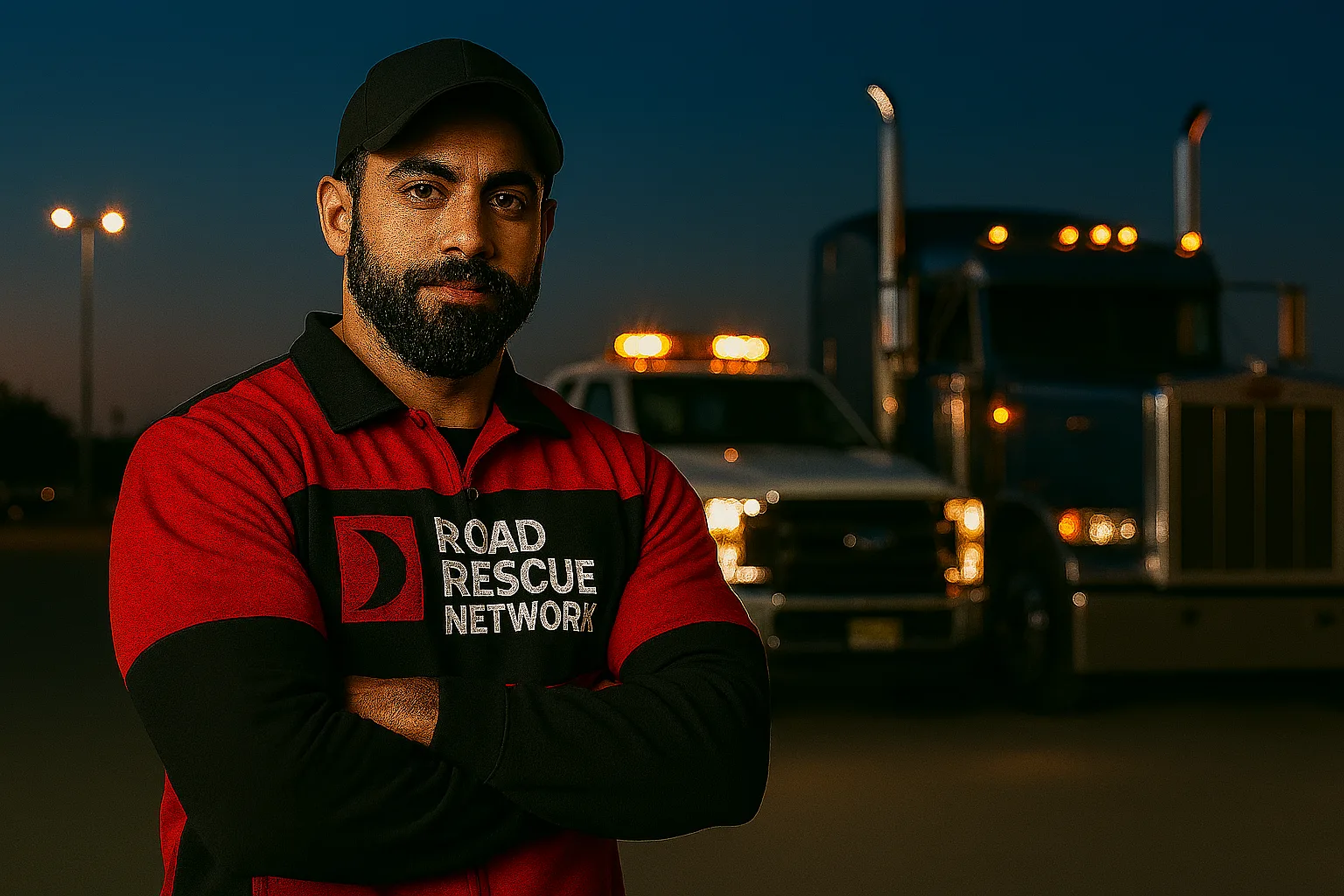
Most New York calls are answered in about 47 minutes. You get a real time before anyone rolls, and the price before the work starts.
New York City anchors the largest consumer market in North America and the busiest container port on the East Coast through the Port of New York and New Jersey. Drayage from Newark/Elizabeth Marine Terminal feeds I-95, I-78, and the I-278 truck-routes that string together Brooklyn, the Bronx, and Queens last-mile delivery. The five-borough freight footprint moves more than 400 million tons of goods annually under some of the strictest curfew, weight-limit, and bridge-restriction rules in the country.
New York, often called New York City (NYC), is the most populous city in the United States. It is located at the southern tip of New York State on New York Harbor, one of the world's largest natural harbors. The city comprises five boroughs—Manhattan, Brooklyn, Queens, the Bronx, and Staten Island—each being coextensive with its respective county. It is the geographical and demographic center of both the Northeast megalopolis and the New York metropolitan area, the largest metropolitan area in the United States by both population and urban area. New York is a global center of technology, finance and commerce, culture, entertainment and media, academics and scientific output, the arts and fashion—and as home to the headquarters of the United Nations, international diplomacy. New York City is known for its fast pace and continuous urban energy.
A breakdown on the Cross Bronx Expressway during evening rush is one of the most expensive places in America for a truck to sit, with a single stalled tractor-trailer regularly backing up I-95 traffic for fifteen miles in either direction. Road Rescue Network's New York rescuers are pre-staged across the five boroughs and northern New Jersey to break that bottleneck fast, with average dispatch times that account for bridge-toll routing, NYC DOT off-hour delivery rules, and the reality that no two routes into the Hunts Point market look the same.
New York City freight is unlike any other US market. Drayage operators pulling chassis out of Newark or Elizabeth contend with PortPASS appointment windows, congestion-pricing zones below 60th Street, and parkways that will not legally accept commercial vehicles. Our network is built around mechanics and tow operators who already know which exits will pass a 13'6" trailer, which Brooklyn streets restrict above 80,000 lb GVW, and which industrial blocks in Maspeth can safely host a roadside service truck without triggering a parking complaint.
Whether you are coordinating an out-of-town fleet trying to reach a Bronx Hunts Point produce slot before 5 a.m. or an owner-operator with a chassis-flat at the Goethals Bridge approach, the closest verified, insurance-current Road Rescue Network rescuer is reached through a single phone call or service request. Coordination, dispatch, and ETA confirmation are handled by Road Rescue Network's 24/7 operations team.
Reviews collected from fleet customers and drivers after completed service calls in this metro.
“Driver lost a turbo actuator on the Cross Bronx at 11pm. RRN had a tech wedged onto the shoulder in 38 minutes, working under highway lights. Repair, paperwork, escort off the bridge, all in two hours. I have never had that response in this city.”
“Steer tire let go on the BQE before the Verrazzano. The tow operator who showed up actually understood the BQE shoulder rules and got me to the Maspeth FleetPride before the morning rush hit. Calm, professional, knew the bridges.”
“Truck went down inside the Hunts Point market. RRN coordinated the wrecker through the gate without delay, but tow took longer than I expected because of the produce-truck congestion. Solid work in a hard environment.”
A winch-out is recovery rather than towing: the vehicle is not broken, it is stuck, and the job is getting it back onto solid ground under its own power. Typical New York cases are sliding off into a ditch or median, dropping a wheel off a soft shoulder, getting buried in mud or snow, and backing off the edge of a lot or a construction entrance. The operator arrives with a winch-equipped truck, assesses the angle and what the vehicle is resting on, sets up an anchor point and a pull line, and extracts it — sometimes with recovery straps, snatch blocks, or a second attachment point to change the direction of pull. Damage-free recovery is the whole skill: a bad pull can bend a frame, tear a bumper off, or destroy a driveline, which is why the setup takes longer than the pull. Once the vehicle is out, most drivers continue on their way. If the incident that put it there also broke something, that becomes a separate repair or tow decision.
It depends on your membership tier and on the club that serves your area, so the honest answer is check your own coverage rather than trust a general rule. Motor clubs commonly include a limited amount of winching or extraction in roadside coverage — often defined by how far the vehicle is from a paved surface, how long the recovery takes, or how many service calls you have used that year — with anything beyond those limits billed to you. Recoveries needing more than one truck, specialized equipment, or extended time routinely exceed what a membership covers. Two things worth knowing before you call anyone. First, coverage you may already have is not only a motor club: auto insurance policies, credit cards, and new-vehicle warranties frequently include roadside with winching provisions. Second, if you are on a covered urban interstate during peak hours, a free state highway service patrol may reach you first and can often relocate a vehicle off the travel lanes at no charge.
Winch-outs are priced on the recovery rather than on distance, because nothing is being transported anywhere. What moves the number in New York: how far off the roadway the vehicle is and what it is sitting in, since deep mud, snow, or a steep embankment is a different job from a wheel off a shoulder; the vehicle's weight and class, because a passenger car and a loaded tractor-trailer need entirely different equipment; the angle and whether a straight pull is possible or the operator needs a snatch block, a second anchor, or a second truck; how long the recovery takes, as extended work is usually billed on time; and when it happens, since overnight, weekend, and holiday calls carry a premium. Weather is the hidden factor — the ice storm that put you in the ditch put fifty other people there too, and that stretches both price and response. Ask for the estimate before authorizing, and check whether your insurance, credit card, motor club, or vehicle warranty already covers winching, because a large share of people who have that coverage do not know it.
Pay-per-use roadside is built from a service call fee plus whatever the job actually requires. A jump start, lockout, fuel delivery, or tire change sits at the low end and normally ends the call. A winch-out from a ditch, a commercial air-system repair, or anything needing a heavy truck is a different service and a different number. Three things move the total more than people expect: vehicle class, time of day — overnight, weekend, and holiday calls carry a premium — and distance from the responding operator. Before authorizing anything in New York, check whether you already have coverage through your auto insurance, a credit card, a motor club, or a new-vehicle warranty, because a large share of people who have it do not know it. And if you are on a covered urban interstate during peak hours, a free state service patrol may reach you first.
Get safe first, then worry about the bill. On a highway shoulder that usually means hazard lights on, exiting away from traffic, and moving behind a barrier or up the embankment — not standing beside the vehicle and not sitting in it if there is a safe way out. Then check for coverage you might not know you have: auto insurance policies, credit cards, motor club memberships, and new-vehicle warranties commonly include roadside. If you are on an urban interstate in peak hours, check whether a free state highway service patrol covers that stretch. After that, any pay-per-use provider including Road Rescue Network can dispatch to New York without a membership — ask for the service call fee and the likely total before the truck rolls, and if a tow is needed, name the destination before it is hooked so you do not inherit storage fees at a lot you did not choose.
In many cases yes, on specific roads at specific times. Most state transportation departments — New York included — operate free highway service patrols that circulate on congested urban interstates during peak hours, providing fuel, jump starts, tire changes, and relocation off the travel lanes at no charge. The limits are real: coverage is corridor-specific and hour-specific, so a breakdown on a covered stretch at rush hour may get free help within minutes, while the same breakdown on a rural highway at midnight will not. Many states also dispatch these patrols through their 511 traveler information line. Separately, and independent of the state, you may already have roadside coverage through auto insurance, a credit card, a motor club, or a vehicle warranty. Check both before paying for a call in New York.
In a metro area like New York a typical response runs in the tens of minutes rather than hours, but the honest answer is that it depends on four things: how far the nearest suitable operator is, what class of vehicle you need — a heavy wrecker has far fewer units on the road than a light service truck — traffic and weather at the time, and how precisely you described your location. That last one is the one you control. Road, direction of travel, nearest mile marker or exit, and which side you are on cuts more time off a response than anything else, and a dropped pin is better than all of it. Storms and the first hard freeze of the season produce call volume that stretches everyone's response, including ours.
It depends entirely on whether you already have it, which most people have not checked. Auto insurers commonly offer it as an inexpensive policy add-on, many credit cards include it, and most new vehicles come with it for the warranty period — paying a motor club on top of any of those is buying the same thing twice. If you genuinely have none of them, a membership tends to pay off for older vehicles, long commutes, and anyone who drives at night or in remote areas, and pay-per-use tends to win for a newer vehicle driven mostly around town. Read what the plan actually covers before assuming: towing mileage caps, winch-out coverage, and whether the plan follows the person or the vehicle are the three details that decide whether it helps on the night you need it.
It depends on where you stopped, and getting it wrong is the most dangerous part of a breakdown. On a highway with a wide shoulder or a barrier, the safer choice is usually to exit on the side away from traffic and move well clear — behind a guardrail or up an embankment — because a stopped vehicle on a shoulder is struck far more often than people imagine. In heavy fast traffic with no shoulder and nowhere safe to stand, staying belted inside with hazards on is safer than standing exposed. Either way, hazard lights go on immediately, and commercial drivers are federally required to place warning triangles within ten minutes. If you are unsure which situation you are in, say where you are when you call and dispatch will tell you.
Average response time in NYC is 47 minutes for mobile truck repair, but it varies significantly by borough and time of day. Manhattan-bound calls during congestion-pricing hours run longer; Maspeth, Hunts Point, and JFK-zone calls regularly come in under 35 minutes. We post real averages, not marketing fluff.
Yes, that's actually one of our most-frequented service zones. Cross Bronx breakdowns require coordination with NYPD Highway Patrol for safe-pullout protocol; our dispatchers handle that handoff. We have rescuers stationed in the Bronx, in northern New Jersey, and on both sides of the George Washington Bridge.
Every Road Rescue Network rescuer in the New York metro is required to maintain current general liability, automobile liability, workers comp, and (where applicable) garage-keepers insurance. We re-verify every renewal cycle. Expired insurance = automatic suspension from dispatch.
Yes. We service national accounts with consolidated invoicing, fleet-card billing, and a single point of contact. Most national fleets onboard in under 48 hours. Reach out via the form on this page or call our dispatch line.
24/7/365. There is no after-hours surcharge for our network, rescuers quote the same rate at 3am as at 3pm, even with NYC's off-hour delivery patterns.
We dispatch routinely to the TA at Bloomsbury (I-78 Exit 7), TA Mahwah (I-287 / Rt 17), Pilot #335 in Carlstadt (Meadowlands / Rt 17), Love's #674 in Bordentown (NJ Turnpike Exit 7), and the Petro Robbinsville. Many of our service trucks are based out of Maspeth, Hunts Point, or northern NJ, so we can also reach you on the BQE, the LIE, or the Cross Bronx without staging from a truck stop.
Most DPF regen issues we can resolve roadside with a forced regen and a cleaning of the differential pressure sensor. Full DPF removal/cleaning happens at our partner shops in Maspeth and the South Bronx. We'll tell you upfront which path we're taking.
Standard service-call dispatch fee runs $185-275 in the NYC metro depending on borough, time of day, and bridge-toll routing. Heavy-duty towing starts around $625 for in-city moves. We give a confirmed quote before the truck rolls, no surprises on arrival.
Yes. Several of our New York rescuers run fleet-PM programs with scheduled visits to your yard or terminal in Maspeth, Hunts Point, JFK area, and across the Hudson into the Meadowlands and Port Newark. Tell us your fleet size and DOT inspection cadence and we'll match you with the right shop.
If we determine on-scene that the truck can't be fixed roadside in a reasonable window, we coordinate the tow with one of our heavy-duty network rescuers. Many of our service trucks dispatch alongside a wrecker so there's no second response time, important on bridges and tunnels where a stalled rig has to clear immediately.
New York runs about 8,336,817 people and sits in New York County, inside the New York-Newark-Jersey City Metropolitan Area. We take the call, find the closest crew that actually does this work, and tell you what it costs before anyone turns a wheel.
Sample of recent dispatched service calls in this metro. Customer details removed; locations and response times preserved.
| When | Service | Location | Response |
|---|---|---|---|
| Tuesday 04:12 ET | Mobile Truck Repair | I-95 S Cross Bronx exit 4 | 44 min |
| Monday 21:58 ET | Heavy-Duty Towing | I-278 BQE Kosciuszko Bridge | 51 min |
| Monday 12:33 ET | Tire Service | Goethals Bridge approach (Elizabeth NJ) | 36 min |
| Sunday 08:17 ET | Fuel Delivery | I-495 E Maspeth exit 18 | 29 min |
| Saturday 17:05 ET | Trailer Repair | Hunts Point Market dock | 49 min |
| Saturday 02:41 ET | Lockout Service | JFK Air Cargo Center | 24 min |
| Sunday 05:56 ET | Commercial Tire Repair | Interstate 95 service road | 61 min |
| Tuesday 23:59 ET | Mobile RV Repair | RV park near downtown | 56 min |
| Sunday 21:55 ET | Mobile Welding | Industrial yard | 50 min |
| Tuesday 22:06 ET | Mobile Bus Repair | Bus terminal | 59 min |
Coverage in surrounding cities and metros across the same network of verified rescuers.
The same verified network of providers, dispatched 24/7 across every major New York metro and freight corridor.
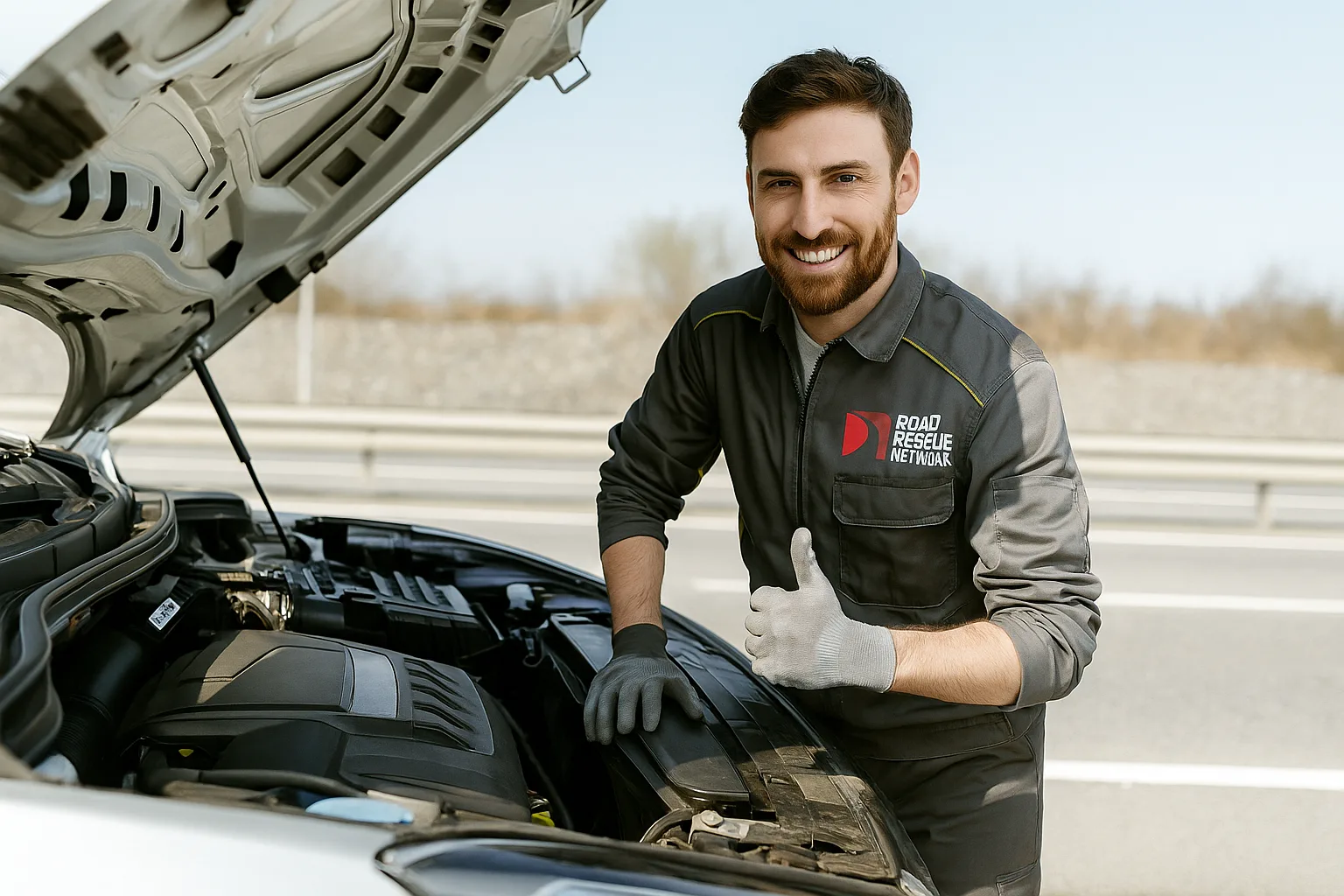
Whether the truck is sitting in New York or out toward Yonkers, it is the same phone number and the same crews. One call, day or night.
Road Rescue Network is actively recruiting verified roadside assistance providers in the New York metro. Heavy traffic, real fleet leads, no auction race-to-the-bottom, straight rescuer-to-customer dispatch with confirmed pricing.
We send New York roadside assistance calls directly to verified rescuers in your service radius. Apply once. Insurance & DOT verified. Live dispatch, fleet accounts, transparent pricing, no motor-club shave-down.
Deep-dive guide on choosing the right provider, common pitfalls, and what to expect on a service call.
OpenOpen positions at our network rescuers, full-time, part-time, and 1099 contract.
OpenOn-site photos from recent calls, see the work, not just the marketing.
OpenService trucks dispatch routinely to these locations across the metro freight corridors.
Closest full-shop TA to NYC westbound; truck parking 240+
View Directory Profile →
Meadowlands logistics zone, 24/7 fuel, light service
View Directory Profile →
Tire Care center, southern approach to NYC
View Directory Profile →
Iron Skillet, 24-hr full shop
View Directory Profile →Last truck rest area before the GWB
Northern NYC approach, full repair shop
View Directory Profile →Local parts houses and diesel suppliers used by network mechanics for time-critical roadside repairs.
Heavy-duty parts, will-call, NYC bridge-and-tunnel access
View Directory Profile →
Located inside the Hunts Point food market complex
View Directory Profile →
Engine parts + dealer service, dedicated NYC bay
View Directory Profile →Major shippers, distribution centers, and industrial freight nodes generating outbound and inbound truck volume.
Largest food distribution complex in the US, 4 a.m. produce window
Forwarder warehouses for FedEx, UPS, Lufthansa Cargo, Korean Air Cargo
Major last-mile delivery station serving NYC
Regional sortation, 24/7 turn cycle
Densest concentration of NYC last-mile and logistics carriers
Largest container port on the East Coast, 8,000+ truck moves/day
Three steps from the call to a cleared scene. Same flow whether you call from a fleet desk or the shoulder of an interstate.
Road, direction of travel, nearest exit or mile marker, and which side you are on. Half of New York roadside delay is a truck on the correct highway going the wrong way, and a dropped pin removes that entirely.
Before anything else, dispatch will tell you whether to stay belted inside or get out on the passenger side and move behind a barrier. On a New York shoulder that call matters more than how fast the truck arrives.
Most New York roadside calls end without a tow — a jump, a tire, fuel, a lockout, an air line. If it genuinely cannot be fixed where it sits, you choose the destination before anything is hooked.
Network rescuers accept all major credit cards, fleet cards, and consumer payment apps. Confirmed at dispatch.