01
OEM diagnostic software
Carrier and Thermo King interfaces
Every controller fault. The two makes do not share codes, tooling, or configuration software — a tech carries both or serves half the fleet.
Need reefer repair in Queens? We send a reefer mechanic for Thermo King and Carrier units, and do APU repair on the same call. Breakdowns here cluster on the interchanges, and a truck stopped on one is a traffic problem before it is a repair problem. I-678, I-495, and I-278 all run through Queens, so most of our calls come off one of those. Freight around here moves for outfits like JFK International Airport and LaGuardia Airport, which is work that runs on a schedule.
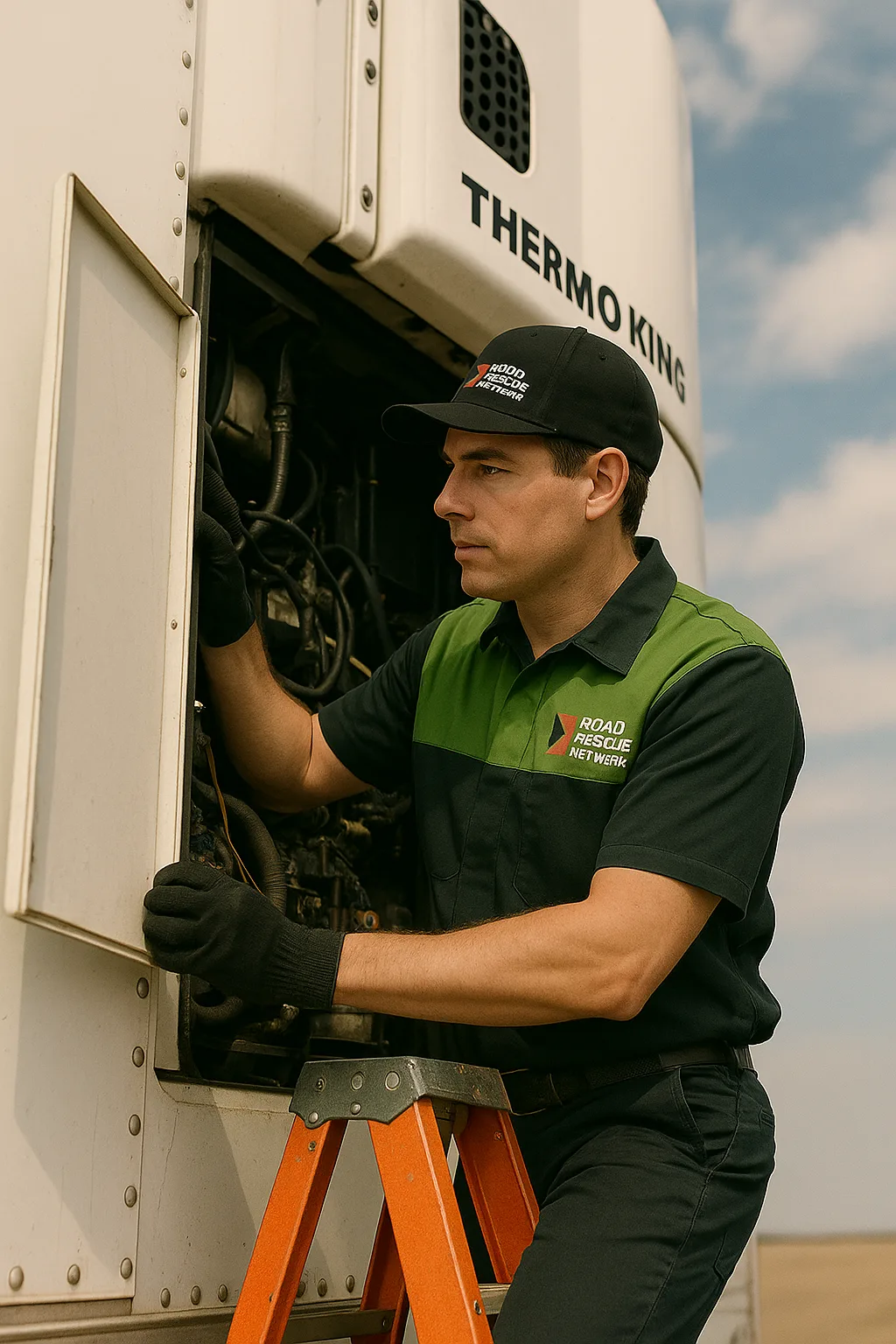
Refrigeration work is a licensed trade with its own tooling. A diesel mechanic with a socket set cannot legally or practically service a Queens reefer circuit.
Carrier and Thermo King interfaces
Every controller fault. The two makes do not share codes, tooling, or configuration software — a tech carries both or serves half the fleet.
Certified recovery, vacuum, weighed charge
Any circuit opened. Refrigerant must be recovered rather than vented, and the charge weighed rather than guessed.
Heated-diode or infrared, plus UV dye
Low-charge and repeat top-off calls. Finding the leak is the repair; adding gas is a delay.
High/low side, micron gauge
Standard on all circuit work. Pulling a proper vacuum is what removes moisture before the new charge goes in.
Traceable calibration, downloadable
Verification and dispute work. An independent reading is what settles a rejected-load argument at the dock.
Common Carrier and Thermo King wear parts
Carried so routine failures finish on the first visit rather than becoming a second dispatch.
Coil cleaner, fin comb, wash gear
Capacity complaints in warm weather. Frequently restores full performance with no parts at all.
Standby testing, phase verification
Electric standby faults at docks and cold-storage yards.
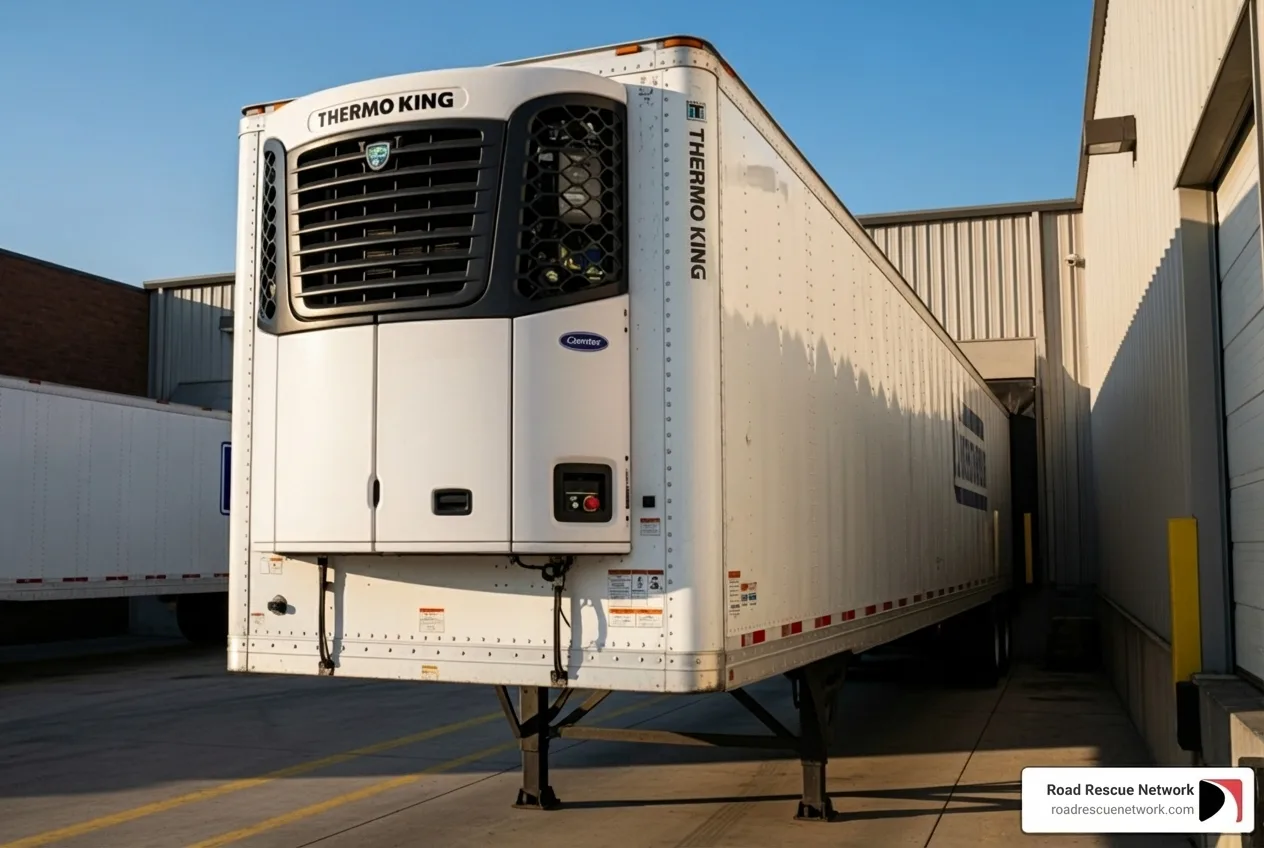
One call puts a reefer repair unit on the road to you anywhere in Queens or out along I-678 and I-495. Tell us the road and which way you are pointed and we do the rest.
Carrier Transicold and Thermo King units diagnosed and repaired where the trailer sits across the Queens metro. A reefer call is a cargo call — the clock started when the box temperature did.
Carrier and Thermo King both throw coded alarms, and the code numbering is not shared between them. A Queens tech reads the actual controller rather than guessing from the symptom.
Carrier Advance and Micro-Link controllers, Thermo King SR and Premier microprocessors. Configuration corruption and firmware faults strand Queens units that are mechanically perfect.
Return air, supply air, ambient, coil, and cargo probes. A failed sensor makes a healthy Queens unit chase a temperature that was never real, then alarm out.
Continuous versus start-stop, cycle-sentry, fresh versus frozen range. A large share of Queens "not holding temperature" calls are a unit configured for the wrong commodity.
Two-way monitoring so a Queens fleet sees a drift before the driver does. The difference between a service call and a rejected load at the dock.
A failed pretrip is the unit telling you it will not survive the run. Worth clearing in a Queens yard rather than discovering it 200 miles out with product aboard.
Carrier 05G and 06D, Thermo King X-series compressors. The most expensive component on the unit, and often the symptom rather than the cause of a Queens failure.
Electronic leak detection, evacuation, and weighed-in charge. Topping off a Queens unit without finding the leak means the same call again next week, and venting refrigerant is a federal violation.
Coil cleaning, fin repair, fan motor and grille service. Road debris and cardboard dust blind a coil, and a blinded coil in Queens summer heat cannot reject the load.
TXV and electronic valve diagnosis. A metering fault gives you a unit that runs continuously, pulls fuel, and never reaches setpoint anywhere in Queens.
Defrost initiation, termination, and drain heaters. An iced evaporator stops airflow entirely, so a Queens frozen load warms up while the unit reports that it is running.
Filter-drier replacement and moisture removal after the system has been opened. Skipping it on a Queens repair is how an acid problem starts eating the new compressor.
The small diesel driving the unit — Carrier's Kubota-based engines and Thermo King's Yanmar-based units. Serviced on its own hours, entirely separate from the tractor's schedule in Queens.
A thrown belt stops the compressor while the engine keeps running, so a Queens driver sees a unit that sounds fine and a box that is warming.
Filters, lines, and priming. The reefer has its own tank, it runs dry long before the tractor does, and a Queens restart after a run-dry needs bleeding.
Glow plugs, preheat, and starter service. A Queens unit that cranks and will not catch on a cold morning is usually preheat, not fuel.
The reefer carries its own battery and charging circuit. A dead reefer battery in a Queens yard leaves the box unrefrigerated with a perfectly good tractor attached.
Shore-power operation, contactors, and phase issues. Lets a Queens dock or cold-storage yard hold a loaded trailer without burning diesel or generating exhaust.
Worn seals let Queens ambient air in continuously. The unit compensates, burns fuel, ices the coil, and eventually loses the fight — an inexpensive part with an expensive failure mode.
Punctured panels and delaminated insulation from forklift strikes. Wet insulation stops insulating, and a Queens trailer with a soaked wall never holds frozen again.
Torn chutes and blocked returns. Product loaded tight against the bulkhead short-circuits the airflow, so the front reads perfect while the Queens tail of the load spoils.
Blocked defrost drains put water on the floor, which refreezes and blocks airflow. Common on Queens produce lanes running high humidity.
Recorder service and download. The temperature record is what a Queens receiver uses to accept or reject the load, and a missing record can lose a claim you would otherwise win.
When the unit cannot be saved in time, the load moves. We line up Queens cold storage and a replacement trailer before the product crosses its temperature threshold.
Rolling 30-day average dispatch-to-arrival, by service type, across the local rescuer network.
A reefer invoice looks like an HVAC invoice with a diesel engine attached, because that is what it is. Here is what a Queens call is made of — and why the cargo, not the repair, usually sets the urgency.
Getting a refrigeration tech and a stocked van to the trailer. Billed once, separate from labor.
Pulling codes, verifying sensors, and confirming the actual fault. Charged as labor and worth every minute — a misdiagnosed compressor is the most expensive mistake on this list.
Refrigeration labor prices above general mechanical labor because it is a certified trade with its own tooling.
Charged by weight at current market. Prices swing hard with regulatory phase-downs, so this line moves year over year.
Sensors and belts are inexpensive. Compressors, controllers, and coils are not, and availability by make can drive the timeline more than the price.
Reefer failures do not respect business hours, and a loaded trailer will not wait until Monday. Expect the premium tier on most emergency calls.
Not a line item, but it drives everything. A frozen load with hours of thermal headroom is a different dispatch than fresh produce already drifting.
When the unit cannot be saved in time, moving the product is its own cost — and almost always less than the claim for losing it.
Units under OEM warranty may need dealer work to preserve coverage. Confirm before authorizing, because the wrong repair path voids it.
A top-off is cheap and temporary. Finding and fixing the leak costs more once and stops the repeat call — and venting refrigerant is a federal violation, not a shortcut.
A unit that must be unloaded or repositioned to reach adds time. Yard space and a driver on hand keep this at zero.
Temperature downloads and written cause notes for a cargo claim. Frequently pays for the whole visit.
Road Rescue Network does not set a member operator's rates. What the network does is get a reefer-certified tech — not a general diesel mechanic — to the trailer with the right make's software, and the diagnosis separated from the repair on the quote.
The same crews that run Queens also cover Brooklyn (7 mi), Manhattan (6 mi) and The Bronx (9 mi), so a call from either side of Queens County reaches the same desk.
Each service links to local response times, rescuer coverage, and recent dispatched jobs in this metro.
A live map of every reefer repair technician in Queens metro, with real-time positions, ETAs, and dispatch status, available inside your dashboard.
Sign in to track network rescuers across Queens in real time, dispatch jobs, and confirm ETA before the truck rolls.
Each corridor has a dedicated breakdown landing page with service zones, exits, and recent dispatched jobs.
12 exits in Queens
The Van Wyck is the primary truck route between JFK air cargo and the rest of the city. Chronic congestion at the Kew Gardens interchange and around the JFK cargo exits makes this Queens' single busiest breakdown corridor.
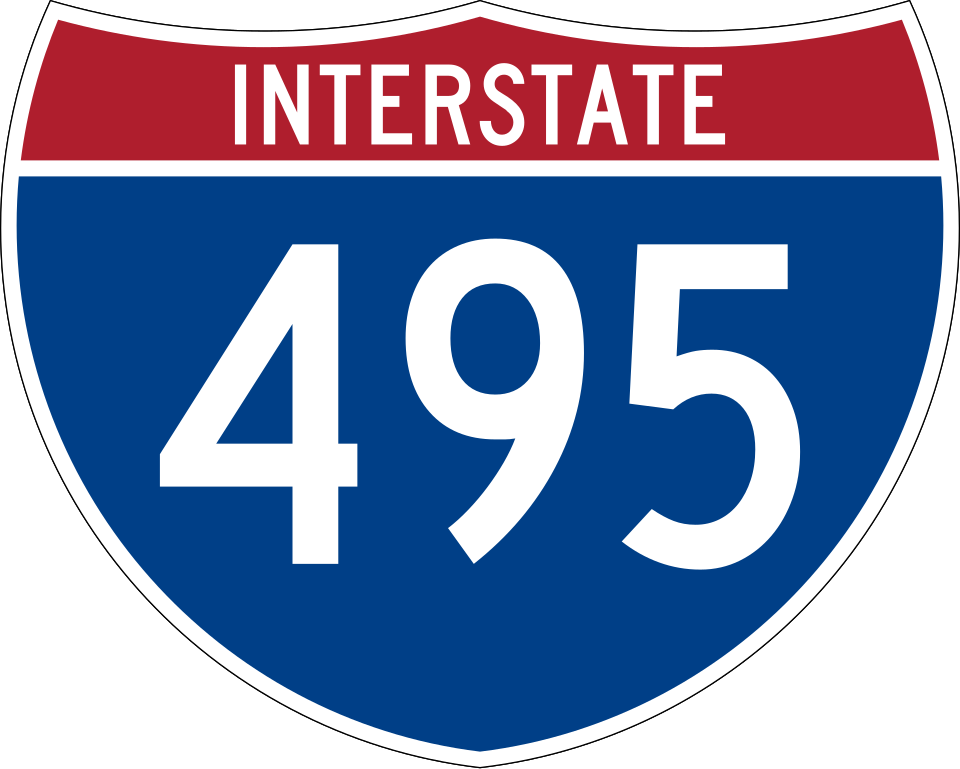
16 exits in Queens
The LIE bisects Queens from the Queens-Midtown Tunnel out to Nassau County, carrying the bulk of Long Island freight. The Maspeth and Queens Boulevard exits feed the borough's heaviest truck-depot cluster.
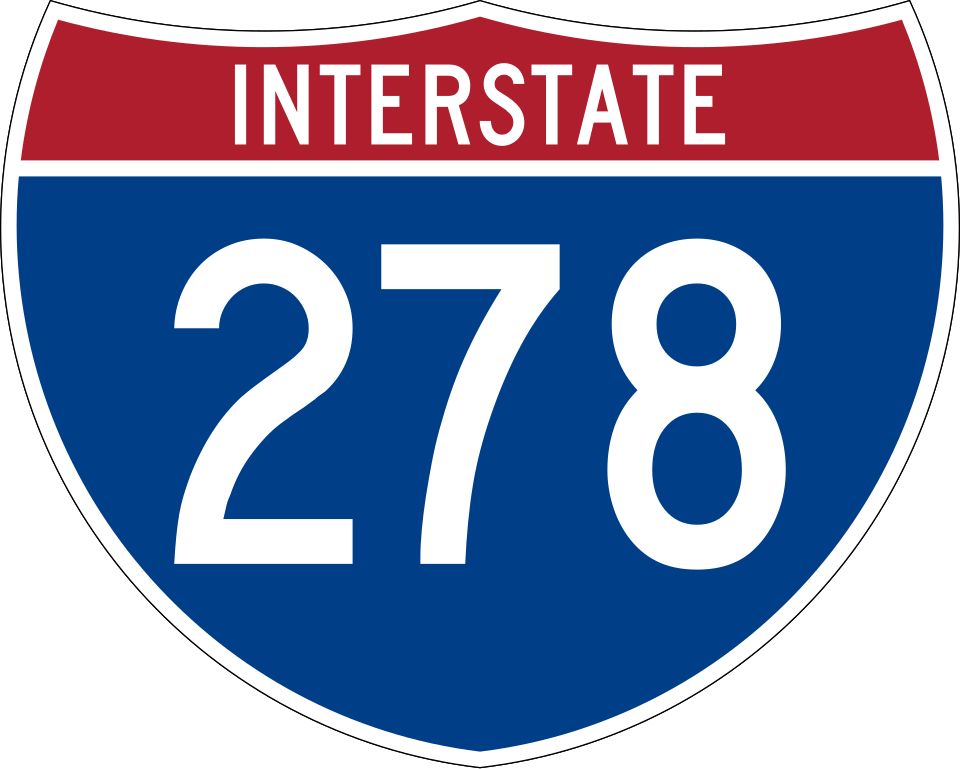
9 exits in Queens
The BQE crosses northern Queens via the Kosciuszko Bridge over Newtown Creek, the seam between the Maspeth and Greenpoint industrial zones. A frequent scene of overheating and brake calls on the bridge grade.
14 exits in Queens
The GCP runs past LaGuardia and the Citi Field/USTA complex. No commercial trucks due to parkway clearances, but a regular site of box-truck strikes and stranded coaches near the airport ramps.
4 exits in Queens
I-95 reaches Queens freight via the Throgs Neck and Whitestone Bridges, the main connection between Long Island, Queens, and New England long-haul lanes. Trucks transfer onto the Cross Island and Clearview.
3 exits in Queens
The Bronx-Whitestone Bridge segment of I-678 links Queens to the Hunts Point Market and the Bronx freight network. Tolled crossing with steady reefer and produce-truck traffic overnight.
Patterns observed across recent dispatch data in this metro, by service type and corridor.
When a truck hauling time-critical air freight breaks down on the Van Wyck approaching JFK, the load can miss a flight that does not reroute. Our Queens techs prioritize cargo-area corridors and carry common driveline, fuel, and air-system parts to attempt the roadside fix that keeps the freight on schedule rather than forcing a tow and a missed connection.
The climb over the Kosciuszko Bridge across Newtown Creek cooks marginal cooling systems, especially on hot afternoons when the BQE locks up at the Maspeth seam. We stock coolant, hose kits, and water pumps on every Queens-area service truck so a steam-cloud on the bridge becomes a roadside repair instead of a tow off a no-shoulder span.
Out-of-town drivers routed by GPS onto the Grand Central Parkway around LaGuardia strike the low parkway overpasses on a near-weekly basis. We dispatch off-parkway wreckers who coordinate with NYPD Highway for the extraction, plus a mobile tech for the roof and refrigeration-unit damage that almost always follows a strike.
Reefer work sits under environmental law and food-safety law at the same time. What governs a repair and a load in Queens, New York.
Federal law requires technicians who service refrigerant circuits to be certified, and prohibits knowingly venting refrigerant to the atmosphere. Recovery equipment is mandatory, not optional — an uncertified tech opening a circuit is committing a violation.
High-global-warming-potential refrigerants are being phased down under federal rule, which is why prices move and why newer units run different blends. Charging the wrong refrigerant into a unit damages it and voids coverage.
Federal food-safety rules place obligations on carriers moving food under temperature control, including pre-cooling, monitoring, and record retention. Your temperature record is a compliance document, not just a receipt.
In a rejected-load dispute the recorder download is the evidence. A unit that failed with documented pre-cool and monitoring is a very different claim than one with no record at all.
Several states regulate emissions from transport refrigeration units, with registration and reporting obligations that attach to the equipment owner. Requirements travel with the trailer, not the tractor.
Local anti-idling ordinances frequently exempt refrigeration units precisely because the cargo requires them, but the exemption is not universal. Electric standby is the clean answer where a dock supports it.
Most Queens calls are answered in about 40 minutes. You get a real time before anyone rolls, and the price before the work starts.
Queens is the freight gateway of New York City, home to JFK and LaGuardia airports and the air-cargo, trucking, and warehousing networks that feed them. Maspeth and Long Island City form one of the densest industrial-truck districts in the Northeast, where overnight box-truck fleets stage before fanning out across the five boroughs and Long Island. The borough's mix of expressways, low parkway clearances, and round-the-clock air-cargo deadlines keeps its freight tempo relentless.
Queens is the largest by area of the five boroughs of New York City, and the second most populous, with a population of 2,405,464 as of the 2020 census. Since 1899 the borough is coextensive with Queens County, the second-most populous county in New York state, behind Kings County (Brooklyn). If Queens were its own city, it would be the fourth most-populous in the United States, after the other four boroughs of New York City, Los Angeles, and Chicago. Queens is the fourth-most densely populated borough in New York City and the fourth-most densely populated U.S. county.
Queens sits at the convergence of the city's busiest freight expressways and its two major airports, which means breakdowns here ripple straight into air-cargo and grocery supply chains. A tractor that drops a driveline on the Van Wyck approaching JFK can hold up containers bound for flights that will not wait. Road Rescue Network's Queens rescuers run 24/7 and know the cargo-area access roads that a stranger to the borough would never find.
The mechanics in Queens who handle heavy-duty calls learn fast that the borough is really a dozen freight neighborhoods stitched together by congested interchanges. Maspeth's truck depots, the JFK cargo city, the LIC last-mile warehouses, and the Hunts Point feed across the Whitestone all have their own access quirks and their own breakdown patterns. Our network is built around technicians who work this terrain daily, not crews guessing at the right gate.
Whether you're a national fleet staging out of Restaurant Depot in Maspeth or an owner-operator stuck on the Grand Central Parkway with a charging fault, the closest verified, insurance-current rescuer in our Queens network is one phone call away. Coordination, dispatch, and ETA confirmation are handled by Road Rescue Network's 24/7 operations team, so your load keeps moving.
Reviews collected from fleet customers and drivers after completed service calls in this metro.
“Driveline let go on the Van Wyck with a JFK air freight load. RRN had a tech on scene in 40 minutes, carried the part, and we still made the cargo cutoff. For Queens that response time is unheard of.”
“Cracked a trailer crossmember at the Maspeth depot. The welder showed up with a generator and full setup, did a clean structural repair right in the yard, and had me legal again the same afternoon. Great work.”
“Truck overheated and quit on the Kosciuszko, no shoulder, total mess. Wrecker took a bit to fight through the BQE but the operator knew the bridge and got us off safely. Would have been five stars if traffic hadn't added 15 minutes.”
Average response time in Queens is 40 minutes for mobile truck repair. Times run shorter near Maspeth, LIC, and the JFK cargo area and longer in eastern Queens or during peak congestion. We track every call and publish real averages, not marketing numbers.
Yes, the I-678 Van Wyck corridor around the JFK cargo exits is our single busiest Queens service zone. Our dispatchers know the cargo-area access roads and the Kew Gardens interchange bottlenecks, and we prioritize air-freight calls because those loads run against flight cutoffs.
Every Road Rescue Network rescuer in Queens must maintain current general liability, automobile liability, workers comp, and garage-keepers coverage where applicable. We re-verify each renewal. Expired insurance means automatic suspension from dispatch.
Yes. We service national accounts with consolidated invoicing, fleet-card billing, and a single point of contact. Most national fleets onboard in under 48 hours. Use the form on this page or call our dispatch line.
24/7/365. There is no after-hours surcharge in our network. Rescuers quote the same rate at 3am as they do at 3pm.
We dispatch routinely to the Maspeth truck-depot district, the JFK air-cargo staging lots, the Long Island City last-mile warehouses, the College Point yards near the Whitestone, and the Restaurant Depot in Maspeth. Most of our techs know these locations cold.
Most DPF regen faults we resolve roadside with a forced regen and a cleaning of the differential-pressure sensor. Full DPF removal and cleaning happens at a partner shop. We tell you upfront which path we are taking before any work starts.
We reach the breakdown, but commercial trucks are banned on the Grand Central Parkway due to low clearances. If a box truck or coach struck a parkway overpass near LaGuardia, we coordinate an off-parkway wrecker and the NYPD Highway escort to get the vehicle out legally.
Standard service-call dispatch runs $185-275 in the Queens market depending on time of day and service type, reflecting tolls and tighter access. Heavy-duty towing starts around $525 for in-borough moves. You get a confirmed quote before the truck rolls.
If we determine on-scene that the truck cannot be fixed roadside in a reasonable window, we coordinate the tow with one of our heavy-duty network rescuers. Many of our units roll alongside a wrecker so there is no second response time when a tow is likely.
Queens runs about 2,272,771 people and sits in Queens County, inside the New York Metropolitan Area. We take the call, find the closest crew that actually does this work, and tell you what it costs before anyone turns a wheel.
Sample of recent dispatched service calls in this metro. Customer details removed; locations and response times preserved.
| When | Service | Location | Response |
|---|---|---|---|
| Wednesday 02:51 ET | Mobile Truck Repair | I-678 Van Wyck near JFK cargo | 42 min |
| Tuesday 19:33 ET | Heavy-Duty Towing | Kosciuszko Bridge, Maspeth | 49 min |
| Monday 11:18 ET | Commercial Tire Repair | Restaurant Depot, Maspeth | 35 min |
| Sunday 07:44 ET | Mobile RV Repair | Alley Pond Park RV pull-off | 60 min |
| Saturday 16:05 ET | Mobile Welding | Maspeth Industrial Business Zone | 53 min |
| Friday 05:27 ET | Mobile Bus Repair | MTA Casey Stengel Depot, Flushing | 59 min |
| Thursday 22:12 ET | Fuel Delivery | Hunters Point Ave, Long Island City | 30 min |
| Wednesday 14:39 ET | Trailer Repair | JFK cargo staging lot | 46 min |
Coverage in surrounding cities and metros across the same network of verified rescuers.
The same verified network of providers, dispatched 24/7 across every major New York metro and freight corridor.
Whether the truck is sitting in Queens or out toward The Bronx, it is the same phone number and the same crews. One call, day or night.
Road Rescue Network is actively recruiting verified reefer repair providers in the Queens metro. Heavy traffic, real fleet leads, no auction race-to-the-bottom, straight rescuer-to-customer dispatch with confirmed pricing.
We send Queens reefer repair calls directly to verified rescuers in your service radius. Apply once. Insurance & DOT verified. Live dispatch, fleet accounts, transparent pricing, no motor-club shave-down.
Deep-dive guide on choosing the right provider, common pitfalls, and what to expect on a service call.
OpenOpen positions at our network rescuers, full-time, part-time, and 1099 contract.
OpenOn-site photos from recent calls, see the work, not just the marketing.
OpenNetwork technicians carry diagnostic equipment, OEM-spec tooling, and common-failure parts for every major reefer repair brand on the road. Out-of-stock specifics order in within 24 hours.
Service trucks dispatch routinely to these locations across the metro freight corridors.
Fuel, parking, fleet repair staging
View Directory Profile →Air-cargo drayage queue and staging
View Directory Profile →LIC last-mile fuel and parking
View Directory Profile →Near Whitestone Bridge, big-box staging
View Directory Profile →Pull-off, limited truck space
Local parts houses and diesel suppliers used by network mechanics for time-critical roadside repairs.
Heavy-duty parts, will-call counter
View Directory Profile →
Commercial counter, HD brakes and filters
View Directory Profile →
Engine parts + authorized diesel service
View Directory Profile →Major shippers, distribution centers, and industrial freight nodes generating outbound and inbound truck volume.
Primary air-cargo handling, time-critical freight
High-volume foodservice DC, dock receiving
Dense truck-depot district, last-mile staging
Last-mile and e-commerce fulfillment cluster
Northern Queens distribution receiving
Furniture last-mile staging
Event-freight surge facility near LaGuardia
Three steps from the call to a cleared scene. Same flow whether you call from a fleet desk or the shoulder of an interstate.
Carrier or Thermo King, the alarm code on the display, the setpoint, and what is in the box. The commodity sets the clock — a frozen Queens load has hours of headroom, fresh produce may have minutes.
We dispatch someone certified for refrigerant work carrying your make's software and recovery equipment. A Queens general mechanic cannot legally open the circuit, and half of reefer faults are inside it.
Repair, then a run to setpoint to prove it holds, then the temperature record downloaded for your file. If the unit cannot be saved in time, we move the load to Queens cold storage instead of watching it spoil.
Network rescuers accept all major credit cards, fleet cards, and consumer payment apps. Confirmed at dispatch.