01
Metered tank truck
Compartmented tank, calibrated meter, printed ticket
Bulk fills, yard fueling, and any delivery where you should be paying for measured gallons. The meter is the difference between a receipt and a guess.
Need gas delivered in The Bronx? We bring gas or diesel to wherever you stopped, enough to get you moving. Ran a diesel dry? We prime it on the same visit. Most calls here come off a highway at a bad hour, so where you are standing matters as much as how fast we get there. I-95, I-87, and I-278 all run through The Bronx, so most of our calls come off one of those. Freight around here moves for outfits like Hunts Point Food Distribution Center and Hunts Point Produce Market, which is work that runs on a schedule.
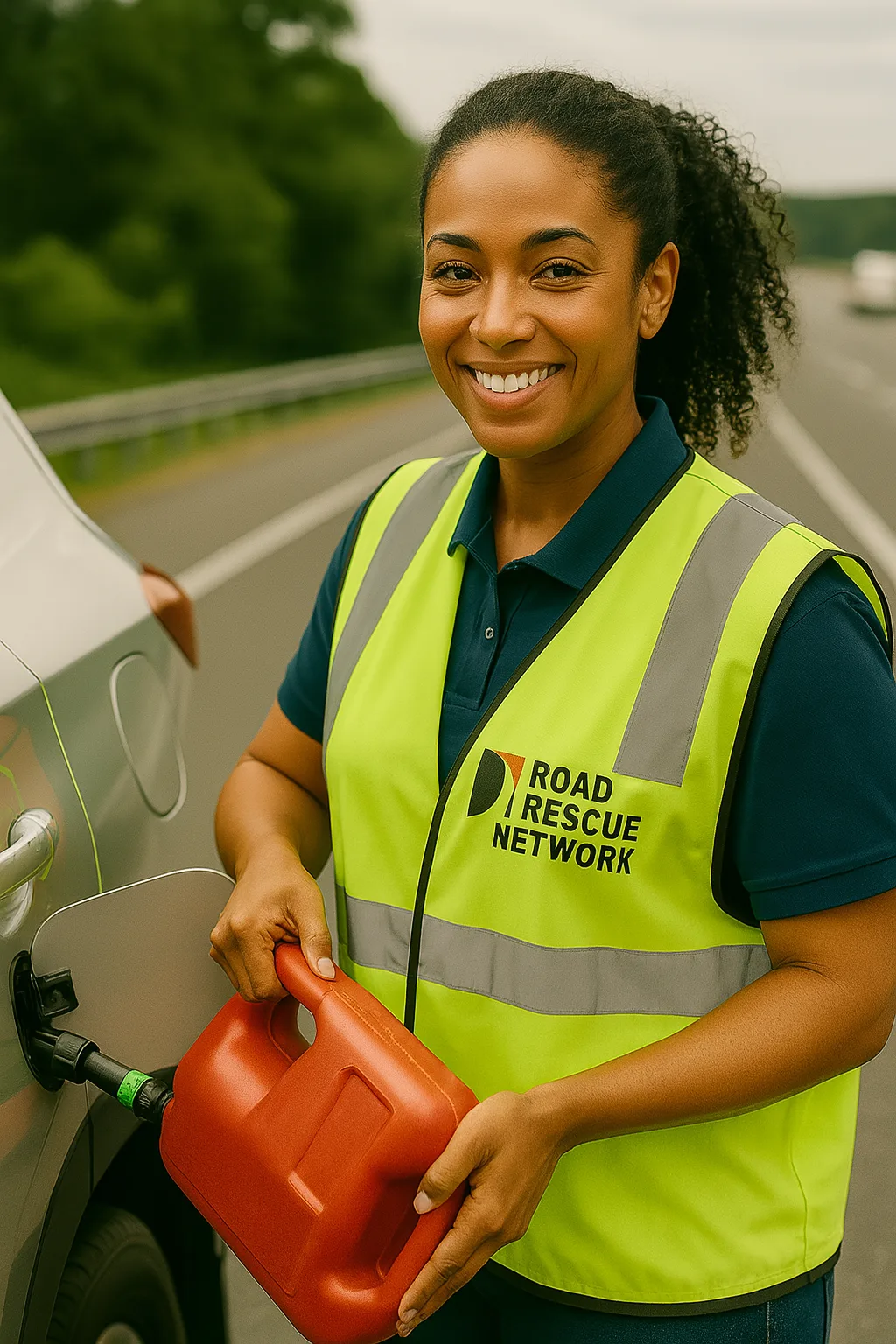
Fuel is a regulated commodity, not a jerry can in a pickup bed. This is what a compliant The Bronx delivery actually rolls with.
Compartmented tank, calibrated meter, printed ticket
Bulk fills, yard fueling, and any delivery where you should be paying for measured gallons. The meter is the difference between a receipt and a guess.
DOT-approved portable containers, transfer pump, filter
Roadside out-of-fuel calls where 30 to 50 gallons ends the emergency. Faster to stage and far easier to work from a live shoulder than a tanker.
Dedicated ISO 22241 handling, no cross-contamination
Every DEF call. DEF must never touch diesel equipment — a contaminated system can take out the SCR, which is a five-figure repair.
Static bonding cable, clamps, continuity check
Every transfer, without exception. Flowing fuel generates static; bonding the truck to the receiving vehicle is what stops that from finding an ignition source.
Inline filter, water-block element
Deliveries into a tank that has been sitting, and any call following a contamination complaint. Product is filtered on the way in, not after it causes a problem.
Reversible pump, evacuation hose, holding vessel
Misfuels, contaminated tanks, and unit-to-unit transfers. Removing the wrong product is a different job than adding the right one.
Absorbent, drip pans, boom, labeled disposal
Rolls on every delivery. A small spill handled on the spot is housekeeping; the same spill reaching a storm drain is a reportable environmental event.
Anti-gel dosing, #1 blend stock, filter stock
Winter operations. A gelled truck needs treatment, blended product, and a filter change — fuel alone leaves it exactly where it sat.
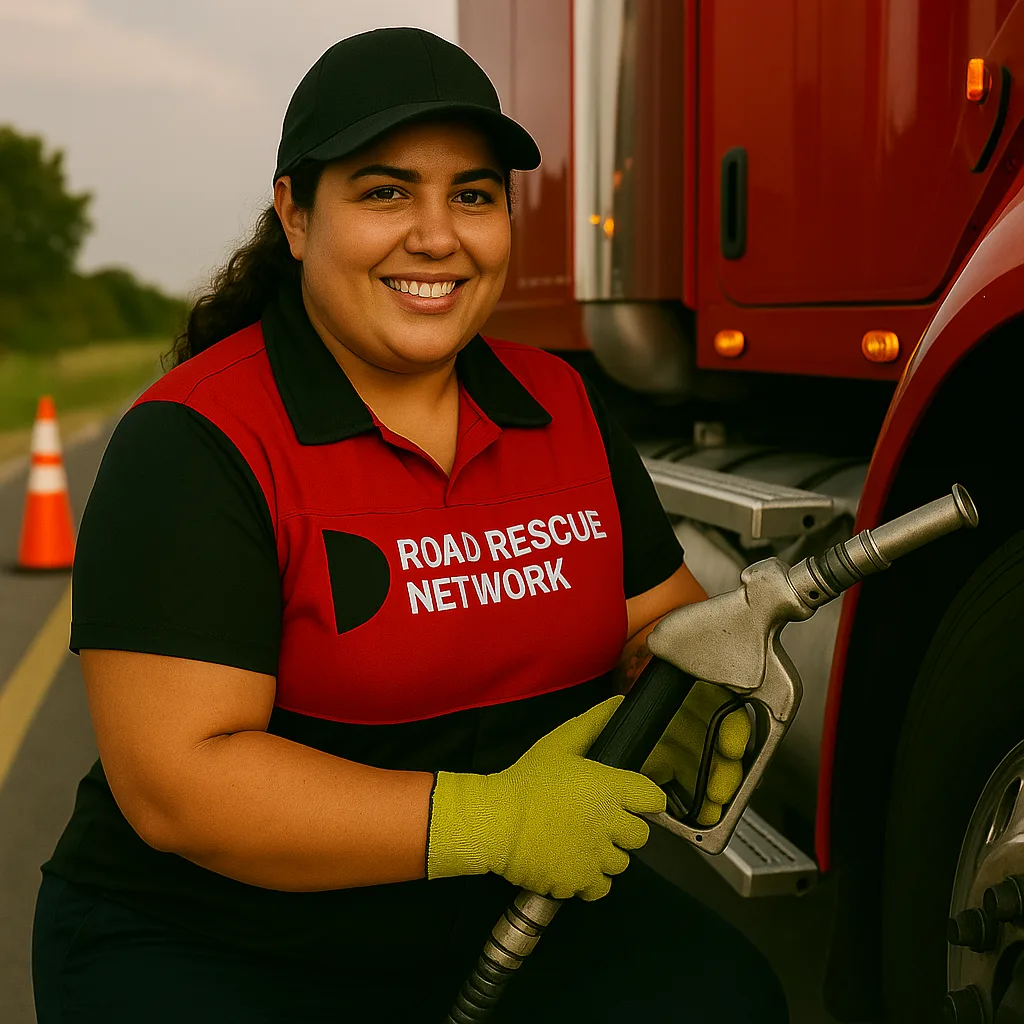
One call puts a fuel delivery unit on the road to you anywhere in The Bronx or out along I-95 and I-87. Tell us the road and which way you are pointed and we do the rest.
Diesel, gasoline, DEF, and kerosene delivered to the shoulder, the yard, or the job site across the The Bronx metro. Metered, receipted, and grounded before a drop of product moves.
Standard on-road ULSD for tractors, straight trucks, and buses. The default The Bronx emergency delivery, dispensed through a metered hose so you pay for gallons pumped, not an estimate.
Red-dyed, tax-exempt diesel for generators, equipment, and construction fleets. Legal off the public road only — putting it in a truck that runs The Bronx highways is a fuel-tax violation with real penalties.
Regular, mid-grade, and premium for light vehicles, service trucks, and equipment. Delivered in DOT-approved containers with the octane confirmed at order rather than guessed at the roadside in The Bronx.
ISO 22241 urea solution, jugged or bulk. An empty DEF tank derates a modern engine to a crawl and eventually will not restart — a very common The Bronx call that has nothing to do with the fuel tank.
Kerosene and #1 for cold-weather blending and heater fuel. Blending #1 into #2 lowers the cloud point, which is what keeps The Bronx fuel flowing on a single-digit January night.
Treated winter product and anti-gel additive dosed to the temperature. Untreated summer #2 sitting overnight in a The Bronx cold snap gels in the filter, and no amount of cranking fixes that.
Enough product to get you off the shoulder and to a station, or a full fill if you would rather not stop again. The most common The Bronx call and usually the fastest one to clear.
A refrigeration unit runs off its own tank, and it runs dry long before the tractor does. A The Bronx reefer that quits on a loaded trailer puts the cargo on a clock, so this dispatches at a different priority.
Modern common-rail engines do not simply restart once fuel is added — air has to come out of the system. The The Bronx truck arrives able to bleed and prime, or you are still parked with a full tank.
Water in the fuel, algae, or a bad station load. Drain, filter change, and clean product — pouring fresh diesel on top of contaminated fuel in The Bronx buys you about twenty miles.
Gas in a diesel tank or diesel in a gas tank. Do not start it. A The Bronx misfuel that never turned over is a drain-and-refill; one that ran is a repair bill measured in thousands.
Refill plus the restart sequence a derated truck needs before it will make full power again. The Bronx drivers frequently call this in as a breakdown because the symptom is a truck that will not exceed 5 mph.
Scheduled overnight fueling of a parked The Bronx fleet, truck by truck, so drivers start the shift full instead of burning the first hour at a truck stop.
Excavators, dozers, lifts, and light towers fueled where they sit. Moving iron to a The Bronx pump costs more in downtime than the fuel is worth.
Standby and prime-power generators topped during an outage or an extended run. The Bronx hospitals, data rooms, and cold-storage sites schedule this before the tank gets interesting.
Surge fueling for utility crews, municipal fleets, and response equipment when The Bronx stations are down or dry. Priority allocation to critical operations first.
Above-ground and skid tanks filled on a schedule or on call, metered with a printed ticket. The Bronx shops and yards run this instead of a fuel card program.
Motorcoach staging, film production, and event fleets fueled on site so a The Bronx schedule never bends around a fuel stop.
Primary and secondary filters swapped roadside, which is what actually gets a gelled or contaminated The Bronx truck moving again after the product is replaced.
Bleeding the lines and priming the system so the engine catches. Standard on any The Bronx run-dry, and the step most fuel-only providers cannot perform.
Anti-gel dosed and filters replaced when The Bronx temperatures drop the fuel below its cloud point. Heat plus treatment, not simply more diesel.
Pumping out and filtering bad product from a truck or a bulk tank. The Bronx yards with a tank that sat through a wet season usually need this before anything else works.
Refill, filter, and system check after a siphon or a drilled tank. A The Bronx truck fueled straight after a theft frequently drags debris straight into the filter.
Pumping product from a disabled unit into a running one, metered and documented, so fuel already paid for is not stranded in a The Bronx yard.
Rolling 30-day average dispatch-to-arrival, by service type, across the local rescuer network.
Fuel delivery is product plus service, and the two are billed separately. Here is what a The Bronx invoice is actually made of.
Priced off the current market rack, not a fixed number. It moves daily, so a quote is good for that call rather than that week.
The charge for bringing the fuel to you, billed once and separate from the product. This is the number to compare between providers.
Most operators set a gallon minimum. Below it you pay the minimum anyway, so a 10-gallon splash often costs the same as 30.
Distance charges on deliveries outside the core metro. Ask where the meter starts — at their yard or at your location.
Overnight and holiday deliveries price above daytime. Most true out-of-fuel emergencies land in exactly that window.
Billed by the jug or by the gallon on its own line. It is not diesel and it is not included in a diesel price.
Getting a run-dry engine to restart is labor, not fuel. Worth confirming the truck can do it before it is dispatched.
Draining, evacuating, and disposing of bad product is billed by volume plus disposal. Substantially more than a straight delivery.
Some deliveries carry a container or pump charge. Bulk metered deliveries usually do not.
On-road diesel carries federal and state fuel tax; off-road dyed product does not. Which one you are buying changes the price and the legality.
Jumping the queue on a live shoulder or a critical generator carries a premium. Scheduled yard fueling is always the cheaper way to buy the same gallons.
Passed through at cost when containment goes beyond a routine drip pan. Rare, and cheaper than the alternative.
Road Rescue Network does not set a member operator's fuel price. What the network does is separate product from service on the quote before the truck rolls, so you can see what the gallons cost and what the delivery cost.

The same crews that run The Bronx also cover Manhattan (6 mi), Yonkers (5 mi) and New Rochelle (8 mi), so a call from either side of Bronx County reaches the same desk.
Each service links to local response times, rescuer coverage, and recent dispatched jobs in this metro.
A live map of every fuel delivery truck in The Bronx metro, with real-time positions, ETAs, and dispatch status, available inside your dashboard.
Sign in to track network rescuers across The Bronx in real time, dispatch jobs, and confirm ETA before the truck rolls.
Each corridor has a dedicated breakdown landing page with service zones, exits, and recent dispatched jobs.
11 exits in The Bronx
The Cross Bronx is one of the most congested freight corridors in the United States, connecting the George Washington Bridge to New England. The below-grade trench section near the Alexander Hamilton Bridge has minimal shoulder and is a constant breakdown hot spot.
14 exits in The Bronx
The Major Deegan runs along the Harlem River past Yankee Stadium and connects Bronx freight to the New York Thruway north. Heavy truck volume feeding Hunts Point and the Bronx Terminal Market.
13 exits in The Bronx
The Bruckner is the direct truck artery into the Hunts Point market peninsula. The Bruckner interchange where I-278, I-95, and I-895 tangle is one of the most complex and breakdown-prone junctions in the city.
4 exits in The Bronx
The former Sheridan, now a boulevard, is the short connector funneling produce trucks off the Bruckner toward the Hunts Point gates. Tight ramps and constant market traffic.
3 exits in The Bronx
The Whitestone Bridge links Bronx freight to Queens and the Long Island lanes. Tolled crossing carrying steady reefer and produce-distribution traffic out of Hunts Point overnight.
5 exits in The Bronx
The Throgs Neck Bridge is the eastern truck crossing from the Bronx to Queens and Long Island, relieving some Whitestone load. Frequent crosswind and high-profile-trailer service calls on the span.
Patterns observed across recent dispatch data in this metro, by service type and corridor.
A refrigeration unit that quits in the Hunts Point market queue at 4am is racing spoilage on a full produce or meat load while the gates keep moving. Our Bronx techs carry common reefer belts, sensors, and refrigerant and prioritize Hunts Point calls, because saving the cold chain on a fresh load is worth far more than the repair itself.
The below-grade trench of the Cross Bronx near the Alexander Hamilton Bridge has almost no shoulder, so a stalled truck there can lock the worst freight corridor in the country for hours. We pre-stage the nearest unit and coordinate the NYPD Highway handoff to clear the lane fast, because every minute on that grade compounds the backup behind it.
Bronx winters drop cold enough that air-system freeze-ups are a regular January and February call along the Major Deegan and Bruckner. Our local mechanics stock methanol-injection kits and air-dryer rebuild parts on every service truck, so a frozen brake system on the Deegan becomes a roadside thaw-and-repair rather than a tow off a congested expressway.
Moving fuel is regulated at the federal, state, and local level all at once. What governs a delivery in The Bronx, New York, and what a compliant operator does about it.
Fuel moved for hire is a DOT-regulated hazardous material. Above threshold quantities the vehicle must be placarded and the driver must hold a hazmat endorsement. An unmarked pickup delivering drums is not a compliant operation.
Red-dyed diesel is untaxed and legal only off the public highway. Using it in an on-road vehicle is a federal and state fuel-tax violation with per-gallon penalties, and roadside dye testing is a real enforcement activity.
Fuel flowing through a hose builds static charge. Bonding the delivery vehicle to the receiving tank before the transfer is a fundamental safety requirement, not an optional step.
Portable fuel must travel in containers approved for the purpose and secured against movement. Product carried in unapproved vessels is both a violation and the most common cause of delivery fires.
Operators handling bulk fuel work under spill-prevention obligations, and releases above a reportable quantity must be reported to environmental authorities. Containment is part of the job, not an add-on.
Metered deliveries run through devices subject to inspection and certification, which is what makes the gallon count on your ticket enforceable. Unmetered estimating is where disputes come from.
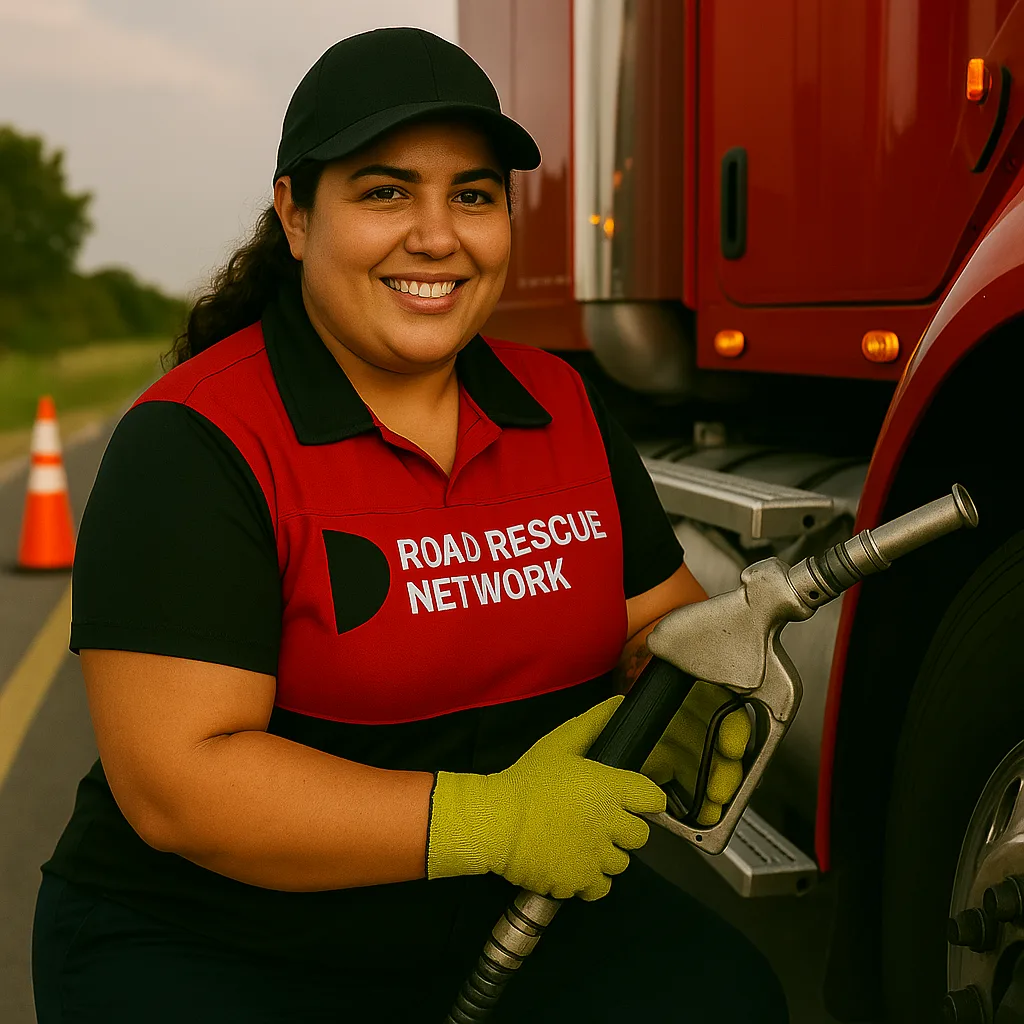
Most The Bronx calls are answered in about 39 minutes. You get a real time before anyone rolls, and the price before the work starts.
The Bronx is the food-distribution heart of New York City, anchored by the Hunts Point Food Distribution Center, the largest wholesale produce and meat market complex in the world. Tens of thousands of trucks cycle through Hunts Point every week, then push out across the Cross Bronx and Major Deegan to feed the entire metro region. The borough's overnight produce surges and chronically jammed expressways make reliable roadside repair a make-or-break factor for fresh-freight schedules.
The Bronx is the northernmost of the five boroughs of New York City. The Bronx has a land area of 42 square miles (109 km2) and a population of 1,472,654 at the 2020 census. It has the fourth largest area, fourth largest population, and third highest population density of the boroughs. The Bronx is the only borough located primarily on the U.S. mainland, bordering Westchester County to its north; the Hudson River and the borough of Manhattan, across the Harlem River, to its west; the borough of Queens, across the East River, to its south; and Long Island Sound to its east. The borough is coextensive with Bronx County, one of the 62 counties of New York State.
The Bronx's freight economy runs on perishables and the clock. A reefer that loses cooling on the Bruckner approaching Hunts Point at 4am is racing spoilage, not just a schedule, and the market gates do not slow down for anyone. Road Rescue Network's Bronx rescuers run 24/7 with techs who carry reefer parts and know the Hunts Point peninsula gate-by-gate, because in this borough a slow response means a lost load.
Anyone who's dispatched a truck through the Bronx knows the Cross Bronx Expressway is its own kind of punishment, consistently rated among the worst freight bottlenecks in America. Stop-and-go on the grade cooks brakes and clutches, the trench section has almost no shoulder, and a single stall can lock the corridor for hours. Our network is built around mechanics who work the Cross Bronx and the Deegan every day, not crews who avoid them.
Whether you're a national produce fleet staging at Hunts Point or an owner-operator stuck on the Major Deegan with an air leak, the closest verified, insurance-current rescuer in our Bronx network is one phone call away. Coordination, dispatch, and ETA confirmation are handled by Road Rescue Network's 24/7 operations team, so your fresh freight keeps moving.
Reviews collected from fleet customers and drivers after completed service calls in this metro.
“Reefer trailer blew a steer tire in the Hunts Point queue at 3am with a full produce load. RRN had a tech there in 30 minutes with the right size and we never broke the cold chain. These guys understand what a market load means.”
“Air leak left me crawling on the Major Deegan during the morning crush. The mobile tech found me fast, swapped a leaking chamber roadside, and got me back to Hunts Point. Knew the corridor cold.”
“Truck quit in the Cross Bronx trench, no shoulder, nightmare. Wrecker fought through but the operator handled the NYPD coordination perfectly and got us out. Lost a star only because the traffic delay was brutal, not their fault.”
Average response time in the Bronx is 39 minutes for mobile truck repair. Times run shorter around Hunts Point and the Bruckner and longer in the northern Bronx or during Cross Bronx gridlock. We track every call and publish real averages, not marketing numbers.
Yes, Hunts Point is our busiest Bronx service zone. Our techs know the produce and meat market gates, carry reefer parts, and prioritize cold-chain calls because a stalled refrigeration unit in the market queue is racing spoilage, not just a schedule.
Every Road Rescue Network rescuer in the Bronx must maintain current general liability, automobile liability, workers comp, and garage-keepers coverage where applicable. We re-verify each renewal. Expired insurance means automatic suspension from dispatch.
Yes. We service national accounts with consolidated invoicing, fleet-card billing, and a single point of contact. Most national fleets onboard in under 48 hours. Use the form on this page or call our dispatch line.
24/7/365. There is no after-hours surcharge in our network. Rescuers quote the same rate at 3am as they do at 3pm, which matters in a borough where the produce market never sleeps.
We dispatch routinely to the Hunts Point market peninsula, the Bruckner Boulevard truck stops, the Port Morris industrial district, and the Bronx Terminal Market near Yankee Stadium. Most of our techs know these locations cold.
Most DPF regen faults we resolve roadside with a forced regen and a cleaning of the differential-pressure sensor. Full DPF removal and cleaning happens at a partner shop. We tell you upfront which path we are taking before any work starts.
Yes. The below-grade Cross Bronx section near the Alexander Hamilton Bridge has almost no shoulder, so our dispatchers coordinate with NYPD Highway for a safe approach and clear the lane fast. It is one of the toughest spots in the country and we work it constantly.
Standard service-call dispatch runs $180-270 in the Bronx market depending on time of day and service type, reflecting tolls and tight access. Heavy-duty towing starts around $500 for in-borough moves. You get a confirmed quote before the truck rolls.
If we determine on-scene that the truck cannot be fixed roadside in a reasonable window, we coordinate the tow with one of our heavy-duty network rescuers. Many of our units roll alongside a wrecker so there is no second response time when a tow is likely.
The Bronx runs about 1,385,108 people and sits in Bronx County, inside the New York Metropolitan Area. We take the call, find the closest crew that actually does this work, and tell you what it costs before anyone turns a wheel.
Sample of recent dispatched service calls in this metro. Customer details removed; locations and response times preserved.
| When | Service | Location | Response |
|---|---|---|---|
| Thursday 03:38 ET | Mobile Truck Repair | I-278 Bruckner near Hunts Point Ave | 41 min |
| Wednesday 20:14 ET | Heavy-Duty Towing | Cross Bronx trench near Hamilton Bridge | 48 min |
| Tuesday 04:55 ET | Commercial Tire Repair | Hunts Point Produce Market gate | 33 min |
| Monday 09:21 ET | Mobile RV Repair | Orchard Beach lot, Pelham Bay | 59 min |
| Sunday 18:47 ET | Mobile Welding | Port Morris industrial yard | 52 min |
| Saturday 06:02 ET | Mobile Bus Repair | MTA Gun Hill Bus Depot | 58 min |
| Friday 23:30 ET | Fuel Delivery | I-87 Major Deegan near Yankee Stadium | 29 min |
| Thursday 15:16 ET | Trailer Repair | Baldor Specialty Foods dock | 45 min |
Coverage in surrounding cities and metros across the same network of verified rescuers.
The same verified network of providers, dispatched 24/7 across every major New York metro and freight corridor.
Whether the truck is sitting in The Bronx or out toward New Rochelle, it is the same phone number and the same crews. One call, day or night.
Road Rescue Network is actively recruiting verified fuel delivery providers in the The Bronx metro. Heavy traffic, real fleet leads, no auction race-to-the-bottom, straight rescuer-to-customer dispatch with confirmed pricing.
We send The Bronx fuel delivery calls directly to verified rescuers in your service radius. Apply once. Insurance & DOT verified. Live dispatch, fleet accounts, transparent pricing, no motor-club shave-down.
Deep-dive guide on choosing the right provider, common pitfalls, and what to expect on a service call.
OpenOpen positions at our network rescuers, full-time, part-time, and 1099 contract.
OpenOn-site photos from recent calls, see the work, not just the marketing.
OpenService trucks dispatch routinely to these locations across the metro freight corridors.
Market drayage queue and overnight staging
View Directory Profile →Fuel, parking, fleet repair staging
View Directory Profile →Repair staging near the market gates
View Directory Profile →Industrial-district commercial yard, parking
View Directory Profile →Pull-off, limited truck parking
Local parts houses and diesel suppliers used by network mechanics for time-critical roadside repairs.
Heavy-duty truck and trailer parts, will-call
View Directory Profile →
Commercial counter, HD brakes and filters
View Directory Profile →
Engine parts + authorized diesel service
View Directory Profile →Major shippers, distribution centers, and industrial freight nodes generating outbound and inbound truck volume.
World's largest wholesale produce market, 24/7 truck flow
Major wholesale meat distribution, reefer-heavy
Online grocery fulfillment, last-mile reefer fleet
Foodservice distribution, large outbound fleet
Food-distribution and cold-storage cluster
Manufacturing and warehouse zone near Deegan
Retail-distribution complex near Yankee Stadium, dock receiving
Three steps from the call to a cleared scene. Same flow whether you call from a fleet desk or the shoulder of an interstate.
Diesel, gas, DEF, or kerosene — and roughly how much gets you moving. Whether the engine ran completely dry matters too, because a The Bronx run-dry needs bleeding and priming, not just a fill.
You get the per-gallon price and the delivery charge as separate numbers before the truck leaves, plus an ETA. No The Bronx delivery should end with a single lump sum you cannot break apart.
The truck is bonded to your vehicle, product is filtered on the way in, and you get a metered ticket showing gallons and price. If it needs a prime or a filter to restart, that happens before we leave you in The Bronx.
Network rescuers accept all major credit cards, fleet cards, and consumer payment apps. Confirmed at dispatch.