Provo sits on I-15 along the Wasatch Front, the spine of Utah's freight corridor that carries every truck moving between Salt Lake City, Las Vegas, and the Phoenix-bound flow. The Utah County tech corridor (Silicon Slopes) anchored by Adobe, Qualtrics, and Vivint generates dense data-center construction and equipment freight, while BYU and Utah Valley University drive bus-fleet and campus-supply rotation. Provo Canyon on US-189 climbs from 4,500 feet at the canyon mouth to 8,000 feet at Heber Valley with sustained 6% grades, generating a constant brake-fade and engine-overheat call pattern that no other Wasatch Front community shares.
Provo is a city in and the county seat of Utah County, Utah, United States. It had a population of 115,162 at the 2020 census, making it the fourth-most populous city in Utah. It is the principal city in the Provo–Orem–Lehi metropolitan area, which had a population of 671,185 at the 2020 census. Provo anchors the second-largest metropolitan area in Utah, after the Salt Lake City metropolitan area.
Provo's freight economy runs on three pivots: the I-15 Wasatch Front north-south flow, the Silicon Slopes tech-corridor data-center construction surge, and the BYU campus-supply rotation. When a Class 8 truck breaks down on I-15 at Lehi during the morning Silicon Slopes commute window, the freight cascade hits 75,000 vehicles backing up to Bluffdale within an hour. Road Rescue Network's Provo rescuers are pre-positioned at the I-15 / US-189 split, the Lehi tech-campus corridor, and the Springville south-end staging cluster so service trucks reach call locations inside 32 minutes around the clock.
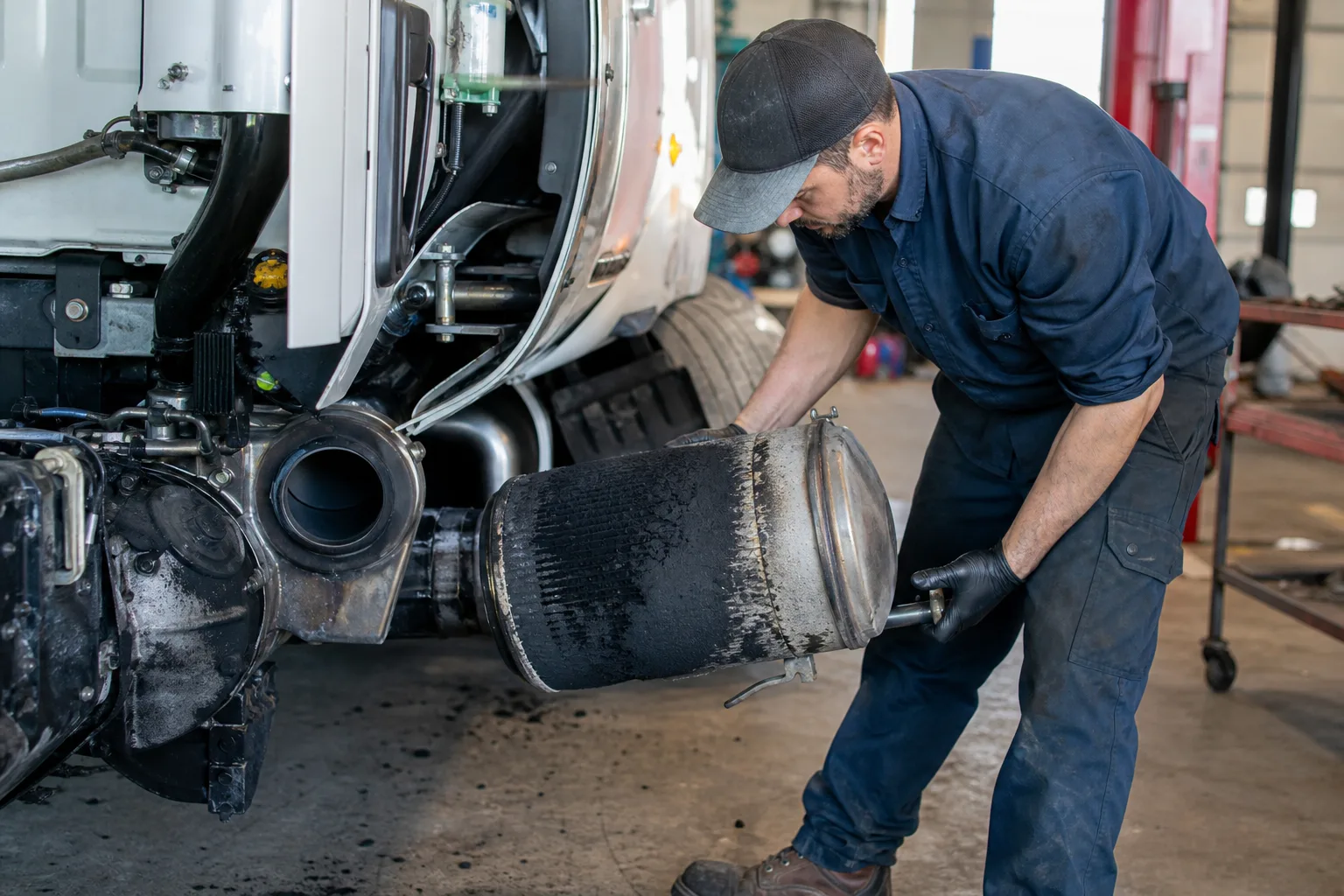
The mechanics in Provo who handle heavy-duty calls every day live with two operational punishments unique to the southern Wasatch Front: the Provo Canyon mountain-grade brake-fade pattern on US-189 between Provo and Heber City with sustained 6% climbs and chronic engine-cooling failures, and the inversion-trapped winter pollution event when cold-air pools settle into Utah Valley for 7-10 day stretches and cause respiratory shutdowns plus diesel particulate filter regen failures across the entire fleet. Our network is built around mechanics who handle that envelope every shift, with mountain-tuned diagnostic tooling and inversion-event DPF cleaning capacity on every dispatch.
Whether you are a fleet manager dispatching from Salt Lake City with a load stranded at the Adobe Lehi campus dock, or an owner-operator on US-6 trying to clear a brake-fade call before the Soldier Summit, the closest verified, insurance-current rescuer in our Provo network is reached through a single phone call or service request. Coordination, dispatch, and ETA confirmation are handled by Road Rescue Network's 24/7 operations team.