01
Mobile welding rig
Engine-driven welder, stick and wire, cutting torch
Landing gear, crossmembers, frame cracks, and underride guards. Structural trailer repair is welding first and mechanics second.
Need trailer repair in Orange? We run mobile trailer repair to the dock, the yard or the shoulder — brakes, air lines, lights, landing gear, doors and suspension. Highway miles break different parts than city miles — cooling, aftertreatment and tires, more than brakes and mounts. I-5, CA-22, and CA-57 all run through Orange, so most of our calls come off one of those. Freight around here moves for outfits like St. Joseph Hospital and Children's Hospital of Orange County, which is work that runs on a schedule.
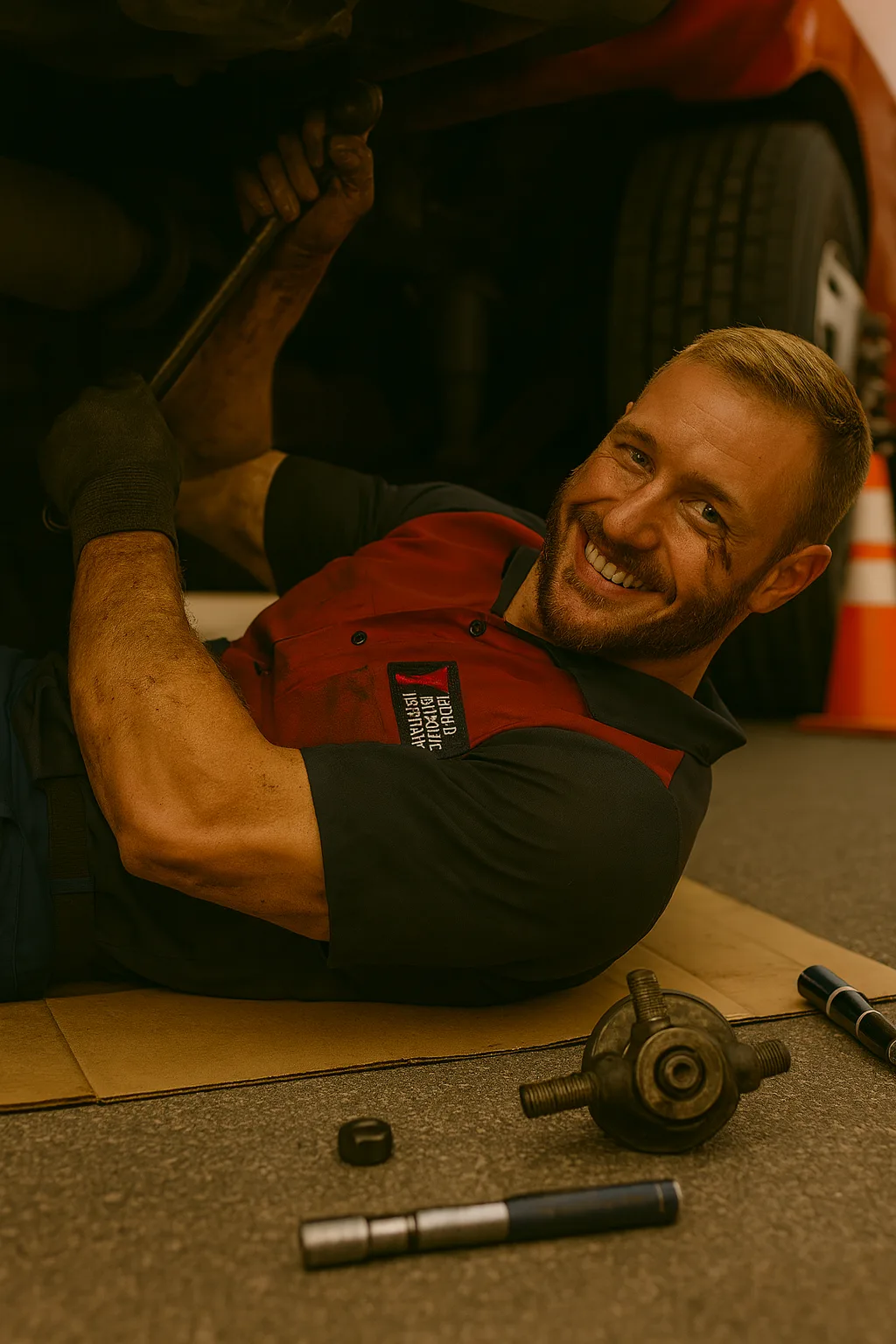
Trailer work splits between structural repair and air-brake work, and the two need completely different trucks. A Orange dispatch that arrives without a welder cannot fix a landing gear, and one without air tooling cannot release the brakes.
Engine-driven welder, stick and wire, cutting torch
Landing gear, crossmembers, frame cracks, and underride guards. Structural trailer repair is welding first and mechanics second.
Gauges, line stock, glad hands, fittings, caging tools
Any trailer that cannot build or hold air. Frequently a ten-minute fix that otherwise becomes a tow.
Shoe and drum service, slack gauges, pushrod travel measurement
Out-of-adjustment findings and roadside brake failures. The measured stroke is what an inspector goes by, not appearance.
Rated for loaded tandem lifting, cribbing
Bearing, hub, drum, and suspension work. A loaded trailer is lifted on rated equipment or not at all.
Trailer ABS ECU interface, sensor testing
Amber lamp faults. Guessing at a wheel speed sensor replaces good parts and leaves the lamp on.
LED lamps, harness, noseboxes, conspicuity tape
Carried on every call so a lighting violation clears on the first visit rather than becoming a return trip.
Legs, gearboxes, air bags, height valves, bushings
The high-frequency failures. Stocking them is the difference between one dispatch and three days out of service.
Hardwood sections, scuff liner, rivets, fasteners
Floor and panel damage found at a dock, where a shipper will not load until it is closed up.
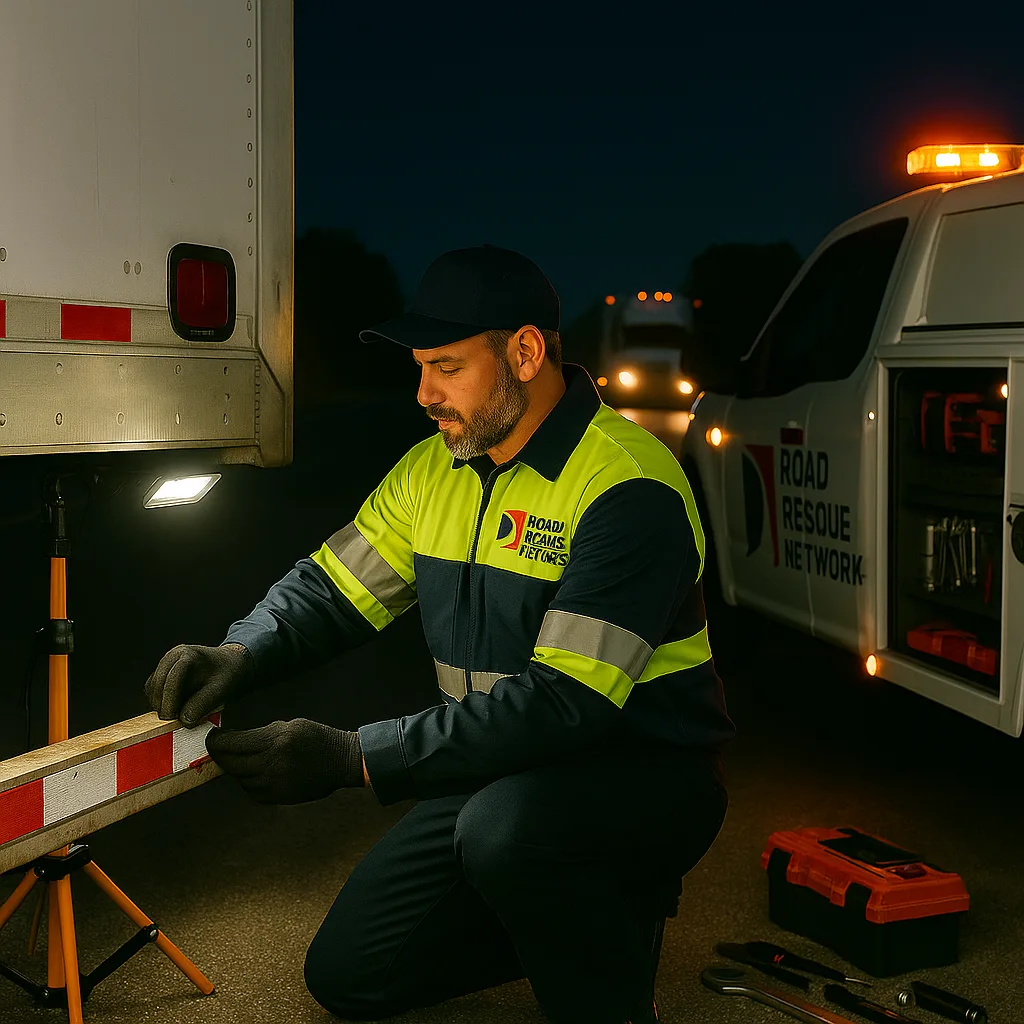
One call puts a trailer repair unit on the road to you anywhere in Orange or out along I-5 and CA-22. Tell us the road and which way you are pointed and we do the rest.
Van, reefer box, flatbed, tanker, dump, and container chassis worked on where the trailer sits across the Orange metro. A trailer failure usually strands a loaded box and a perfectly healthy tractor at the same time, which is why most of this work is mobile rather than shop.
Bent legs, stripped gearboxes, seized cranks, and sheared mounts. The single most common trailer call in Orange — a dropped trailer that will not lift is immobile even though nothing mechanical is actually wrong with it.
Cracked crossmembers, sagging rails, and rusted-through I-beams repaired by a certified mobile welding rig. A Orange trailer with failing crossmembers has a floor waiting to drop a forklift through it.
Worn kingpins, cracked upper coupler plates, and delaminated pickup plates. This is the one connection holding the trailer to the tractor, and it is an automatic out-of-service item on any Orange roadside inspection.
Hardwood floor sections, laminated decking, and scuff liner. Forklift damage and rot spread from a single soft board, and a Orange shipper can refuse to load a trailer over a hole they can see.
Torn roof sheets from dock canopies and low clearances, punctured sidewalls, popped rivets, and rub-rail damage. A wet Orange load is a cargo claim that costs multiples of the panel.
Swing doors, roll-up doors, cables, springs, hinges, and cam locks. A Orange trailer that will not close is a trailer that cannot legally or safely leave the dock, loaded or empty.
Ruptured air bags, failed height control valves, and broken shocks. A collapsed bag drops one corner onto the frame and destroys tires and bearings on the way to the next Orange exit.
Broken leaf springs, worn equalizers, hangers, and torque arms. Orange pavement joints and potholes take these apart quietly until the axle stops tracking straight.
Seized slider pins, worn rails, and air cylinders that will not release. A slider stuck in the wrong position is a Orange weight-distribution violation you cannot fix at the scale house.
Repacking, hub replacement, and leaking wheel seals. A hot hub found on a Orange shoulder is minutes from a wheel-off, which is the worst outcome on this entire list.
Bent axles and out-of-alignment tandems after a curb strike or a hard dock hit. Misalignment eats a set of Orange trailer tires in weeks and pulls the whole combination sideways.
Mounting, torque, valve stems, and damaged rims. Handled on the same Orange dispatch when a suspension failure has already taken the tire with it.
Relining, drum replacement, springs, and rollers. Brake condition is the single most cited category in Orange roadside inspections and the fastest route to an out-of-service sticker.
Seized S-cams and out-of-adjustment automatic slacks. A Orange trailer can pass a visual and still fail the pushrod-travel measurement an inspector actually takes.
Ruptured diaphragms, caged spring brakes, and cracked housings. A blown chamber locks a Orange trailer in place until it is caged or replaced on scene.
Chafed lines, split hoses, frozen glad hand seals, and leaking fittings. The cheapest part on the trailer and the most common reason a Orange driver cannot build air and leave.
Wheel speed sensors, exciter rings, ECU faults, and the amber lamp on the left rear. An inoperative ABS lamp is a documented Orange inspection violation on its own.
Relay valves, spring brake valves, check valves, and water-fouled tanks. Wet Orange winter air freezes valves closed overnight and strands a trailer that worked fine at shutdown.
Corroded pins, broken nosebox, and burned circuits. The first thing checked on any Orange trailer with no lights at all, and frequently the whole repair.
Chafed harnesses, corroded grounds, and splice failures inside the rail. Intermittent Orange lighting faults live here and are why a lamp swap did not fix it.
LED and incandescent lamp replacement across the whole required pattern. Federal rules specify which lamps must work, and a Orange inspector counts them.
Retroreflective tape replacement to the required pattern on sides and rear. Missing or degraded tape is a cited Orange violation and a genuine night-visibility problem.
Flaps, hangers, and rear impact guard repair. A damaged underride guard is a serious Orange finding, not cosmetic, and the weld has to be right.
The federally required annual inspection performed on site, with the failing items repaired on the same Orange visit rather than scheduling the trailer back into a shop twice.
Insurance-current network rescuers with verified compliance, equipment, and live availability status.
Rolling 30-day average dispatch-to-arrival, by service type, across the local rescuer network.
Google shows a "how much would it cost to fix a trailer" box on this search because nobody on page one answers it. Here is what actually makes up a Orange trailer invoice, and which items move it the most.
Getting a stocked truck and a technician to where the trailer sits. Billed once and separate from labor. A shop visit removes this line but adds a tow and the days the trailer is gone.
The largest line on most trailer invoices. Structural and welding labor prices above general mechanical labor because of the certification and the rig.
Landing gear, crossmembers, and frame work are billed on the welding rig's time. Often the entire repair, with parts as a rounding error.
Air bags, slacks, chambers, lamps, and bearings are inexpensive and usually stocked. Landing gear assemblies, axles, and suspension components are not.
An adjustment is minutes. A full reline with drums across a tandem is a different invoice entirely — and the inspection that triggered it does not care which one you were expecting.
Trailer failures cluster at night and at docks on weekends. Emergency dispatch carries a premium tier, and a loaded trailer usually justifies it.
A loaded trailer limits what can be lifted, unhooked, or moved. Some repairs genuinely cannot start until the load comes off, which is a scheduling cost more than a parts cost.
A shoulder on an interstate, a fenced yard, or a dock door are three different jobs. Traffic control on a live roadway adds real cost and is not optional.
The federally required annual, and any repairs the inspection turns up. Cheapest when scheduled, most expensive when an officer finds it first.
A trailer placed out of service cannot legally move until the defect is corrected. That converts an ordinary repair into an emergency dispatch with a driver and a load waiting on it.
Frequently bundled, because the suspension or bearing failure that stranded the trailer already destroyed a tire on the way.
Chasing an intermittent electrical fault or an ABS code is billed time. It is also the difference between fixing it once and replacing three good parts.
Road Rescue Network does not set a member operator's rates. What the network does is make sure the truck that rolls to a trailer actually carries what the failure needs — a welding rig for structural work, air and brake tooling for a brake failure — instead of arriving, diagnosing, and leaving to come back.
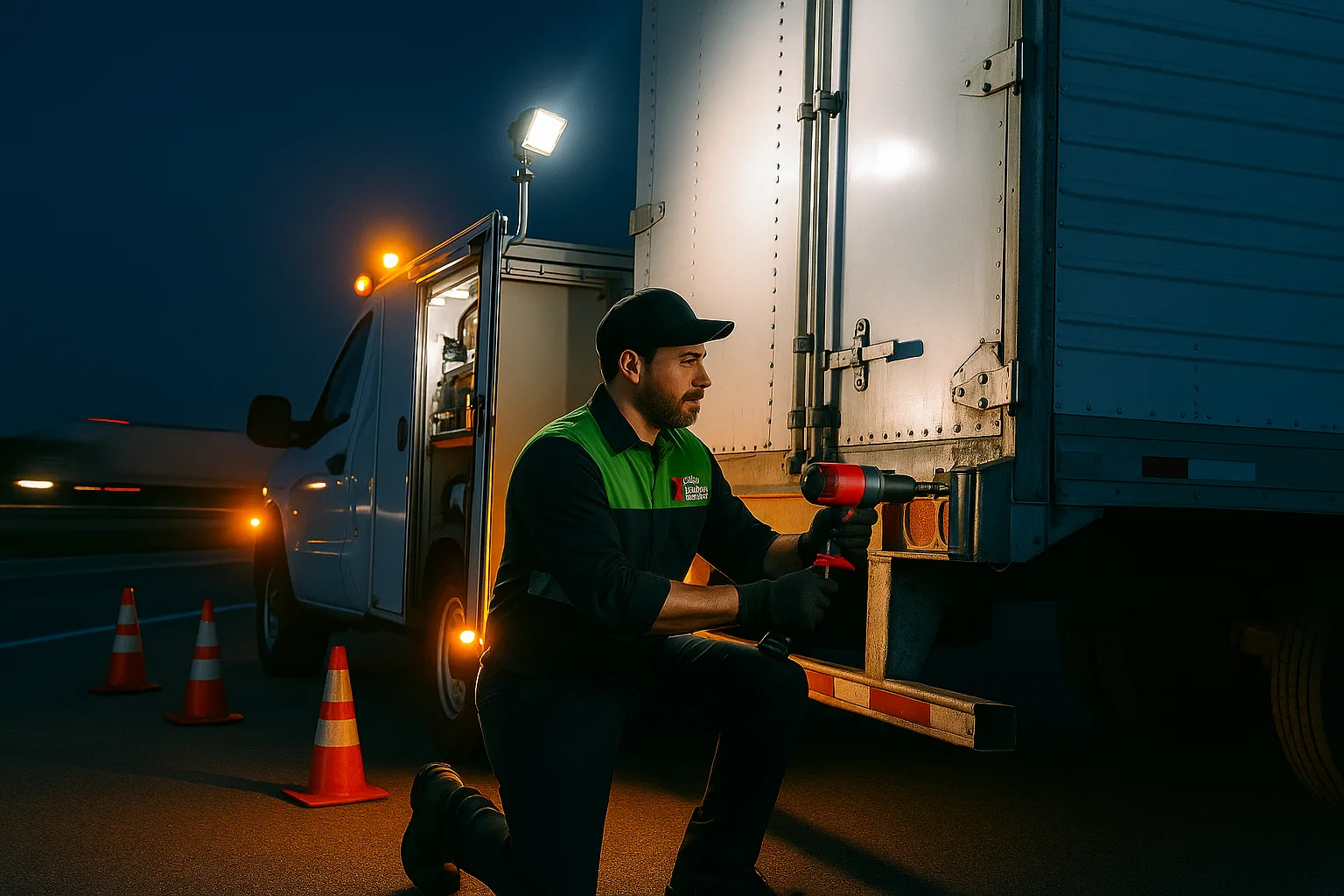
The same crews that run Orange also cover Anaheim (4 mi), Santa Ana (4 mi) and Tustin (4 mi), so a call from either side of Orange County reaches the same desk.
Each service links to local response times, rescuer coverage, and recent dispatched jobs in this metro.
A live map of every mobile trailer repair technician in Orange metro, with real-time positions, ETAs, and dispatch status, available inside your dashboard.
Sign in to track network rescuers across Orange in real time, dispatch jobs, and confirm ETA before the truck rolls.
Each corridor has a dedicated breakdown landing page with service zones, exits, and recent dispatched jobs.
5 exits in Orange
The Santa Ana Freeway through Orange, the spine of Southern California freight from LA to San Diego. Its junction with SR-22 and SR-57 at the Orange Crush is the city's defining congestion and breakdown zone.

3 exits in Orange
The Garden Grove Freeway running west from the Orange Crush toward Long Beach, a heavily traveled commuter and freight corridor feeding the interchange from the coastal cities.
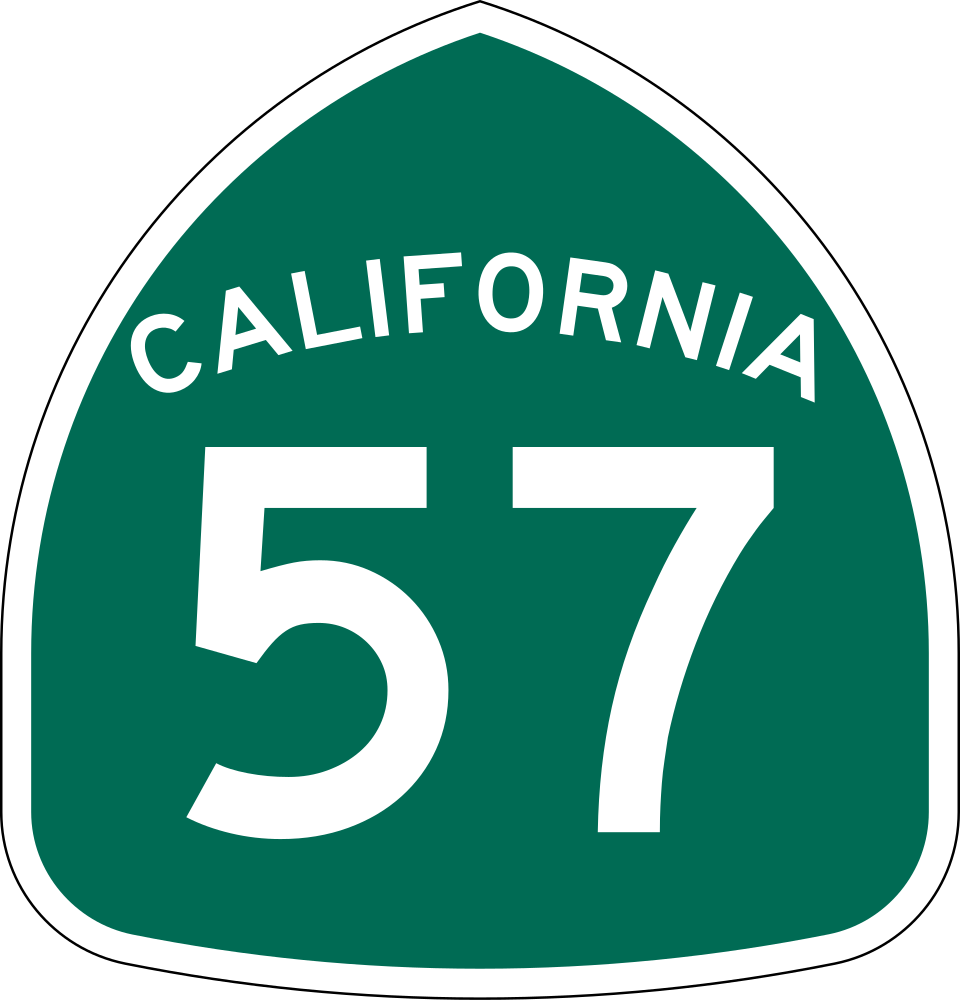
4 exits in Orange
The Orange Freeway running north from the Crush toward Pomona and the Inland Empire, a major drayage and dry-van corridor with steep volume through the interchange.
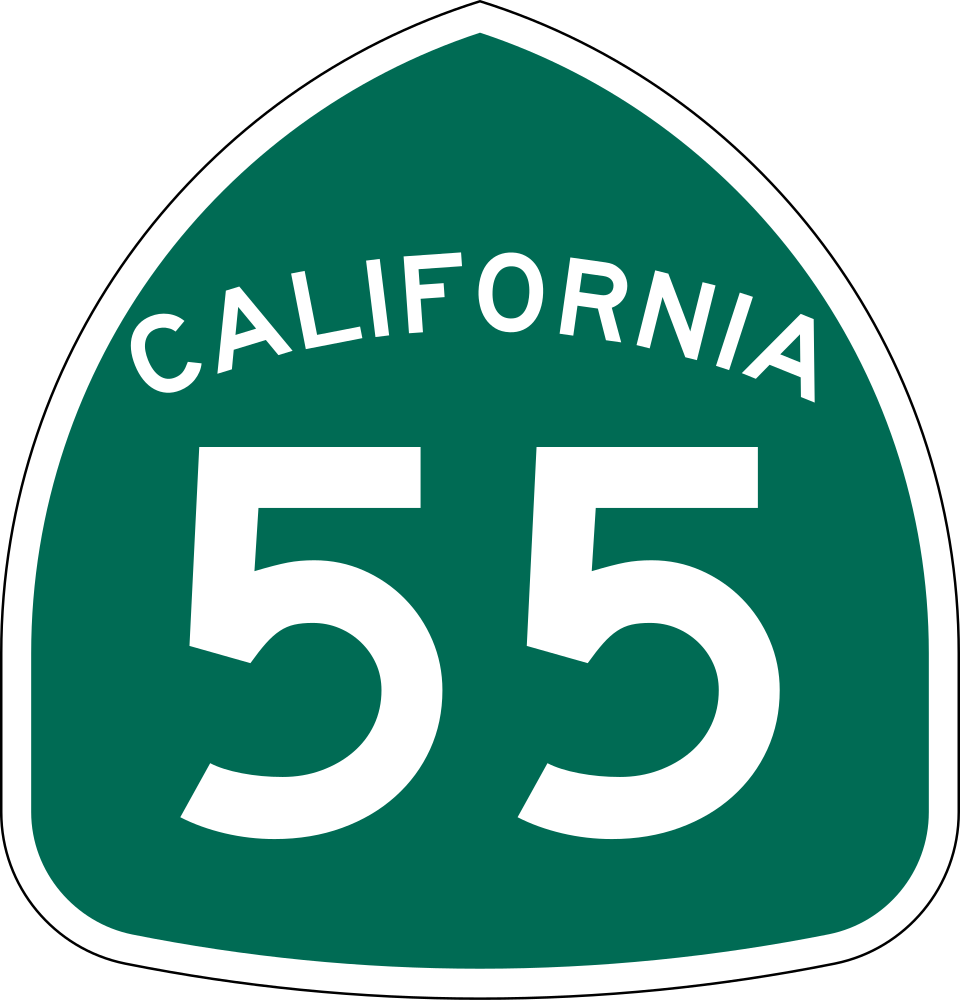
4 exits in Orange
The Costa Mesa Freeway through eastern Orange, linking the city to John Wayne Airport, the South Coast commercial district, and SR-91. Heavy box-truck and airport-supply traffic.
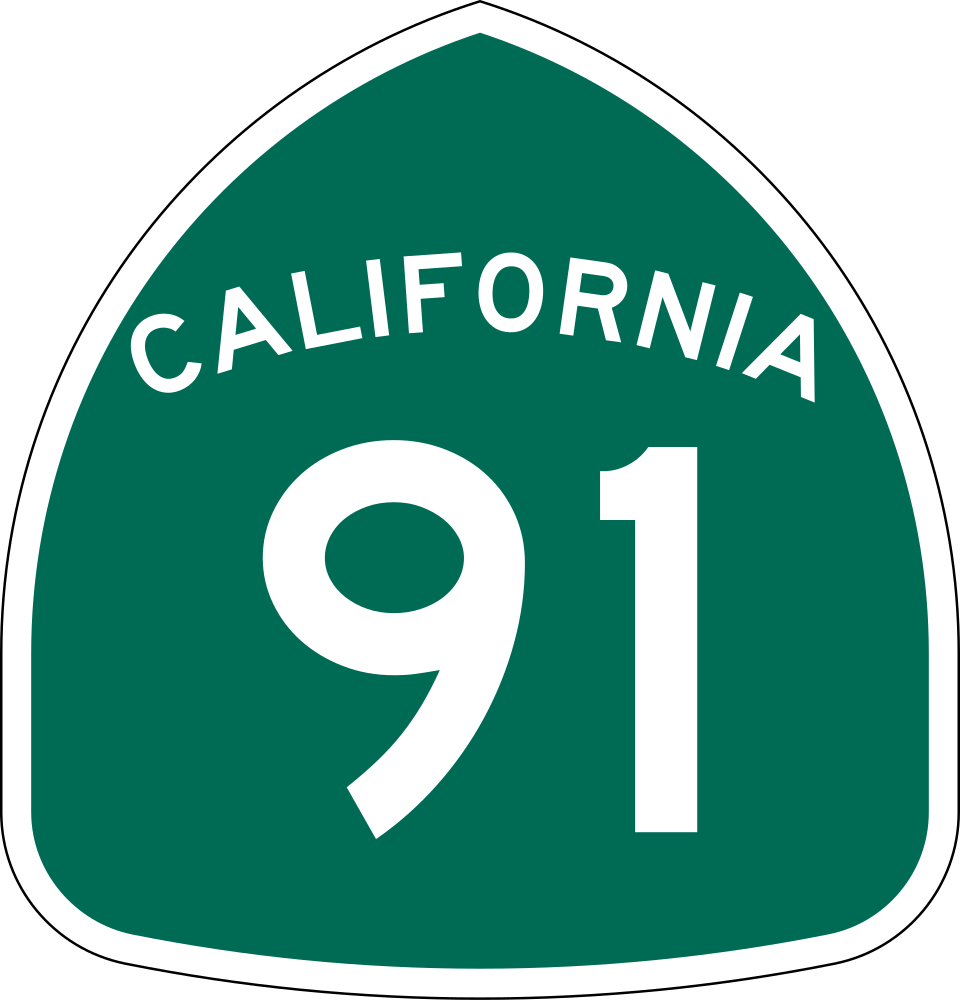
0 exits in Orange
The Riverside Freeway just north of Orange, the primary Orange County to Inland Empire commuter and freight corridor, reached via SR-55 or SR-57.
0 exits in Orange
The Eastern Transportation Corridor toll road southeast of Orange, an express bypass for freight avoiding the SR-55 and I-5 congestion through the county.
Patterns observed across recent dispatch data in this metro, by service type and corridor.
The Orange Crush stacks I-5, SR-22, and SR-57 into one of the busiest freeway junctions in the country, and a breakdown on its connector ramps backs up all three freeways at once. We treat the Crush as a priority zone, with techs who know its safe pullouts and dispatchers who coordinate the CHP handoff for shoulder work. The aim is a fast clear before the interchange gridlocks.
Orange's St. Joseph, CHOC, and UCI Medical district runs on time-sensitive supply and pharma deliveries, often refrigerated, and a breakdown or lift-gate failure puts critical freight at risk. We prioritize hospital-district calls with techs who carry hydraulic, reefer, and electrical parts. The goal is to save the delivery and keep cold-chain freight in spec.
Orange sits inland enough that summer afternoons push past the high 90s, and superheated pavement on the I-5 and SR-57 approaches blows tires and stresses cooling systems. Our techs roll with multiple tire sizes plus coolant and hose. The priority is getting a rig legal and cool before the heat sidelines it in the worst of the Crush congestion.
More trailers are placed out of service for brakes, lights, and structure than for anything else. What governs a commercial trailer in Orange, California, and what an inspector is actually measuring.
Every commercial trailer must pass a documented periodic inspection at least once every 12 months against the federal minimum standards, and the record has to be retained. The inspection covers brakes, coupling, frame, lighting, suspension, tires, and wheels — it is not a formality, and a missing record is its own violation.
Roadside inspections are scored against the CVSA out-of-service criteria. Certain defects — a cracked upper coupler, a defective brake beyond the allowed count on an axle, an inoperative required lamp pattern — stop the trailer where it stands until repaired. That is why a trailer repair call is frequently an emergency call.
Federal rules set maximum pushrod stroke by chamber size, and an inspector measures it rather than judging by feel. A trailer with too many defective brakes on an axle is out of service regardless of how it drives, and automatic slack adjusters do not exempt anything from the measurement.
Federal regulations specify exactly which lamps and reflectors a trailer must carry and where retroreflective tape must run. Degraded or missing conspicuity tape is a routine citation, and it is also the single cheapest night-visibility improvement on the equipment.
Trailers must carry a rear impact guard meeting federal strength and labeling standards. Damage to the guard is treated as a structural defect, and a repair weld has to restore the rated strength rather than simply close the gap.
The person performing a periodic inspection and the person doing brake work both have to meet federal qualification standards. A repair signed off by someone unqualified does not satisfy the requirement, no matter how good the work was.
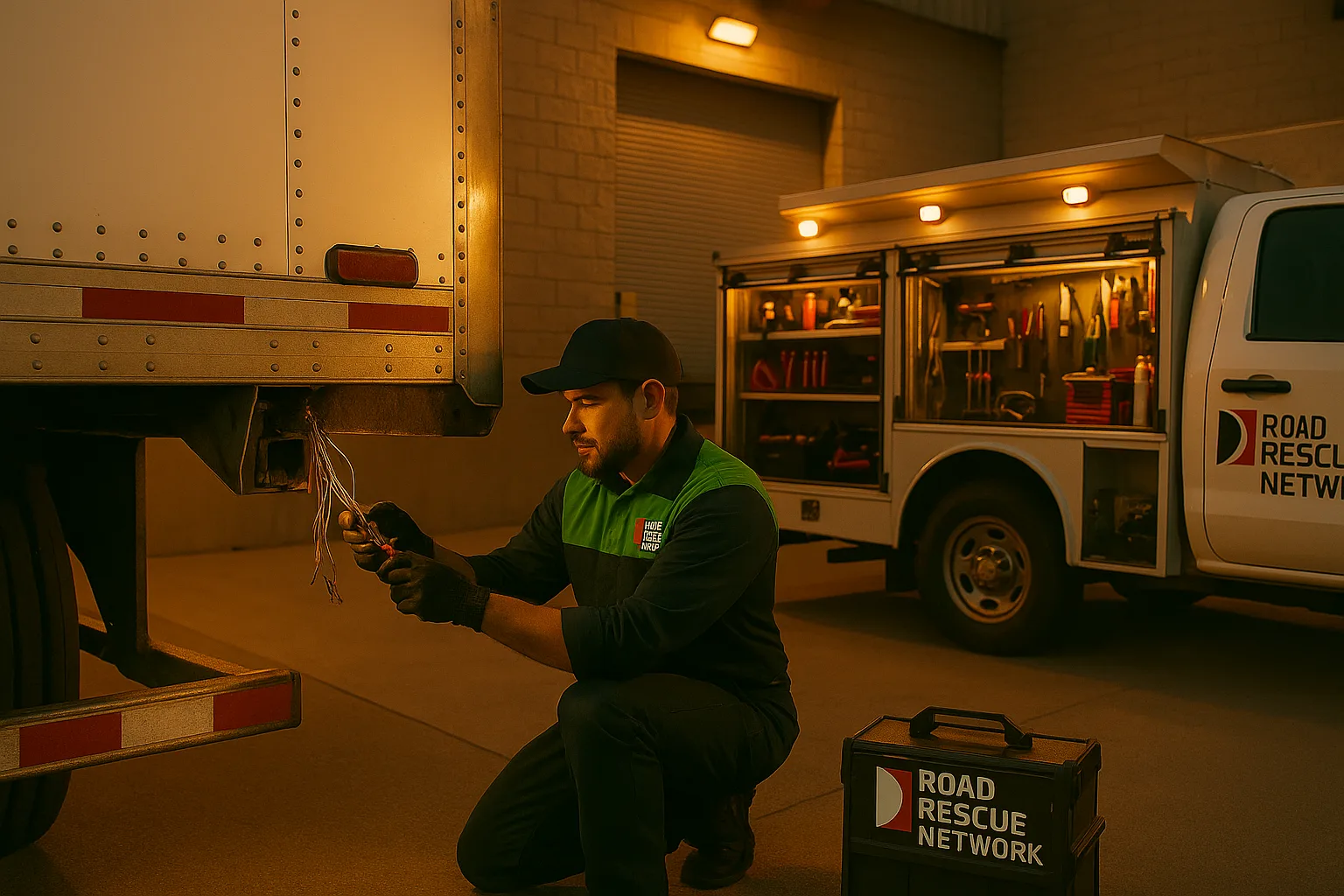
Most Orange calls are answered in about 40 minutes. You get a real time before anyone rolls, and the price before the work starts.
The city of Orange sits on top of the Orange Crush, the famous interchange where I-5, SR-22, and SR-57 braid together into one of the busiest freeway junctions in the country. It is a central distribution and medical-supply hub for Orange County, moving retail, healthcare, and last-mile freight across the basin. The constant congestion at the Crush makes Orange a perpetual breakdown and recovery hot spot.
Orange is a city located in northern Orange County, California, United States. It is approximately 3 miles (4.8 km) north of the county seat, Santa Ana. Orange is unusual in this region because many of the homes in its Old Town District were built before 1920. While many other cities in the region demolished such houses in the 1960s, Orange decided to preserve them. The small city of Villa Park is surrounded by the city of Orange. The population of Orange was 139,911 as of 2020.
The mechanics in Orange who handle heavy-duty calls work directly on top of the Orange Crush, the I-5, SR-22, and SR-57 interchange that ranks among the most congested freeway junctions in the United States. Road Rescue Network's Orange rescuers know every connector ramp and safe pullout in that knot, because a breakdown in the Crush snarls three freeways at once. Average response time here holds steady even in the worst of the Orange County crush.
Orange's freight economy runs on healthcare, retail, and last-mile distribution feeding a dense Orange County population, which means box trucks, medical-supply runs, and lift-gate deliveries dominate over long-haul Class 8 traffic. That shifts the breakdown profile toward lift-gate hydraulics, brakes worn by relentless stop-and-go, and cooling systems stressed by inland summer heat. Our network is staffed with techs who carry hydraulic, brake, and cooling parts and treat the Crush as their daily commute.
When a Class 8 truck breaks down on the I-5 northbound approach to the Crush in the afternoon backup, or a medical-supply box truck stalls near the St. Joseph and CHOC hospital district, every minute ripples across freeways and delivery windows alike. Whether you're supplying a hospital dock or running retail freight to The Outlets at Orange, the nearest verified, insurance-current Road Rescue Network rescuer is one phone call away. Dispatch, ETA confirmation, and CHP coordination for the interchange shoulders are handled by our 24/7 operations team.
Reviews collected from fleet customers and drivers after completed service calls in this metro.
“Refrigerated supply truck lift gate failed at the CHOC dock with pharma still aboard. Tech reached us in 33 minutes, rebuilt the hydraulic line, and kept the cold chain intact. They understood the urgency of medical freight.”
“Truck went down on the SR-57 connector inside the Crush at rush hour. RRN coordinated with CHP and had a heavy wrecker threading the ramps in under an hour. The operator knew that interchange inside and out.”
“Steer tire blew on the 5 northbound in the heat. Service truck had the size and got us legal in about 40 minutes. One star off only because traffic slowed the first ETA, but the tech was excellent.”
It depends far more on what failed than on the trailer. Lighting, air line, and glad hand repairs are typically the cheapest calls on the board and often finish in under an hour. Brake adjustments are quick; a full reline with drums across a tandem is a substantially larger invoice. Landing gear and crossmember work is billed on welding time and sits in between. Every Orange mobile call also carries a service-call charge for bringing the truck and the parts to the trailer — which is still normally less than towing the trailer to a shop and losing it for several days. Ask for the diagnosis and the repair quoted separately so you can see which is which.
It is a load-distribution guideline: put roughly 60 percent of the cargo weight in the front half of the trailer and 40 percent in the back half, so the weight sits ahead of the axles and keeps positive tongue or kingpin loading. Load it backwards and the trailer sways, and on a commercial combination it also shifts weight off the drives and onto the trailer tandems. It is a rule of thumb for stability, not a legal standard — federal axle limits and posted bridge weights are the rules that actually get enforced, and a seized slider can put you over one of them without a single pound being added.
Usually yes, and more often than owners expect. Trailers have no engine, no transmission, and no emissions system, so the expensive failure modes that retire a tractor do not exist here — a 20-year-old van trailer with a sound frame and a good upper coupler is worth repairing almost indefinitely. The honest cutoffs are structural: widespread crossmember rot, a cracked or delaminated upper coupler, or frame rail corrosion that welding cannot restore to rated strength. Brakes, lights, landing gear, suspension, and flooring are all wear items with straightforward economics. Get an honest structural assessment first, because that is the one answer that changes the decision.
Heavy-duty parts distributors across the Orange metro carry trailer lighting, air, brake, and suspension components, and most commercial trailer manufacturers support regional parts networks. In practice the faster route for a stranded trailer is a mobile repair truck that already stocks the high-frequency failures — lamps, harnesses, glad hands, air bags, slack adjusters, brake chambers, and landing gear components — so the repair happens on the first visit instead of turning into a parts run. Structural and floor materials are usually carried on the welding rig for the same reason.
Most of it happens on the road. Landing gear, air leaks, brake work, lighting, ABS faults, suspension components, bearings, and floor patches are all routinely done where the trailer sits in Orange — with a welding rig for the structural half and air tooling for the brake half. What genuinely needs a shop is major frame straightening, full floor replacement, large body and panel rebuilds, and paint. The deciding question is usually not the repair but the location: a live interstate shoulder gets stabilized and towed, while the same failure in a yard or at a dock gets fixed in place.
Brakes lead by a wide margin — defective brakes beyond the permitted count on an axle, or pushrod stroke past the limit for the chamber size, which an inspector measures rather than estimates. After that: a cracked or shifted upper coupler or worn kingpin, inoperative required lamps, tires below tread depth or with visible cord, a damaged rear impact guard, and structural cracks in frame members. An out-of-service trailer cannot legally move until the defect is corrected, which is why these turn into emergency dispatches — the driver, the tractor, and the load are all parked with it.
Average response time in Orange is 40 minutes for mobile truck repair, faster off-peak, and longer when the Orange Crush gridlocks during the commute crush. We post real tracked averages, not marketing numbers.
Yes, the Orange Crush where I-5, SR-22, and SR-57 meet is one of our most-frequented and highest-priority service zones. Working its connector-ramp shoulders requires CHP coordination, and our dispatchers handle that handoff so the tech can focus on the repair while traffic is managed.
Every Road Rescue Network rescuer in Orange carries current general liability, automobile liability, workers comp, and where applicable garage-keepers coverage. We re-verify each renewal cycle, and expired insurance means automatic suspension from dispatch.
Yes. We service national accounts with consolidated invoicing, fleet-card billing, and a single point of contact. Most fleets onboard in under 48 hours through the form on this page or our dispatch line.
24/7/365. There is no after-hours surcharge in our network. Rescuers quote the same rate at 3am as at 3pm, which matters for early hospital-supply runs and overnight retail freight.
We dispatch routinely to the Pilot in Santa Fe Springs, the OC Diesel fuel stop near the Crush, the TA in Ontario up the SR-57, and the Love's in Corona on the 91. Our service trucks know the Orange County freight corridors and these stops by sight.
Yes, those are core Orange calls given the hospital and retail delivery economy. Our techs carry hydraulic and pump parts for lift gates plus common reefer belts and sensors, and most of these faults are roadside fixes that save the delivery and the cold chain.
Standard service-call dispatch fee runs $170-250 in central Orange County depending on time of day and interchange congestion. Heavy-duty towing starts around $485 for in-area moves. We give a confirmed quote before the truck rolls.
Yes. Several Orange rescuers run fleet-PM programs tailored to delivery and medical fleets, with lift-gate, reefer, brake, and cooling inspections built in. Tell us your fleet size and DOT cadence and we'll match you with the right shop.
If we determine on-scene that the truck can't be fixed roadside, we coordinate the tow with one of our heavy-duty network rescuers. In the Orange Crush and its feeder freeways we often dispatch a wrecker alongside the service truck so there's no second response time.
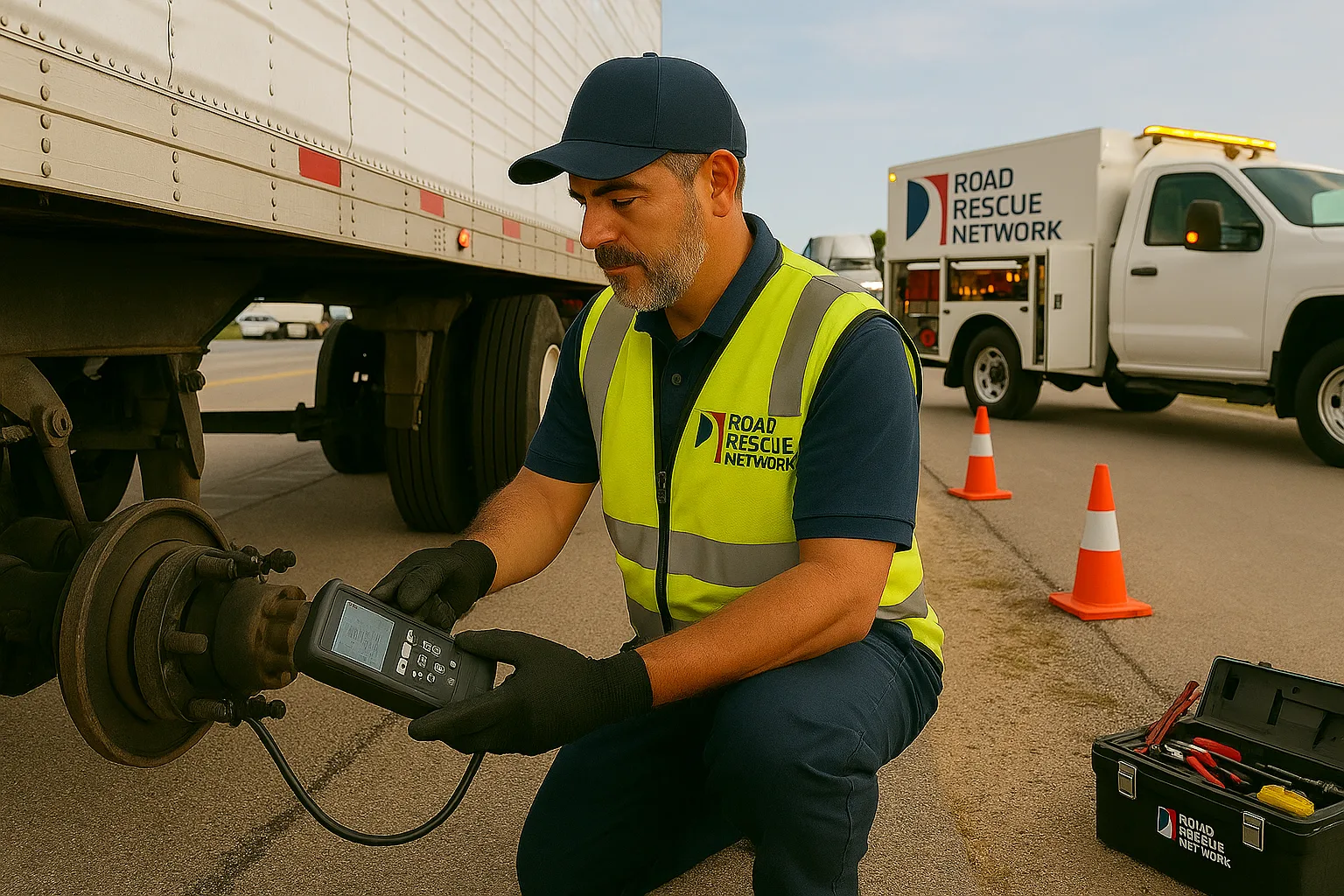
Orange runs about 140,992 people and sits in Orange County, inside the Greater Los Angeles. We take the call, find the closest crew that actually does this work, and tell you what it costs before anyone turns a wheel.
Sample of recent dispatched service calls in this metro. Customer details removed; locations and response times preserved.
| When | Service | Location | Response |
|---|---|---|---|
| Tuesday 16:14 PT | Mobile Truck Repair | I-5 N Orange Crush approach | 42 min |
| Monday 18:49 PT | Heavy-Duty Towing | SR-57 N at the Crush | 48 min |
| Sunday 11:02 PT | Commercial Tire Repair | Orange commerce center Batavia | 36 min |
| Saturday 14:27 PT | Mobile RV Repair | RV storage off SR-55 | 57 min |
| Friday 10:18 PT | Mobile Welding | Eckhoff industrial yard | 48 min |
| Thursday 06:41 PT | Mobile Bus Repair | OCTA base near Orange | 63 min |
| Wednesday 15:55 PT | Trailer Repair | The Outlets at Orange dock | 46 min |
| Tuesday 20:36 PT | Battery Jumpstart | St. Joseph supply dock | 25 min |
Coverage in surrounding cities and metros across the same network of verified rescuers.
The same verified network of providers, dispatched 24/7 across every major California metro and freight corridor.
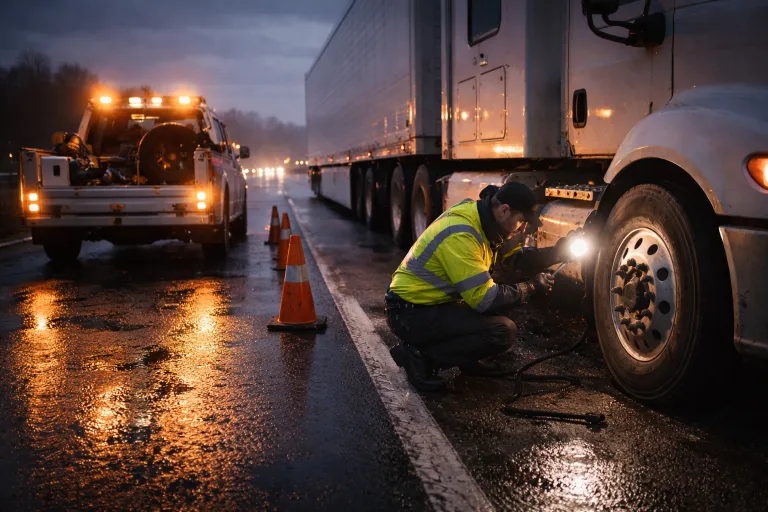
Whether the truck is sitting in Orange or out toward Tustin, it is the same phone number and the same crews. One call, day or night.
Deep-dive guide on choosing the right provider, common pitfalls, and what to expect on a service call.
OpenOpen positions at our network rescuers, full-time, part-time, and 1099 contract.
OpenOn-site photos from recent calls, see the work, not just the marketing.
OpenNetwork technicians carry diagnostic equipment, OEM-spec tooling, and common-failure parts for every major trailer repair brand on the road. Out-of-stock specifics order in within 24 hours.
Service trucks dispatch routinely to these locations across the metro freight corridors.

Nearest full truck stop north, 24-hr
View Directory Profile →
Shop on-site, scales, north via the 57
View Directory Profile →
Tire Care, east on the 91
Local diesel and parking near the Crush
View Directory Profile →Limited truck parking near the Crush
Local parts houses and diesel suppliers used by network mechanics for time-critical roadside repairs.
Heavy-duty parts, will-call
View Directory Profile →
Commercial counter, HD batteries
View Directory Profile →
Engine parts + dealer service
View Directory Profile →Major shippers, distribution centers, and industrial freight nodes generating outbound and inbound truck volume.
Medical supply receiving, time-sensitive deliveries
Children's hospital supply, refrigerated pharma freight
Retail distribution and last-mile staging
Light-industrial and distribution tenants near the Crush
Fleet-yard and warehouse cluster
Distribution and light-manufacturing freight east of the city
Three steps from the call to a cleared scene. Same flow whether you call from a fleet desk or the shoulder of an interstate.
Trailer type, what failed, and whether there is freight aboard. A landing gear, an air leak, and a wheel-off are three different trucks — sending the wrong one to a Orange yard costs a whole dispatch.
Structural work goes to a mobile welding rig; brake and air work goes to a truck with air tooling and brake stock. A Orange technician who arrives without what the failure needs has to leave and come back.
Brake stroke measured, required lamps confirmed, and any out-of-service item cleared before the trailer moves. If it cannot be made legal where it sits, we tow it in Orange rather than send a driver out on it.
Network rescuers accept all major credit cards, fleet cards, and consumer payment apps. Confirmed at dispatch.