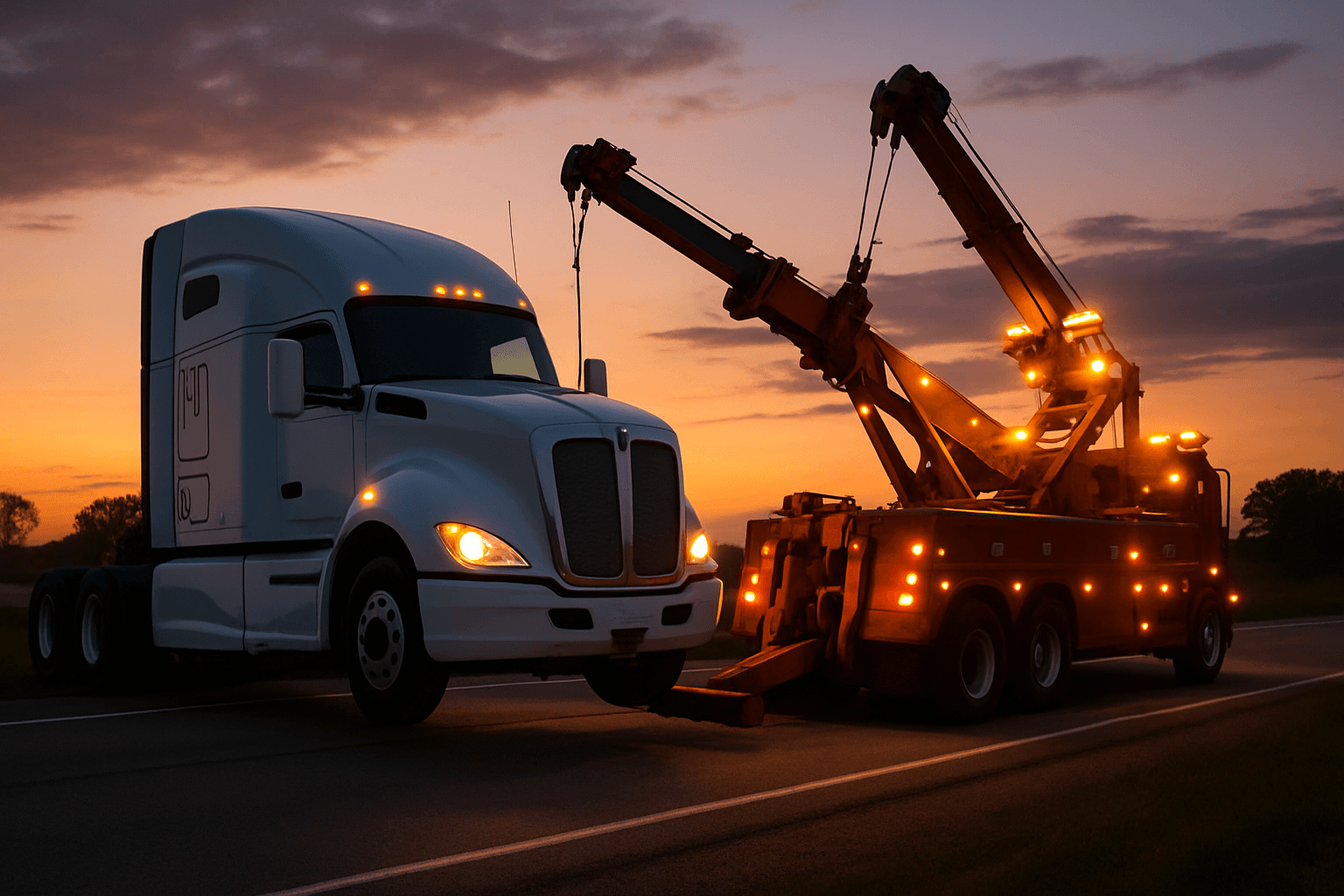
Why Vendor Quality Matters More Than Price
A fleet manager in the Midwest once told me his company switched to a cheaper roadside assistance vendor to cut costs. Three months later, they switched back. The savings evaporated after two incidents where trucks sat for hours waiting for service, missing delivery windows and costing far more in penalties than they saved on the contract.
That story plays out constantly across the industry. When a truck breaks down, the clock starts immediately. Every hour of downtime compounds. Cargo sits. Drivers burn hours of service. Customers get angry. The difference between a mediocre roadside assistance vendor and an exceptional one often shows up in those first 60 minutes after the call.
This is not about promoting any single company. It is about understanding what separates vendors who genuinely solve problems from those who just show up eventually. Whether you are a fleet manager vetting providers or an owner-operator building a list of trusted contacts, the criteria matter.
Response Time: The Non-Negotiable Baseline
Speed is table stakes. A vendor who cannot consistently arrive within the promised window is not a vendor worth keeping on file. But response time is more nuanced than it appears.
First, there is quoted ETA versus actual arrival. Some vendors quote optimistic times to win the job, then show up late. Others pad their estimates and arrive early. The second group builds trust. The first group gets one chance, maybe two, before they are off the list.
Second, response time varies by geography and time of day. A mobile mechanic who can reach you in 45 minutes during business hours in a metro area might need three hours at 2 AM in rural territory. That is reality, not failure. The key is whether the vendor communicates honestly upfront and updates you if conditions change.
Third, response time includes dispatch efficiency. The best vendors answer the phone fast, ask the right diagnostic questions, and commit resources immediately. Vendors who put you on hold, transfer you twice, and then say they will call back are already behind before anyone rolls.
Fleet managers should track actual arrival times against quoted times for every vendor they use. After a dozen calls, patterns emerge. Vendors who consistently beat their own estimates earn priority status. Vendors who consistently miss them get moved down the list or dropped entirely.
Technical Competence: Can They Actually Fix It?
Showing up fast is pointless if the vendor cannot solve the problem. Technical competence separates professionals from pretenders.
For tow operators, competence means understanding weight distribution, knowing how to safely secure a loaded truck, and having the right equipment for the job. A flatbed operator who shows up to recover a sleeper cab with a standard wheel lift setup has already failed. The best heavy duty tow operators carry multiple rigging options, know how to work with air brake systems, and can handle unusual recovery scenarios without calling for backup.
For mobile mechanics, competence means diagnostic ability under pressure. Roadside breakdowns rarely present textbook symptoms. A good mobile mechanic can troubleshoot electrical gremlins, identify failing sensors versus actual component failures, and make judgment calls about what is safe to limp to a shop versus what needs a tow. They carry a deep tool inventory and common parts. They do not show up with a basic socket set and a code reader.
For tire techs, competence means speed and safety. Changing a steer tire on a highway shoulder in traffic requires focus and efficiency. The best tire techs work methodically, check for secondary damage, and verify proper inflation and torque specs before they leave. They also know when a tire is too damaged to repair and will not sell you a patch job that fails 50 miles down the road.
One way to evaluate technical competence is to ask diagnostic questions before the vendor arrives. A competent mechanic will ask about symptoms, recent maintenance, and operating conditions. They might even talk you through a quick check to narrow down the issue. A less competent vendor will just say "I'll take a look when I get there" and show up unprepared.
Communication: The Underrated Differentiator
Communication quality predicts service quality. Vendors who communicate well during the initial call almost always deliver better service than vendors who are vague or dismissive.
Good communication starts with the first interaction. The vendor should confirm your exact location, ask about the nature of the problem, and give you a realistic ETA with a callback number. They should also tell you what to expect when they arrive and what information or access they will need.
During the job, good vendors provide updates. If they are running late, they call. If the problem is more complex than expected, they explain why and give options. If they need to order a part or call for additional equipment, they tell you immediately, not after an hour of trial and error.
After the job, good vendors document what they did and provide an invoice that matches what they quoted. They also follow up if there was any uncertainty about the repair. A mobile mechanic who fixes a sensor issue and then calls the next day to make sure the truck is still running right has earned future business.
Poor communicators, by contrast, go silent. They do not update you when they are late. They do not explain what they are doing or why. They finish the job, hand you a bill, and leave. If something goes wrong later, they are hard to reach.
Fleet managers should pay attention to communication patterns. Vendors who communicate proactively are usually organized, professional, and accountable. Vendors who communicate only when pressed are usually disorganized and reactive.
Equipment and Capability: Matching the Vendor to the Job
Not every roadside assistance vendor can handle every job. Matching the vendor to the problem saves time and frustration.
Heavy duty tow operators need serious equipment. A rotator for complex recoveries. A landoll or RGN trailer for long-distance transport of disabled trucks. Rigging gear rated for the loads they handle. Vendors who show up under-equipped waste everyone's time.
Mobile mechanics need a well-stocked service truck. Diagnostic computers compatible with multiple truck makes. A full complement of hand tools, air tools, and specialty tools. Common wear parts like belts, hoses, filters, and sensors. Welding equipment if they advertise welding services. Hydraulic hose and fittings if they work on hydraulic systems. A mechanic who has to leave the scene to get parts or tools is not truly mobile.
Tire techs need commercial-grade equipment. A heavy duty impact wrench. Tire cages for safe inflation. A good jack rated for the weight. A supply of the tire sizes they commonly encounter. Vendors who work out of a pickup bed with hand tools are fine for light work but cannot handle a fleet operation efficiently.
Before you call a vendor, make sure they can actually handle the job. A vendor who specializes in passenger cars is not going to successfully recover a loaded tractor-trailer from a ditch. A mobile mechanic who works mostly on pickups might not have the diagnostic tools for a Volvo or a Freightliner. Asking upfront saves everyone time.
Reputation and Accountability: What Other Customers Say
Reputation is earned over time. The best way to evaluate a roadside assistance vendor is to ask other people in the industry.
Talk to other fleet managers. Who do they call when a truck goes down? Who do they avoid? Word of mouth is powerful because fleet managers have no reason to lie about vendor performance. A vendor who consistently delivers good service will have multiple fleets willing to vouch for them.
Talk to drivers. Drivers interact directly with roadside vendors and have strong opinions. A driver who has been stranded for hours waiting for a tow will remember the vendor's name. A driver who got back on the road quickly because a mobile mechanic showed up prepared and fixed the problem will also remember.
Check online reviews, but take them with context. A single bad review might be an outlier. A pattern of bad reviews about the same issues, response times, communication, or billing, is a red flag. Similarly, a vendor with consistently positive reviews over time is probably doing something right.
Accountability also shows up in how vendors handle mistakes. Everyone makes mistakes. Equipment fails. Traffic delays happen. Parts do not arrive on time. The difference is whether the vendor owns the problem and makes it right or whether they deflect and make excuses. Vendors who take accountability earn long-term trust. Vendors who blame everyone else do not.
Pricing Transparency: No Surprises After the Fact
Pricing is always a factor, but pricing transparency matters more than the actual price. A vendor who quotes $800 and charges $800 is better than a vendor who quotes $600 and then adds fees and surcharges to reach $900.
The best vendors provide clear pricing upfront. They explain what is included and what costs extra. They tell you if there are potential variables, such as additional labor if the problem is more complex than expected or mileage fees if the tow distance exceeds a certain range. They give you a chance to approve additional charges before proceeding.
Avoid vendors who refuse to quote prices over the phone or who give vague estimates like "depends on what we find." That is a setup for bill shock. A professional vendor should be able to give you a reasonable range based on the information you provide.
Also avoid vendors who lowball to win the job and then inflate the bill. This happens more often than it should. A tow operator quotes $500, shows up, and then claims the job is more complex and charges $1,200. Unless the situation genuinely changed, that is bait and switch.
Fleet managers should establish pricing agreements with their preferred vendors. Many vendors offer contract rates for fleets that provide consistent volume. That eliminates pricing uncertainty and builds a stable relationship.
How Road Rescue Network Helps Connect You with Quality Vendors
Finding quality roadside assistance vendors has traditionally been a frustrating process. You call around, hope someone answers, and hope they can actually help. Road Rescue Network changes that dynamic by connecting truckers, fleet managers, and drivers directly with verified roadside service providers across the country.
The platform allows you to post a service request with details about your location and the problem. Nearby vendors, including tow operators, mobile mechanics, tire techs, welders, and hydraulic hose specialists, can respond with their availability and pricing. You see multiple options and choose the vendor that fits your needs.
This is not about replacing the vendors you already trust. It is about giving you options when your usual contacts are unavailable or when you break down in unfamiliar territory. The transparency of the process means you know what you are getting before you commit.
What Drivers Should Look for in a Roadside Vendor
Drivers are often the ones making the call when something goes wrong. If you are an owner-operator or a company driver with discretion over who to call, here is what to prioritize.
First, look for vendors who treat you with respect. You are stranded on the side of the road, possibly in bad weather, possibly at night. A vendor who shows up with a good attitude and works efficiently makes a stressful situation tolerable. A vendor who shows up annoyed or dismissive makes it worse.
Second, look for vendors who explain what they are doing. A good mobile mechanic will walk you through the diagnosis and the repair. A good tow operator will explain how they are going to secure your truck and where they are taking it. You should never feel like you are in the dark about what is happening to your equipment.
Third, look for vendors who do not try to upsell unnecessary services. If your truck needs a tow, it needs a tow. If a mobile mechanic can fix it on site, they should fix it on site. Vendors who push for more expensive options when simpler solutions exist are not looking out for your best interest.
Fourth, keep a list. When you find a vendor who delivers good service, save their contact information. Build a network of trusted providers in the regions you run regularly. That way, when something goes wrong, you are not starting from scratch.
What Makes a Vendor Worth Featuring
Some roadside assistance vendors go beyond competent service and become genuinely valuable partners to the fleets and drivers they serve. These are the vendors worth spotlighting.
They invest in their equipment. They do not show up with aging trucks and worn-out tools. They maintain their gear and upgrade when necessary. They understand that their equipment is their livelihood and treat it accordingly.
They invest in training. The best vendors stay current on new truck technology, new diagnostic methods, and new safety protocols. They attend industry training. They get certified. They do not coast on what they learned 20 years ago.
They treat every job like it matters. Whether it is a simple tire change or a complex recovery, they bring the same level of professionalism and care. They do not blow off small jobs or treat routine calls as beneath them.
They build relationships. They remember their customers. They check in after a job to make sure everything is still running right. They offer advice when asked. They become a resource, not just a vendor.
They give back to the industry. Some vendors mentor newer operators. Some volunteer for industry associations. Some share knowledge online to help other professionals improve. They understand that a stronger industry benefits everyone.
Final Thoughts: Vendor Quality Is a Long-Term Investment
Choosing roadside assistance vendors based solely on price is short-term thinking. The cheapest vendor is rarely the best vendor, and the cost of poor service, downtime, missed deliveries, and driver frustration, far exceeds the money saved on the initial call.
Build relationships with quality vendors. Pay them fairly. Treat them as partners, not commodities. When you find a tow operator who consistently shows up fast and handles your equipment with care, keep them on speed dial. When you find a mobile mechanic who can diagnose problems quickly and get your trucks back on the road, send them more work.
Quality vendors are out there. They answer the phone. They show up when they say they will. They fix the problem. They communicate clearly. They charge fairly. They take pride in their work. Those are the vendors worth featuring, worth recommending, and worth calling the next time something goes wrong.