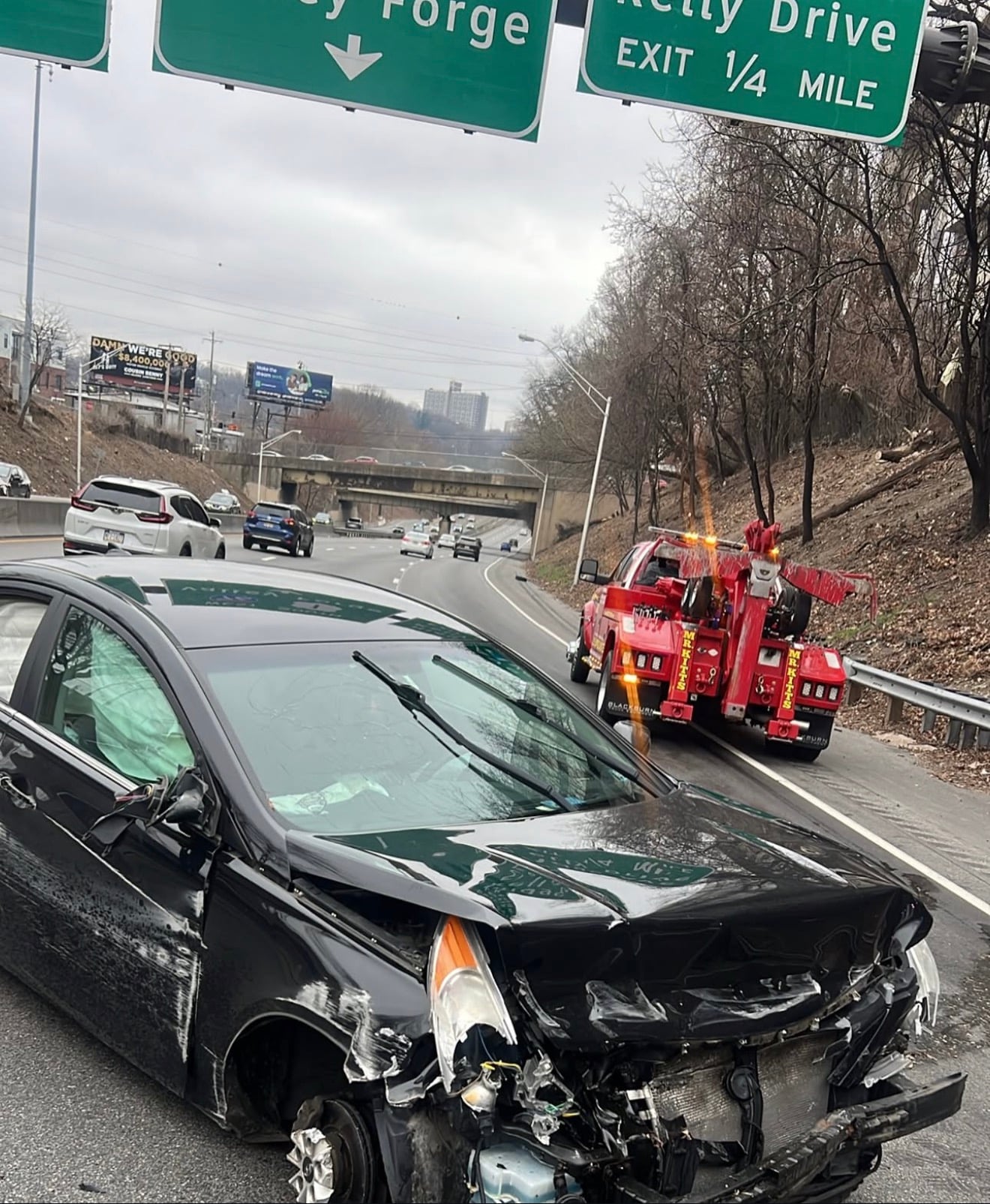
Towing and recovery, from a hatchback to an 80,000 lb rig.
One number reaches dispatchers who know the difference between a wheel-lift call and a rotator call. Tell us the vehicle, the load, and where it sits, we match the right truck the first time instead of sending equipment that has to turn around and come back with something bigger.
Rollbacks, wheel-lifts, integrated wreckers, landolls and rotators on one network.
Destination is your choice, your shop, your yard, your dealer, not an impound lot.
Hookup and per-mile rate confirmed before the truck leaves the yard.
1420
Rescuers on-call now
47 min
Average dispatch ETA
18,700
Calls last 30 days
24/7
Always available
About Towing and Recovery
Towing versus recovery, and why the truck we send matters
Towing and recovery are two different jobs that get billed under one word. A tow is transport: the vehicle is upright, on its wheels, in a spot a truck can reach, and the work is hooking it and driving it somewhere. Recovery is everything that has to happen before that is possible, a rig on its side in a median, a box truck nosed into a drainage ditch, a trailer that shifted forty thousand pounds of freight against one wall, a loader that walked itself off the edge of a haul road. Recovery is priced on time, rigging, and risk rather than miles, because the hard part is getting the machine back into a condition where a tow can even begin. When you call, tell dispatch which one you actually have; it changes the equipment, the crew size, and the number we quote you.
The equipment side is not interchangeable either. A wheel-lift cradles the tires and lifts one axle, which is fast and cheap and completely wrong for all-wheel drive, low-clearance, air-suspension, and most electric platforms, dragging two driven wheels down the highway can cook a transfer case or a differential in a matter of miles, and the repair costs many times what the correct flatbed would have. A rollback (flatbed) carries the whole vehicle with nothing turning, which is why it is the default for AWD, exotics, collector cars, wrecked units, and anything that will not roll straight. On the commercial side, an integrated wrecker with an underlift picks a tractor up by the axle or the frame rather than the bumper, a landoll trailer hydraulically tilts to load equipment and non-rolling trucks, and a rotator is a heavy wrecker whose boom slews a full circle so a crew can pick and place a load from an angle a fixed boom could never reach. Air cushions belong in that same conversation: they lift a laid-over trailer evenly instead of prying on one corner and folding the roof rail.
Then there is the part nobody explains until it costs money. A consensual tow is one you request and control, you name the destination, you approve the rate, the vehicle goes where you want it. A non-consensual tow is one ordered by police at a crash scene, by a property owner, or by a state highway agency clearing a lane, and in that case you do not pick the operator, the destination, or the storage yard, and daily storage plus release and administrative fees start accruing immediately. On busy corridors the window between a breakdown and a state-ordered relocation can be well under an hour. Calling early and having your own truck en route is the single cheapest thing you can do, and if a rotation tow already happened, dispatch can still arrange a second-tow release out of the yard to a shop you actually chose. Ask for an itemized invoice on every job, insurance carriers, motor clubs, and cargo claims all require line items, not a lump sum.
The safest way to move anything that should not roll on its own wheels: all-wheel drive, lowered or air-suspension cars, EVs, exotics and collector vehicles, and any unit with collision or driveline damage. The whole vehicle rides on the deck, loaded with a winch and soft straps at the manufacturer's tie-down points instead of hooks thrown over a control arm.
Wheel-Lift & Dolly Towing
Fast, low-impact hookup for two-wheel-drive vehicles in tight spots, parking garages with low overheads, packed apartment lots, alleys and city curb lanes where a rollback simply cannot maneuver. Dollies go under the drive wheels when the transmission cannot be shifted or the vehicle has to be moved without turning a driveline.
Heavy-Duty Wrecker Towing
Integrated wreckers with underlifts rated for tractors, loaded trailers, tankers, dump trucks, coaches and fire apparatus. Air hookups to hold or release spring brakes, driveline pulls where the drivetrain cannot be allowed to spin, and towbar or fifth-wheel setups so a loaded combination moves as one unit instead of two problems.
Accident & Rollover Recovery
Scene work with police, fire, and highway agencies: uprighting laid-over trucks and trailers with air cushions and rotator picks, freeing pinned units, sweeping and containing debris, and clearing travel lanes on a schedule the incident commander sets. Photos and an itemized recovery report go to whoever is paying the claim.
Winching & Off-Road Extraction
Vehicles that are not on pavement anymore. Ditches, soft shoulders, mud, sand, snow banks, embankments, and job sites reached with snatch blocks, rated shackles, and anchors set at proper angles. Rigging goes to real recovery points so the unit comes out straight and does not gain a bent frame rail on the way.
Equipment & Machinery Hauling
Landoll and lowboy transport for skid steers, excavators, backhoes, telehandlers, forklifts, and non-running trucks that cannot be lifted by an axle. Load-securement to DOT standards, and dispatch flags anything that will need permits for width, height, or weight before the truck is scheduled rather than after.
Why Mobile vs a Shop
A disabled vehicle is a liability the entire time it sits, to passing traffic, to your cargo, to your CSA score if it is commercial, and to your wallet the moment a highway agency decides to relocate it for you. Getting the correctly sized truck on scene the first time ends all of that in one trip instead of stacking a wasted dispatch, a second call, and storage fees on top of the original breakdown.
On the Service Truck
Network operators run rollbacks with wheel-lift assists, self-loading wheel-lift trucks, medium-duty wreckers, integrated heavy wreckers with underlifts and air packages, landoll and lowboy trailers, and rotators with air cushions, snatch blocks, rated shackles, and full rigging kits. Dispatch confirms rated capacity against your actual gross weight before the truck is assigned.
24/7 DispatchInsurance & DOT VerifiedYou Know When They’ll Be There
Duty Classes
Light, medium, heavy, and everything that needs a rotator
Towing is priced and dispatched by weight class, not by vehicle name. Find your gross weight below so you know which truck is coming and roughly what it takes to move you.
Passenger vehicles and light commercial units moved by rollback or wheel-lift. This is the highest-volume tier in the network and the one where equipment choice matters most, because AWD, low clearance, and EV platforms all need a flat deck rather than a lift.
The awkward middle that light trucks cannot legally lift and heavy wreckers are oversized for. Delivery box trucks, shuttle buses, ambulances, small motorhomes, and loaded work trucks handled by medium wreckers and extended-deck carriers.
Tractors, loaded trailers, tankers, dumps, mixers, coaches, and fire apparatus. Integrated wreckers in the 25 to 75 ton range pick from the frame or axle with an underlift, with air lines connected to cage or release the spring brakes and drivelines pulled when the unit cannot be allowed to roll.
The calls where the unit is no longer upright, no longer on the road, or no longer in one piece. Rotators slew a boom through a full circle so a crew can pick from whatever angle the scene allows, and air cushions upright a laid-over trailer evenly instead of folding it.
What fits
Rollovers & jackknifed rigs
Off-road & embankment recoveries
Shifted or spilled loads
Crane & equipment retrieval
Multi-vehicle crash scenes
What rolls
50-75 ton rotator
Air cushion bag systems
Snatch blocks & rated shackles
Load-transfer trailers
Debris & spill containment
What We Get Called For
The tows and recoveries this network runs every day
Patterns pulled from live dispatch traffic across the network, not a generic service checklist.
AWD crossover that will not start in a parking garage
Two problems at once: the drivetrain rules out a wheel-lift, and the deck height rules out a rollback on a garage ramp with seven feet of clearance. The answer is a self-loading wheel-lift with go-jacks or skates to roll the vehicle out to street level, where the flatbed is waiting. Tell dispatch the clearance height and the level you are parked on when you call, that one detail is the difference between a single dispatch and a truck that shows up, cannot fit, and leaves.
Loaded dry van broken down on an interstate shoulder
A tractor down under load is a clock: hours of service are burning, the freight has an appointment, and the shoulder is the most dangerous real estate on the highway. Dispatch confirms gross weight and whether the trailer stays hooked, then sends a heavy wrecker able to tow the combination as one unit or drop a hostage tractor under the trailer so the load keeps moving while the power unit goes to a shop. Get the reflective triangles out at the required distances first, and stay out of the traffic side of the vehicle.
Tractor-trailer on its side in a median
This is recovery, not towing. A rotator sets up on stable ground, air cushions go under the trailer to lift it evenly, and the crew works with the responding agency on lane closures while the load is assessed for shifting. If the freight moved, it usually has to be transloaded to another trailer before anything is uprighted, because forty thousand pounds against one sidewall will tear the trailer apart on the pick. Expect hours, not minutes, and expect an itemized report with photos for the carrier and the cargo claim.
Box truck backed into a soft shoulder on a delivery route
Rain, a gravel apron, and a driver who trusted a mirror. The rear duals sink, the frame settles, and now a straight truck that weighs eleven tons needs to come out sideways without folding the rear crossmember. A medium wrecker rigs to the frame with a snatch block set to change the pull angle, and the truck comes out along the line it went in. Attempting this with a chain and a friend's pickup is how a fifteen-minute winch becomes a bent-frame insurance claim.
Excavator down on a job site with no road access
Machinery that will not start or has thrown a track does not go on a rollback. It goes on a landoll or a lowboy, winched up a hydraulically tilted deck while the operator controls the line. Dispatch checks the machine's transport weight and width against the route before scheduling, because an over-width or over-weight move needs a permit and, in some corridors, a scheduled travel window. Site access (gate width, ground conditions, and overhead lines) is the other thing we ask about before we assign a truck.
Car impounded off a crash scene the same night
Police-ordered rotation tows go to whichever operator is up on the list, to whichever yard that operator uses, and storage begins that day. If your vehicle is already in a yard, we can arrange a second tow out to your shop, your dealer, or your driveway once the hold is released, which usually costs less than another week of storage plus the drive to a body shop you did not choose. If the vehicle is still on the scene and the scene is not yet cleared, calling us first is what keeps it out of the yard entirely.
Response Times
Average towing and recovery response times by call type
Rolling 30-day average dispatch-to-arrival by service type across the national rescuer network. Urban metros run faster; rural corridors run longer.
Light-Duty Towing
42 min
Accident Recovery & Assistance
46 min
Winching & Recovery
54 min
Heavy-Duty Towing
61 min
Heavy Equipment Hauling
88 min
Emergency Roadside Assistance
34 min
Coverage
One number. The whole country.
Dispatch does the finding. You never call a second company, chase a callback, or negotiate with a stranger on the shoulder.
50
States covered
75-ton
Rotator capacity on network
24/7
Live dispatch, holidays included
3
Duty classes plus heavy recovery
Broken down right now?
One number reaches dispatchers who know the difference between a wheel-lift call and a rotator call. Tell us the vehicle, the load, and where it sits, we match the right truck the first time instead of sending equipment that has to turn around and come back with something bigger.
Nobody can quote a tow honestly without knowing the weight, the distance, and what it takes to get the unit hooked. What we can do is show you every variable that lands on the invoice, so the number dispatch gives you at (800) 673-1060 is something you can actually check.
Hookup fee plus per-mile rate
Almost every tow is built from two numbers: a base hookup or service call charge that covers getting the truck to you and the vehicle secured, and a per-mile rate from the scene to the destination. Both are quoted before the truck rolls. Some markets bill from the operator's yard rather than from the pickup point, so ask which clock is running, it is a fair question and any straight operator will answer it.
Duty class of the truck required
A rollback, a medium wrecker, and a 60-ton rotator are three entirely different pieces of capital with three different operator certifications behind them, and the rate follows the iron. This is why gross weight matters more than what the vehicle is called. Guessing low on the phone does not save money; it sends the wrong truck, wastes an hour, and you pay for the second dispatch too.
Recovery time and crew size on scene
Straight transport is priced on miles. Recovery is priced on time, and the meter includes rigging, uprighting, transloading freight, and cleanup. A two-truck crew with a rotator working a median rollover for five hours is a fundamentally different invoice than a thirty-minute hookup, and it should be, because that is what the work costs.
Winching, rigging and access difficulty
How far off the pavement the unit sits, what it sits in, and whether there is a solid anchor within reach all move the number. A ten-foot pull onto a level shoulder is minor. A vehicle eighty feet down an embankment in wet clay needs multiple snatch blocks, a second unit as an anchor, and real time. Locked-up wheels, a seized driveline, or a missing key add steps too.
After-hours, weather and scene surcharges
Overnight, holiday, and severe-weather calls price higher industry-wide because fewer trucks are staffed at exactly the moment demand triples. Incident scenes add coordination time with police and highway agencies, lane-closure requirements, and sometimes mandatory debris cleanup. None of that should be a surprise line item, which is why we put it in the quote up front.
Storage, impound and who is paying
If a vehicle goes to a yard, daily storage plus release and administrative fees accrue until someone signs it out, that is usually the fastest-growing cost on any towing invoice. Many tows are recoverable through auto or commercial insurance, cargo claims, a motor club, or a manufacturer roadside program, and all of them require line items. Ask for an itemized invoice at booking, every time.
You get the price before the truck rolls. Dispatch quotes the job up front against the network rate for your location and equipment, and we confirm it with you before anyone is dispatched. No arrival-time surprises, no renegotiating on the shoulder.
How It Works
How Towing and Recovery Dispatch Works
Three steps from breakdown to back on the road. Same flow whether you call from a fleet desk or the shoulder of an interstate.
01
Call dispatch
One number reaches Road Rescue Network's 24/7 operations team. Describe the problem in plain language; we capture your location, vehicle, and need in under 60 seconds.
02
We dispatch
We find the closest truck that actually has the right gear for your problem, and you get a time before anybody leaves. Nobody promises to call you back.
03
Truck rolls
The truck shows up when we said it would. Most calls end right there without a tow. If it does need towing, that gets handled on the same visit, not a second wait.
By Metro
Towing & Recovery in major US metros
Tap a metro for local rescuers, live response times, and recent calls. New cities are added continuously.
Towing and Recovery Brands We Service in the United States
Network technicians carry diagnostic equipment, OEM-spec tooling, and common-failure parts for every major towing and recovery brand on the road. Out-of-stock specifics order in within 24 hours.
Towing & Recovery FAQ. Pricing, coverage, and response time
How long will it take for a tow truck to reach me?+
Network average from dispatch to arrival runs about 47 minutes across all towing call types. Light-duty tows in dense metros regularly beat 35. Heavy-duty and recovery calls take longer because far fewer trucks in any market are rated for the work and the nearest one may be an hour out. Dispatch gives you the honest ETA at booking and calls you if it moves, rather than quoting a number that makes you feel better for ten minutes.
What is the difference between towing and recovery?+
Towing is transport of a vehicle that is upright, on its wheels, and reachable by a truck, it is priced on hookup plus miles. Recovery is the work required to get a vehicle back into that condition: uprighting a rollover, pulling a unit out of a ditch or embankment, transloading shifted freight, or extracting a machine from a job site. Recovery is priced on time, rigging, and crew, because miles are not what makes it hard.
Do I need a flatbed or is a wheel-lift fine?+
Wheel-lifts are fine for most two-wheel-drive vehicles over short distances. You want a flatbed if the vehicle is all-wheel or four-wheel drive, has low ground clearance or air suspension, is electric, is a collector or exotic car, has collision damage, or has a wheel that will not roll. Towing an AWD vehicle on two wheels can destroy a transfer case or a differential, and that repair dwarfs the difference in tow rate.
How much does a tow cost?+
It is built from a hookup fee plus a per-mile rate, adjusted for the duty class of truck required, the time of day, and any winching or recovery work needed to reach the vehicle. Because those variables swing enormously between a sedan in a suburb and a loaded tractor on a rural shoulder, we quote your specific job before dispatch rather than publishing a national price we could not honor. You approve the number before a truck leaves.
Can you tow a fully loaded semi without unloading it?+
Usually yes. A heavy wrecker with an underlift can pick a tractor by the frame or drive axle and move the combination as one unit, and air lines are connected so the spring brakes can be caged or released properly. When gross weight, freight condition, or a shifted load makes that unsafe, the answer is a hostage tractor under the trailer so the load keeps moving while the power unit goes to the shop separately.
Where will my vehicle be taken?+
Wherever you tell us, on any tow you request. Your shop, your dealer, your yard, your driveway, or the nearest facility dispatch has confirmed is actually open. We do not route vehicles into an impound lot on a consensual tow. The only tows where you do not choose the destination are police-ordered scene tows and property-owner tows, which are not ours to direct.
My car was already towed to an impound lot. Can you help?+
Yes. Once the yard releases the vehicle, we can run a second tow from the lot to your shop, your body shop, or your home. Storage accrues daily and release plus administrative fees stack on top, so moving it out quickly is almost always cheaper than leaving it while you decide. Bring your ID, registration or title, and proof of insurance, most yards will not release without all three.
Do you handle accident scenes with police on site?+
Yes. Network operators work incident scenes with law enforcement, fire, and state highway agencies routinely: lane closures, debris sweep, fluid containment, and clearance timing set by the incident commander. Be aware that at many scenes the responding agency will call a rotation tow of its own. If you want to control where your vehicle goes, call us as early as you safely can.
Can you tow a motorhome, a bus, or a piece of equipment?+
Yes, and each one needs its own plan. Class A motorhomes and coaches are heavy-duty work with air systems and long wheelbases to account for. Non-running equipment goes on a landoll or a lowboy rather than a wrecker, loaded up a tilting deck by winch. Tell dispatch the transport weight, length, width, and height up front so we know whether the move needs a permit before we schedule it.
Are the tow operators actually licensed and insured?+
Every operator in the network is verified before taking a dispatch and re-verified on an ongoing basis: current commercial and on-hook or garage-keepers coverage on file, valid operating authority, and equipment rated for the classes they accept. Arrival time and job completion are tracked on every call, and operators who fall below the standard stop receiving dispatches from us.
Accepted Payment
Payment methods accepted across the network
Network rescuers accept all major credit cards, fleet cards, and consumer payment apps. Confirmed at dispatch.
Comdata
Get Help Now
Need towing and recovery right now?
One number reaches a live dispatcher who sends the nearest verified rescuer, day or night, with a confirmed price and ETA before the truck rolls.