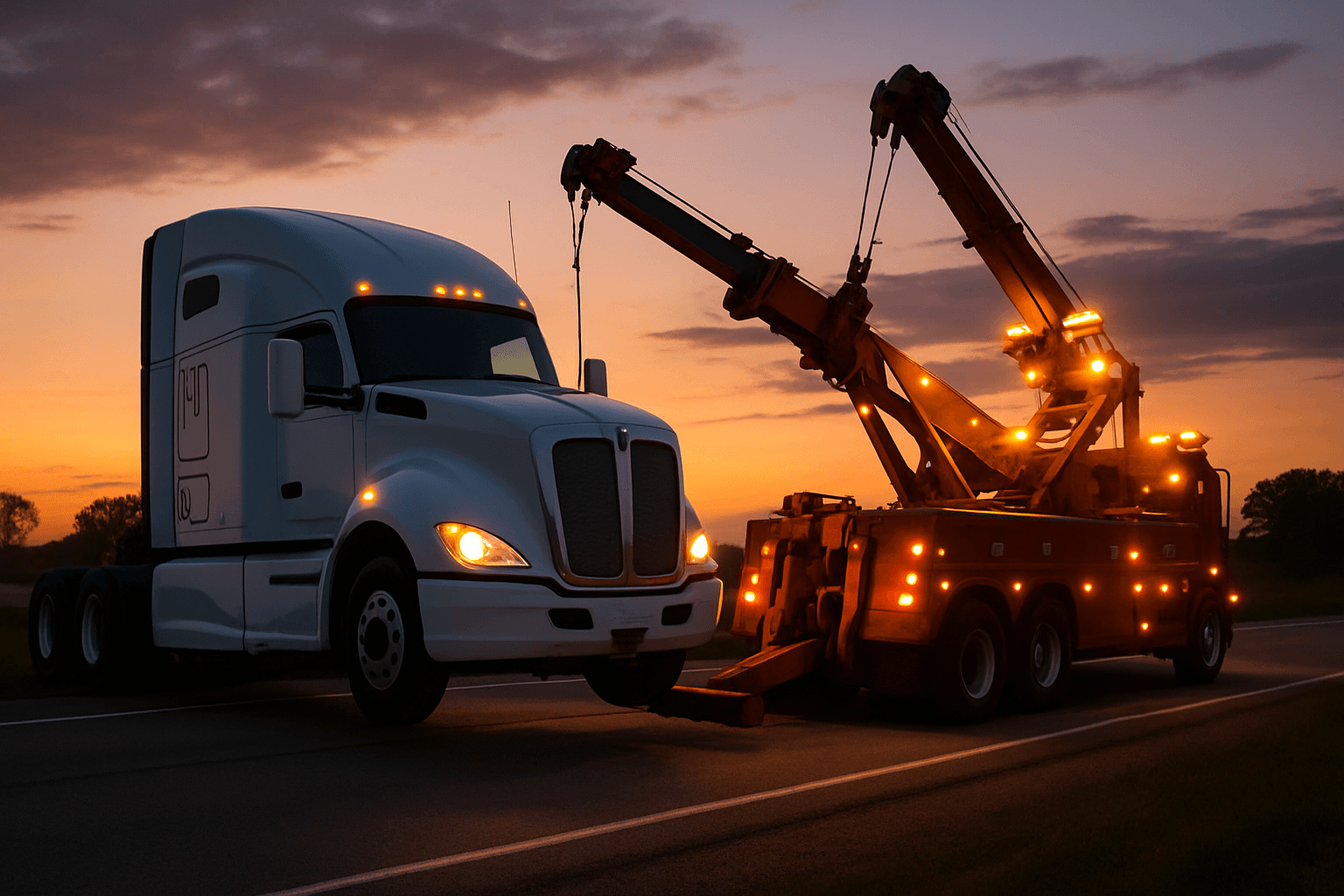
What Actually Qualifies as a Tow Truck
Most people picture a flatbed or a wheel-lift rig pulling a sedan off the shoulder. That works for passenger cars, but the commercial trucking world operates on an entirely different scale. A tow truck in the heavy-duty sense is any specialized recovery vehicle equipped to move, lift, winch, or transport disabled commercial trucks, trailers, buses, motorhomes, or construction equipment. These machines range from medium-duty wreckers rated for box trucks and delivery vans all the way up to 75-ton rotators capable of uprighting a rolled tanker or extracting a loaded tractor from a ditch.
The term "tow" itself covers a lot of ground. It can mean a simple hook-and-chain drag, a full undercarriage lift, a flatbed transport, or a complex multi-point rigging job involving multiple trucks and hydraulic booms. What matters is matching the truck to the job. Send the wrong class of wrecker to a Class 8 breakdown and you will either damage the disabled unit or waste hours waiting for the right equipment to show up.
Light-Duty vs Medium-Duty vs Heavy-Duty: The Weight Classes That Matter
Tow trucks are categorized by their gross vehicle weight rating and lifting capacity, and those categories determine what they can legally and safely handle.
Light-duty tow trucks typically handle vehicles up to around 10,000 pounds. These are the wheel-lift and flatbed units you see pulling sedans, pickups, and small vans. They have no place in commercial trucking recovery, but they do show up at car dealership auctions, impound lots, and municipal tow contracts. If you run a fleet of cargo vans or small delivery trucks, a light-duty wrecker might be all you need for a simple tow to the shop, but anything heavier requires stepping up.
Medium-duty tow trucks are rated for vehicles between 10,000 and 26,000 pounds. These handle box trucks, step vans, small buses, Class 4-6 commercial trucks, and some smaller RVs. Medium-duty wreckers often use a combination of wheel-lift, underlift, and integrated boom systems. They are common in urban environments where delivery fleets and municipal vehicles dominate the call volume. If you operate a last-mile delivery fleet or a small moving company, this is the class you will interact with most often.
Heavy-duty tow trucks start at 26,001 pounds and go up from there. This is where the real commercial trucking recovery happens. These rigs are built to move Class 7 and Class 8 tractors, loaded trailers, motorcoaches, fire trucks, and heavy construction equipment. Heavy-duty wreckers come in several sub-types: conventional boom trucks, integrated units with underlift systems, sliding rotator units, and specialized heavy haulers with multi-axle configurations. The biggest rotators can lift over 75 tons and cost upwards of half a million dollars new.
The Main Types of Heavy-Duty Tow Trucks You Will Encounter
When your tractor goes down on the highway or your trailer jackknifes in a rest area, the type of tow truck that shows up matters as much as how fast it arrives.
Conventional boom trucks use a fixed or telescoping boom mounted behind the cab. The boom extends over the disabled vehicle, and chains or straps attach to the frame or axles. These trucks are versatile and relatively affordable, but they require careful rigging and are slower to deploy than integrated units. They work well for simple tows where the disabled truck can roll on its own axles.
Integrated wreckers combine a boom with an underlift system that slides under the front or rear axle of the disabled vehicle. This setup distributes weight more evenly and allows for faster hookups. Integrated units are the workhorses of highway recovery, especially for tractors that have lost air pressure or suffered steering failures. They can lift the front end, secure the rear axles, and tow the entire unit without needing a second truck.
Rotator wreckers add a rotating boom to the integrated platform. The boom can swing 360 degrees, which is critical for off-road recoveries, rollovers, and situations where the disabled truck is not parallel to the road. Rotators are expensive to own and operate, but they are the only practical option for uprighting a flipped trailer or winching a tractor out of a steep embankment. If you have ever seen a recovery crew working a multi-vehicle pileup or a tanker rollover, there was almost certainly a rotator on scene.
Landoll trailers and heavy haulers are not technically tow trucks, but they serve a similar function. These are specialized lowboy or tilt-deck trailers designed to transport disabled equipment that cannot be towed conventionally. If your truck has frame damage, a broken axle, or fire damage that makes it unsafe to tow, a heavy hauler is the safer option. The disabled unit is winched or driven onto the deck and secured for transport.
What Determines Semi Tow Truck Cost
The question every fleet manager and owner-operator asks after a breakdown: what is this going to cost? The answer depends on the type of recovery, the equipment required, the location, and the time of day.
Hourly rates for heavy-duty tow trucks commonly run between $200 and $400 per hour, with a minimum charge that often covers the first two hours. That minimum can range from $400 to $1,000 depending on the market and the operator. If the job requires a rotator, specialized rigging, or multiple trucks, expect the hourly rate to climb. Some operators charge a flat dispatch fee on top of the hourly rate.
Mileage charges apply once the tow truck leaves its yard. Rates typically range from $5 to $10 per loaded mile, sometimes higher in rural areas where operators have to travel significant distances to reach the breakdown. If your truck goes down 80 miles from the nearest heavy-duty wrecker, you are paying for 80 miles of travel each way, plus the loaded tow distance.
Winching and recovery labor is billed separately from the tow itself. If your tractor is in a ditch, off the pavement, or requires rigging to stabilize before it can be moved, expect additional charges. Winching rates often start at $150 per hour and go up depending on the complexity. Multi-point rigging, boom extensions, and off-road recoveries can easily double the base tow cost.
After-hours and weekend premiums are standard. Many operators charge 1.5x to 2x their normal rate for calls between 6 PM and 6 AM, and the same applies to weekends and holidays. If your truck breaks down at 2 AM on a Sunday, plan accordingly.
Storage and impound fees come into play if the disabled truck cannot be immediately repaired or picked up. Tow yards typically charge $50 to $150 per day for outdoor storage of a Class 8 tractor, and more if the trailer is still attached. If the breakdown happened in a no-parking zone or the truck was impounded by law enforcement, those fees start accruing immediately.
The total semi tow truck cost for a straightforward highway breakdown and tow to a nearby shop might run $800 to $1,500. A complex recovery involving a rollover, off-road winching, and a 100-mile tow can easily exceed $10,000. That is why many fleets and owner-operators carry roadside assistance coverage that includes heavy-duty towing up to a certain dollar limit.
When You Actually Need a Tow vs When You Need Mobile Repair
Not every breakdown requires a tow truck. In many cases, a mobile mechanic, tire tech, or hydraulic hose specialist can get you back on the road faster and cheaper than a tow to the shop. Knowing the difference saves time and money.
If your truck has lost all air pressure and the brakes are locked, you need a tow. Same if the engine has seized, the transmission is locked up, or the frame is damaged. If the truck is blocking traffic, leaking hazardous materials, or has been in a collision, a tow truck is the right call.
But if you have a flat tire, a dead battery, a blown air line, a failed starter, or a fuel delivery issue, a mobile service provider can often handle it on-site. Road Rescue Network connects drivers and fleet managers with mobile mechanics, tire techs, and hydraulic specialists who operate 24/7 across the country. In many cases, a mobile repair costs a fraction of a tow and gets the truck moving in under two hours.
The key is accurate diagnosis. If you or your driver can identify the problem and it falls into the repairable-on-site category, dispatch mobile service first. If the problem is mechanical failure, structural damage, or anything that makes the truck unsafe to operate, call for a tow.
How to Choose a Good Tow Truck Operator
Not all heavy-duty tow operators are created equal. The difference between a professional recovery crew and a cut-rate operator can mean the difference between a clean tow and thousands of dollars in secondary damage.
Licensing and insurance are non-negotiable. A good tow truck operator carries commercial auto liability, on-hook coverage (which protects your truck while it is being towed), and garage keeper's liability (which covers your truck while it is in their yard). Ask for proof of insurance before they hook up. If they hesitate or cannot produce current certificates, walk away.
Equipment condition matters. A well-maintained wrecker with clean rigging, functional hydraulics, and proper lighting is a sign of a professional operation. Worn cables, leaking hydraulic lines, and rusted boom components are red flags. If the truck that shows up looks like it barely made the trip, do not let them hook your equipment.
Operator experience with your type of vehicle is critical. Towing a day cab is different from towing a sleeper with a 53-foot reefer still attached. Ask how many similar recoveries the operator has handled. If they seem uncertain about rigging points or weight distribution, that is a problem.
Response time commitments should be clear up front. Some operators promise 60-minute response windows and deliver. Others quote two hours and show up four hours later. If you are blocking a lane or sitting in a dangerous location, response time is not just a convenience issue, it is a safety issue.
Transparent pricing is another marker of a professional outfit. A good operator will give you a clear estimate before they start the job, including hourly rates, mileage, and any anticipated surcharges. If they refuse to discuss pricing until after the truck is hooked, you are likely dealing with someone who inflates bills after the fact.
What Happens During a Heavy-Duty Tow
Understanding the process helps you communicate with the operator and ensures your equipment is handled correctly.
The operator arrives and assesses the situation. They will walk around the disabled truck, check for frame damage, look at the axles and suspension, and determine the safest rigging points. If the truck is in a hazardous location, they may set up traffic control or coordinate with law enforcement before starting the recovery.
Next comes the hookup. For an integrated wrecker, the operator positions the underlift under the front or rear axle, secures the lift arms, and raises the disabled truck until the drive axles are off the ground. Chains or straps secure the frame to prevent shifting during transport. If the truck is equipped with air ride suspension, the operator may need to manually release air or adjust the ride height.
If the recovery involves winching, the operator extends the boom, attaches the winch cable to a secure frame point, and begins pulling. This is slow, controlled work. Rushing a winch job can snap cables, damage the truck, or injure the crew. Multi-point rigging uses multiple attachment points and sometimes multiple trucks to distribute the load evenly.
Once the truck is secured, the operator performs a final walk-around to check for loose straps, clearance issues, and proper weight distribution. Then the tow begins. Speed is kept moderate, and the operator monitors the load constantly. Sharp turns, sudden stops, and rough roads all increase the risk of shifting or secondary damage.
At the destination, the operator lowers the truck carefully, disconnects the rigging, and ensures the truck is stable before releasing it. If the truck is going into storage, they will document its condition with photos and a written report.
Common Tow Truck Mistakes That Damage Your Equipment
Even experienced operators make mistakes, and some of those mistakes are expensive.
Improper rigging points are the most common issue. Attaching chains or straps to suspension components, brake lines, or body panels instead of the frame can cause structural damage. A good operator knows where the manufacturer-approved lift points are and uses them.
Over-tightening straps can bend frames, crack welds, or damage mounting brackets. Straps need to be snug, not torqued down like they are holding a battleship. If you see an operator cranking down on a ratchet strap with a cheater bar, speak up.
Dragging locked wheels happens when the operator does not properly release the brakes or does not use dollies for the rear axles. Dragging a locked axle even a short distance can destroy tires, bearings, and brake drums.
Ignoring load limits is another problem. Some operators will attempt to tow a truck that exceeds their wrecker's rated capacity because they do not want to lose the job. This is dangerous and can result in the tow truck losing control or dropping the load.
Failure to secure loose components like fuel tanks, battery boxes, or toolboxes can result in those items falling off during transport. Always do a walk-around before the tow starts and point out anything that looks loose.
Tow Truck Availability and Coverage Gaps
Heavy-duty tow trucks are not evenly distributed across the country. In major metro areas and along high-traffic interstates, you can usually get a wrecker on scene within an hour or two. In rural areas, especially in the Mountain West, the Northern Plains, and parts of the Deep South, heavy-duty coverage can be sparse. Some regions have only one or two operators within a 100-mile radius, and if those operators are already on a job, you could be waiting four to six hours or longer.
This is where a nationwide dispatch network becomes valuable. Road Rescue Network connects drivers and fleet managers with vetted heavy-duty tow operators across the country, including in low-coverage areas where finding help on your own can be difficult. The platform lets you submit a breakdown, see which operators are available, and get real-time updates on response times.
Seasonal demand also affects availability. Winter weather, especially in the northern states, creates a surge in tow calls. Ice storms, blizzards, and black ice conditions can overwhelm local operators, and response times stretch accordingly. If you run routes through high-risk winter areas, having a backup plan and a reliable dispatch contact is not optional.
What to Do Before the Tow Truck Arrives
Preparation reduces risk and speeds up the recovery process.
Secure the scene. If the truck is on the shoulder, set out triangles or flares at the required distances. If you are blocking a lane, turn on your four-ways and try to get traffic control on scene. Many states require law enforcement presence for any vehicle blocking a travel lane.
Document the breakdown. Take photos of the truck from all angles, including close-ups of any visible damage. Note the odometer reading, fuel level, and any warning lights on the dash. This documentation protects you if there is a dispute about damage that occurred during the tow.
Remove valuables and personal items. Anything in the cab that is not bolted down should come with you. Tow yards are not responsible for personal property, and items left in the truck can disappear.
Communicate clearly with the operator. Tell them exactly what happened, what symptoms the truck is showing, and where it needs to go. If you want the truck taken to a specific shop, make sure the operator knows the address and has confirmed they can deliver there. Some shops do not accept after-hours drop-offs, and you do not want your truck sitting in a tow yard accruing storage fees because of a miscommunication.
Get the operator's contact information and a written estimate. Before they hook up, confirm the total estimated cost, including any potential surcharges. Get the operator's direct phone number so you can check on the truck's status during transport.
Alternatives to Traditional Towing for Certain Breakdowns
In some cases, a tow is not the most efficient solution.
Mobile repair is faster and cheaper for many common failures. A mobile mechanic can replace a starter, fix an air leak, change a fuel filter, or repair a wiring issue on-site. Mobile tire techs can handle blowouts, tread separations, and wheel seal leaks without needing to move the truck. Hydraulic hose specialists can fabricate and install custom hoses on the roadside.
Tire dollies and go-jacks are portable tools that let you move a truck with locked brakes or damaged wheels a short distance without a full tow. Some mobile service providers carry these tools and can reposition your truck off the travel lane or into a safer location while repairs are completed.
Bobtail tows are an option if the trailer is the problem but the tractor is still operational. Disconnect the trailer, secure it in place, and drive the tractor to the shop or to a location where a different trailer can be picked up. This only works if the tractor itself is roadworthy and the trailer can be safely left behind.
The Role of Tow Trucks in Accident Recovery and Cargo Salvage
Heavy-duty tow trucks do more than move broken-down equipment. They are central to accident investigation, cargo recovery, and hazmat cleanup.
When a commercial truck is involved in a collision, the tow operator works with law enforcement, insurance adjusters, and sometimes federal investigators to document the scene, remove wreckage, and recover cargo. If the truck was carrying hazardous materials, the tow operator coordinates with hazmat teams to contain spills and safely remove the vehicle without spreading contamination.
Cargo recovery can be a multi-day operation. If a trailer overturns and spills its load across the highway, the tow operator may need to bring in forklifts, container trucks, and additional labor to clear the scene. Perishable cargo adds time pressure. Refrigerated trailers that lose power or overturn require immediate offloading to prevent total loss.
In these situations, the tow truck is just one piece of a larger recovery effort, but it is often the most visible and the most expensive. Fleets that operate high-value or hazmat loads should have pre-negotiated agreements with recovery specialists who understand the regulatory and logistical complexity of these jobs.
What Fleet Managers Should Know About Tow Truck Contracts and Coverage
If you operate a fleet of any size, relying on random tow operators found during a roadside emergency is inefficient and expensive. Many fleets negotiate contracts with regional or national tow networks to lock in pricing, guarantee response times, and streamline billing.
Volume discounts are common. If your fleet generates consistent tow volume, operators will often reduce their hourly rates or waive dispatch fees in exchange for guaranteed business.
Preferred provider agreements give you priority dispatch during high-demand periods. When every operator in a region is slammed with calls, having a contract in place can mean the difference between a two-hour wait and an eight-hour wait.
Centralized billing simplifies accounting. Instead of tracking dozens of individual invoices from different operators, you receive a single consolidated bill at the end of the month.
Pre-vetted operators reduce risk. When you work through a network or contract, the operators have already been screened for licensing, insurance, and equipment standards. You are not rolling the dice on whoever answers the phone first.
Road Rescue Network offers fleet managers a nationwide platform for dispatching not just tow trucks but also mobile mechanics, tire techs, and other roadside service providers. The bidding system lets you see real-time pricing and availability, and the operator ratings help you make informed decisions about who to send to your truck.
How Technology Is Changing the Tow Truck Industry
The heavy-duty tow industry has been slow to adopt technology, but that is changing.
GPS tracking is now standard on most modern wreckers. Fleet managers and drivers can see the tow truck's location in real time and get accurate ETAs. This transparency reduces the anxiety of waiting and helps with coordination if multiple service providers are involved.
Digital dispatch platforms like Road Rescue Network replace the old model of calling five operators and hoping one picks up. Drivers and fleet managers submit a breakdown request, operators bid on the job, and the customer chooses based on price, response time, and ratings. The entire process happens in minutes, not hours.
Photo documentation is becoming standard practice. Operators take photos before, during, and after the tow to document the truck's condition and protect themselves from false damage claims. Some platforms require operators to upload these photos as part of the job completion process.
Electronic invoicing and payment streamline the financial side. Instead of waiting for a paper invoice to arrive in the mail, fleet managers receive digital invoices immediately after the job is complete. Payment can be processed through the platform, and all records are stored in one place for easy retrieval during audits or insurance claims.
Final Thoughts: Know Your Options Before You Need Them
The time to figure out your tow truck options is not when your driver is sitting on the shoulder at midnight with a dead engine. Know who operates in your lanes, what their rates are, and what their response times look like. Build relationships with operators you trust, or work through a dispatch platform that vets operators for you.
Understand the difference between a tow and a mobile repair, and know when each one makes sense. A $300 mobile service call beats a $1,500 tow every time, as long as the problem is fixable on-site.
And when you do need a tow, ask questions. Confirm insurance, verify equipment capacity, get a written estimate, and document everything. A good tow truck operator will appreciate your diligence. A bad one will try to rush you through the process, and that is when mistakes happen.
Heavy-duty towing is expensive, disruptive, and often unavoidable. But knowing how the system works, what to expect, and how to protect your equipment can turn a bad situation into a manageable one.


