Fleet services, matched to how your fleet actually breaks.
A refrigeration failure, a grounded mixer and a liftgate that will not drop are three different emergencies with three different clocks. Road Rescue Network routes each one to a rescuer who works that kind of vehicle.
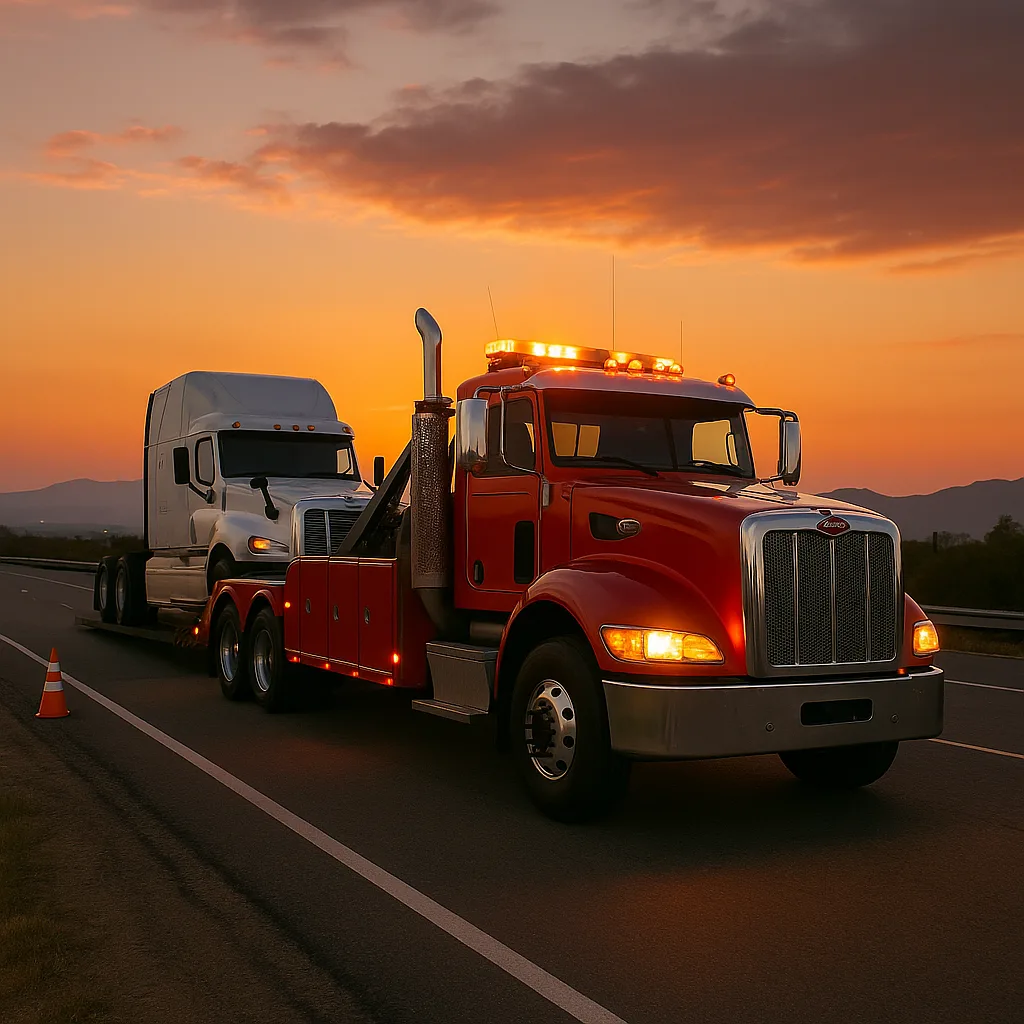
The failure decides the response. Sending the nearest truck to every call is how a ninety-minute repair turns into a two-day tow.
Every fleet has a breakdown pattern, and it comes from the duty cycle rather than the badge on the hood. Long-haul carriers lose money to detention. Construction loses it to a pour that cannot wait. Refrigerated loses the load itself. Final-mile loses the route. Municipal fleets lose the collection round and then answer for it at a council meeting. Those are not the same emergency, and they do not deserve the same response.
Road Rescue Network routes on capability first. A wheel-end failure on a loaded tanker, a liftgate on a delivery van and an alarm code on a Thermo King unit go to three different rescuers, because the person who can close the call is not always the person who is closest. Every rescuer in the network is checked for insurance standing, DOT compliance where it applies, and the equipment to do the specific job.
The pages below cover the eight verticals with the most distinct failure patterns — what breaks, on what equipment, and how the call runs from the phone to the work order. If your operation sits across two of them, that is normal; the routing works off the vehicle and the fault, not the label.
Eight industries, eight breakdown patterns.
Transportation & Logistics
OTR carriers, regional fleets and LTL hubs get a breakdown resolved where the truck sits — on the shoulder, at a terminal, or in a drop yard. Most calls close without a tow.
Construction
A grounded mixer stops the pour. Rescuers reach the site itself — no lowbed tow, no crew standing around waiting on a shop appointment.
Heavy Equipment
When a support truck or equipment transport goes down, the iron sits idle behind it. The trucks and trailers that move heavy equipment get serviced on location.
Refrigerated & Food-Grade
A reefer failure is a spoilage clock, an FSMA problem and an angry receiver at the same time. Specialists in the network carry the diagnostic gear for Thermo King and Carrier units.
Final-Mile & Delivery
High-cycle urban fleets lose route productivity to shop time faster than to any single failure. Box trucks, cargo vans and liftgates kept turning with on-site repair.
Bus & Motorcoach
A bus breakdown is a passenger safety event before it is a mechanical one. Qualified rescuers reach the coach without riders being left on a shoulder.
Government & Municipal Fleets
When a municipal fleet stops, city services stop with it — visibly. On-site repair and scheduled maintenance that produce the documentation procurement actually requires.
Owner-Operators
One truck, one breakdown, zero revenue. Solo operators and small fleets get routed the same way a national carrier does — nearest verified rescuer who can fix the actual failure.
What is the same across all of them.
One number, any hour
1-800-673-1060 reaches dispatch 24/7/365. No membership, no account requirement, and no after-hours surcharge on nights or weekends.
Routed by what broke
The request goes to the nearest rescuer who handles that failure on that class of vehicle — not simply to the nearest available truck.
Price and window before the roll
You hear the arrival window and the service-call rate on the phone, and you decide before anyone is dispatched.
Fixed where it stopped
Most commercial breakdowns close on-site. A tow happens when the failure genuinely needs one, and the rescuer says so early rather than billing hours to find out.
Written down against the vehicle
Parts, labor and cost land on the unit record, so repeat failures stop hiding inside a stack of one-off roadside invoices.
Go to your industry.
Keep every load moving, every mile.
Learn more →Jobsite breakdowns fixed where they happen.
Learn more →Big iron deserves mechanics who show up.
Learn more →Every minute counts when the cold breaks.
Learn more →Delivery stops here — breakdowns don't.
Learn more →Passengers aboard. Fix it here.
Learn more →Public assets. Zero tolerance for downtime.
Learn more →Your rig is your business. We protect both.
Learn more →Truck, trailer, reefer, welding and commercial tire, on-site.
Learn more →Light, medium and heavy-duty towing plus winch-out.
Learn more →5,241 towns with their own repair, towing and roadside pages.
Learn more →Consolidated invoicing and per-vehicle cost history.
Learn more →Answers before you call.
That is the normal case, and it changes nothing. Routing works off the vehicle class and the specific fault, not the label on the account. A construction company running its own delivery vans gets the right rescuer for each.
No. Anyone can call 1-800-673-1060 and get a rescuer dispatched, including a single owner-operator. A fleet account adds consolidated invoicing, per-vehicle service history and preferred-rescuer tagging.
A roadside program sends the nearest available truck. This routes to the nearest rescuer who can actually complete your repair — which is the difference between a tow and a fix on most commercial breakdowns.
Yes. Coverage is built around freight corridors rather than metro population, which is where most programs thin out. Response runs 35 to 45 minutes in covered areas and longer on remote stretches, and you hear the window before dispatch.
Service-call fees typically run $150 to $235 depending on hour, location and service type. Heavy-duty towing starts around $475 for in-metro moves. Nights and weekends carry no surcharge, and the quote is settled before the truck rolls.
Yes. On-site preventive visits and DOT inspections at your yard, terminal or depot are available in every one of these verticals, scheduled around your shift structure rather than a generic calendar.
Tell us what broke. We will send someone who fixes it.
Dispatching 24 hours · 7 days a week