Understanding What a Tow Truck Actually Does
A tow truck is a purpose-built vehicle designed to move disabled, wrecked, illegally parked, or otherwise immobile vehicles from one location to another. That sounds simple until you realize the range of equipment involved. A flatbed hauling a sedan off a curb has almost nothing in common with a 75-ton rotator pulling a loaded semi out of a ditch, yet both fall under the same umbrella term.
Most people think about tow trucks only when they need one, which is exactly the wrong time to start learning. Understanding the basics now, what types exist, how pricing works, and what separates a professional operation from a fly-by-night outfit, makes the difference between a smooth recovery and a nightmare that costs you twice what it should have.
The tow truck industry serves everyone from passenger car drivers to fleet managers running hundreds of commercial vehicles. If you operate anything with wheels, you will eventually need a tow. The question is whether you will know enough to make a good decision when that moment comes.
Types of Tow Trucks and What They Handle
Light Duty Tow Trucks
Light duty rigs handle passenger cars, motorcycles, small SUVs, and light-duty pickups. These trucks typically use a wheel lift or integrated lift system that raises the drive wheels off the ground while leaving the other axle rolling. Older models used hook and chain setups, but those have mostly disappeared because they damage bumpers and undercarriages.
Flatbed carriers, also called rollbacks or slide decks, are common in this category. The entire bed tilts and slides backward, the disabled vehicle gets winched onto the deck, and everything gets secured with chains or straps. Flatbeds work well for all-wheel-drive vehicles, low-clearance sports cars, and anything that should not be towed with wheels on the pavement.
Light duty operators handle the majority of roadside calls. Lockouts, jump starts, flat tire changes, and short-distance tows to repair shops make up the bulk of their work. Response times are usually faster because there are more light duty trucks in service and the jobs are simpler.
Medium Duty Tow Trucks
Medium duty rigs step up to handle box trucks, small buses, larger RVs, and some single-axle commercial trucks. These trucks have stronger booms, heavier-duty winches, and beefier chassis to manage the additional weight. A typical medium duty truck might handle vehicles in the 10,000 to 26,000-pound range, though exact capacities vary by equipment.
This is where you start seeing more specialized rigging. Towing a 26-foot box truck with a full load requires careful weight distribution and proper tie-down points. Operators in this class usually have more training and experience than light duty crews because the margin for error shrinks as weight goes up.
Medium duty is also the category where you see a lot of municipal work: towing illegally parked delivery trucks, moving abandoned vehicles, and clearing accident scenes involving commercial vehicles that are too heavy for light duty but do not require a full heavy wrecker.
Heavy Duty Tow Trucks
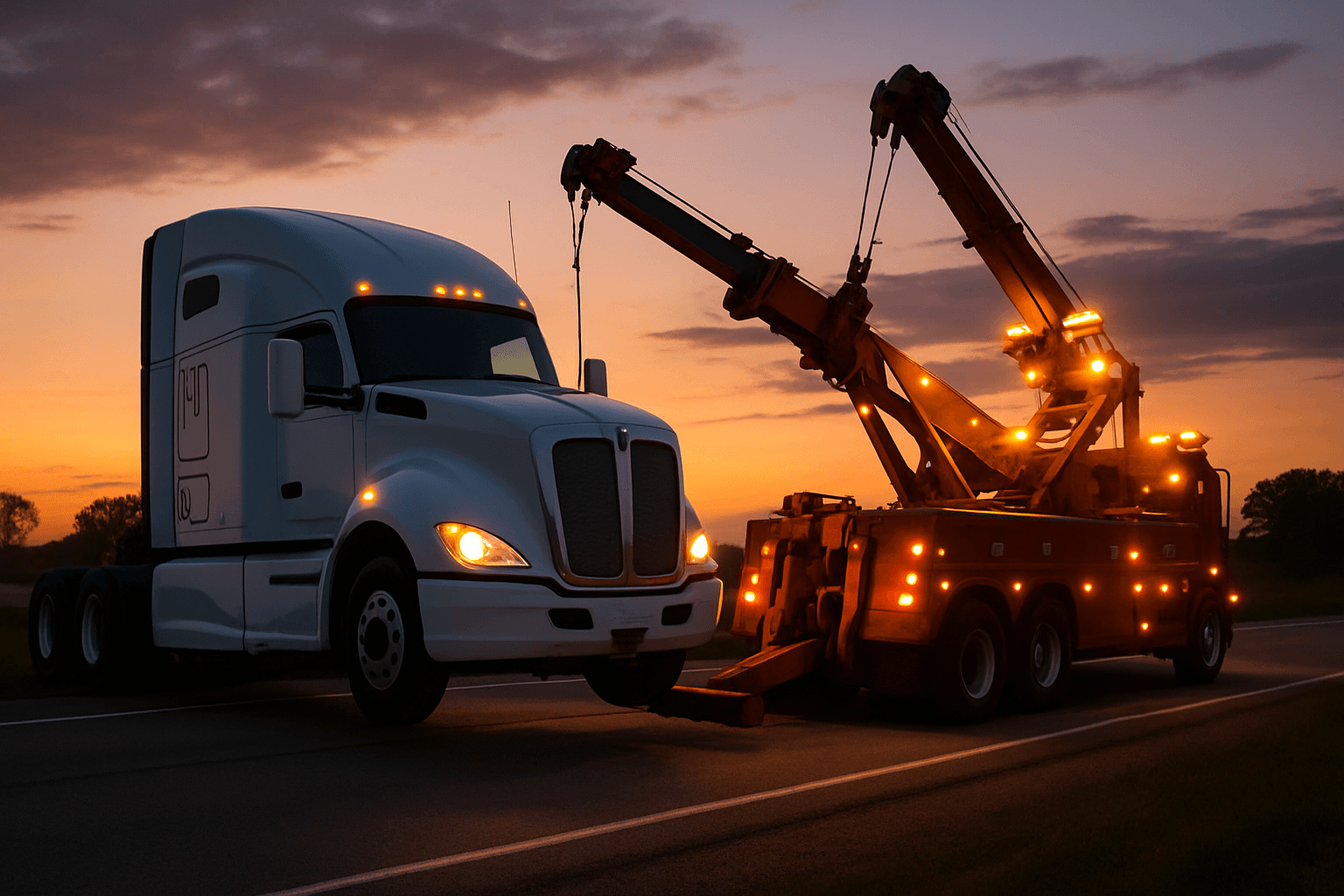
Heavy duty is where the serious iron lives. These are the rigs that recover tractor-trailers, motorcoaches, large RVs, construction equipment, and anything else that weighs more than a typical medium duty truck can handle. Heavy wreckers often have two or three axles, integrated boom and underlift systems, and winches rated for 30, 50, or even 75 tons of pulling capacity.
A loaded Class 8 tractor-trailer can weigh 80,000 pounds. If that rig goes off the road into soft ground or tips over, you need serious equipment and skilled operators to get it back on pavement without causing more damage. Heavy duty towing is as much engineering as driving. Operators calculate load angles, rigging points, and weight distribution before they even hook up.
Heavy duty calls take longer and cost more, but the alternative is leaving a $150,000 truck and a $200,000 load sitting in a ditch while you scramble to find someone who can actually move it. Fleet managers and owner-operators who run commercial equipment should have a heavy duty tow company lined up before they need one, not after.
Heavy rotators, the largest category, are used for the most complex recoveries: overturned tankers, jackknifed doubles, or trucks that have gone down embankments. These machines can cost over a million dollars and require operators with years of experience. If you ever see one working, stop and watch. It is impressive.
How Tow Truck Pricing Actually Works
Base Rates and Mileage
Most tow companies charge a base hook-up fee plus a per-mile rate. The hook-up covers the truck rolling out, the operator's time, and the initial connection. Mileage starts from where the truck picks up the vehicle, not from the tow company's yard.
Light duty tows in many markets run $75 to $125 for the base hook-up and $3 to $5 per mile after that. A five-mile tow to a repair shop might cost $100 to $150 total. Heavy duty rates are completely different. Base rates can start at $300 to $500, and mileage might be $10 to $15 per mile or more, depending on the equipment required.
If you are shopping around, ask for the full breakdown. Some companies quote a low base rate but tack on high mileage charges. Others include the first few miles in the base rate. You need the total cost for your specific situation, not a vague starting price.
After-Hours and Weekend Rates
Tow trucks do not stop working at 5 p.m., but you will pay more for service outside normal business hours. After-hours premiums typically add 25% to 50% to the base rate. If you break down at 2 a.m. on a Sunday, expect to pay more than you would on a Tuesday afternoon.
This is not price gouging. Operators working overnight or weekends are giving up time with their families and dealing with worse traffic, worse weather, and higher risk. The premium reflects that reality.
Some companies do not advertise their after-hours rates clearly. Ask before you commit. If you are calling around at midnight trying to find the cheapest option, you might end up with a truck that takes three hours to arrive because the operator is juggling multiple calls.
Recovery and Winching Fees
If your vehicle is not sitting on flat pavement ready to hook up, you are looking at recovery charges on top of the tow itself. Recovery means winching a vehicle out of a ditch, pulling it back onto the road after a slide-off, or uprighting something that has tipped over.
Light duty recovery might add $50 to $200 depending on difficulty. Heavy duty recovery can run into thousands of dollars. A semi that has gone off the highway and down an embankment might require multiple heavy wreckers, hours of rigging work, and coordination with law enforcement to close lanes. That is not a $300 job.
Some operators charge by the hour for recovery work. Rates vary, but $150 to $250 per hour for heavy equipment is common. Complex recoveries can take four, six, or eight hours. The bill adds up fast, but the alternative is leaving the truck there.
Storage and Impound Fees
If your vehicle gets towed to the tow company's yard instead of a repair shop or your home, you will likely pay daily storage fees. These start accruing immediately and can run $25 to $75 per day for passenger vehicles, more for commercial trucks.
Impound situations, where a vehicle is towed by law enforcement or a property owner, often involve additional administrative fees. You might pay the tow, the storage, and a release fee just to get your keys back. Read the invoice carefully and ask questions if something does not make sense.
Storage fees are one reason to have a plan before you break down. If you know which repair shop you want your vehicle towed to, tell the operator up front. Otherwise, it goes to their yard, and you are paying storage while you figure out your next move.
Finding a Tow Truck When You Need One
Searching for Towing Trucks Near You
Most people start with a search engine when they need a tow. Typing "towing trucks near me cheap" or "cheapest tow service near me" into a phone will return a list of companies, but that list is not neutral. The top results are often paid ads, and the companies with the biggest marketing budgets are not always the best operators.
Look past the ads. Check reviews, but read them carefully. A company with 500 five-star reviews and zero negative feedback is probably buying reviews. Look for detailed feedback that mentions specific situations: "showed up in 20 minutes," "operator was professional," "explained the charges before hooking up." That tells you more than a generic "great service" comment.
If you are searching in a specific area, like Tulsa, OK, for example, you will get a mix of local independents and national chains. Local companies often have better knowledge of the area and faster response times, but national chains might have more trucks available during peak times.
Motor Club and Insurance Dispatch
Many drivers have roadside assistance through their auto insurance or a motor club membership. These services will dispatch a tow truck for you, and depending on your coverage, you might pay nothing out of pocket or just a reduced rate.
The catch is that you do not choose the tow company. The insurance or club dispatcher sends whoever is available in their network. Sometimes that works out fine. Other times you get a truck that is 45 minutes away when there is a local operator five minutes down the road.
If you are in a safe location and not blocking traffic, you can call your insurance or club and also call a local tow company directly to compare response times and costs. If the local company can get there faster and the price difference is reasonable, paying out of pocket might be worth it.
For commercial vehicles, especially heavy duty, relying on a standard motor club is usually a mistake. Most clubs do not cover trucks over a certain weight, and even if they do, they might dispatch a light duty operator who shows up and realizes they cannot handle the job. Owner-operators and fleet managers need commercial roadside coverage or direct relationships with heavy duty tow companies.
Using a Dispatch Platform
Road Rescue Network connects drivers and fleet managers with tow operators, mobile mechanics, tire techs, and other roadside service providers across the country. Instead of calling random companies from a search results page, you post your breakdown or service request, and qualified providers in the area can respond with availability and pricing.
This approach works well when you are in an unfamiliar area or need a specific type of service. If you are hauling a load through a state you have never been to and your truck goes down, you probably do not know which local heavy duty operator is reliable. A dispatch platform gives you access to vetted providers without the guesswork.
The transparency helps too. You see who is available, what they charge, and how fast they can respond before you commit. That is harder to get when you are making cold calls to companies you have never heard of.
What Separates a Professional Tow Company from a Cheap One
Licensing and Insurance
Every state requires tow truck operators to carry specific insurance coverage, and many require business licenses or permits. A legitimate company will have commercial auto liability, on-hook coverage (which protects your vehicle while it is being towed), and garage keeper's liability if they store vehicles.
Ask about insurance before you agree to service. If the operator damages your vehicle during the tow and they do not have proper coverage, you are stuck filing a claim against your own insurance or suing them directly. Neither option is fun.
Cheap tow truck companies that undercut everyone else on price often do it by skimping on insurance, using poorly maintained equipment, or hiring inexperienced drivers. You might save $30 on the tow and then spend $3,000 fixing the damage they caused.
Equipment Condition and Maintenance
Professional tow companies maintain their trucks. Hydraulic systems get serviced, tires get replaced, lights work, and safety equipment is up to date. The truck shows up clean, the operator knows how to use the equipment, and the job gets done without drama.
Budget operators run trucks until they fall apart. You will see rust, bald tires, broken lights, and jury-rigged equipment. An operator who does not maintain the truck is not maintaining their skills either. That is not someone you want handling your vehicle.
Look at the truck when it arrives. If it looks like it barely made the trip, send it away and call someone else.
Operator Training and Experience
Towing is a skill. Knowing where to attach rigging points, how to balance a load, and how to secure a vehicle without damaging it takes training and practice. Heavy duty towing requires even more expertise because the consequences of a mistake are severe.
Ask how long the operator has been in the business. Ask if they have handled your type of vehicle before. A guy who has been towing passenger cars for six months should not be trying to recover a loaded semi. If the operator seems unsure or starts making things up, stop the job and find someone else.
Professional operators are happy to explain what they are doing and why. They walk you through the process, show you the rigging, and make sure you understand the plan before they start. Cowboys just hook up and go, and that is when things get broken.
Common Tow Truck Scenarios and What to Expect
Accident Tows
If you are involved in an accident, law enforcement will often call a tow truck to clear the scene. You usually do not get to choose the company. The truck that shows up is whoever has the rotation contract with that police department.
Rotation tows are not always cheap. The company knows you do not have a choice, and some take advantage of that. Ask for an itemized invoice before you sign anything, and if the charges seem excessive, document everything and dispute it later. Do not argue on the side of the road.
If the accident is minor and the vehicle is driveable, you can sometimes avoid the rotation tow by moving the vehicle yourself and calling your own tow company later. Check with the officer first, though. If they have already called the truck, you might still get charged a cancellation fee.
Breakdown Tows
Breakdowns are more predictable. You call for a tow, the truck shows up, the operator hooks up your vehicle, and you ride along or arrange your own transportation. If you are going to a repair shop, call ahead and let them know you are coming so they can clear a bay or at least a parking spot.
For commercial breakdowns, especially on highways, time matters. Every hour your truck sits on the shoulder is an hour of lost revenue, and if you are blocking a lane, you might be racking up fines. Heavy duty operators understand this and usually move faster than light duty companies, but you still need to communicate urgency clearly.
If you are hauling a load, figure out what happens to the cargo. Some tow companies can take the whole rig. Others can only move the tractor, and you will need to arrange a separate truck to move the trailer. Do not assume anything. Ask before the truck rolls.
Illegal Parking and Impound Tows
If your vehicle gets towed from private property or for illegal parking, you are dealing with an impound. The property owner or law enforcement initiated the tow, not you, and you will pay to get the vehicle back.
Impound fees are usually higher than regular tows because they include administrative costs and storage. You might also need to show proof of ownership and pay in cash or certified funds. Some impound lots do not take credit cards.
If you think the tow was unjustified, you can dispute it, but you usually have to pay to get your vehicle back first and then fight for a refund. Impound lots do not release vehicles just because you are unhappy.
How Fleet Managers Should Think About Tow Truck Relationships
Building a Network Before You Need It
Fleet managers running multiple trucks should have tow company relationships in place before a breakdown happens. Waiting until a truck is down on the side of the highway to start calling around is expensive and inefficient.
Identify heavy duty operators in the regions where your trucks run most often. Introduce yourself, tour their facilities, and negotiate rates in advance. Some companies offer fleet discounts or priority dispatch if you give them consistent volume.
Having a pre-negotiated rate means no surprises when the bill comes. Your driver knows who to call, the tow company knows your trucks and your expectations, and the whole process moves faster.
Understanding Total Cost of Downtime
The tow itself is only part of the cost when a commercial truck breaks down. You also lose the revenue from that truck sitting idle, you might miss delivery windows and pay penalties, and you could lose customer relationships if delays become a pattern.
Choosing the cheapest tow service might save you $100 on the tow but cost you $1,000 in downtime if the truck takes an extra three hours to get moving. Fast, reliable service is worth paying for when the alternative is a truck sitting on the shoulder for half a day.
Some fleet managers track tow costs as a line item and try to minimize them. Smarter fleet managers track total downtime cost and optimize for speed and reliability instead.
Mobile Repair as an Alternative
Not every breakdown requires a tow. Mobile mechanics can handle many roadside repairs on the spot: replacing belts, fixing air leaks, changing injectors, or diagnosing electrical issues. If the repair can be done in an hour or two, keeping the truck on the road is almost always cheaper than towing it to a shop.
Road Rescue Network connects fleet managers with mobile mechanics, tire techs, and other mobile service providers who can respond to breakdowns and handle repairs without a tow. For fleets running tight schedules, that flexibility is critical.
Towing should be the last resort, not the first response. Evaluate whether the truck can be fixed on-site before you call for a wrecker.
Final Thoughts on Tow Trucks and Roadside Service
A tow truck is a tool, and like any tool, its value depends on who is operating it and how well it is maintained. Knowing the difference between light, medium, and heavy duty equipment, understanding how pricing works, and recognizing the signs of a professional operation will save you money and frustration when you need help.
Do not wait until you are stranded to start learning. Build relationships with tow companies in your area, keep their contact information saved, and know what your insurance or roadside coverage actually includes. If you run a fleet, treat towing and roadside service as part of your operational planning, not an afterthought.
The best tow is the one you never need, but when you do, having the right company on speed dial makes all the difference.