Fleet repair for municipal and public works fleets.
Sanitation packers, dump and spreader trucks, utility bodies, sweepers and transit buses. Serviced at the yard or on the route, with work orders written for a procurement file.
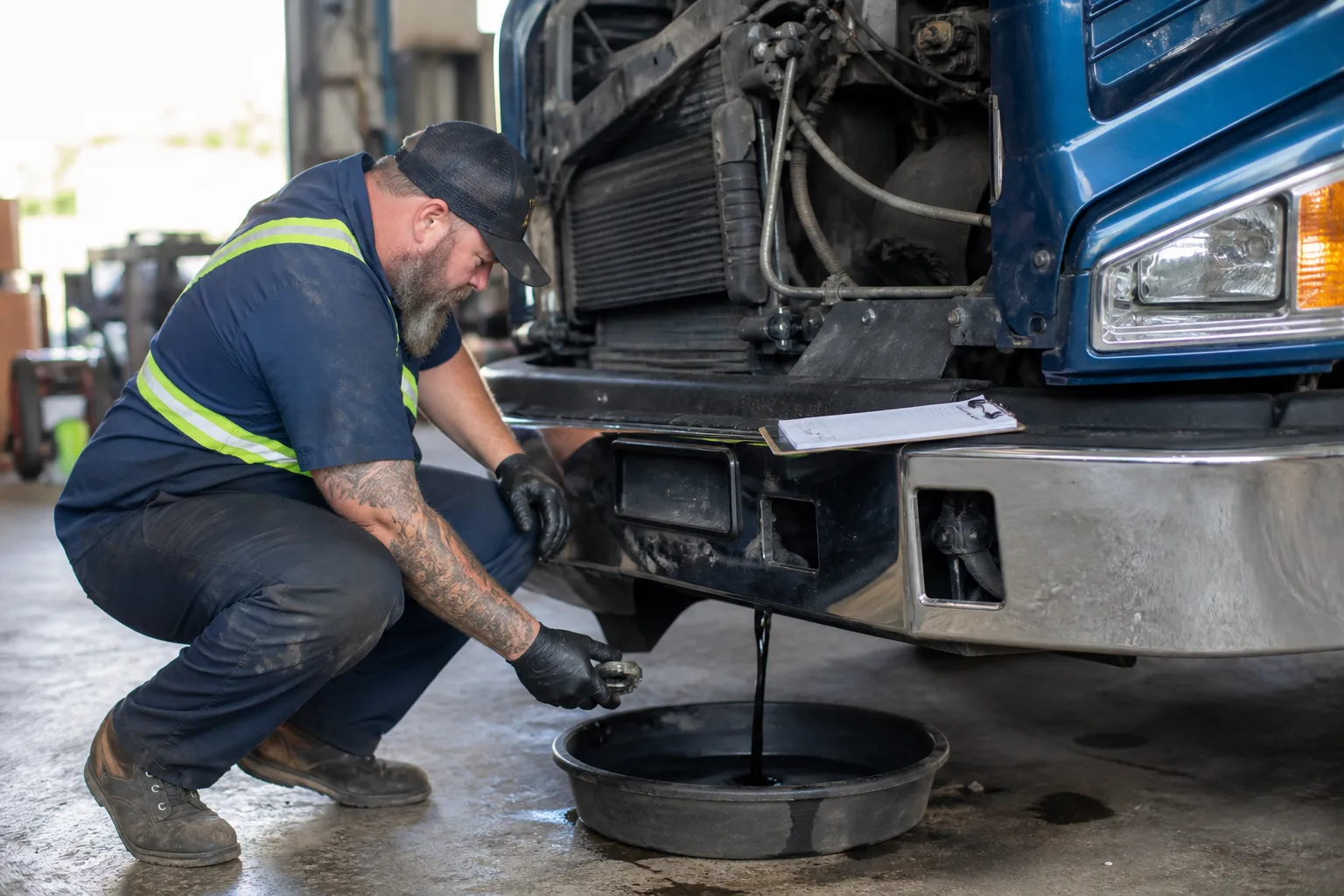
A packer down on Tuesday is not a maintenance ticket. It is a missed collection route and a phone line full of residents.
Municipal fleet downtime is public in a way private fleet downtime never is. A missed collection route, a sweeper that does not run, a snow spreader sidelined before a storm — each of those becomes a resident complaint and then a council question. The operational requirement is ordinary mobile repair; what is different is that the response has to survive being looked at afterwards.
That puts documentation on equal footing with wrench time. Public fleets buy against procurement rules, justify spend line by line, and answer for it in budget cycles that arrive whether the work went well or badly. Work orders that carry the unit, the fault, the parts, the labor and the cost in a form that drops into a procurement file are worth as much to a fleet manager here as the repair itself.
The fleets themselves are also unusually mixed. A single public works department can run packers, dumps, spreaders, line trucks, sweepers and light vehicles from a dozen manufacturers across twenty model years, much of it carrying deferred maintenance nobody funded. Routing by capability rather than by proximity is what keeps that diversity from turning every call into a gamble on whether the rescuer has seen the vehicle before.
What actually goes wrong in government fleets.
Downtime that is immediately visible to the public
A missed route or an idle sweeper generates resident complaints the same day and political attention shortly after.
Procurement rules that require documented justification
Spend has to be defensible line by line. A work order that does not carry unit, fault, parts and labor creates work rather than closing it.
Fleet diversity across makes, types and model years
Packers, spreaders, line trucks and buses in one department. Capability-based routing matters more here than anywhere else.
Aging inventory carrying deferred maintenance
Budget cycles defer work that then arrives as failures. Service history per unit is what turns that backlog into a fundable plan.
Emergency response for storms and public safety events
Snow, flood and storm events need fleet support at exactly the hours everything else is closed.
How a government fleets call runs.
Unit number and service impact
Which asset, and what stops if it stays down — a route, a shift, a storm response. That is what sets priority on a municipal call.
Routed by vehicle type
Packer bodies, spreader controls and line-truck hydraulics are distinct systems. The match is to a rescuer who works that vehicle.
Cost quoted before authorization
You get the number in advance, in a form that can be authorized against a purchase order rather than reconciled afterwards.
Worked at the yard or on the route
Whichever restores service faster. Yard visits can clear several units in one pass when the route can absorb it.
Work order written for the file
Unit, fault, parts, labor and cost, structured to drop straight into a procurement record and a service history.
Operations we serve in government fleets.
- Municipal public works & streets departments
- Sanitation & solid waste collection fleets
- Transit authorities & public bus systems
- Utility & water department fleets
- Parks, recreation & facilities maintenance fleets
- County & state highway maintenance fleets
Vehicles and equipment covered.
- Sanitation trucks & rear/side-loader packers
- Dump trucks & spreader trucks
- Utility body trucks & line trucks
- Transit & paratransit buses
- Sweepers & specialized municipal vehicles
- Trailers for public works operations
Where to go next.
Vocational municipal vehicles at the yard or curbside.
Learn more →Packer bodies, plow frames and structural repair.
Learn more →Cold-morning fleet starts before the shift.
Learn more →Consolidated invoicing and documented cost history.
Learn more →Your rig is your business. We protect both.
Learn more →Passengers aboard. Fix it here.
Learn more →5,241 towns with their own repair, towing and roadside pages.
Learn more →Browse verified rescuers by service and service area.
Learn more →Answers before you call.
Yes. Work orders carry the unit, the fault, the parts, the labor and the cost, structured to go into a procurement file without being rewritten.
Yes. Packer bodies, spreader controls, hydraulics and the chassis under them are all inside the network's vocational capability.
Coverage runs 24/7 with no after-hours surcharge, which is the point for snow, flood and public safety events — those are exactly the hours everything else is shut.
Yes, and for a municipal fleet that is usually the efficient shape. A scheduled yard pass clears small defects across multiple units in a single authorization.
No, but it changes the useful output. Service history per unit is what turns an unfunded backlog into a documented, fundable plan for the next budget cycle.
Service-call fees typically run $150 to $235 depending on hour, location and service type. The quote is settled before authorization so it can be raised against a purchase order.
Public fleet down? The city notices before you do.
Dispatching 24 hours · 7 days a week