Heavy equipment transport and support fleet repair.
RGNs, lowboys, fuel and lube trucks, mechanics trucks and water wagons — serviced at the site, the pit or the terminal. The support fleet is what keeps the iron earning.
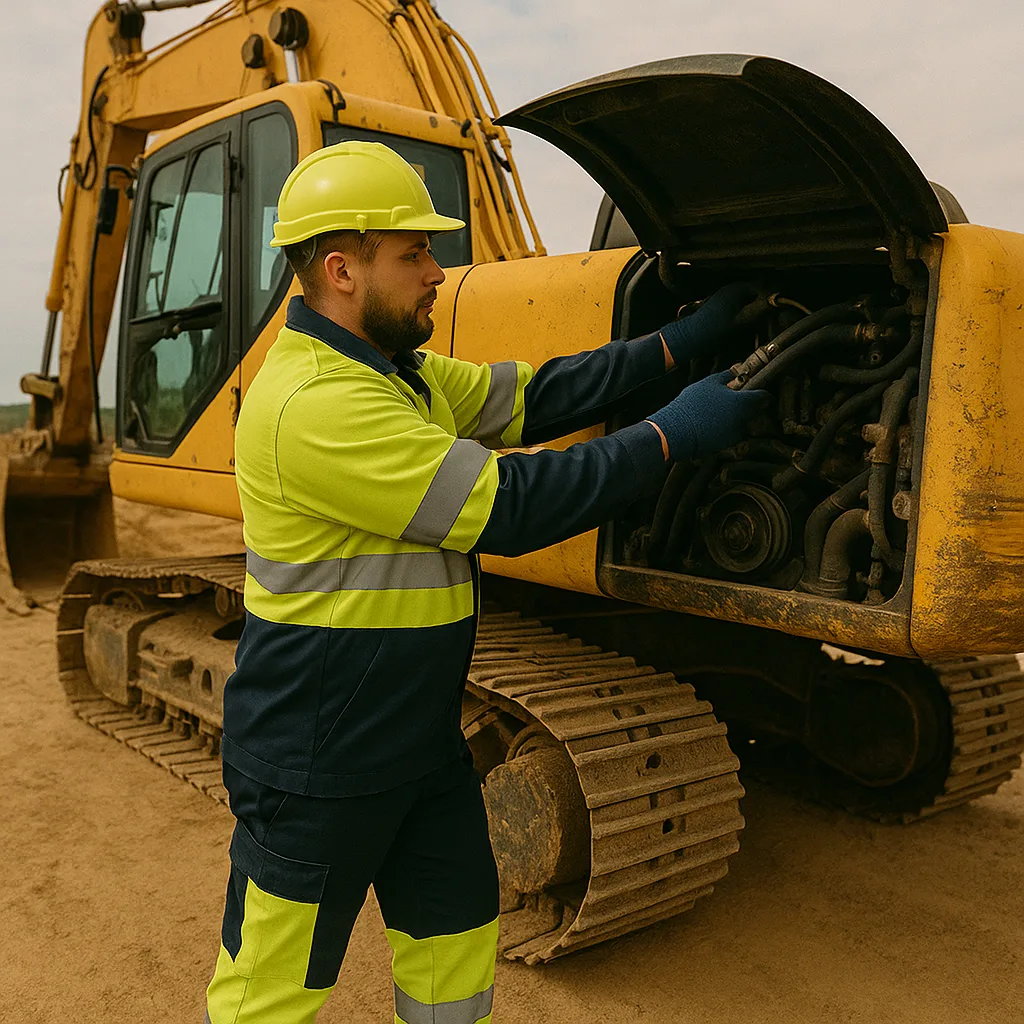
Nobody bills for an excavator. They bill for the excavator working — and it does not work if the lowbed that moves it is down.
Heavy equipment operations lose money in a way that is easy to misattribute: the machine is fine, but the support fleet around it is not. A fuel and lube truck that cannot make its round idles a whole pit by mid-shift. An RGN with an air leak strands a machine at the wrong site. The equipment is the asset on the balance sheet, but the commercial trucks and trailers are the thing that decides whether it produces today.
The locations make this harder than ordinary fleet work. Pits, quarries, pipeline right-of-way and land-clearing sites are exactly where dealer service trucks are slowest to go and where a tow is most expensive to arrange. Routing to a rescuer who is willing and equipped to work off-pavement is most of the problem solved, and it is the part a generic roadside program handles worst.
Permit and compliance exposure rides along with all of it. Oversize and overweight moves depend on the transport equipment being legal, so a brake out of adjustment or a lighting fault is not just a repair — it is a move that cannot legally happen. Keeping the transport fleet inspection-current is what keeps the permit calendar from becoming the bottleneck.
What actually goes wrong in heavy equipment.
Support vehicle failures that idle a whole production cycle
One water wagon or lube truck down can stop a pit that has six machines running. The support fleet is the real single point of failure.
Remote sites dealer trucks will not respond to
Pits, right-of-way and clearing sites sit well off the service map most programs actually cover.
Overloaded haul cycles eating brakes and drivetrain
Short heavy loops wear components at a rate highway maintenance intervals do not anticipate.
Transport permits blocked by a compliance fault
An oversize move needs legal equipment. A lighting or brake defect turns a scheduled move into a cancelled one.
Night-shift failures with no local shop until morning
Aggregate and pipeline work runs around the clock. The repair coverage has to as well.
How a heavy equipment call runs.
Say where off-pavement it is
Pit bench, haul road, right-of-way station. Access conditions decide which rescuer can actually reach the unit and what they need to bring.
Routed to off-highway capability
Working a lowbed on a haul road is not the same job as a shoulder call on an interstate. Routing accounts for the ground, not just the failure.
Window against the shift
You hear the arrival window before dispatch so you can decide whether to reroute the cycle or hold it.
Repaired on the ground
Air, brake, hydraulic and electrical work happens where the unit sits. Recovery is arranged only when the repair genuinely cannot be.
Compliance recorded
When the work touches something a permit depends on — brakes, lighting, coupling — the documentation reflects it, so the next oversize move is not held up proving it.
Operations we serve in heavy equipment.
- Equipment rental companies & dealerships
- Aggregate & mining operations
- Pipeline & infrastructure contractors
- Demolition & salvage operations
- Large-scale land clearing contractors
- Port & intermodal terminal equipment fleets
Vehicles and equipment covered.
- Off-highway haul truck support vehicles
- Equipment transport trailers (RGN, lowboy, extendable)
- Fuel & lube service trucks
- Mechanics service trucks & crane trucks
- Water wagons & dust control trucks
- Oversize / overweight pilot & escort vehicles
Where to go next.
Support-fleet repair at the pit or the site.
Learn more →Structural repair on decks, ramps and frames.
Learn more →Recovery when the unit truly cannot be repaired in place.
Learn more →Shifted or unsecured equipment loads, restored.
Learn more →Every minute counts when the cold breaks.
Learn more →Jobsite breakdowns fixed where they happen.
Learn more →5,241 towns with their own repair, towing and roadside pages.
Learn more →Browse verified rescuers by service and service area.
Learn more →Answers before you call.
The commercial trucks and trailers around the equipment are the core of the work. Some rescuers also work the iron directly — name the machine when you call and it routes to someone who does.
Yes. Describe the access when you call — bench, haul road, station number — so the routing picks a rescuer equipped for that ground.
Yes. On-site inspection visits at the yard keep RGNs, lowboys and support trucks legal without pulling them out of the move schedule.
Call immediately — a permitted move that stops has its own clock and its own escort costs. The failure detail decides whether it is a repair or a recovery.
Service-call fees typically run $150 to $235 depending on hour, location and service type. Off-pavement access can move it, and the number is settled before dispatch.
Yes, 24/7, with no after-hours surcharge.
The iron only earns when the support fleet runs.
Dispatching 24 hours · 7 days a week