Fleet maintenance and roadside repair for carriers.
Class 8 tractors, dry vans, tankers and flatbeds, serviced where they stop. Your breakdown routes to the nearest verified rescuer who can actually fix what broke.
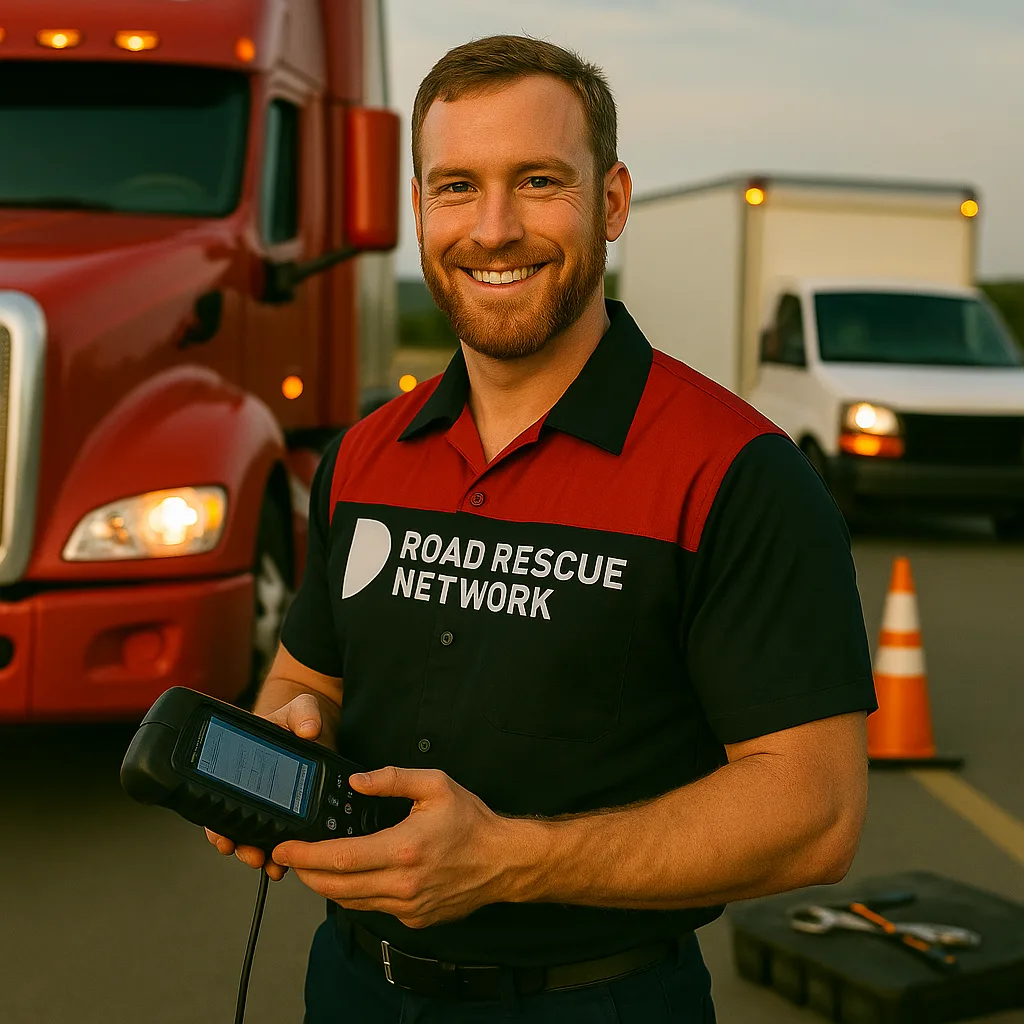
A drive-axle seal at 2 a.m. is not a repair bill. It is a missed pickup window, detention on the receiver end, and a customer relationship under pressure.
Transportation fleets live and die by on-time delivery, and the expensive part of a breakdown is almost never the part. It is the hours. A tow adds a queue at a shop that has its own backlog, and the truck comes off the board for days over a repair that took ninety minutes of actual wrench time. Road Rescue Network exists to close that gap: your request routes to a rescuer near the truck who carries the tooling for that failure, and the work happens on the shoulder.
The network is national and the routing is by capability, not just proximity. A wheel-end failure on a loaded tanker and a trailer light-out on a dry van are different calls, and they go to different people. Every rescuer is checked for insurance standing, DOT compliance where it applies, and the equipment to do the specific job — so a dispatcher is not guessing whether the truck that shows up can finish the work.
For fleets running more than a handful of power units the value compounds after the repair. Every job logs against the vehicle with the parts used, the labor and what it cost, so your maintenance team sees a real service history per unit and your controller sees the spend without chasing invoices across a dozen roadside vendors.
What actually goes wrong in transportation.
Detention stacking behind a roadside failure
The repair is an hour. The tow, the shop queue and the reload are three days. On-site repair is what keeps a single failure from eating the week's routing plan.
Finding a qualified tech at 2 a.m. in a thin corridor
Night and weekend coverage in rural stretches is where most roadside programs quietly fail. Network coverage is built around freight corridors rather than metro population.
DOT annual inspections across a dispersed fleet
Pulling units off revenue miles for shop inspections is expensive. On-site inspection visits at terminals and drop yards keep the paperwork current without the deadhead.
Tire and wheel-end failures far from a truck stop
Commercial tire work on the roadside needs a rescuer carrying the right casing sizes and a mount capability, not a light-duty van that arrives and calls someone else.
Unplanned repair spend nobody budgeted
Roadside repair is the line item that blows monthly maintenance budgets because nobody sees the total until the invoices land. Per-vehicle cost attribution puts it back under control.
How a transportation call runs.
Call with the symptom, not the diagnosis
What the driver heard, what the dash is showing, whether the truck is loaded, and the exact mile marker. That is what decides which rescuer goes.
Routed by capability
Air system, wheel end, electrical and refrigeration are different skill sets. The request goes to the nearest rescuer who handles that failure, not simply the nearest truck.
Arrival window and rate before the roll
You hear the window and the service-call rate up front. If it does not work for the load, you say so before anyone is dispatched.
Repaired where it stopped
Most highway failures close on the shoulder. When a unit genuinely needs a shop, the rescuer says so early instead of billing three hours to find out.
Logged against the unit
Parts, labor and cost land on the vehicle record. Recurring failures on a single tractor stop hiding inside a pile of one-off roadside invoices.
Operations we serve in transportation.
- Long-haul / OTR carriers
- LTL & regional fleets
- Intermodal drayage operations
- Flatbed & step-deck carriers
- Tanker & bulk commodity fleets
- Logistics & 3PL private fleets
Vehicles and equipment covered.
- Class 8 semi-tractors & day cabs
- 53-foot dry van & flatbed trailers
- Tanker trailers (DOT spec)
- Lowboy & heavy-haul trailers
- Liftgate-equipped trailers
- Converter dollies & pup trailers
Where to go next.
Engine, air, electrical and brake work on the shoulder.
Learn more →Lights, brakes, air lines and landing gear on-site.
Learn more →For the calls that genuinely need a wrecker.
Learn more →Consolidated invoicing and per-vehicle cost history.
Learn more →Jobsite breakdowns fixed where they happen.
Learn more →Your rig is your business. We protect both.
Learn more →5,241 towns with their own repair, towing and roadside pages.
Learn more →Browse verified rescuers by service and service area.
Learn more →Answers before you call.
Response runs 35 to 45 minutes in most covered corridors and longer on remote stretches. You get the arrival window on the phone before dispatch, not after. Call 1-800-673-1060 any hour.
Yes. On-site inspection visits are scheduled at terminals, drop yards and maintenance facilities, so units stay compliant without coming off revenue miles for a shop trip.
Mobile repair rigs stock the common wear items — air hoses and fittings, brake hardware, wheel seals, belts, filters, batteries. Specialty parts may need a parts run during the call, and the rescuer tells you that up front.
Coverage is national, so geography does not. What changes at that scale is the account side: consolidated invoicing, per-vehicle cost history, and the ability to tag preferred rescuers in the lanes you actually run.
Service-call fees typically run $150 to $235 depending on hour, location and service type. Heavy-duty towing starts around $475 for in-metro moves. The quote is settled before the truck rolls, and nights and weekends carry no surcharge.
The rescuer documents what was done and what still needs attention, then tows it if that is the right call. You are not paying twice to learn the same thing.
Truck down mid-lane? The repair goes to the truck.
Dispatching 24 hours · 7 days a week